
Tabelog 100 #74
Our verdict
Ogakiku places Kawagoe’s eel tradition in clear focus: a house-style unagi and donburi restaurant in Nakacho with Tabelog 100 Unagi 2024 recognition. The appeal is cultural as much as culinary, sitting within a city known for Edo-period streetscapes and a slower, older rhythm of eating than central Tokyo.

Pearl is the En Primeur Club membership app, where members save venues, book tables and use the concierge.
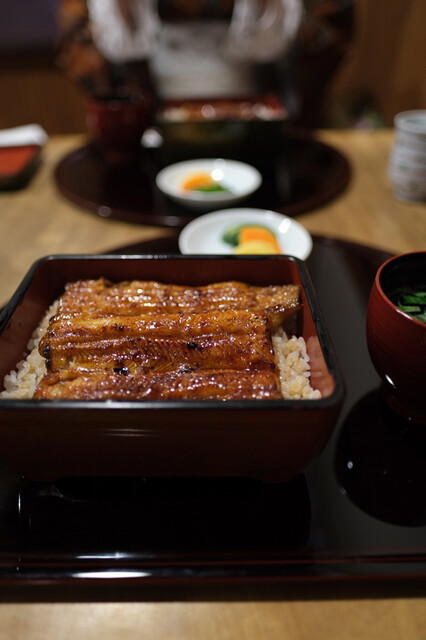
The menu
What to order
- Unaju (eel rice box)
- Kabayaki (grilled eel)
- Shirayaki (plain grilled eel)
- Unagi course menus Yamabuki, Sakura, Kiku
Approaching Kawagoe, the city shifts into its older register: low rooflines, kura-style storehouses, and a pace that makes eel feel less like a luxury detour than part of the city’s grammar. Unagi has long carried ceremonial weight in Japan, especially around stamina, summer heat, and the patient craft of serving freshwater eel over rice. In Kawagoe, the tradition reads differently from Tokyo’s counter-driven dining culture: less close-range performance than time, appetite, and a city built on preservation rather than novelty.
Ogakiku belongs to that older Kawagoe dining pattern. Its Tabelog Hyakumeiten recognition for 2024 places it in a category judged against specialists, not general Japanese restaurants. That matters. Eel restaurants are narrow by design, and credibility depends on repetition: handling, seasoning, rice timing, and turning one main idea into a complete meal. The format rewards restraint, because overcomplication has little room to hide when the central order is eel over rice.
Kawagoe's eel culture rewards patience over spectacle
Unagi in Japan sits between everyday comfort and formal occasion. It can be lunch, family meal, seasonal ritual, or measured splurge, but it rarely behaves like contemporary tasting-menu dining. Kawagoe gives the category a fitting stage. Its merchant-house architecture and day-trip economy draw visitors seeking Edo-period atmosphere, yet the better meals are grounded rather than theatrical. Eel fits that register: history, heat, sauce, and rice, served without needing table-side explanation.
The local comparison is instructive. Kawagoe Ichinoya also works within the eel tradition, while VANITOY BAGEL KURA TSUKURI HONTEN and Kawagoe Bakery Rakuraku speak to the city’s daytime snacking culture. PIZZERIA ROCCO and Burger Cafe Honohono pull Kawagoe toward casual international and café formats. Against that spread, Ogakiku is not just another meal stop. It represents the city’s older restaurant logic: choose a narrow specialty, serve it with confidence, and let the meal’s rhythm carry the weight.
That is the useful way to read its Tabelog Hyakumeiten 2024 placement and 3.63 score. The recognition does not make the experience grander; it clarifies the competitive set. This is a specialist category, and diners should arrive thinking in terms of eel craftsmanship rather than menu breadth. For a broader read on the city’s dining range, our full Kawagoe restaurants guide is the better frame, with other Kawagoe dining rooms showing how varied the city becomes once visitors move beyond the postcard streets.
A house restaurant format, not a counter performance
The room category matters less here than the meal’s focus. Ogakiku is best understood as a specialist restaurant for unagi and donburi, placing it closer to a planned family or small-group meal than the chef-facing intimacy of sushi or kappo. Expectations shift accordingly. The pleasure is not watching every movement from a counter seat, but settling into a slower lunch or evening meal where the dish arrives as a finished object rather than a staged sequence.
This is important for travelers using Kawagoe as a day trip from Tokyo. Central Tokyo often trains visitors to chase compressed, high-intensity dining: short seatings, hard reservations, and progression menus. Kawagoe’s eel restaurants follow a different social contract, tied to walking, shopping streets, shrine visits, and the older pleasure of a planned midday meal. Ogakiku fits that pattern because the format is legible even to first-time visitors: eel, rice, and a setting for conversation rather than spectacle.
Families should read the format carefully. The category is focused, and the safest assumption is that the meal revolves around the main specialty rather than a broad fallback menu. It is better for groups whose younger diners are comfortable with eel over rice, not parties needing many unrelated choices. The experience is traditional, not hushed like luxury counters, making it more forgiving than many premium Japanese formats while still asking diners to meet the restaurant on its own terms.
How to place it in a Kawagoe day
The smart itinerary treats eel as the anchor, not an afterthought. Kawagoe’s appeal is strongest when the meal sits within the flow of historic streets and slower retail wandering, not squeezed between snacks. Donburi and unagi have weight; arriving hungry is part of the point. In summer, the association between eel and stamina adds resonance, but the category is not single-season. It works year-round because the craft rests on consistency, not novelty.
Visitors building a wider Kawagoe stay can pair the meal with city guides beyond restaurants: our full Kawagoe hotels guide, our full Kawagoe bars guide, our full Kawagoe wineries guide, and our full Kawagoe experiences guide give the city more shape than a single lunch reservation can. For readers comparing Japanese regional dining more broadly, other dining in Kawagoe and elsewhere shows how place-specific Japanese eating can be, even within casual-to-midrange formats. Simple dishes travel, but regional context changes their meaning.
The editorial case for Ogakiku is direct. Choose it when Kawagoe’s older food culture is the point of the day, not for a fast snack crawl or chef-led tasting sequence. Its value lies in how clearly it expresses the city’s traditional restaurant mode: focused specialty, settled rhythm, Tabelog Hyakumeiten recognition, and a meal that makes sense before or after the historic streets rather than apart from them.
Frequently asked questions
Is Ogakiku good for families?
Ogakiku can work for family meals in Kawagoe when the group is comfortable with a focused unagi and donburi meal. The listed budget is Dinner: JPY 5,000 - JPY 5,999; Lunch: JPY 5,000 - JPY 5,999.
What should I expect atmosphere-wise at Ogakiku?
Expect a specialist unagi restaurant rather than a counter-led tasting-menu setup. Tabelog selected it for its Hyakumeiten recognition in 2024, so it is best approached as a planned lunch or evening meal, not a quick snack stop.
What's the pricing like at Ogakiku?
Pricing at Ogakiku is listed as JPY 5,000 - JPY 5,999 JPY 5,000 - JPY 5,999.
What are the opening hours for Ogakiku?
Specific opening hours are not provided here. Confirm directly with Ogakiku before visiting Kawagoe.
Pricing, Compared
Comparable venues by cuisine and price in the same metro.
| Venue | Cuisine | Price | Awards | Notes |
|---|---|---|---|---|
| OgakikuThis venue (the venue you are viewing) | Traditional Unagi (Eel) Restaurant | $30–50 | Tabelog 100 #74 | Not listed |
| Kawagoe Ichinoya | Traditional Japanese Unagi | $30–50 | Tabelog 100 #86 | Matsuecho, Traditional Japanese Unagi |
| Kawagoe Bakery Rakuraku | Not listed | $1–10 | Tabelog 100 #78 | Kashiya Yokocho / Motomachi, Japanese-style Bakery & Bread Shop |
| Ganja Honten | Tsukemen / Ramen | $10–20 | Tabelog 100 #28 | Shintomi-cho, Tsukemen / Ramen |
| Ramen Jiro Kawagoe ten | Ramen Jiro-style pork ramen | $10–20 | Tabelog 100 #61 | Asahicho, Ramen Jiro-style pork ramen |
| Kotobuki Seimen Yoshikawa Kawagoe ten | Japanese Ramen | $10–20 | Tabelog 100 #70 | Minami Otsuka, Japanese Ramen |
Recognition history
Dated appearances from independent guides and award organizations, with the underlying list record or original source where available.
Tabelog 100 #74 · No. 74
Tabelog · Tabelog 100 - Unagi - 2024
Continue exploring
More in Kawagoe
Restaurants in Kawagoe
All restaurants in Kawagoe →



Bars in Kawagoe
Browse all →


Hotels in Kawagoe
Browse all →


Wineries in Kawagoe
Browse all →
Details
- Classic
- Well Known
- Cozy
- Rustic
- Family
- Group Dining
- Special Occasion
- Casual Hangout
- Date Night
- Historic Building
- Standalone
- Private Dining
- Sake Program
- Beer Program
- Local Sourcing
- Street Scene
- A La Carte
- Set Menu
- Sake
- Beer
- Soft Drinks
- Pescatarian Friendly
Current opening hours
- Monday
- 11 AM–2 PM, 4:30–7 PM
- Tuesday
- 11 AM–2 PM, 4:30–7 PM
- Wednesday
- 11 AM–2 PM, 4:30–7 PM
- Thursday
- Closed
- Friday
- 11 AM–2 PM, 4:30–7 PM
- Saturday
- 10:40 AM–6 PM
- Sunday
- 10:40 AM–6 PM
Hours can change for holidays and private events. Last verified .
Atmosphere is that of a classic, long-established eel house in a wooden Taisho-era building: warm and nostalgic with traditional decor, tatami seating upstairs, and a relaxed but bustling feel at peak times.