Oesterput
Our verdict
On the Belgian coast between Blankenberge and Wenduine, Oesterput occupies a stretch of road where the sea is close enough to make its presence felt in the food. The name alone signals the kitchen's orientation: oysters, shellfish, and the cold-water produce that defines this coastline. For visitors moving through the North Sea resort towns, it represents the kind of address that keeps the region's seafood tradition honest.

Pearl is the En Primeur Club membership app — saves, bookings, and concierge access live there. Same editors, same standards.
- Address
- Wenduinse Steenweg 16, 8370 Blankenberge, Belgium
- Phone
- +3250411035
- Hours
- Mon–Tue ClosedWed–Sun 12–1:30 PM, 6–8:30 PM
- Website
- oesterput.com
- Directions
- Get directions
- Booking
- Book on Zenchef
Where the North Sea Sets the Pace
The Flemish coast has never needed much theatre. The architecture here is deliberately unshowy, the light flat and marine, the priorities clear: what comes out of the water matters more than what goes on the walls. Oesterput sits on Wenduinse Steenweg on the outskirts of Blankenberge, positioned between the town proper and the quieter village of Wenduine, which means arriving here feels like a deliberate act rather than a casual stroll. That intentionality shapes the visit from the start.
The name translates directly from Dutch as "oyster pit" or "oyster trough," a word that carries the weight of coastal Flemish seafood culture behind it. Along this stretch of the North Sea coast, oesterputten were traditionally the stone or timber-lined holding tanks where live oysters and shellfish were kept before sale or service. Naming an establishment after that infrastructure is a statement of culinary allegiance, one that places the kitchen firmly inside a long regional tradition rather than positioning itself against it.
The Ritual of a Seafood Meal on the Belgian Coast
There is a particular rhythm to eating seafood in the coastal towns between Blankenberge and Wenduine that differs from the faster cadence of city dining. Tables tend to hold longer. The arrival of a plateau de fruits de mer is not a starter or a course; it is a project, a collective arrangement of cold shells, brine, and lemon that asks for a certain unhurried attention. The Flemish coast has operated this way for generations, and the better addresses here understand that the ritual is as much a part of the proposition as the produce itself.
Shellfish-led dining on the North Sea operates under seasonal logic that city restaurants rarely have to observe so directly. Oyster quality peaks in the colder months, when the water temperature drops and the animals are at their densest and most saline. Crab and langoustine follow their own calendars. A kitchen oriented around this produce has no choice but to align its menu with what the season allows, which means the dining ritual changes depending on when you visit. That temporal specificity is part of what distinguishes addresses like Oesterput from more generalist coastal restaurants that treat seafood as a category rather than a discipline.
Belgium's coastal dining tradition sits in a different register from the more celebrated seafood cultures of Brittany or the Basque country, though the raw material quality along the North Sea is comparable. What distinguishes the Flemish approach is a pragmatism about preparation: the leading product is often served simply, with an emphasis on freshness over technique. That restraint requires confidence in sourcing, and it shapes the pace of a meal here. You eat with the water in mind.
Blankenberge's Place in Belgian Coastal Dining
Blankenberge is not where Belgium's most decorated kitchens operate. The starred addresses cluster further inland: Boury in Roeselare, Hof van Cleve - Floris Van Der Veken in Kruishoutem, Zilte in Antwerp, and Willem Hiele in Oudenburg, a kitchen that arguably does the most serious work with North Sea seafood in the country. Closer to the coast, Bartholomeus in Heist holds Michelin recognition and operates in a similar seafood-forward register.
Blankenberge itself is a mass-market resort town, one of Belgium's busiest, and most of its restaurant strip reflects that volume-oriented reality. The addresses that distinguish themselves tend to do so through a narrower focus rather than broader ambition. Oesterput's name and location signal that narrower focus clearly. Within Blankenberge, the dining scene spans a range of formats: Bistro De Boeie operates in a more casual bistro register, Cabo and Carrello occupy different points on the spectrum, Onism represents a more contemporary approach, and Ten Doele anchors the more traditional end. Our full Blankenberge restaurants guide maps the broader field.
For context on what seafood-focused dining looks like at its most refined and resource-intensive, the comparisons worth making are international. Le Bernardin in New York City defines one end of the spectrum, where classical French technique is applied to premium ocean produce with surgical precision. Atomix in New York City operates in a different mode entirely, but both illustrate how seriously seafood can be treated when the kitchen commits to a single direction. Oesterput operates at a different scale and with different ambitions, but the underlying logic of specialisation is shared.
Belgian fine dining has also developed a strong inland-seafood tradition, where kitchens far from the coast work seriously with North Sea produce. Bozar Restaurant in Brussels, De Jonkman in Sint-Kruis, L'air du temps in Liernu, Castor in Beveren, and d'Eugénie à Emilie in Baudour each represent the depth of Belgium's broader culinary field. Coastal addresses like Oesterput occupy a different position in that ecosystem: closer to the source, less mediated by technique, more directly tied to what the water offers on a given day.
Planning a Visit
Oesterput is located at Wenduinse Steenweg 16, 8370 Blankenberge, on the road connecting Blankenberge to Wenduine. The coastal tram (De Lijn's Kusttram) runs between both towns and covers this corridor, making it reachable without a car. For visitors staying in Blankenberge's central accommodation strip, the location sits at the quieter residential edge of town rather than the seafront, which affects the approach but not the proximity.
Frequently asked questions
Where exactly is Oesterput?
Oesterput is located at Wenduinse Steenweg 16, 8370 Blankenberge, Belgium, Blankenberge.
How does Oesterput's location between Blankenberge and Wenduine affect the dining experience?
Wenduinse Steenweg 16 sits on the connector road between Blankenberge and the quieter village of Wenduine, removing Oesterput from the noise of Blankenberge's seafront without isolating it from the coastal tram network that links the two towns. The De Lijn Kusttram stops serve both ends of that road, making the address reachable without a car. That positioning tends to attract a local and returning visitor mix alongside the summer tourist volume that concentrates closer to Blankenberge's pier.
What's the best thing to order at Oesterput?
The name is the clearest guide available: oesterput translates directly to oyster pit, the traditional Flemish shellfish holding tank, and the restaurant's identity is built around that reference. Order shellfish in some form — oysters being the logical anchor — and work outward from there based on what's available from North Sea suppliers. On the Belgian coast, this style of eating is driven by seasonal availability rather than a fixed menu architecture.
Should I book Oesterput in advance?
Blankenberge sees concentrated visitor traffic between June and August, when the Flemish coast operates at peak capacity across accommodation, tram, and dining. Addresses with an established local identity tend to fill faster than their physical scale suggests during this window. Booking ahead is the practical approach for summer visits; shoulder months like May and September carry less risk, though the coastal tram stops at Blankenberge year-round for those arriving without a car.
What's the signature at Oesterput?
Oysters and shellfish are not a specialism here — they are the founding premise, embedded in the restaurant's name itself. The oesterput was historically a practical infrastructure: a stone or tiled tank where fishermen held live shellfish before sale, predating modern cold-chain logistics. That tradition is the signature, and Oesterput on Wenduinse Steenweg 16 positions itself within it rather than apart from it.
Can Oesterput accommodate dietary restrictions?
A kitchen oriented around shellfish and North Sea seafood operates within a specific product range, which creates natural constraints for guests avoiding seafood, following plant-forward diets, or managing shellfish allergies. The venue's name and concept make the core offer explicit. Guests with significant dietary restrictions should check the venue's official channels to confirm what alternatives, if any, are available before visiting.
Is eating at Oesterput worth the cost?
Shellfish dining along the Flemish coast carries a structural premium relative to inland Belgium, reflecting both the logistics of live product and the tourist-season pricing that Blankenberge's position as a coastal resort generates. Oesterput sits on Wenduinse Steenweg 16, between Blankenberge and Wenduine, which places it slightly outside the central promenade pricing tier. Whether that margin represents value depends on the quality of product on the day — shellfish freshness at a coastal address with a name rooted in the oesterput tradition is the reasonable benchmark to apply.
Cuisine-First Comparison
Comparable venues nearby, for context on price, style, and recognition.
| Venue | Cuisine | Price | Notes |
|---|---|---|---|
| OesterputThis venue — the venue you are viewing | Belgian Seafood | $30–50 | Not listed |
| Ten Doele | Traditional Belgian-French Cuisine | $50–100 | Blankenberge |
| Bistro De Boeie | Classic Belgian Bistro | $30–50 | Centrum |
| Onism | Global Fusion Tapas | Not listed | Blankenberge |
| Carrello | Modern Mexican Coastal | Not listed | Not listed |
| Cabo | Modern French-Belgian Brasserie | $30–50 | Marina |
Continue exploring
More in Blankenberge
Restaurants in Blankenberge
Browse all →
Bars in Blankenberge
Browse all →
Details
- Rustic
- Cozy
- Well Known
- Lunch
- Dinner
- Open Kitchen
- Local Sourcing
- A La Carte
Current opening hours
- Monday
- Closed
- Tuesday
- Closed
- Wednesday
- 12–1:30 PM, 6–8:30 PM
- Thursday
- 12–1:30 PM, 6–8:30 PM
- Friday
- 12–1:30 PM, 6–8:30 PM
- Saturday
- 12–1:30 PM, 6–8:30 PM
- Sunday
- 12–1:30 PM, 6–8:30 PM
Hours can change for holidays and private events. Last verified .
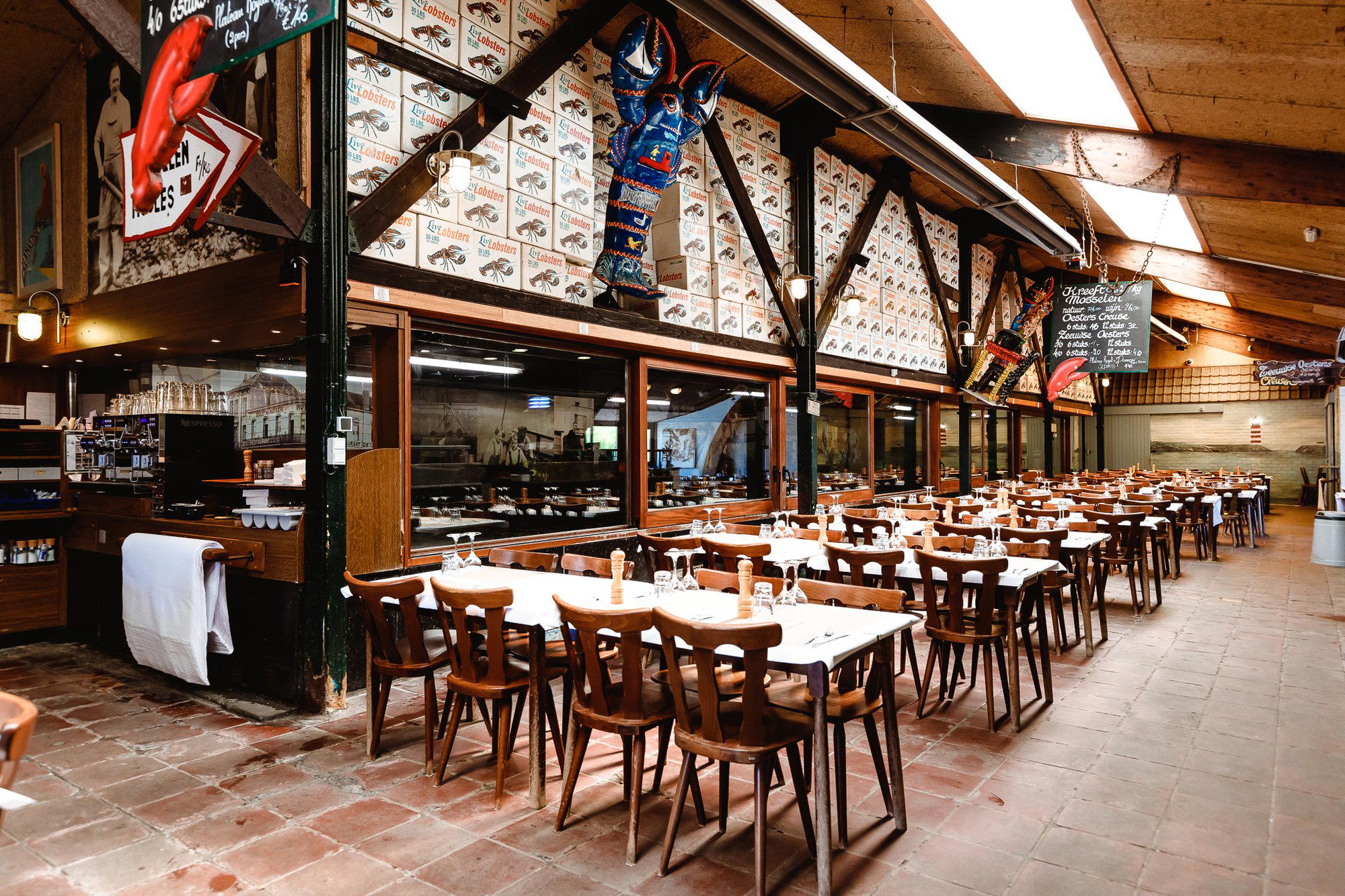
Cozy and rustic atmosphere reminiscent of seaside shacks with lively lobster tanks and a distinctive, authentic briny vibe.