
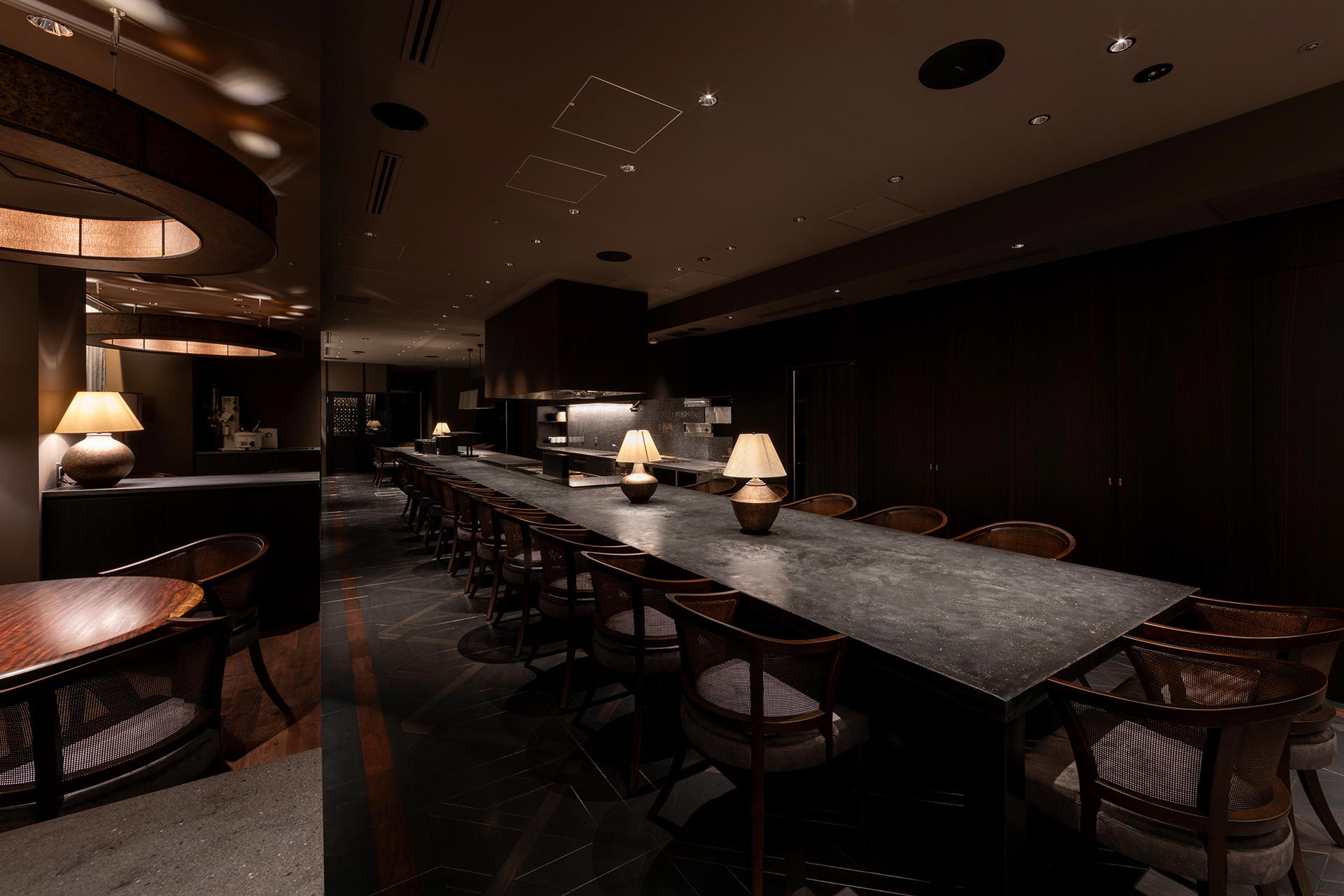
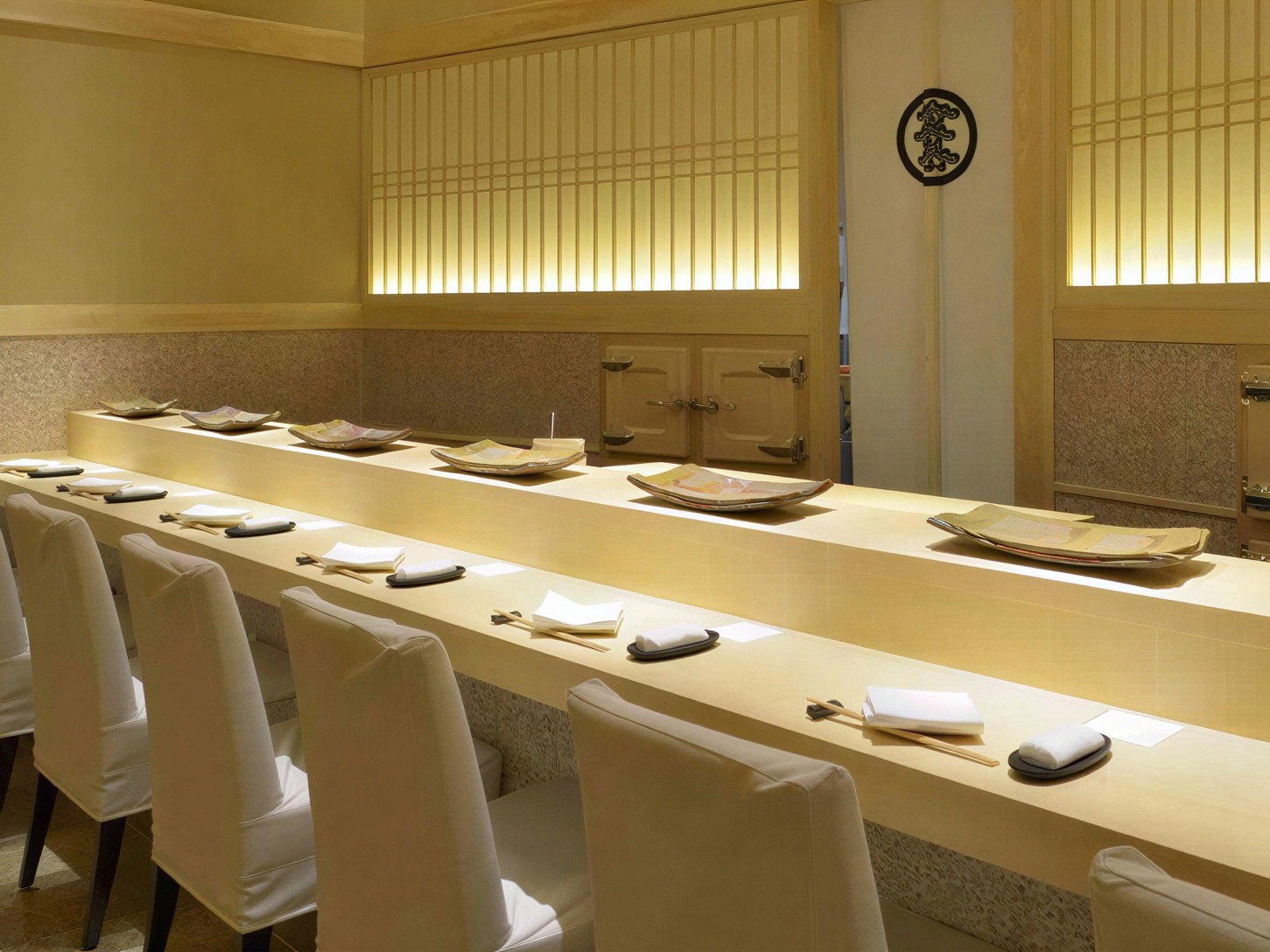
Ochiai Rou Steak House Tokyo brings the teppanyaki counter into Azabudai Hills’ polished dining orbit, with 16 counter seats and selection for Tabelog Steak・Teppanyaki EAST “Tabelog 100” 2025. The appeal is ritual rather than spectacle: a compact room, chef-facing service, wine-minded drinking, and a format built for diners who want the meal’s pacing to matter as much as the beef.
Pearl is the En Primeur Club membership app — saves, bookings, and concierge access live there. Same editors, same standards.
- Address
- 1 Chome-3-1 Azabudai, Minato City, Tokyo 106-0041, Japan
- Phone
- +81 3-6459-1603
- Website
- balconyby6th.com
 Saves & bookings on Pearl
Azabudai Hills has changed how Tokyo diners read this pocket of Minato: no longer a pass-through between Roppongi and Toranomon, but a concentrated dining district where high-rise polish meets counter-led Japanese hospitality. Here, teppanyaki carries a social code. The grill is the room’s center of gravity, turning timing, posture, heat, and conversation into part of the meal.
That frames Ochiai Rou Steak House Tokyo. With 16 counter seats, it feels closer to a chef-facing ritual than a hotel-style steakhouse dinner. Its selection for Tabelog Steak・Teppanyaki EAST “Tabelog 100” 2025 gives it a concrete place in Tokyo’s steak and teppanyaki conversation, especially for diners comparing newer Azabudai Hills addresses with longer-established city counters.
A teppanyaki counter built around ceremony, not theatre
Tokyo teppanyaki often leans two ways. One treats the iron plate as performance, with flame, gesture, and a room built to impress groups. The other is quieter and more Japanese in discipline: ingredients move across heat in sequence, service adjusts to the counter’s pace, and attention matters more than noise. Ochiai Rou Steak House Tokyo belongs to the latter camp.
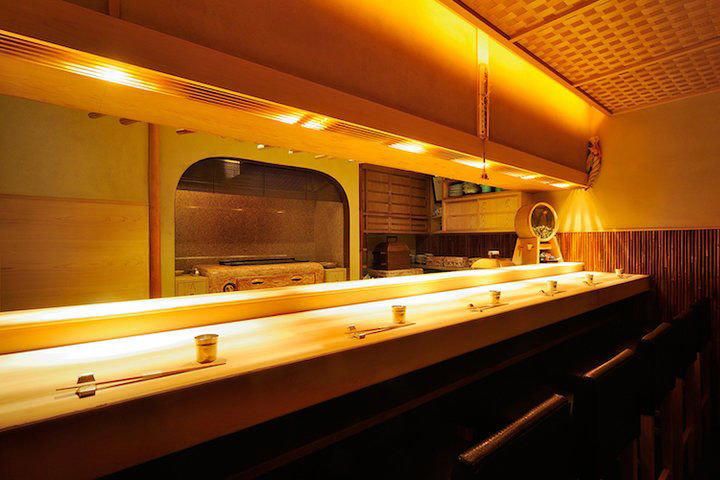
The all-counter setup matters. In Tokyo, counter dining is not just seating; it changes the contract between kitchen and guest. At sushi, tempura, yakitori, and teppanyaki counters, diners watch decisions happen in real time: when something is turned, rested, sliced, plated, or held back. That closeness rewards patience and is less forgiving of rushed conversation, late arrivals, or guests expecting a private-table steakhouse rhythm.
Within Azabudai Hills, this gives the restaurant a sharper identity. The complex also holds luxury-led dining in other registers, from yakiniku at Yoroniku Azabudai Hills to the high-priced sushi bracket of Sushi Saitou Azabudai, where the published range sits far above casual dining. Mudai occupies another expensive tier. In that context, a compact teppanyaki counter is a narrower proposition: not the development’s broadest night out, but a focused meal for guests who want beef, heat, and service choreography to carry the evening.
The drinking side supports that positioning. The restaurant lists wine, shochu, cocktails, BYO drinks, and sommelier service, signaling broader beverage expectations than a simple steak-and-red-wine template. In Tokyo, serious teppanyaki increasingly overlaps with wine culture because beef, seafood, sauces, and grilled vegetables pull a meal across several flavor registers. A sommelier cues a counter designed for diners who treat pairings and bottle choice as structural.
Azabudai Hills and the new luxury grammar of Minato dining
Azabudai Hills’ dining scene is openly ambitious. Its restaurants sit inside a development built for international residents, office traffic, destination shoppers, and Tokyo diners comfortable moving between Japanese counters and global luxury cues. The setting feels polished before the first plate arrives. That polish can flatten restaurants without a strong format; restrained teppanyaki resists it because attention keeps returning to the plate, counter, and service timing.
Ochiai Rou Steak House Tokyo opened in 2023, placing it in the area’s recent wave rather than Tokyo’s older steakhouse lineage. Established teppanyaki rooms can lean on decades of reputation; newer counters in major developments must prove they are not merely real-estate amenities. Tabelog’s 2025 Steak・Teppanyaki EAST selection is a useful trust signal, not because it ends debate, but because it shows the restaurant has entered a category where Tokyo diners compare precision, value, atmosphere, and sourcing with uncommon severity.
The counter also defines who should choose it. This is not the loose, all-ages format of casual family dining. The venue’s family policy narrows the rhythm: school-age children are welcomed at lunch when they can take the regular course, while dinner is restricted to guests aged 13 and older. Evening teppanyaki at this scale is adult-paced, not a background setting for a mixed group with different appetites.
Private rooms are not part of the equation, so social exposure is part of the experience. For some diners, that is the point. Tokyo counter culture often asks guests to trade privacy for proximity: closer sightlines, direct service, and a clearer sense of how the meal is assembled. For business meals needing confidential conversation, another format may suit better.
How to read it within a Tokyo dining itinerary
For travellers building a Tokyo restaurant schedule, the decision is not whether teppanyaki is “worth it” in the abstract, but what role it plays between sushi, yakitori, kaiseki, curry, cafés, and bars. A counter steak dinner in Azabudai Hills has a different tempo from the skewer-by-skewer rhythm at 124. KAGURAZAKA (Yakitori), the casual visual play of 2D Cafe, or the everyday specificity of 3 Chome no Curry Ya San. It sits closer to special occasion, without requiring the same mental frame as an omakase sushi counter.
It fits diners who want a controlled, chef-facing meal without the intensity of a sushi-only evening. Teppanyaki ritual is easy for first-time visitors to Japan to read: heat, doneness, service sequence, and beverage pacing remain legible even when language or menu detail is limited. Tokyo regulars will notice tighter signals: the counter-only room, sommelier layer, non-smoking policy, and absence of private rooms all push the meal toward concentration.
For wider planning, use Our full Tokyo restaurants guide to balance counter dining with casual and specialist meals, then map the rest of the trip through Our full Tokyo hotels guide, Our full Tokyo bars guide, Our full Tokyo wineries guide, and Our full Tokyo experiences guide. Nearby or alternative restaurant references across Japan and beyond can help calibrate mood rather than category: 鮪と炭火焼き うお炭 秋葉原店, 12/10 Shinjuku ten, -Grilled beef Sukiyaki- KAMAKURA TANUKIAN 鎌倉 たぬき庵 in Kamakura.cafe in Osaka.know in Kumamoto, (Shoku) Vietnam in Kawasaki, [Curry Senmon Ten] Maruyama Kyoju. in Sapporo, [ki:] in Kyoto, Jōdo Saké Bar in Los Angeles, and Onigiri Time in Pasadena.
The editorial call is simple: choose the restaurant when the appeal is the discipline of the counter itself. In a high-gloss development, its strongest argument is compactness: 16 seats, direct sightlines, and a teppanyaki ritual that feels measured rather than oversized.
Where It Fits
Comparable venues at the same tier.
| Venue | Cuisine | Price | Notes |
|---|---|---|---|
| Ochiai Rou Steak House TokyoThis venue — the venue you are viewing | Modern Wagyu Teppanyaki Steakhouse | $$$ | Not listed |
| PENTHOUSE GINZA hanare: | Steakhouse / Teppanyaki | $$$ | Chūō |
| Shunsai Steak Dokoro Raimuraito | Japanese-Style Steakhouse / Bistro | $$$ | Chiyoda |
| 青柳 | Traditional Japanese Fine Dining | $$$ | Minato |
| BENJAMIN STEAK HOUSE Roppongi | New York-style Prime Steakhouse & Seafood | $$$$ | Minato |
| Chinese Hanten Mita ten | Classic Chinese restaurant known for Peking duck | $$$ | Minato |
Recognition history
Dated appearances from independent guides and award organizations, with the underlying list record or original source where available.
Tabelog 100 #70 · No. 70
Tabelog · Tabelog 100 - Steak / Teppanyaki - EAST - 2025









At a Glance
- Elegant
- Modern
- Intimate
- Sophisticated
- Date Night
- Business Dinner
- Special Occasion
- Group Dining
- Chefs Counter
- Design Destination
- Hotel Restaurant
- Standalone
Current opening hours
- Monday
- 11 AM–2:30 PM, 5:30–10 PM
- Tuesday
- 11 AM–2:30 PM, 5:30–10 PM
- Wednesday
- 11 AM–2:30 PM, 5:30–10 PM
- Thursday
- 11 AM–2:30 PM, 5:30–10 PM
- Friday
- 11 AM–2:30 PM, 5:30–10 PM
- Saturday
- 11 AM–2:30 PM, 5:30–10 PM
- Sunday
- 11 AM–2:30 PM, 5:30–10 PM
Hours can change for holidays and private events. Last verified .
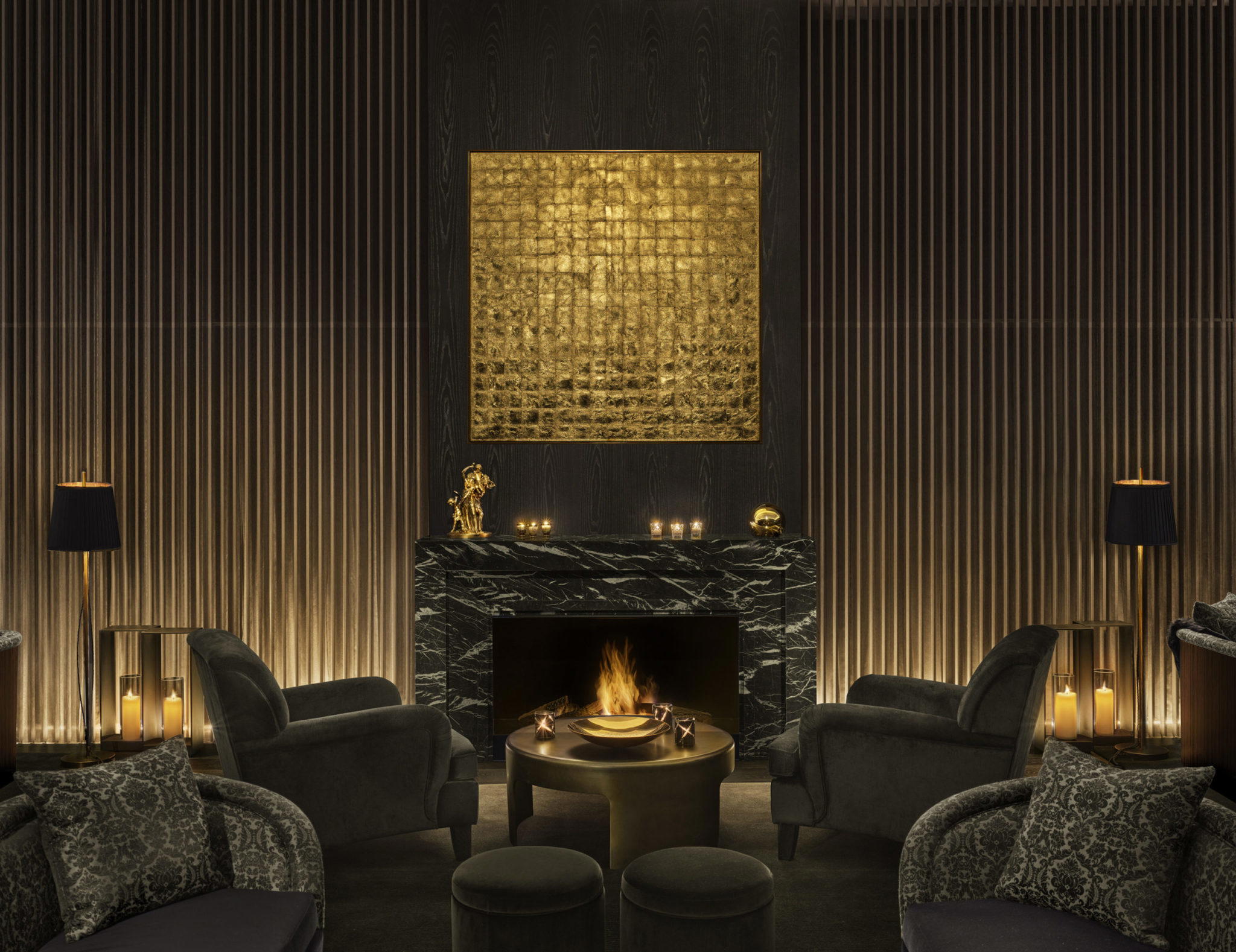
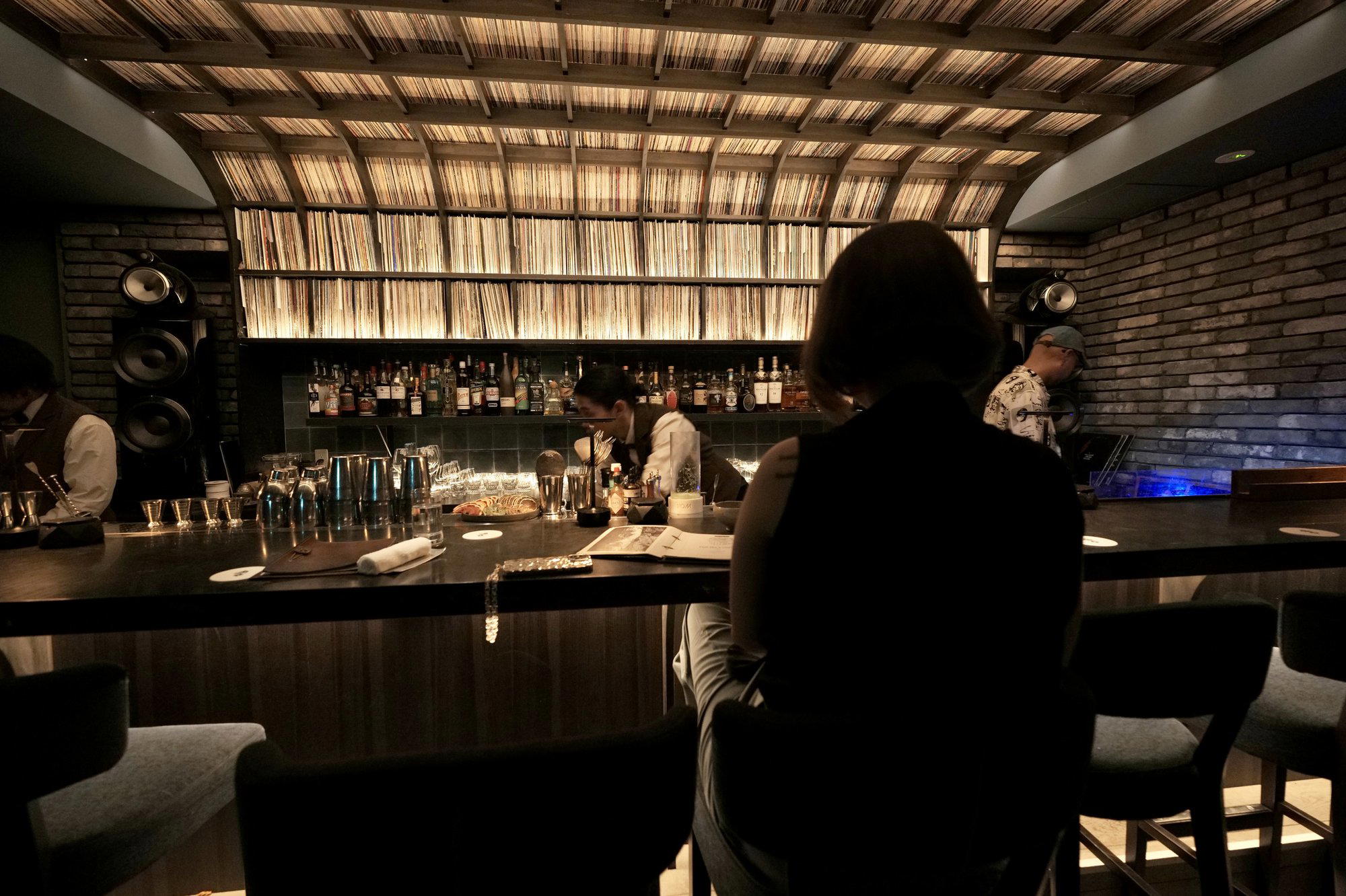
A small 16-seat counter-only room in Azabudai Hills with a refined hotel-like feel; guests describe a calm, upscale atmosphere focused on the chef’s grill performance rather than views or background noise, making it suited to relaxed, conversation-friendly dining.