OBAO at 647 9th Avenue sits in Hell's Kitchen's mid-range Southeast and East Asian dining corridor, where menu architecture tends to reveal a kitchen's actual priorities more honestly than any press narrative. The restaurant draws on Vietnamese and Thai culinary frameworks, offering a format that rewards diners willing to read the menu as a structured argument rather than a list of options.
Pearl is the En Primeur Club membership app — saves, bookings, and concierge access live there. Same editors, same standards.
- Address
- 647 9th Ave, New York, NY 10036
- Phone
- +12122458880
- Website
- obaony.com
- Directions
- Get directions
 Saves & bookings on Pearl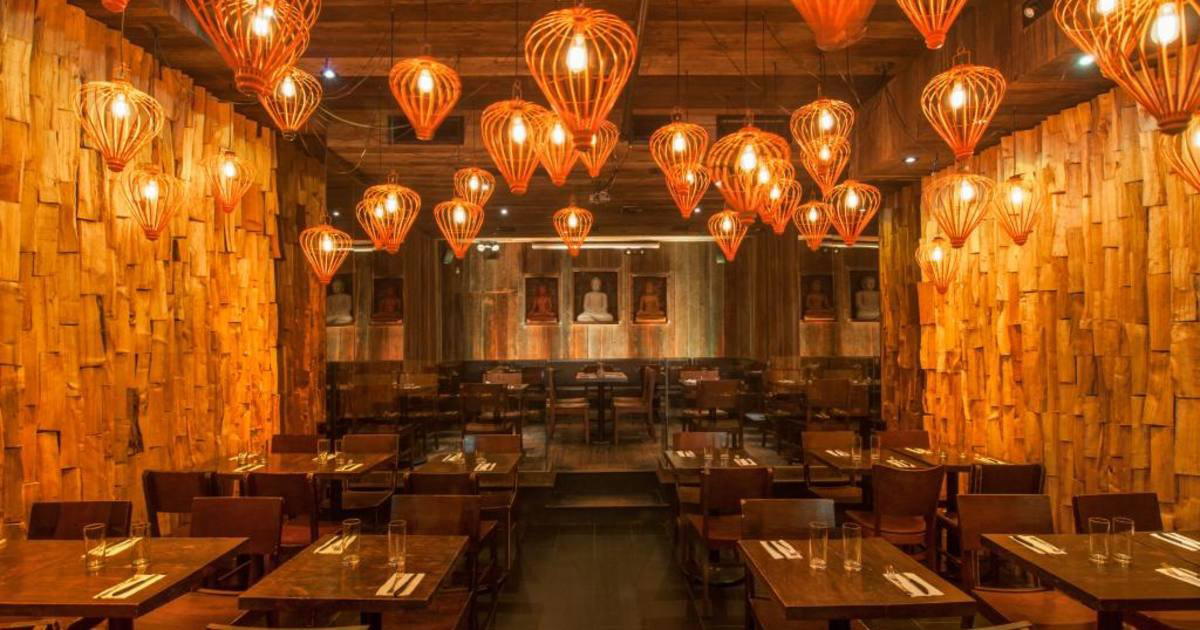
Hell's Kitchen and the Logic of the Mid-Range Asian Menu
Hell's Kitchen has long been one of Manhattan's more credible corridors for Southeast and East Asian cooking outside of Chinatown and Flushing. The stretch of 9th Avenue running through the low-to-mid 40s offers a density of Vietnamese, Thai, and pan-Asian restaurants that compete on cooking quality rather than location premium, which tends to produce leaner, more direct menus than you find in Midtown proper. OBAO at 647 9th Avenue sits inside that dynamic, occupying a mid-range price position that contrasts with venues like Le Bernardin, Masa, or Per Se, and doing so with a menu that makes a legible case for Vietnamese and Thai cooking as serious, structured cuisine rather than delivery-category food.
That positioning matters. In a city where Korean fine dining has moved decisively upmarket through places like Atomix and Jungsik New York, the mid-range Southeast Asian restaurant occupies a different kind of strategic space. It cannot compete on ceremony or tasting-menu architecture. What it can compete on is the coherence of a menu that treats its source traditions with enough seriousness.
Reading the Menu as a Structural Document
The editorial angle that matters most when assessing OBAO is how the menu is organized and what that organization suggests about the kitchen's priorities. In Southeast Asian cooking, the menu is not merely a list of dishes; it is a blueprint of regional logic. A well-constructed Vietnamese-Thai menu will tend to separate cold preparations, herb-forward dishes, and broth-based dishes into distinct registers, signaling to a knowledgeable diner that the kitchen understands balance, temperature, and the interplay of fresh and cooked elements as distinct disciplines rather than interchangeable techniques.
Where a menu collapses these categories, combining spring rolls, curries, and noodles into a single undifferentiated section, it usually signals a kitchen optimized for throughput rather than culinary argument. Where those categories are held distinct, and where the ingredient logic within each section holds internally, the menu becomes a tool for reading the kitchen's actual priorities. OBAO's presence on 9th Avenue within a block set that includes multiple competing Asian restaurants means it operates in a context where diners are often making direct comparisons, which adds further pressure on menu clarity as a competitive signal.
This is a different kind of pressure from what drives the tasting-menu tier. At Alinea in Chicago or The French Laundry in Napa, menu architecture is a form of theater, sequenced with deliberate pacing and narrative arc. At Lazy Bear in San Francisco or Single Thread Farm in Healdsburg, the menu is inseparable from sourcing philosophy. In the Hell's Kitchen mid-range, the menu is a practical argument about what a cuisine can do within real-world constraints of price, space, and neighborhood expectation.
Vietnamese and Thai Cooking in the New York Context
New York's relationship with Vietnamese and Thai cuisines has evolved considerably over time. The past decade has produced a bifurcation: on one side, casual fast-casual formats that flatten both cuisines into a small roster of crossover dishes for a lunch crowd; on the other, a smaller cohort of restaurants that treat the full range of regional variation in Vietnamese and Thai cooking as something worth preserving and presenting seriously.
The distinction shows up in menu breadth. A Vietnamese menu that lists only pho, banh mi, and a few bun dishes is signaling its audience and its ambition simultaneously. A menu that extends into southern Vietnamese preparations, Central Vietnamese complexity, or the herb and fermented condiment traditions of the northern regions is making a different claim about what the cuisine actually is. The same applies to Thai cooking, where the gap between a menu offering only pad thai and green curry and one that moves into regional preparations from Chiang Mai or the deep south represents a meaningful difference in culinary seriousness.
OBAO's Hell's Kitchen address places it in a neighborhood where that kind of seriousness is commercially viable. That audience mix creates space for a mid-range restaurant to hold a more substantive menu position than it might in a purely tourist-driven corridor.
Where OBAO Sits in the Broader American Dining Picture
Across American cities, the mid-range Asian restaurant occupies a space that often goes under-documented relative to its fine-dining counterpart. The critical attention that flows to venues like Providence in Los Angeles, Blue Hill at Stone Barns in Tarrytown, Addison in San Diego, Bacchanalia in Atlanta, or The Inn at Little Washington tends to be structured around the frameworks of French-derived fine dining: tasting menus, wine programs, white tablecloth service, starred recognition. Southeast Asian cooking at the mid-range level operates by different metrics, and critical frameworks for evaluating it are less standardized.
Internationally, the mid-range Asian restaurant has been taken more seriously for longer. The kind of precision and culinary intelligence visible at 8 1/2 Otto e Mezzo Bombana in Hong Kong or the rigor associated with institutions like Alain Ducasse at Louis XV in Monte Carlo reflects traditions of critical attention that have shaped kitchen culture over generations. In the American context, and specifically in New York, that critical scaffolding is thinner for Southeast Asian cooking, which means restaurants operating in this space often define their own terms of quality without the benefit of an established evaluative tradition. See our full New York City restaurants guide for further context on how the city's dining tiers are currently distributed.
The same tension between recognized fine dining and under-documented mid-range quality appears at venues like Emeril's in New Orleans, where Southern culinary traditions operate within a differently structured critical environment. The pattern is consistent: cuisines that developed outside the French-derived fine dining framework tend to be evaluated later and less systematically, regardless of their actual culinary depth.
Know Before You Go
Address: 647 9th Ave, New York, NY 10036
Neighborhood: Hell's Kitchen, Manhattan
Cuisine framework: Vietnamese and Thai
Price tier: Mid-range
Reservations: Recommended
Hours: Mon: 1–10:30 PM; Tue: 11:30 AM–10:30 PM; Wed: 11:30 AM–10:30 PM; Thu: 11:30 AM–10:30 PM; Fri: 11:30 AM–11:30 PM; Sat: 11:30 AM–11:30 PM; Sun: 11:30 AM–10:30 PM
Getting there: The 9th Avenue address is walkable from the Port Authority Bus Terminal and several A/C/E and 1/2/3 subway stops along 8th and 7th Avenues
The Minimal Set
Comparable venues nearby, for context on price, style, and recognition.
| Venue | Cuisine | Price | Notes |
|---|---|---|---|
| OBAOThis venue — the venue you are viewing | Hell's Kitchen, Thai-Vietnamese Fusion | $$ | Not listed |
| Pure Thai Cookhouse | Not listed | $$ | Hell's Kitchen, Authentic Thai Noodle Shophouse |
| Chim Chim | Gramercy, Thai Pastry and Desserts | $$ | Not listed |
| V{IV} | Hell's Kitchen, Modern Thai Street Food | $$ | Not listed |
| Pranna | Not listed | $$$ | Flatiron District, Southeast Asian Fusion |
| Tuk Tuk | Not listed | $$ | Long Island City-Hunters Point, Thai Street Food |
Continue exploring
More in New York City
Restaurants in New York City
Browse all →
Bars in New York City
Browse all →

Hotels in New York City
Browse all →







At a Glance
- Trendy
- Cozy
- Modern
- Casual Hangout
- Group Dining
- Date Night
- Open Kitchen
Current opening hours
- Monday
- 1–10:30 PM
- Tuesday
- 11:30 AM–10:30 PM
- Wednesday
- 11:30 AM–10:30 PM
- Thursday
- 11:30 AM–10:30 PM
- Friday
- 11:30 AM–11:30 PM
- Saturday
- 11:30 AM–11:30 PM
- Sunday
- 11:30 AM–10:30 PM
Hours can change for holidays and private events. Last verified .
Trendy and cozy atmosphere with chic, modern decor evoking Southeast Asian street energy.