Our verdict
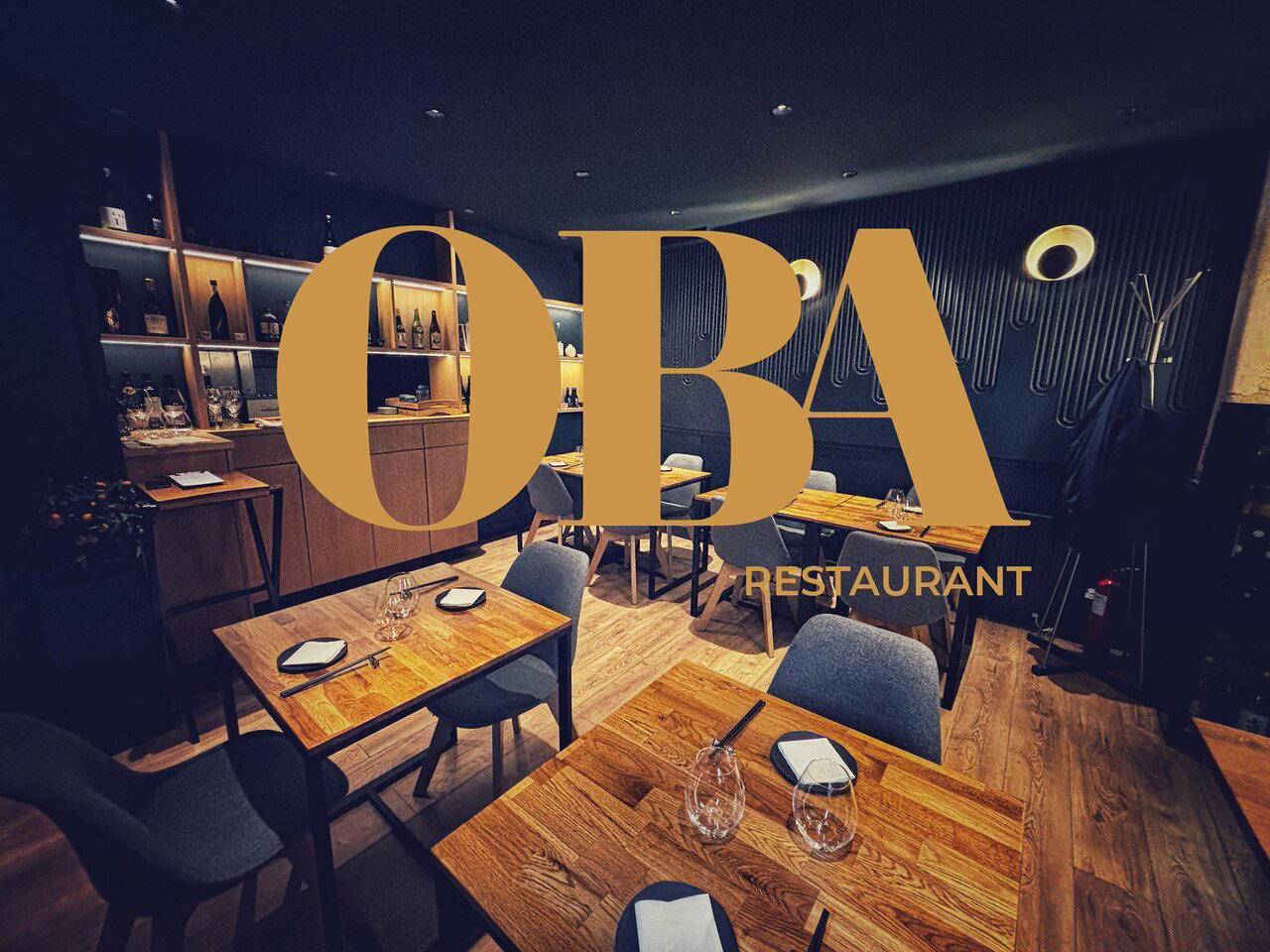
Located on Rue Emile Duployé in Bordeaux, OBA sits within a city that has spent the last decade reorienting its restaurant scene around produce provenance and regional identity. The address places it in an area where ingredient sourcing, not wine-list depth, increasingly defines a table's reputation. For Bordeaux diners tracking where that shift is happening, OBA is part of the conversation.

Pearl is the En Primeur Club membership app — saves, bookings, and concierge access live there. Same editors, same standards.
- Address
- 15 Rue Emile Duployé, 33000 Bordeaux, France
- Phone
- +33783641545
- Hours
- Mon ClosedTue–Thu 7–10 PMFri–Sat 7–10:30 PMSun Closed
- Website
- module.thefork.com
- Directions
- Get directions
- Booking
- Book on TheFork
Where Bordeaux's Sourcing Conversation Is Happening
Bordeaux built its global reputation on what goes in the glass, not what arrives on the plate. For most of the twentieth century, the city's restaurant culture functioned as supporting infrastructure for the wine trade: competent, traditional, and rarely the reason anyone booked a flight. That has changed with some speed over the past decade. A younger generation of operators has moved the editorial conversation toward the kitchen, and specifically toward the question of where ingredients come from and how transparently that story is told. OBA, at 15 Rue Emile Duployé in the 33000 postcode, sits within that shift.
The address itself is worth noting. Rue Emile Duployé runs through a part of Bordeaux that lacks the tourist-circuit density of the Quai des Chartrons or the Place de la Bourse waterfront, which tends to mean the clientele skews local. In French restaurant culture, that is generally a reliable proxy for a kitchen that earns its custom through consistency rather than location advantage. Restaurants in high-footfall zones can absorb a mediocre service year; restaurants in residential or semi-commercial streets generally cannot.
The Sourcing Question in a Wine City
The broader trend OBA represents is one playing out across France's regional capitals. Cities like Lyon, Marseille, and Strasbourg have each developed a tier of mid-to-upper restaurants whose identity is built less on classical technique signalling and more on supply-chain transparency: named farms, seasonal-only menus, and procurement relationships that chefs discuss openly. Bordeaux arrived at this movement slightly later than, say, Lyon, where the tradition of market-driven cooking runs back generations, but the city is closing that gap.
What makes the sourcing argument particularly pointed in Bordeaux is the agricultural geography surrounding the city. The Gironde department sits at the intersection of Atlantic coastline, river estuary, pine forest, and some of France's most intensively farmed wine-growing land. That means the raw material within a practical sourcing radius is genuinely varied: Arcachon Bay oysters, Pauillac lamb raised on salt-marsh grass, Périgord black truffles accessible within two hours, and estuary fish that rarely appear on menus outside the region. A kitchen that commits to drawing from that radius has access to ingredients that restaurants in Paris, however well-funded, cannot replicate at the same freshness. The question for any Bordeaux restaurant making sourcing its editorial identity is whether the procurement relationships are real or cosmetic.
This is the distinction that separates the more credible addresses in this tier from those that dress local sourcing as marketing. Across France's serious sourcing-led kitchens, from Bras in Laguiole, where the gargouillou's plant inventory is tracked obsessively, to Mirazur in Menton, where the kitchen garden operates as a direct extension of the menu, the commitment shows in format as well as vocabulary. Menus change not because the marketing calendar demands a seasonal refresh, but because a specific product has arrived or finished. That discipline is harder to sustain than it sounds.
OBA Within Bordeaux's Current Restaurant Tier
Bordeaux's restaurant market has stratified fairly clearly over the past several years. At the leading sits a handful of addresses associated with serious investment and international name recognition: Le Pressoir d'Argent under the Gordon Ramsay group and L'Observatoire du Gabriel operate in the higher bracket, with price points and formats that align them with destination dining rather than regular-use tables. Below that, a mid-tier has developed that rewards repeat visits and local knowledge more than special-occasion spending: Maison Nouvelle, L'Oiseau Bleu, and Amicis each represent distinct approaches within that band. OBA occupies this middle zone, where the competition is decided by consistency and product quality rather than room design or brand recognition.
For readers tracking the wider French restaurant scene, the sourcing-led approach at this tier has national precedents worth understanding. Flocons de Sel in Megève has made altitude-specific Alpine ingredients central to its identity. AM par Alexandre Mazzia in Marseille draws from Mediterranean produce networks with an intensity that has earned three Michelin stars. Assiette Champenoise in Reims and Au Crocodile in Strasbourg each demonstrate how regional capitals can sustain serious kitchens without defaulting to Paris-facing ambition. Even at the international level, kitchens like Le Bernardin in New York and Atomix in New York City show how ingredient sourcing, when made structurally central, defines a restaurant's long-term positioning more reliably than any single technique or format.
OBA's location at 15 Rue Emile Duployé places it within walking distance of Bordeaux's inner residential neighbourhoods, making it accessible from the city centre without requiring a taxi. For visitors using the city as a base for Médoc or Saint-Émilion day trips, it fits naturally into an evening return. The same applies to any dietary requirements: contact ahead rather than arriving with the assumption that information will be readily available at the door.
For a fuller map of where OBA sits within Bordeaux's current dining offer, our Bordeaux restaurants guide provides comparative context across price tiers and neighbourhood clusters. Readers interested in France's highest-tier sourcing-led cooking might also find it useful to read across to Troisgros in Ouches, Auberge de l'Ill in Illhaeusern, Paul Bocuse in Collonges-au-Mont-d'Or, or Alléno Paris au Pavillon Ledoyen for a sense of how the national conversation at the top tier is structured.
Frequently asked questions
Where exactly is OBA?
OBA is located at 15 Rue Emile Duployé, 33000 Bordeaux, France, Bordeaux.
Is OBA a good choice for a dinner in Bordeaux if I am more interested in the food than the wine list?
OBA is specifically positioned within Bordeaux's emerging conversation around ingredients and provenance rather than the city's established identity as a wine capital. For a diner whose priority is what arrives on the plate, OBA at 15 Rue Emile Duployé sits within the tier of Bordeaux addresses now building a reputation on sourcing credibility. That makes it a more deliberate choice in a city where most celebrated tables have historically led with the cellar.
What do people recommend at OBA?
OBA sits within Bordeaux's current wave of produce-led restaurants, where the sourcing of ingredients tends to drive what appears on the menu rather than a fixed repertoire. Regulars generally point to seasonal dishes that reflect what is arriving from local suppliers at any given time. Because the menu shifts with availability, the safest approach is to ask the team on arrival what has come in that week.
Do they take walk-ins at OBA?
OBA is located at 15 Rue Emile Duployé in Bordeaux, a city where the stronger addresses at this tier of the market tend to fill their covers in advance, particularly on Thursday through Saturday evenings. Walk-in availability depends on the day and the season. Contacting the restaurant directly before arriving without a reservation is advisable.
What is OBA known for?
OBA represents a specific shift in how Bordeaux restaurants are framing their identity, moving the emphasis away from the wine list as the primary draw and toward the sourcing and handling of ingredients. In a city historically defined by what goes in the glass, that repositioning is notable. OBA operates within a peer group of Bordeaux addresses now pushing this conversation forward at the table rather than the cellar.
How does OBA handle allergies?
No allergy or dietary accommodation policy is publicly documented for OBA. As with any restaurant operating a market-driven or frequently changing menu in Bordeaux, the most reliable approach is to communicate requirements clearly at the time of booking and to confirm again on arrival.
Should I splurge on OBA?
Pricing details for OBA are not currently published, which places it among Bordeaux restaurants that tend to communicate value through the experience itself rather than a visible price anchor. If OBA aligns with your interest in produce-focused cooking in a wine city that is only recently developing a strong food identity independent of its cellars, the case for booking is straightforward. Bordeaux's restaurant tier at this level generally runs between €50 and €120 per person before wine, though that range should be confirmed directly with the venue.
Same-City Peers
Comparable venues nearby, for context on price, style, and recognition.
| Venue | Cuisine | Price | Notes |
|---|---|---|---|
| OBAThis venue — the venue you are viewing | Japanese Izakaya with Local Twists | $50–100 | Not listed |
| PAVILLON YUASA | Authentic Japanese Kaiseki & Sushi | $50–100 | Chartrons - Grand Parc - Jardin Public |
| Demeter | Modern Global Fusion | $50–100 | Centre ville |
| Le Comptoir de Sèze | Modern French Bistronomic | $30–50 | Chartrons - Grand Parc - Jardin Public |
| Café Maritime | Modern French Brasserie | $30–50 | Bordeaux Maritime |
| Echo | Modern French-Asian Fusion | $30–50 | Centre ville |