Positioned along the Quai Armand Lalande on Bordeaux's revitalised left bank, Café Maritime occupies one of the city's most architecturally charged dining addresses. Where Bordeaux's top tables lean toward grand salon formality, this quayside setting offers a different register, one shaped by industrial heritage and river light. It sits in a competitive field that includes several of the city's most serious modern kitchens.
Pearl is the En Primeur Club membership app — saves, bookings, and concierge access live there. Same editors, same standards.
- Address
- 1 Quai Armand Lalande, 33300 Bordeaux, France
- Phone
- +33557102040
- Website
- cafemaritime.com
- Directions
- Get directions
 Saves & bookings on Pearl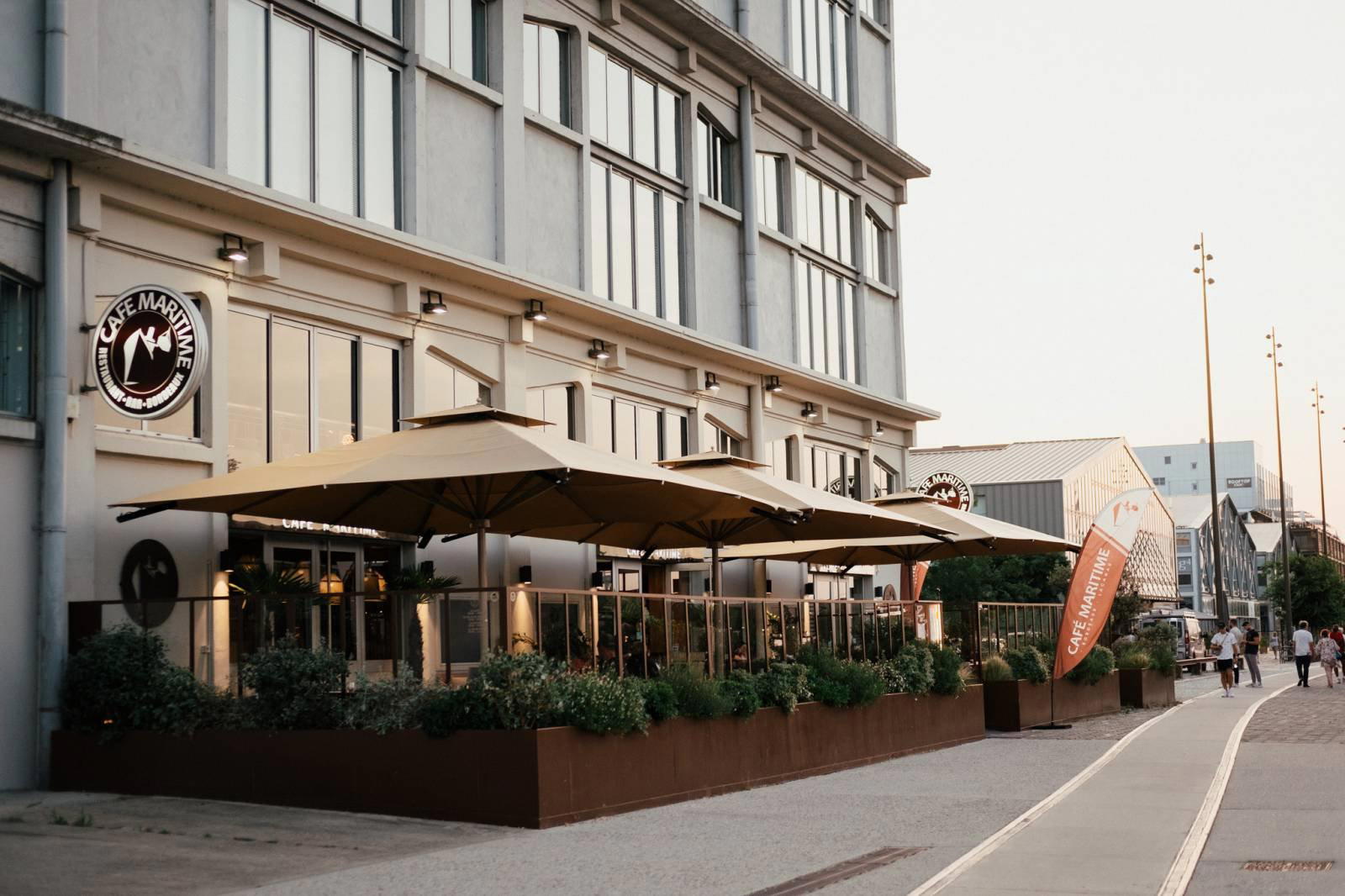
A Quayside Container, Reframed
Bordeaux's dining scene has spent the better part of two decades reorganising itself around a handful of spatial archetypes: the grand bourgeois interior, the converted wine warehouse, and the contemporary bistro fitted into a 19th-century shell. Café Maritime operates in a different register. The address, 1 Quai Armand Lalande, in the Bassins à Flot district, places it inside what was, not long ago, a working port infrastructure. The neighbourhood itself is one of Bordeaux's more deliberate urban transformations: former dockyards converted into a cultural and residential quarter, with the physical evidence of that industrial past left largely intact. Dining here is, in part, an experience of that context.
The Bassins à Flot quarter positions Café Maritime at some distance from the historic city centre, where most of Bordeaux's Michelin-recognised tables are concentrated. That distance is not a liability. It is, in the vocabulary of how cities refashion post-industrial waterfronts, the point. Venues in this kind of setting tend to draw a different kind of attention than those in the old town: less the formal anniversary-dinner crowd, more the architecturally curious and the locally embedded. How Café Maritime calibrates its offer within that spatial reality is the question that defines where it sits relative to peers like L'Observatoire du Gabriel or Maison Nouvelle, both of which operate in more central, historically freighted rooms.
What Industrial Heritage Does to a Dining Room
There is a well-established grammar for converted industrial dining spaces: exposed steel, poured concrete, retained signage, high ceilings that absorb sound rather than carry it. When the physical container is this legible as a former working building, the interior design decision is usually one of restraint, adding too much risks burying what the building itself communicates. The Quai Armand Lalande address suggests that the restaurant inherits a room with structural presence, the kind that in similar European port conversions (Lisbon's LX Factory district, Hamburg's HafenCity, Marseille's redeveloped docks) tends to shape the dining atmosphere as much as the kitchen does.
River-facing positions at this latitude bring particular light conditions: long, low afternoon light in summer, a harsher, more dramatic quality in winter months when the Garonne runs grey and full. Seasonality in a room like this is partly meteorological. Bordeaux's position at roughly 44 degrees north means the light shifts substantially between June and December, and a quayside room registers that shift more directly than a landlocked interior. For visitors planning around this, late spring and early autumn offer one readable version of the space, enough light to read the room clearly, without the flatness of high summer midday.
Where It Sits in Bordeaux's Dining Tier
Bordeaux now operates a recognisably stratified restaurant market. At the leading sit the Michelin-starred rooms: Le Pressoir d'Argent and a small cohort of similarly credentialled addresses. Below that, a broader tier of serious modern kitchens competes on technique, sourcing, and room quality. L'Oiseau Bleu and Amicis occupy different corners of that mid-to-upper tier. What the address does confirm is a deliberate choice to operate outside the historical core, which in most comparable cities signals either a destination proposition strong enough to pull diners across the city, or a neighbourhood offer anchored to the local residential and creative community that has settled in Bassins à Flot.
For context on what serious French cooking looks like at the highest registers nationally, the reference set runs from Mirazur in Menton and Alléno Paris au Pavillon Ledoyen to the long-established regional houses like Auberge de l'Ill, Bras in Laguiole, and Les Prés d'Eugénie. Bordeaux's own contribution to that national conversation has historically been weighted toward wine rather than kitchen, which makes the current generation of ambitious city-based restaurants a more recent and still-evolving story. Internationally, the waterfront dining model has produced rooms of genuine substance, Le Bernardin in New York being the frequently cited benchmark for seafood in a serious urban setting, though the comparison is one of category type rather than direct peer equivalence.
The Bassins à Flot Address, in Practice
Getting to Quai Armand Lalande from central Bordeaux involves crossing to the left bank and heading north along the river. The tram network (Line B, Gare Saint-Jean direction, then a transfer or short taxi) covers most of that distance, though the final approach to the quayside is easier on foot or by bike along the riverside path. For visitors based in the city centre, the journey is approximately 20 to 25 minutes depending on mode. Bordeaux is navigable enough that the distance should not be a deterrent, but it is worth building into plans rather than treating the address as a spontaneous addition to an evening already committed to the old town. The full Bordeaux restaurants guide covers the broader geography of where to eat across the city's different quarters.
What is consistent is the quayside location itself, which sets the restaurant apart from the majority of addresses in Bordeaux's dining map and places it alongside a small number of rooms where the building and its riverine context function as an explicit part of the offer.
How This Compares Elsewhere in France
The model of a serious dining room in a post-industrial waterfront setting has precedent across France. Flocons de Sel in Megève demonstrates how a geographically peripheral address can sustain high ambition through kitchen quality alone. Georges Blanc in Vonnas and Troisgros in Ouches have each made a destination case from non-urban settings. The principle, that place and building can carry as much weight as prestige address, is well established in French dining culture. Paul Bocuse's Auberge du Pont de Collonges and La Table du Castellet both operate from positions that would, on a map, appear marginal, and both have built sustained reputations from exactly that physical remove. Whether the restaurant operates in that tradition, or as a more locally grounded neighbourhood proposition.
A Minimal comparable set
Comparable venues nearby, for context on price, style, and recognition.
| Venue | Cuisine | Price | Notes |
|---|---|---|---|
| Café MaritimeThis venue — the venue you are viewing | Not listed | $$$ | Not listed |
| La Brasserie des Chartrons | Not listed | $$$ | Bordeaux Maritime, Traditional French Brasserie |
| Restaurant Son' | Centre ville, Modern French Fusion | $$$ | Not listed |
| Le Bordeaux | Not listed | $$$ | Centre ville, Southwestern French Brasserie |
| La Zoologie | Bordeaux Sud, Modern Bistronomic French | $$$ | Not listed |
| Breizh Café - Chartrons | Not listed | $$$ | Chartrons - Grand Parc - Jardin Public, Breton Crêperie with Japanese & Southwestern Influences |
Continue exploring
More in Bordeaux
Restaurants in Bordeaux
Browse all →
Bars in Bordeaux
Browse all →
Hotels in Bordeaux
Browse all →
At a Glance
- Elegant
- Trendy
- Sophisticated
- Modern
- Brunch
- Date Night
- Business Dinner
- Group Dining
- Celebration
- Waterfront
- Terrace
- Private Dining
- Design Destination
- Craft Cocktails
- Local Sourcing
- Waterfront
Current opening hours
- Monday
- 10 AM–2 PM
- Tuesday
- 10 AM–2 PM, 7–10 PM
- Wednesday
- 10 AM–2 PM, 7–10 PM
- Thursday
- 10 AM–2 PM, 7–10 PM
- Friday
- 10 AM–2 PM, 7–10:30 PM
- Saturday
- 10 AM–2 PM, 7–10:30 PM
- Sunday
- 11 AM–2:30 PM
Hours can change for holidays and private events. Last verified .
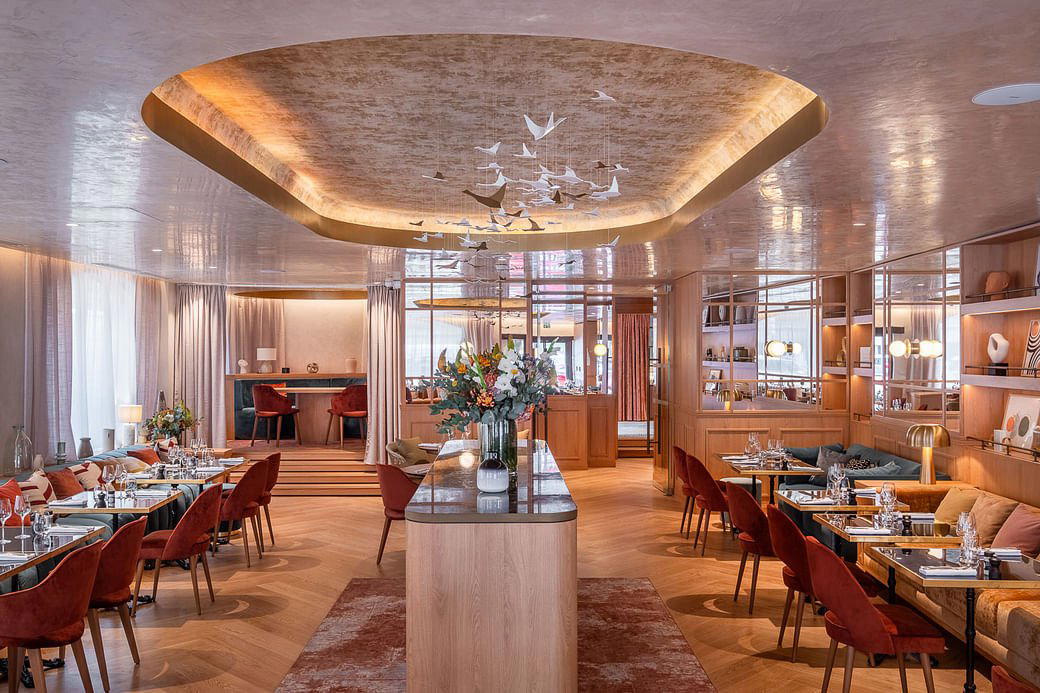
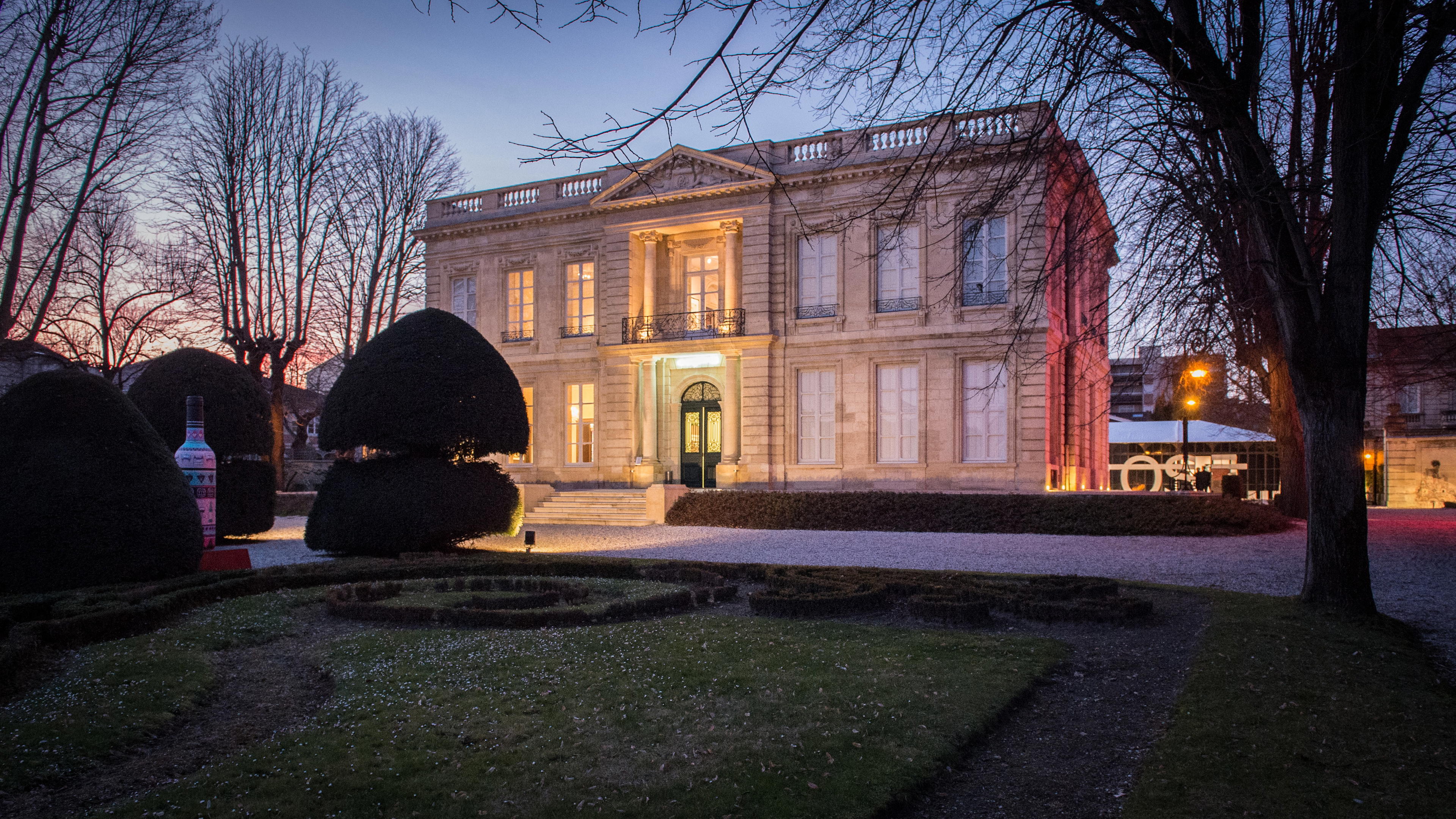
Chic loft-style interior with retro and designer elements, muted comfort, bright and cosy mezzanine areas, Indonesian-inspired bar with piano, elegant and stylish decoration throughout.