North End Fish & Sushi
On Salem Street in Boston's North End, North End Fish & Sushi sits at the intersection of the neighbourhood's Italian-American heritage and a Japanese seafood tradition that has steadily carved space across the city. The address places it steps from particularly densely trafficked food streets in New England, where the expectations around fresh fish run high and the competition is specific.
Pearl is the En Primeur Club membership app — saves, bookings, and concierge access live there. Same editors, same standards.
- Address
- 99 Salem St, Boston, MA 02113
- Phone
- +19786058994
- Website
- northendfishboston.com
- Directions
- Get directions
 Saves & bookings on Pearl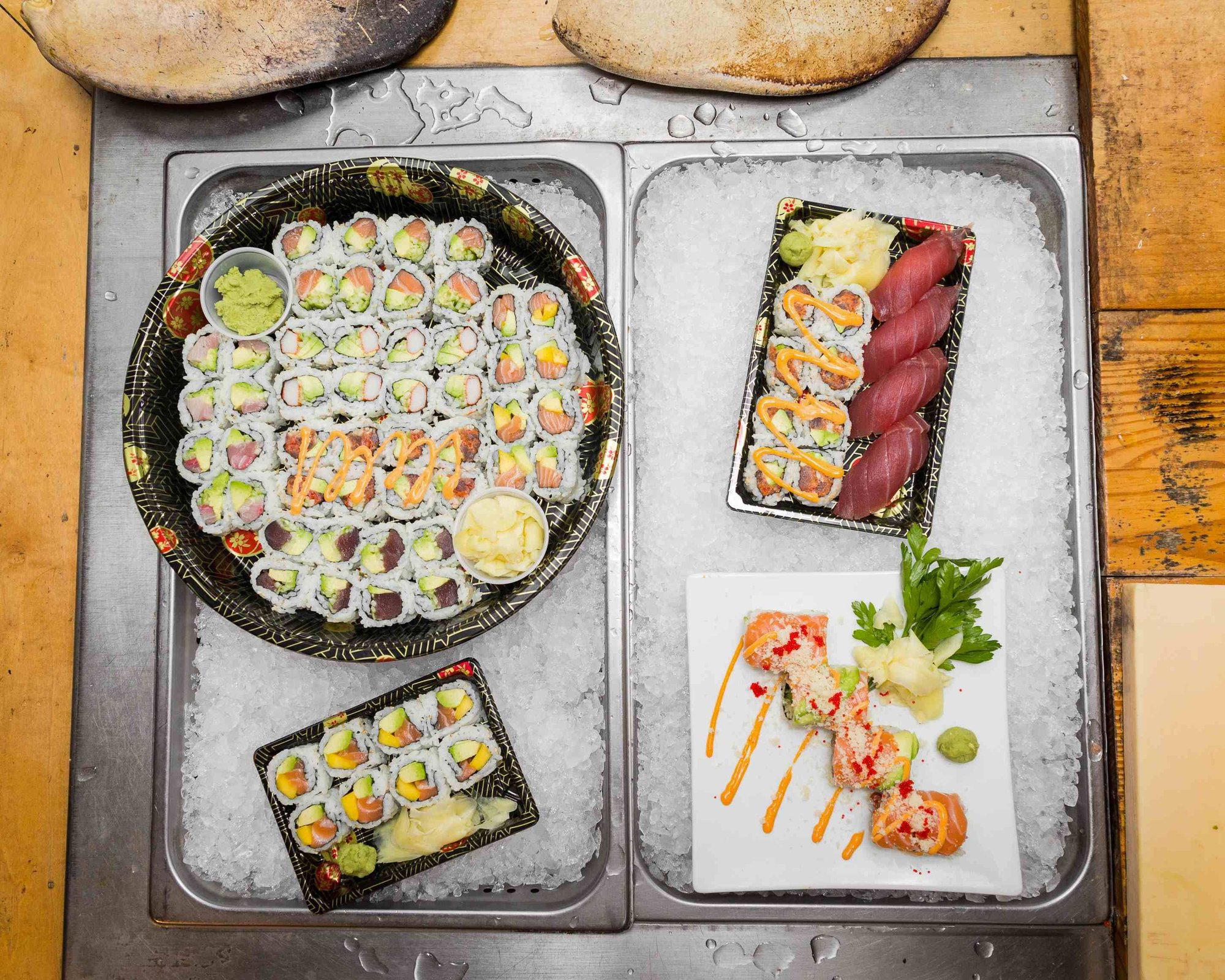
Salem Street and the Weight of Neighbourhood Expectations
Salem Street in Boston's North End carries a particular kind of pressure. This is a corridor where Italian-American food culture has set the dominant register for more than a century, where locals and visitors alike arrive with formed expectations about what a good meal should look like. Into this context, a fish and sushi operation at 99 Salem St occupies a position that requires some negotiation with its surroundings. It is a Japanese sushi and seafood restaurant, not an Italian restaurant, though it shares a block with them. It sells raw fish in a neighbourhood that respects cooked traditions. That positioning is either a liability or a point of distinction, depending on who is doing the evaluating.
The North End itself is one of the densest dining corridors in Boston, a city whose seafood identity runs as deep as any on the eastern seaboard. Atlantic cod built Massachusetts economically; lobster remains the regional shorthand for celebration; raw oysters from local bays are a daily transaction at counters across the waterfront. Sushi, in this context, is not a foreign imposition but an extension of a city already oriented toward the sea. That cultural logic has allowed Japanese seafood formats to take root in Boston more naturally than in landlocked American cities, where the fish culture had to be imported wholesale.
Boston's Seafood Registers: Where the Competition Sits
To place North End Fish & Sushi accurately, it helps to map the tier structure around it. Boston's seafood dining splits broadly into three registers. At the leading edge sits destination-level Japanese dining: 311 Omakase operates the city's most formal sushi counter, where the omakase format, multi-course sequencing, and counter-seat intimacy place it in direct conversation with what venues like Atomix in New York City have demonstrated about the ceiling for Japanese tasting formats in American cities. Below that tier sits a broader category of neighbourhood sushi, where quality varies but the format is consistent: à la carte rolls, combination plates, accessible price points, walk-in or near-walk-in availability. North End Fish & Sushi, based on its address and neighbourhood character, most likely sits in this second register.
The raw bar and casual seafood tier operates a different logic entirely. Neptune Oyster, also in the North End, has built a reputation on bivalves and the kind of focused menu that reflects the bay's seasonal rhythms. Oishii Boston has staked its claim on premium sushi sourcing. Ostra works the upscale seafood grill format. Each of these venues has a clear competitive identity. The fish-and-sushi format, combining cooked seafood plates with Japanese-style raw preparations, appeals to a broader audience by refusing to commit entirely to either tradition, which has commercial advantages but can complicate the editorial verdict.
Outside Boston, the conversation about serious fish-forward dining runs through venues like Le Bernardin in New York City, where the French technique applied to seafood has set a benchmark that few American restaurants approach, and Providence in Los Angeles, which has built a sustained case for West Coast seafood at the fine dining level. These are not direct competitors to a Salem Street neighbourhood spot, but they anchor the upper end of a category that rewards specificity and sourcing transparency.
The Cultural Logic of Fish and Sushi Together
The pairing of a fish restaurant with a sushi menu is a distinctly American format, one that emerged from practical commercial reasoning rather than culinary tradition. In Japan, sushi-ya and izakaya occupy separate registers with different service cultures, different price structures, and different expectations around what the meal is for. American diners, accustomed to broader menus and longer tables, pushed Japanese restaurant operators toward combination formats that could satisfy a group with divergent preferences. The result is a hybrid model that works commercially even when it creates tension culinarily.
This tension is not necessarily a flaw. At its leading, the fish-and-sushi format allows a kitchen to demonstrate range across two preparation traditions that share a single sourcing requirement: the fish has to be good. That shared dependency is a useful quality filter. A kitchen that sources well for its sushi counter will have better raw material for its cooked preparations, and vice versa. The format rewards kitchens that prioritise the supply chain over menu breadth for its own sake.
Boston's access to North Atlantic seafood remains one of the city's structural advantages in this category. Gloucester fishing boats, local oyster beds, and established wholesale relationships with New England ports mean that a kitchen on Salem Street has direct access to product that restaurants in Chicago or Denver would need to fly in. The geography matters in seafood more than in almost any other category, and the North End's proximity to the waterfront is a functional asset, not just a marketing footnote.
Reading the North End as a Dining Neighbourhood
The North End rewards the kind of visitor who is willing to treat the neighbourhood as a destination rather than a single-stop errand. The streets between Hanover and Salem contain a density of food options, from Sicilian-style pastry at Caffe Vittoria to the kind of red-sauce trattorias that have sustained multi-generational family businesses. Into this environment, a fish and sushi restaurant serves a specific function: it provides an alternative to the Italian register for visitors or locals who are eating multiple meals in the neighbourhood over multiple days.
For those building a broader Boston itinerary, the North End pairs naturally with the waterfront, where 1928 Rowes Wharf and 75 on Liberty Wharf operate in a different register, more formal and with harbour views. Further afield, Agosto handles Portuguese-inspired tasting menus at a chef's counter format, and Abe & Louie's anchors the steakhouse tier.
Nationally, the conversation around seafood-led dining continues to evolve. The farm-to-table frameworks developed by places like Blue Hill at Stone Barns in Tarrytown and the ingredient-driven precision of Single Thread Farm in Healdsburg have raised expectations around sourcing transparency that now filter down to every tier of dining. A neighbourhood fish restaurant in 2024 is operating in a context where diners are more likely to ask where the tuna came from than they were fifteen years ago. That shift benefits operations that take sourcing seriously, regardless of their price point or ambition level.
Credentials Lens
Comparable venues nearby, for context on price, style, and recognition.
| Venue | Cuisine | Price | Notes |
|---|---|---|---|
| North End Fish & SushiThis venue — the venue you are viewing | Japanese Sushi & Seafood | $$ | Not listed |
| Basho Japanese Brasserie | Modern Japanese Izakaya Brasserie | $$$ | West Fens |
| Ama | Global Nepalese-Inspired Fusion | $$ | Allston |
| Trattoria Il Panino | Classic Italian Trattoria | $$ | North End |
| Irashai Sushi | Authentic Japanese Sushi | $$ | Chinatown |
| Zuma Boston | Modern Japanese Izakaya | $$$$ | Prudential |
Continue exploring
More in Boston
Restaurants in Boston
Browse all →
Bars in Boston
Browse all →
Hotels in Boston
Browse all →
Wineries in Boston
Browse all →
At a Glance
- Cozy
- Casual Hangout
- Family
Current opening hours
- Monday
- 11 AM–9:20 PM
- Tuesday
- 11 AM–9:20 PM
- Wednesday
- 11 AM–9:20 PM
- Thursday
- 11 AM–9:20 PM
- Friday
- 11 AM–9:20 PM
- Saturday
- 11 AM–9:20 PM
- Sunday
- 11 AM–9:20 PM
Hours can change for holidays and private events. Last verified .
Warm and friendly takeout-focused environment.