Our verdict
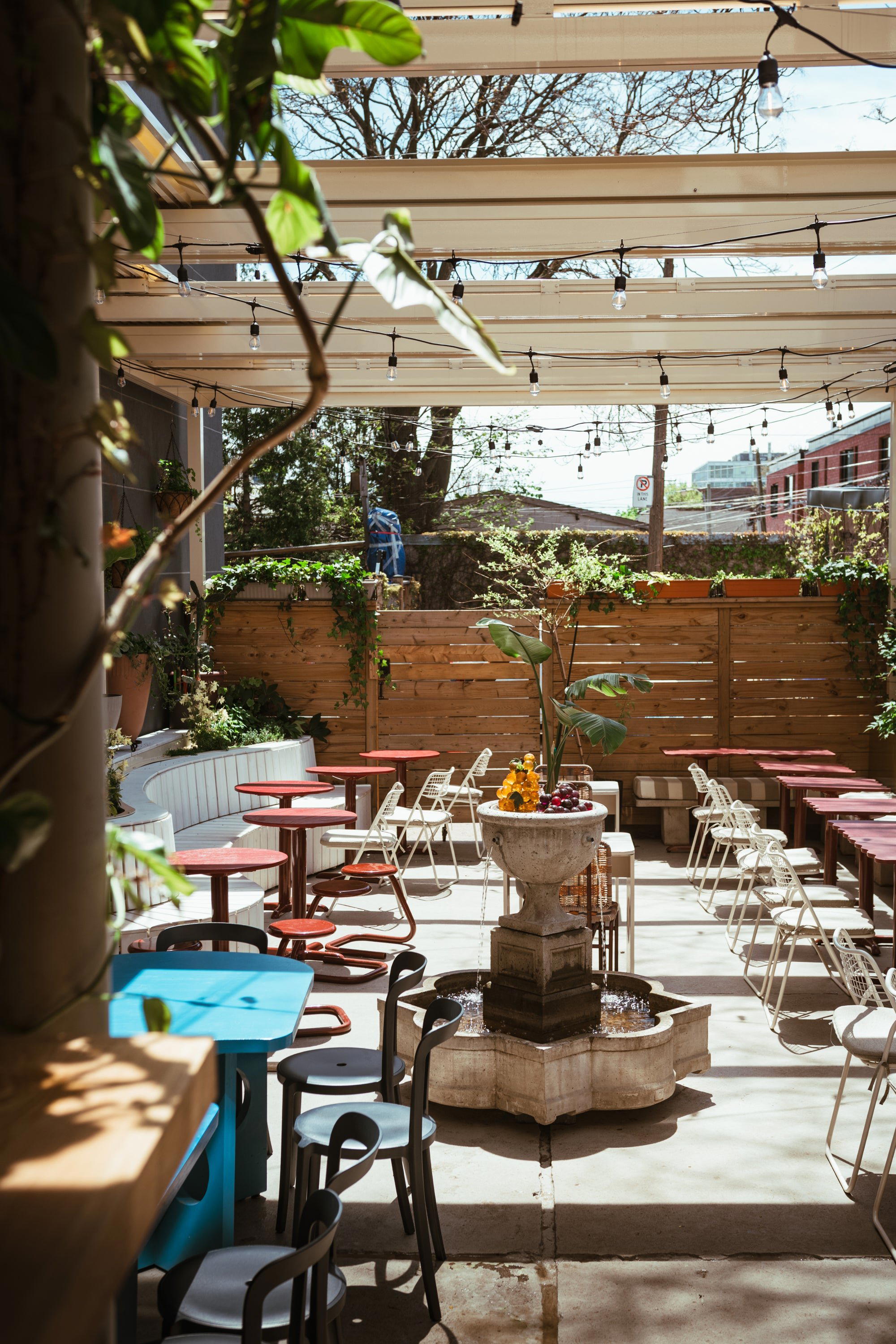
"Nonna’s Place, Wallace Emerson by Underline Studio. Always friendly and welcoming. Nonna’s Place is a family-owned restaurant serving fresh homemade Italian sandwiches, pasta and more. Big portions and reasonable prices. The most popular menu is veal sandwich, but we highly recommend trying all other sandwiches as well (especially the eggplant sandwich!!). Don’t forget to add extra toppings. No washrooms."

The menu
What to order
- Veal parm sandwich
- Chicken parm sandwich
- Eggplant sandwich
Bloor West, Comfort, and the Architecture of a Neighbourhood Table
Bloor Street West, between Lansdowne and Runnymede, has long operated as one of Toronto's more honest dining corridors. It is a stretch that rewards repetition over occasion, where regulars accumulate over years rather than evenings, and where the measure of a restaurant is less the opening-night crowd than the Tuesday-at-7pm crowd. Nonna's Place, at 1419 Bloor St W, sits inside that tradition. The address places it in the Bloor West Village fringe, a pocket of the city where Italian-Canadian identity has threaded through the food culture for decades, and where the word "nonna" carries genuine weight rather than branding shorthand.
The name itself is an editorial statement about menu architecture. A restaurant that opens with a grandmother reference is declaring something about what will and will not appear on the plate. It is signalling restraint over spectacle, memory over innovation, and proportion over architecture. Whether the kitchen delivers on that promise is the more interesting question, but the framing alone separates it from the $$$$-tier Italian operations elsewhere in the city, where the reference points are more likely Piedmont than Puglia, and more likely technique than tradition.
What the Menu Structure Reveals
The Italian-Canadian dining tradition in Toronto occupies a spectrum that runs from the red-sauce neighbourhood trattoria through to the contemporary Italian fine-dining tier represented by venues like DaNico and Don Alfonso 1890, both of which operate at the $$$$ price point and draw on European technique and sourcing as primary signals of quality. Nonna's Place operates outside that register deliberately. A name built around the domestic Italian kitchen implies a menu that organises itself around dishes with origins in home cooking rather than professional tasting-menu logic.
That distinction matters structurally. Home-cooking-derived menus tend to favour depth over breadth within categories: fewer proteins, more pasta variants, sauce traditions built on time rather than complexity of ingredient. The portion of the menu given over to pasta, and whether those preparations reflect specific regional Italian-Canadian lineage or a more generic comfort-food approach, tells you more about a kitchen's ambitions than any single signature dish. In the Italian-Canadian tradition specifically, the sauce-to-pasta ratio and the presence of long-cooked ragus or braised cuts signal whether the kitchen is oriented toward speed or patience. Patience is the harder signal to sustain in a neighbourhood format.
Toronto's Italian-Canadian food culture also carries its own distinct genealogy, separate from both Italian-American traditions in New York and more recent Italian restaurant openings in cities like Vancouver. The community roots in the city's west end and in areas like Corso Italia have produced a local grammar of dishes and presentations that diverges from both the trattoria model and the fine-dining reimagining. A restaurant named and positioned the way Nonna's Place is enters into dialogue with that local grammar, and the degree to which it respects or departs from it is what gives the menu its actual critical interest.
Where It Sits in Toronto's Dining Range
The broader Toronto restaurant scene has stratified sharply in recent years. At the upper tier, venues like Alo (Contemporary), Sushi Masaki Saito, and Aburi Hana anchor a price tier that demands advance booking and operates on omakase or prix-fixe logic. Nonna's Place reads as a counter-proposal to that tier, the kind of place where the value proposition is familiarity and repetition rather than a single curated occasion. That is not a lower standard; it is a different standard, and the city needs both ends of the range to function as a serious dining destination.
The Bloor West location also positions it relative to a specific residential dining culture rather than the destination-dining zones of the Entertainment District or King West. Neighbourhood restaurants in this part of the city face a particular competitive dynamic: they serve the same people repeatedly, which means that consistency and hospitality carry more weight than novelty. A dish that works once needs to work on the twentieth visit. That is a harder test than the tasting-menu format, where the guest is new each time and the room itself carries part of the experience.
For comparison across Canada's broader dining scene, the neighbourhood-rooted model appears at different scales at places like AnnaLena in Vancouver and Cafe Brio in Victoria, both of which have built sustained local followings over years rather than press cycles. The contrast with destination-format venues like Eigensinn Farm in Singhampton or Fogo Island Inn Dining Room in Joe Batt's Arm is instructive: those venues ask the guest to travel to the food. Nonna's Place asks the food to travel to the guest, in the sense that it must integrate itself into the rhythms of a neighbourhood rather than set its own terms. At an international reference level, the contrast is even sharper against rooms like Le Bernardin in New York City or Lazy Bear in San Francisco, which operate on the logic of the controlled, curated occasion.
The EP Club guide to Toronto restaurants covers the full range of the city's dining tiers, from the neighbourhood format through to the tasting-menu upper bracket. Within Ontario, the editorial context extends to venues like Restaurant Pearl Morissette in Lincoln and The Pine in Creemore, which approach the relationship between place and table from a rural and hyper-local angle. In Quebec, Tanière³ in Quebec City and Jérôme Ferrer - Europea in Montreal represent the fine-dining pole. Narval in Rimouski and Busters Barbeque in Kenora extend the range into regional formats with distinct local identities.
Know Before You Go
Address: 1419 Bloor St W, Toronto, ON M6P 3L4
Neighbourhood: Bloor West Village fringe, west-end Toronto
Reservations: Booking method not confirmed; direct contact recommended
Hours: Not confirmed; verify before visiting
Frequently asked questions
Is Nonna's Place okay with children?
The Bloor Street West address and Italian-Canadian comfort food format at Nonna's Place both point toward a family-friendly dining context. Neighbourhood tables of this type in Toronto's west end typically accommodate children without issue. Confirming specifics like high chairs or early-evening quieter hours is worth a call ahead, as hours and policies are not publicly listed for this location.
How would you describe the vibe at Nonna's Place?
Nonna's Place sits on Bloor Street West, one of Toronto's more unpretentious dining corridors, which sets the tone before you walk in. The Italian-Canadian format, rooted in the neighbourhood trattoria tradition, tends toward warm, lived-in rooms where regulars outweigh first-timers. Expect something closer to a family kitchen than a dining room with design ambitions.
How does Nonna's Place fit into Toronto's Italian-Canadian dining tradition?
Toronto's Italian-Canadian restaurant culture runs deep, particularly along the west end corridors where immigrant communities shaped the city's food identity across decades. Nonna's Place on Bloor Street West operates within that lineage, a neighbourhood address rather than a destination-dining concept, which in Toronto's currently stratified restaurant scene carries its own kind of credibility. It occupies the comfort end of a spectrum that stretches up to the high-design contemporary Italian rooms now common in the downtown core.
What's the best thing to order at Nonna's Place?
The Italian-Canadian tradition this style of Toronto restaurant draws from leans heavily on house-made pasta, braised proteins, and red-sauce foundations. Asking staff what came in fresh that day is consistently the most reliable move at a place like this.
Where exactly is Nonna's Place?
Nonna's Place is located at 1419 Bloor St W, Toronto, ON M6P 3L4, Canada, Toronto.
Do they take walk-ins at Nonna's Place?
No booking policy is publicly listed for Nonna's Place at 1419 Bloor St W. Neighbourhood-format Italian-Canadian restaurants in Toronto at this scale often hold some seats for walk-ins, particularly early in the week or before peak dinner hours. Arriving before 6 PM on a weeknight gives you the best chance if you haven't called ahead.
Fast Comparison
| Venue | Cuisine | Price | Awards | Notes |
|---|---|---|---|---|
| Nonna's PlaceThis venue (the venue you are viewing) | Homemade Italian Sandwiches | Not listed | Not listed | Not listed |
| Alo | Modern French Fine Dining with Asian Influences | $200–300 | 1 Michelin Star · La Liste Top Restaurants | Contemporary |
| Sushi Masaki Saito | Edomae-Style Omakase | $500+ | 1 Michelin Star · La Liste Top Restaurants | Sushi, Japanese |
| Aburi Hana | Modern Japanese Kyō-Kaiseki | $300–500 | 1 Michelin Star · The Best Chef One Knife | Kaiseki, Japanese |
| Don Alfonso 1890 | Modern Italian Fine Dining | $200–300 | 1 Michelin Star · La Liste Top Restaurants | Contemporary Italian, Italian |
| Edulis | Mediterranean Seafood Tasting Menu | $150–200 | 1 Michelin Star · World's 50 Best #25 | Canadian, Mediterranean Cuisine |