On Ossington Avenue, Pizzeria Libretto has spent years anchoring the neighbourhood's case for serious Neapolitan pizza in Toronto. Its wood-fired approach, commitment to quality sourcing, and direct menu have made it a reference point in the city's Italian dining conversation, accessible in format, considered in execution, and consistent across a scene that rewards both.
Pearl is the En Primeur Club membership app — saves, bookings, and concierge access live there. Same editors, same standards.
- Address
- 221 Ossington Ave, Toronto, ON M6J 2Z8, Canada
- Phone
- +1 416 532 8000
- Website
- pizzerialibretto.com
- Directions
- Get directions
 Saves & bookings on Pearl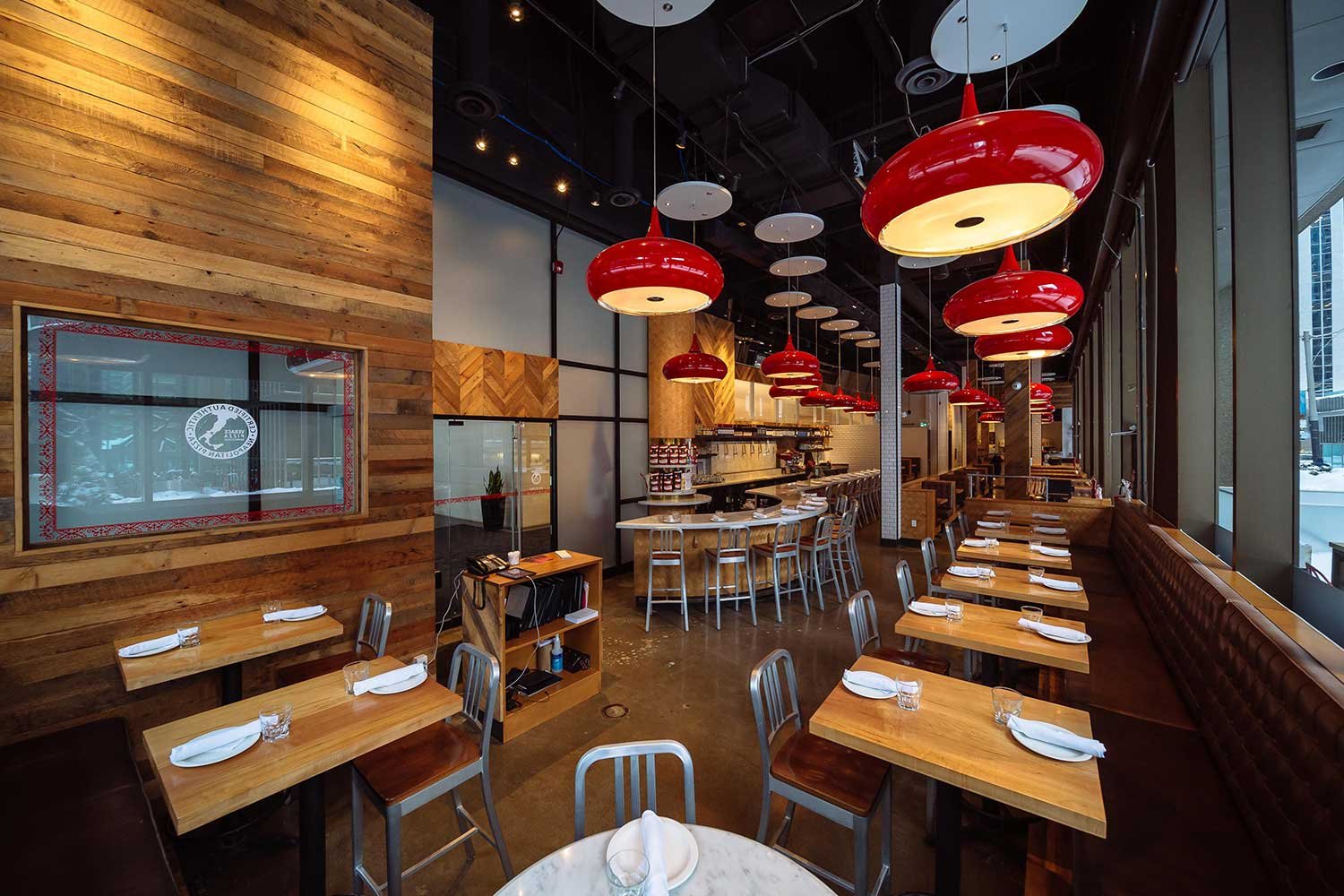
Ossington and the Case for Neapolitan Standards
Walk west on Ossington Avenue on any given evening and the neighbourhood reads like a compressed study in how Toronto's mid-market dining scene matured. The strip between Dundas and Queen pulled in serious operators at a moment when the city's food culture was shaking off its conservative habits, and what settled here was a mix of conviction and accessibility that still defines the street. Pizzeria Libretto, at 221 Ossington, is a casual Neapolitan pizzeria with a recommended reservation policy and a price tier of about US$25 per person.
Neapolitan pizza as a category has a specific technical standard: dough fermented for a defined period, San Marzano tomatoes, fior di latte or buffalo mozzarella, and a wood-fired oven running at temperatures that produce char and leopard spotting on the cornicione in under two minutes. That standard is relatively easy to describe and considerably harder to maintain at volume across multiple service cycles. Libretto built its reputation on consistency with that method, and in a city where Neapolitan credentials are frequently invoked loosely, that discipline matters.
Sourcing as a Structural Commitment
In the Italian pizza context specifically, that conversation centres on ingredient provenance: where flour comes from, how tomatoes are grown and processed, whether dairy suppliers operate at a scale that allows for traceability. These are not aesthetic questions, they affect fermentation behaviour and flavour outcome.
Pizzeria Libretto's approach to sourcing sits within a broader trend among independent operators in Toronto who have moved toward more deliberate supplier relationships. This is not distinctive to pizza, you see the same pattern at the summit end of the city's Italian dining scene, including at DaNico and Don Alfonso 1890. At a lower price tier, Libretto occupies a different position in that conversation: the question is whether a neighbourhood-facing operation can maintain that sourcing rigour.
Waste reduction in a pizza operation is a less glamorous but equally relevant piece of the sustainability picture. Dough management, topping prep, and flour usage all generate significant waste if scheduling is loose. Operations that take fermentation schedules seriously tend, by necessity, to develop tighter prep discipline, you cannot over-produce naturally fermented dough the way you can with commercial-yeast product, because the timing window is narrower. That operational constraint, in this context, doubles as an environmental one.
Where Libretto Sits in the Toronto Italian Picture
Toronto's Italian dining scene spans a wider range than most cities of comparable size. At the leading, rooms like Don Alfonso 1890 and DaNico operate at a register closer to contemporary fine dining than to trattoria tradition. At the neighbourhood level, Libretto holds a different position: accessible price point, walk-in culture with some reservation capacity, and a menu that does not try to be anything other than what it is. That clarity of purpose is increasingly rare in a market that often conflates ambition with format complexity.
The comparison set for Libretto is not Alo or Sushi Masaki Saito or Aburi Hana. Libretto's comparable set is the serious casual Italian operator: places where the kitchen has a point of view, the ingredients are chosen rather than defaulted to, and the check does not require advance financial planning. Within that tier, the Ossington location remains one of the more coherent examples in the city.
For those building a picture of Canada's broader ingredient-led restaurant culture, it is worth noting the regional contrast. Properties like Restaurant Pearl Morissette in Lincoln and Eigensinn Farm in Singhampton have made farm-to-table provenance a defining structural feature at the high end. Fogo Island Inn Dining Room in Joe Batt's Arm anchors its entire identity in hyper-local sourcing at the extreme end of that spectrum. Tanière³ in Quebec City has built a comparable case in a fine-dining register. What Libretto represents is a more democratic version of the same instinct: ingredient discipline applied at a format and price point that the majority of diners in a given neighbourhood can access on a Tuesday.
Across the country, the same pattern recurs at different scales: AnnaLena in Vancouver, Cafe Brio in Victoria, and Jérôme Ferrer - Europea in Montréal each demonstrate how sourcing integrity and neighbourhood-scale accessibility can coexist when operators are willing to make the operational trade-offs that commitment requires. Internationally, that conversation is ongoing at places like Le Bernardin in New York City and Lazy Bear in San Francisco, where sourcing is explicitly part of the editorial identity of the restaurant. Narval in Rimouski and Busters Barbeque in Kenora show that the sourcing conversation is not limited to urban centres or formal dining formats.
The Seasonal Argument for Wood-Fired Pizza
There is a seasonal logic to Neapolitan pizza that rarely gets discussed in the context of sustainability, but it is worth raising. A wood-fired oven that operates at temperature for the duration of service is most efficient when it is running consistently full. That is a summer and autumn argument in Toronto, where patio culture and neighbourhood foot traffic on Ossington support the kind of steady throughput that makes high-temperature wood-fire operations efficient. In the colder months, the same oven becomes a more energy-intensive proposition per cover. Operators who understand this dynamic tend to adjust their prep and service cadence accordingly, which is one reason why serious Neapolitan operations often extend the menu in winter rather than reducing kitchen activity.
Spring and early summer, when Ontario produce begins to move and supplier relationships can be refreshed with new-season ingredients, is the strongest moment to engage with what Libretto does at its most considered. The dough quality does not change with the season, but the topping options reflect availability, and a kitchen that sources deliberately will show that most clearly when local supply is at its most varied.
Nearby-ish Comparables
Comparable venues nearby, for context on price, style, and recognition.
| Venue | Cuisine | Price | Notes |
|---|---|---|---|
| Pizzeria LibrettoThis venue — the venue you are viewing | Authentic Neapolitan Pizza | $$ | Not listed |
| Uncle Tony's | Authentic Italian Pasta & Pizza | $$ | Church-Yonge Corridor |
| Blondies Pizza | Gourmet Pizza | $$ | Cabbagetown |
| Pizzeria Via Mercanti | Authentic Neapolitan Pizza | $$ | Kensington |
| La Bruschetta | Authentic Umbrian Italian | $$ | Earlscourt |
| La Bettola Di Terroni | Traditional Southern Italian Osteria | $$ | Garden District |
Continue exploring
More in Toronto
Restaurants in Toronto
Browse all →



Bars in Toronto
Browse all →

Hotels in Toronto
Browse all →





At a Glance
- Cozy
- Trendy
- Lively
- Casual Hangout
- Date Night
- Group Dining
- Open Kitchen
- Extensive Wine List
- Craft Cocktails
- Beer Program
- Local Sourcing
Current opening hours
- Monday
- Closed
- Tuesday
- Closed
- Wednesday
- 4 PM–1 AM
- Thursday
- 4 PM–1 AM
- Friday
- 4 PM–1 AM
- Saturday
- 4 PM–1 AM
- Sunday
- Closed
Hours can change for holidays and private events. Last verified .
Warm and inviting with ornate design details like rich leathers and Italian subway tiles, featuring a chill vibe enhanced by delicious smells and funky music.