
Michelin Plate
Our verdict
Nishideria, on the second floor of a building near Tenmabashi in Osaka's Chuo Ward, practices what it calls 'Naniwa Italian': Italian technique applied to Kansai-region ingredients and sensibilities. The menu is built around direct relationships with local farmers and a culinary logic that treats Italian cooking as a framework for expressing Osaka's produce rather than replicating the original. The 'Zeppole alla Osacano', a Neapolitan fried dough crossed with takoyaki, is the clearest statement of that intent.

Pearl is the En Primeur Club membership app, where members save venues, book tables and use the concierge.
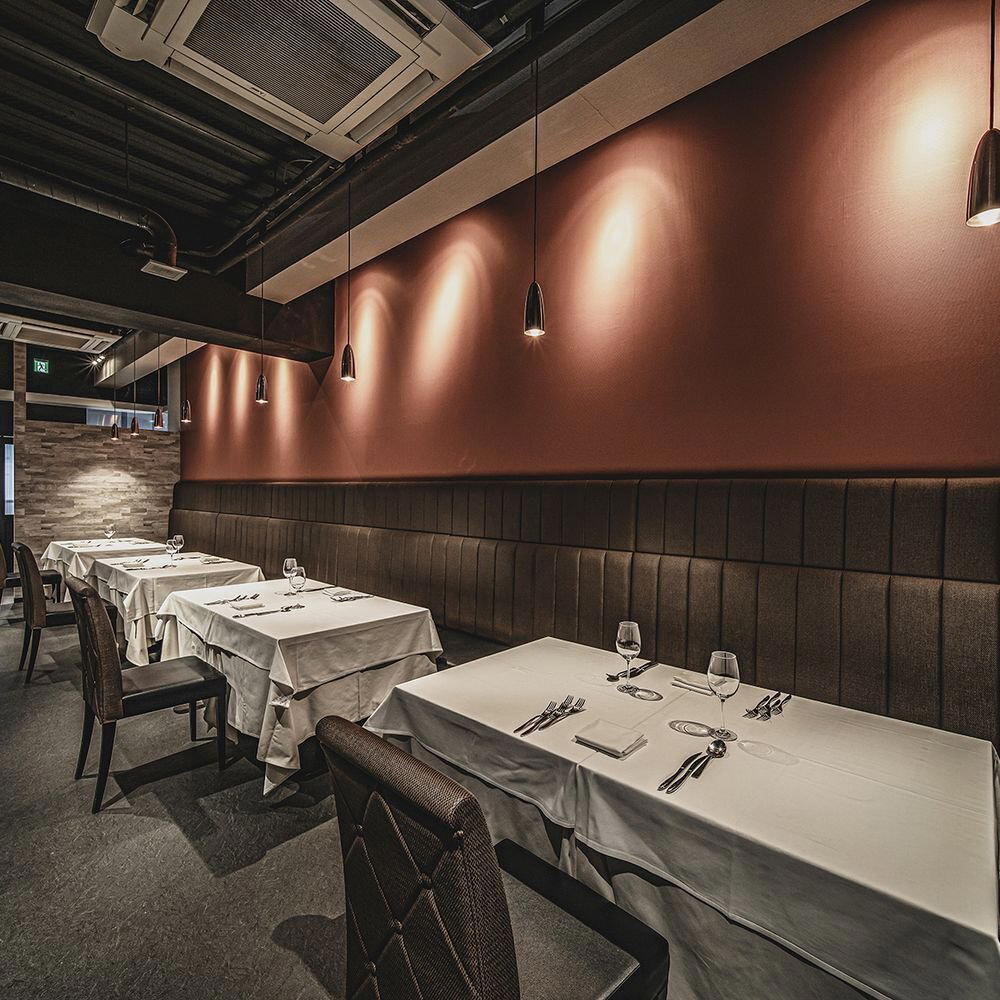
Where Kansai Produce Meets Italian Technique
The staircase leading to the second floor of the DDC Tenmabashi Building in Osaka's Chuo Ward gives little away. The address, on Tenmabashikyomachi in the quieter stretch between Tenmabashi station and the Okawa riverfront, sits well outside the circuits that most visitors follow through the city. That remove is part of the premise. Nishideria is not performing for foot traffic. What happens inside the room is the point, and the room exists to stage a particular culinary argument: that Italian cooking, applied honestly to Kansai ingredients, produces something that could not exist anywhere else.
The Architecture of 'Naniwa Italian'
The term 'Naniwa Italian' is the kitchen's own framing, and it does real work. Naniwa is the old name for Osaka, the city before it became a modern metropolis, and the prefix signals a claim about identity rather than geography. This is not fusion in the sense of two cuisines competing on the same plate. It is Italian technique operating as a method, and Kansai produce operating as the subject matter. The distinction matters because it shapes how the menu is read.
Italian cuisine is among the most ingredient-driven in Europe. Regional cooking in Liguria, Campania, or Emilia-Romagna has always been defined by what the land immediately around it produces: the specific olive oil, the particular aged cheese, the local variety of grain. Applying that same logic to the produce of Osaka and the surrounding Kansai region is not a conceptual stretch, it is, in a sense, applying Italian cooking's own philosophy to a different geography. The result is a menu that asks you to read it on two registers simultaneously: as Italian in structure, and as Osakan in substance.
The 'Zeppole alla Osacano' is the clearest articulation of this on the plate. Zeppole are a Neapolitan tradition: deep-fried dough, eaten as street food or festival food, light and crisp and immediate. Takoyaki is Osaka's equivalent, octopus-filled batter balls, made on a dimpled iron pan, the defining street food of a city that takes its casual eating seriously. The dish is not a novelty item placed on the menu for recognition value. It is a structural argument about how two food cultures, separated by geography, can share a logic of popular festive eating, and what happens when you collapse the distance between them.
A Kitchen Built on Farming Relationships
The menu's architecture depends on the supply chain underneath it. Nishideria works directly with farmers to grow the vegetables it uses, a model that shifts the kitchen's relationship to ingredients from procurement to cultivation. The practical effect is that the menu reflects what the farm can produce in a given season rather than what the wholesale market happens to carry. For Italian cooking, which has always treated the vegetable garden as a primary source of flavor rather than a garnish, this alignment is less unusual than it might appear in a Japanese restaurant context, though it remains relatively uncommon in either tradition.
This farm-direct orientation positions Nishideria within a broader pattern across serious Japanese restaurants, where producers are credited and seasonal sourcing is treated as a matter of culinary seriousness rather than marketing. At the premium end of Osaka's dining scene, venues like Kashiwaya Osaka Senriyama and Taian apply comparable sourcing discipline through the kaiseki framework, where seasonal and regional produce is foundational. Nishideria operates with the same underlying rigor but through an Italian lens, which produces a different vocabulary for the same commitment.
Where Nishideria Sits in Osaka's Dining Frame
Osaka's highest-profile Western dining currently centers on a cluster of French and innovative kitchens: HAJIME and La Cime at the formal French end, Fujiya 1935 in the innovative tier. Each operates with a clear European tradition as its structural spine.
Across Japan, this category has developed quietly but consistently. The broader country has absorbed Italian cooking more deeply than almost any other non-Asian cuisine, and a generation of Japanese chefs trained in Italy have returned to apply what they learned against domestic produce. In Kyoto, Gion Sasaki operates a comparable logic in a Japanese framework. In Nara, akordu does something similar at the Spanish-Japanese intersection. The model is not unique to Osaka, but the Naniwa Italian tag gives Nishideria's version a specific local identity that most similar kitchens have not bothered to name.
For visitors moving between Japan's culinary cities, the comparison set stretches beyond the Kansai region. Harutaka in Tokyo represents the premium Japanese end of that national conversation, while Goh in Fukuoka operates in a comparable register of Japanese-rooted innovation further south. The thread connecting all of them is a kitchen that treats local provenance as the primary material and a non-Japanese culinary tradition as the method for revealing it.
For broader context on where Nishideria sits within Osaka's full dining and hospitality picture, see our full Osaka restaurants guide, our full Osaka hotels guide, and our full Osaka bars guide. The city's experiences and wine scenes are also documented separately.
Planning Your Visit
Location: DDC Tenmabashi Building, 2F, Tenmabashikyomachi 3-8, Chuo Ward, Osaka. Tenmabashi station (Keihan and Osaka Metro Tanimachi lines) is the closest access point. Reservations: Budget: Dress: Not formally specified; smart casual is a reasonable baseline for a second-floor restaurant of this type in Osaka. Timing: As with any farm-direct kitchen, the menu will shift across seasons; aligning your visit with the Kansai agricultural calendar will give you the most from the produce-driven format.
For international reference points on what farm-to-table Italian-adjacent cooking looks like at the highest level, the approach at Le Bernardin in New York City, where ingredient sourcing shapes the entire menu logic, offers a useful frame, as does the produce-forward precision at Atomix. 1000 in Yokohama and 6 in Okinawa extend the regional picture for those building a wider Japan itinerary.
Frequently asked questions
Where exactly is Nishideria?
Nishideria is located at Japan, 〒540-0032 Osaka, Chuo Ward, Tenmabashikyomachi, 3−8 Ddc 天満橋 Bldg. 2F, Osaka.
What kind of recognition has Nishideria received?
Nishideria has received recognition including: The style is ‘Naniwa Italian’, Italian cuisine that highlights the charms of Osaka. Interpreting Italian cooking techniques through Kansai ingredients creates a cuisine found only here. ‘Zeppole alla Osacano’ combines a Neapolitan pastry of….
What should I order at Nishideria?
The dish that most directly captures the kitchen's philosophy is 'Zeppole alla Osacano', which grafts the Neapolitan deep-fried dough pastry onto the structure of Osaka takoyaki. Beyond that, the vegetable courses reflect the restaurant's direct farming relationships, so expect produce grown specifically for the kitchen rather than sourced through conventional supply chains.
Is Nishideria reservation-only?
No booking contact details are publicly listed for Nishideria at the DDC Tenmabashi Building, 2F, Tenmabashikyomachi 3-8, Chuo Ward, Osaka. Given the restaurant's positioning within Osaka's considered dining scene and its farm-coordinated menu structure, contacting the venue directly in advance is strongly advisable before visiting.
What's the standout thing about Nishideria?
The kitchen coined the term 'Naniwa Italian' to describe what it does, and that framing is precise rather than promotional. Naniwa is the historical name for Osaka, and the concept routes Italian cooking methods through Kansai ingredients and producers, creating a regional hybrid that operates outside both conventional Italian and standard Japanese Western dining categories. The farming relationships underpinning the menu give it a specificity that distinguishes it from most Western-format restaurants in the city.
Is Nishideria allergy-friendly?
No allergy or dietary accommodation policy is documented for Nishideria. Because the menu is built around vegetables grown by partner farmers and Italian preparations including fried dough components like the 'Zeppole alla Osacano', diners with specific dietary requirements should communicate needs directly with the restaurant before booking.
What does 'Naniwa Italian' mean and where does the concept come from?
'Naniwa Italian' is the restaurant's own framing for Italian cuisine interpreted through the ingredients and food culture of Kansai, the region that includes Osaka. Naniwa is Osaka's ancient name, and the label signals that this is not fusion in a generic sense but a geographically specific approach. The chef treats working with local farmers as a way of returning something to the region, making the sourcing philosophy as central to the identity as the cooking technique itself.
Where the Accolades Land
Comparable venues nearby, for context on price, style, and recognition.
| Venue | Cuisine | Price | Awards | Notes |
|---|---|---|---|---|
| NishideriaThis venue (the venue you are viewing) | Naniwa Italian | $150–200 | Michelin Plate | Not listed |
| LACERBA | Modern Japanese-Italian Fine Dining | $100–150 | Michelin Plate · Tabelog 100 #33 | Kita |
| atelier HANADA by Morimoto | Modern Chinese Fine Dining | $100–150 | Michelin Plate · Tabelog 100 #31 | Chūō |
| Shizuku | Modern Creative Omakase Sushi | $150–200 | Tabelog Bronze #406 | Kita |
| Otsuki | Modern Japanese Washoku | $150–200 | Michelin Plate | Fukushima |
| Tsunechan | Premium Yakiniku | $100–150 | Tabelog Bronze #488 | Sakai-ku |
Recognition history
Dated appearances from independent guides and award organizations, with the underlying list record or original source where available.
Michelin Plate
Michelin
Continue exploring
More in Osaka
Restaurants in Osaka
All restaurants in Osaka →

Bars in Osaka
All bars in Osaka →


Hotels in Osaka
All hotels in Osaka →



Wineries in Osaka
Browse all →
Details
- Elegant
- Intimate
- Modern
- Date Night
- Special Occasion
- Celebration
- Open Kitchen
- Extensive Wine List
- Sake Program
- Local Sourcing
- Tasting Menu
- Prix Fixe
- Wine
- Vegetarian Friendly
Current opening hours
- Monday
- 11:30 AM–3:30 PM, 5:30–10 PM
- Tuesday
- Closed
- Wednesday
- Closed
- Thursday
- 11:30 AM–3:30 PM, 5:30–10 PM
- Friday
- Closed
- Saturday
- 11:30 AM–3:30 PM, 5:30–10 PM
- Sunday
- 11:30 AM–3:30 PM, 5:30–10 PM
Hours can change for holidays and private events. Hours as of .
Stylish, relaxing space with spacious seating and sofa seating, offering an elegant and intimate atmosphere.