
Tabelog Bronze #512
Our verdict
A meat-forward kaiseki counter in Osaka's Sonezakishinchi district, Niku Kappou Yamaguchi holds a Tabelog 4.15 score and consecutive Bronze awards in 2025 and 2026, alongside selection for Tabelog's Japanese Cuisine WEST Top 100. The 12-seat format runs on reservation only through the OMAKASE platform, with dinner priced at JPY 40,000–49,999 per person. It occupies a specific niche: the disciplined application of kappou technique to premium meat courses within a kaiseki structure.

Pearl is the En Primeur Club membership app, where members save venues, book tables and use the concierge.
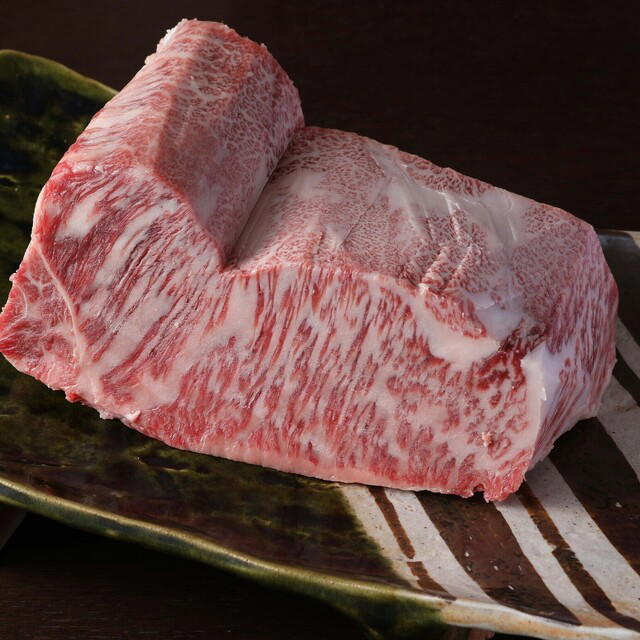
A Counter Where the Discipline Is Meat
Sonezakishinchi sits just north of the Dojima River, a district built on late evenings and serious spending. The streets here are compact and purposeful: corporate entertainment rooms above, small counters at street level, the occasional delivery pulling up to a service entrance. In this environment, Niku Kappou Yamaguchi operates from the ground floor of the Hokuyo Building, a 12-seat counter that does not announce itself to passersby with signage or spectacle. The people who fill those seats already know where they are going.
That dynamic matters when understanding what kind of restaurant this is. Premium meat kaiseki in Osaka occupies a distinct tier, one where the clientele is largely local, repeat, and knowledgeable enough to treat the progression of courses as a familiar grammar rather than a revelation. Yamaguchi earns its position in that tier through a format built around kappou technique applied to meat, a combination that is less common at this price point than the city's abundance of wagyu yakiniku or classical kaiseki might suggest.
What the Format Actually Means
Kappou, as a dining mode, sits between the formality of kaiseki and the interactivity of omakase. The chef works in full view, courses are prepared and plated in sequence, and the counter itself is the room. There is no separate dining area, no move from cocktail lounge to table. At Yamaguchi, that format is organised around meat as the primary subject, which shifts the internal logic of the meal considerably. Classical kaiseki structures its progression around the seasons and around fish and vegetables, with meat appearing late and sparingly. Here, meat is not a punctuation mark but the through-line.
The distinction matters because it positions Yamaguchi in a different conversation to Osaka's more conventional Japanese fine-dining addresses. Counter kaiseki houses like Taian or the heritage rooms of Kashiwaya Osaka Senriyama operate within a more orthodox seasonal framework. French-influenced rooms like HAJIME, La Cime, and Fujiya 1935 bring entirely different structural logic.
What Keeps the Regulars Returning
The 12-seat capacity and the counter format together create a room where regulars are immediately visible. A counter this small cannot sustain itself on tourist traffic or first-timers alone, particularly at this price point, and the reservation structure through the OMAKASE platform filters toward guests who are actively seeking this specific format rather than stumbling into it. The result is a clientele that skews toward Osaka's own food-serious residents and toward domestic visitors from Tokyo or Kyoto who know exactly what they have booked.
For that audience, the draw is consistency and precision. The Tabelog score of 4.15 across a sustained review base, combined with consecutive Tabelog Award Bronze recognition in both 2025 and 2026, and selection for the Tabelog Japanese Cuisine WEST Top 100 in 2025, reflects a kitchen operating without significant variance. Regulars at this kind of counter are not returning to be surprised. They are returning because the standard holds, because the ingredient sourcing remains serious, and because the format itself, the progression of meat courses prepared to order in front of a small group, has its own rhythm that rewards familiarity.
The unwritten menu at a counter like this is the version that regulars understand over time: when the kitchen's most considered preparations appear, which points in the progression reward patience, and how the pace of an evening session compares to the later seating. The weekday schedule runs two sessions, 18:30 to 20:25 and then 20:45 to 23:00, which is a structure more common to high-demand Tokyo counters than to Osaka's typically single-seating fine dining rooms. Saturday condenses to a single session from 18:30 to 21:00. The dual-session weekday format signals that demand is consistent enough to sustain double occupancy of a 12-seat room.
Placement in Osaka's Premium Japanese Dining Scene
Osaka's fine-dining tier has expanded and diversified significantly since 2010, driven partly by the city's own appetite for serious eating and partly by increased international attention during the pre-pandemic years. The Japanese cuisine category within that tier has bifurcated: traditionalist kaiseki houses on one side, and more format-experimental counters on the other. Niku Kappou Yamaguchi, which opened on 16 July 2015, arrived at a moment when that bifurcation was accelerating.
At JPY 40,000–49,999 per person as the listed range, with actual review-based spending averaging closer to JPY 50,000–59,999, the restaurant prices within Osaka's premium tier without reaching the upper ceiling occupied by multi-Michelin rooms. It sits alongside rather than above the city's other serious Japanese counters, distinguishing itself through format specificity rather than price positioning alone.
The broader Kansai region offers strong comparisons. Gion Sasaki in Kyoto operates at the intersection of technique and seasonal produce in a comparable counter format. Further afield, the meat-focused kaiseki tradition finds different expressions in places like Goh in Fukuoka, where Kyushu's wagyu supply shapes a different ingredient argument. Among Tokyo's serious Japanese counters, Harutaka demonstrates how a small-format counter with consistent technique builds a durable reputation. Yamaguchi's position in the Osaka market tracks a similar logic applied to a different primary ingredient.
For visitors building a broader Kansai itinerary, the restaurant's neighbourhood places it within walking reach of central Osaka's major transit nodes, 264 metres from Oebashi station, which makes it practical alongside other commitments in Umeda or Nakanoshima. The area's concentration of serious counter dining makes Sonezakishinchi a sensible base for an evening that begins or ends elsewhere in the district.
Know Before You Go
- Reservations: Reservation only, through the OMAKASE platform. No walk-ins.
- Dinner price: Listed at JPY 40,000–49,999; review-based average closer to JPY 50,000–59,999.
- Hours: Monday to Friday, two seatings: 18:30–20:25 and 20:45–23:00. Saturday: 18:30–21:00. Closed Sunday and public holidays.
- Seats: 12 counter seats. Private use available for groups up to 20.
- Getting there: 264 metres from Oebashi station. No parking on site.
- Payment: Credit cards accepted (VISA, Mastercard, JCB, AMEX, Diners). Electronic money and QR code payments not accepted.
- Smoking: Non-smoking throughout.
- Private rooms: None. Full private hire available.
Frequently asked questions
What should I order at Niku Kappou Yamaguchi?
The format is omakase, meaning the kitchen determines the progression. The concept is meat kaiseki within a kappou structure, so the meal is a sequence of courses built around premium meat preparations rather than a menu with individual selections. Tabelog reviewers consistently note the quality of ingredients across the full progression. The practical guidance: book the evening session you want in advance through OMAKASE, arrive on time for your seating, and let the counter format run its course. The restaurant holds a Tabelog 4.15 score and consecutive Bronze awards, credentials that reflect a kitchen delivering consistently across all courses rather than on a single signature item.
How hard is it to get a table at Niku Kappou Yamaguchi?
Difficult, particularly for weekday seatings. The 12-seat counter runs two sessions on weeknights, which means a maximum of 24 covers per weekday evening across both turns. Reservations are handled exclusively through the OMAKASE platform, and the restaurant's Tabelog recognition, Bronze in 2025 and 2026, plus Top 100 Japanese Cuisine WEST selection, places it among the most-cited premium counters in Osaka, increasing booking pressure from both domestic and international diners. Saturday's single session compounds scarcity at the weekend. The practical approach is to check the OMAKASE platform well in advance, particularly if visiting during peak travel periods or Golden Week. At JPY 40,000-plus per person, the audience self-selects, which means those who do book tend to confirm rather than cancel.
What is Niku Kappou Yamaguchi leading at?
The kitchen's specific discipline is applying kappou technique to a meat-forward kaiseki progression. That is a narrower category than general wagyu dining or classical kaiseki, and Tabelog's sustained recognition across 2025 and 2026 reflects consistency within that specific format rather than breadth across styles. The counter setting and dual-session weekday structure indicate a kitchen built for precision under repeat-visit pressure. Within Osaka's Japanese cuisine tier, Yamaguchi occupies a format position that has few direct counterparts at the same price level, which is the clearest statement of where it performs with confidence.
For a full picture of Osaka's dining and hospitality options, see our full Osaka restaurants guide, our full Osaka hotels guide, our full Osaka bars guide, our full Osaka wineries guide, and our full Osaka experiences guide. If your itinerary extends through the Kansai region and beyond, further reading on Mitsuyasu in Kyoto, akordu in Nara, and Beppu Hirokado in Oita rounds out the western Japan picture. For those extending further, 1000 in Yokohama and 6 in Okinawa represent the range of Japan's serious counter dining at the premium tier.
The Minimal Set
Comparable venues nearby, for context on price, style, and recognition.
| Venue | Cuisine | Price | Awards | Notes |
|---|---|---|---|---|
| Niku Kappou YamaguchiThis venue (the venue you are viewing) | Meat Kappo | $300–500 | Tabelog Bronze #512 | Not listed |
| Takahashi Kentaro | Edomae Sushi Omakase | $200–300 | Tabelog Bronze #445 | Kita, Edomae Sushi Omakase |
| Ohata | Kansai-style Edomae Omakase | $150–200 | Tabelog Bronze #333 | Kita, Kansai-style Edomae Omakase |
| Tempura Ando | Contemporary Tempura Omakase | $150–200 | Tabelog 100 #83 | Chūō, Contemporary Tempura Omakase |
| Kitan-in | Dry-Aged Wagyu Yakiniku and Steakhouse | Not listed | World Best Burgers World's 101 Best Burgers #59 · Tabelog 100 #80 | Chūō, Modern Dry-Aged Wagyu Omakase Yakiniku |
| Ippou Honten | Traditional Kansai-Style Tempura Ryotei | $150–200 | Tabelog 100 #78 | Nishi, Traditional Kansai-Style Tempura Ryotei |
Recognition history
Dated appearances from independent guides and award organizations, with the underlying list record or original source where available.
Tabelog Bronze #512
Tabelog
Full recognition history (2 entries)
Tabelog 100 #18 · No. 18
Tabelog · Tabelog 100 - Japanese cuisine - WEST - 2025
Continue exploring
More in Osaka
Restaurants in Osaka
All restaurants in Osaka →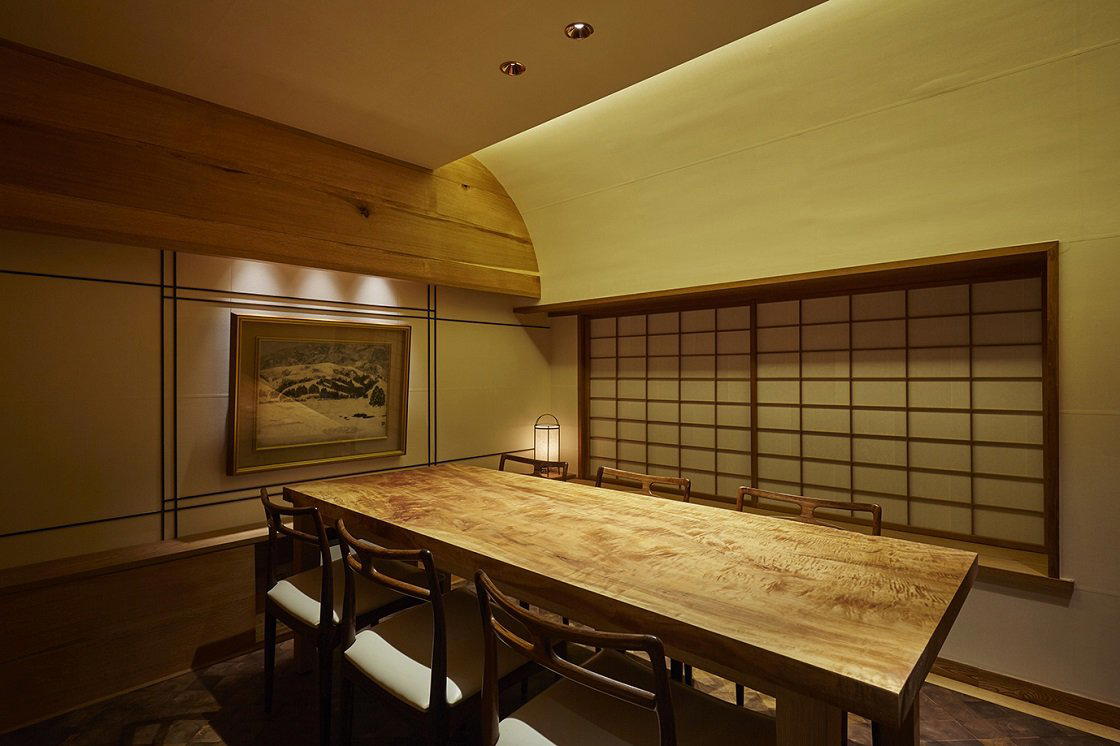
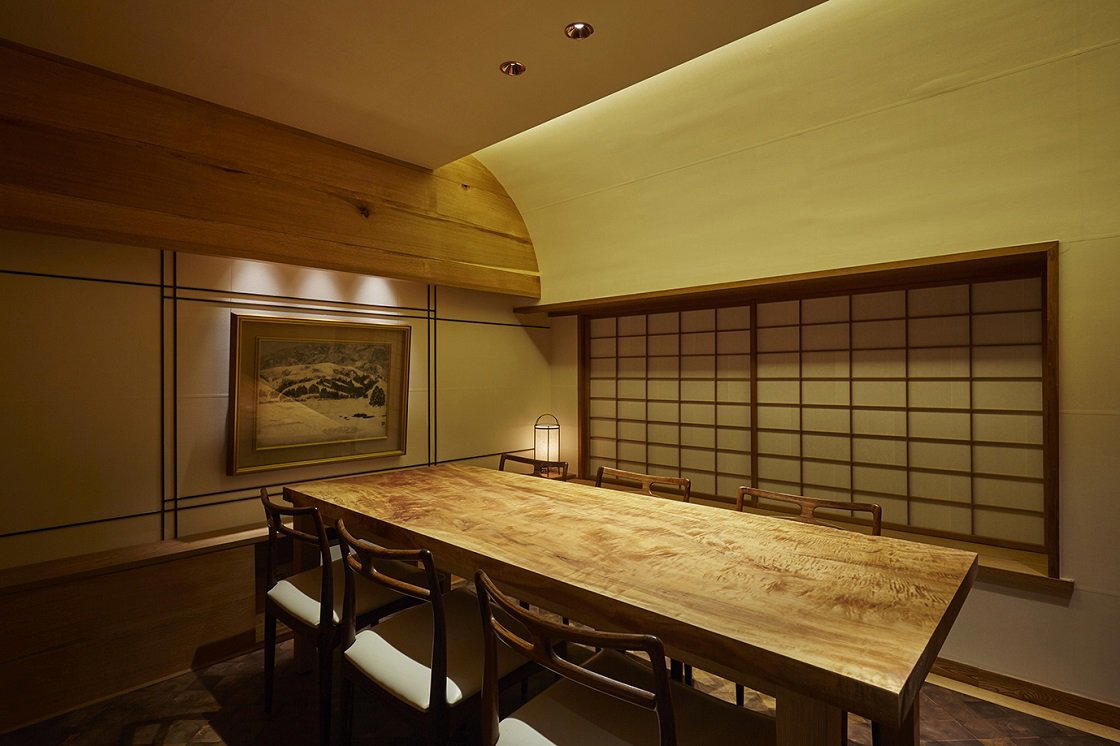


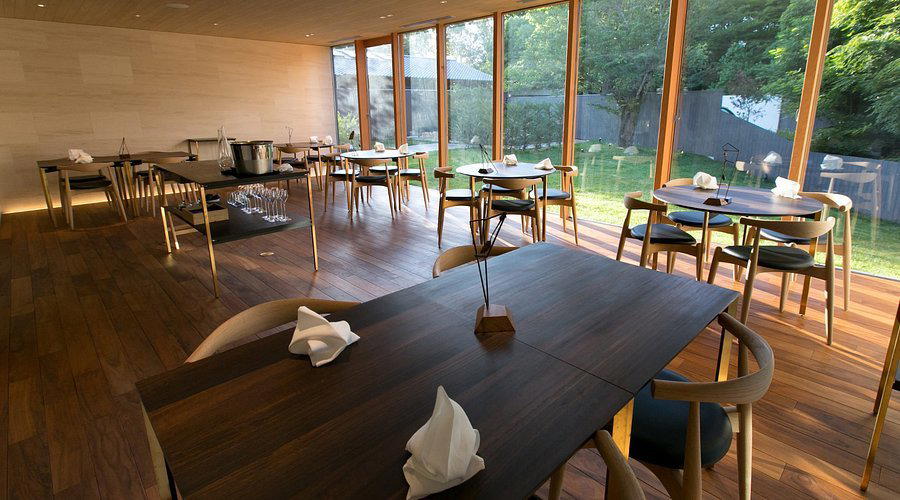
Bars in Osaka
All bars in Osaka →



Hotels in Osaka
All hotels in Osaka →


Wineries in Osaka
Browse all →
Details
- Sophisticated
- Elegant
- Intimate
- Cozy
- Special Occasion
- Business Dinner
- Chefs Counter
- Open Kitchen
- Sake Program
- Omakase
- Counter Dining
- Wine
- Sake
Current opening hours
- Monday
- 6–11 PM
- Tuesday
- 6–11 PM
- Wednesday
- 6–11 PM
- Thursday
- 6–11 PM
- Friday
- 6–11 PM
- Saturday
- 6–10 PM
- Sunday
- Closed
Hours can change for holidays and private events. Hours as of .
Chic and sophisticated with a cozy retro atmosphere exuding dignity.