
Niboshi Soba Ru. belongs to Tokyo’s compact, counter-led ramen culture, where space discipline matters as much as broth style. The Jujo shop works in the niboshi lane, with ramen, tsukemen, abura-soba and maze-soba, a seven-seat counter, repeated Tabelog Ramen TOKYO “Tabelog 100” selections, and a format that rewards diners comfortable with a tight room and quick turnover.
Pearl is the En Primeur Club membership app — saves, bookings, and concierge access live there. Same editors, same standards.
- Address
- 1 Chome-13-2 Kamijujo, Kita City, Tokyo 114-0034, Japan
- Phone
- +81 3-6454-3983
- Website
- twitter.com
 Saves & bookings on Pearl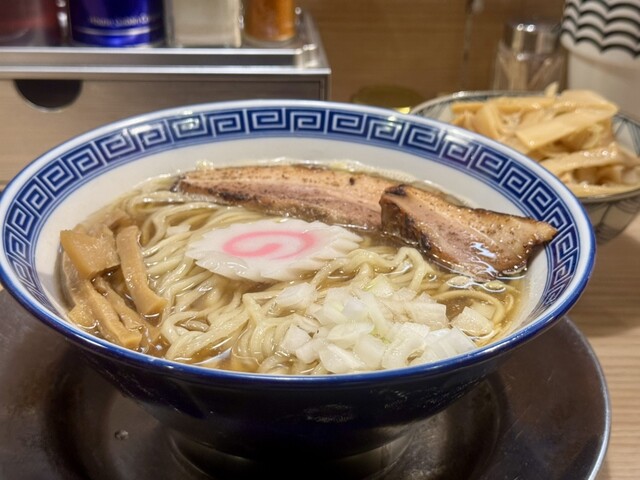
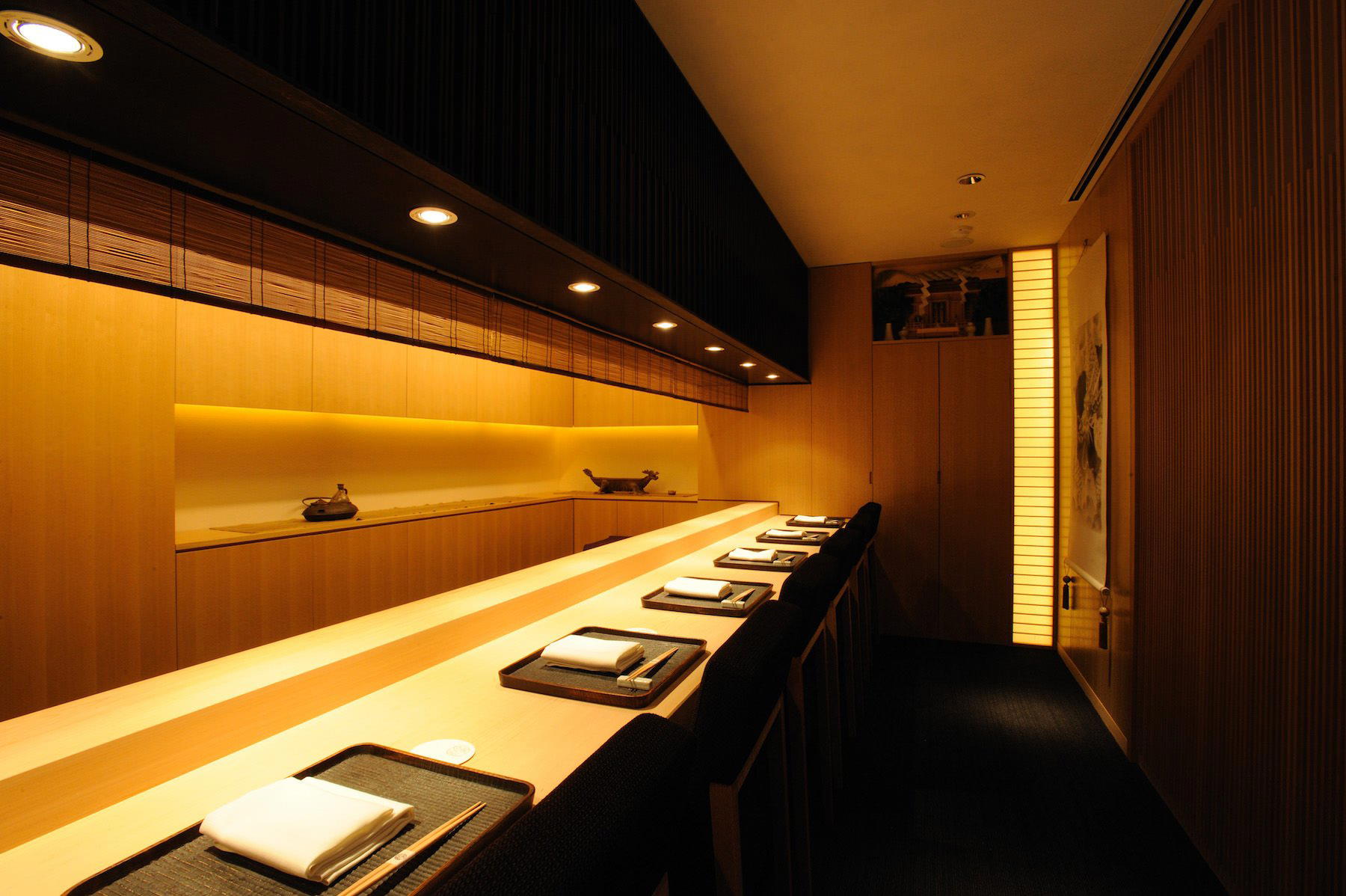
Jujo’s ramen rhythm is smaller and more residential than the station-to-station intensity of central Tokyo. Around the South Exit, the dining scale changes quickly: compact shopfronts, narrow counters, short waits, and meals designed around focus rather than lingering. Niboshi Soba Ru. fits that physical grammar. The room is counter-only, with seven seats and five waiting seats outside, so the experience is shaped before the bowl arrives: limited movement, direct sightlines, and the compressed pace that defines many serious ramen rooms in Tokyo’s outer wards.
That container matters. Ramen in Tokyo is often discussed through broth, noodles and toppings, but the room controls how the food is understood. A seven-seat counter creates a different contract from a larger casual dining room. Diners arrive, order, eat, and clear the seat for the next person. The format strips away ceremony and makes the kitchen-counter exchange the central feature. In that sense, this is not a luxury address; it is a small, high-attention ramen shop operating inside a city where value and precision can sit in the same bowl.
A seven-seat counter built around niboshi concentration
The defining idea is niboshi, the dried-sardine base that gives this style of ramen its marine depth and sharper edge. Tokyo ramen has long made room for multiple broth identities, from chicken-clear chintan to pork-heavy tonkotsu and blended soup styles. Niboshi sits in a more assertive lane: less about softness, more about intensity, bitterness control and balance. Here, the listed categories include ramen, tsukemen, abura-soba and maze-soba, which places the shop across both soup and no-soup formats rather than a single-bowl specialization.
The Tabelog Ramen TOKYO “Tabelog 100” selections in 2019, 2020, 2021, 2022, 2024 and 2025 give the address a useful signal in a city where ramen discovery can otherwise become noise. Tabelog’s Hyakumeiten lists are not Michelin-style luxury markers; they are category-specific recognition inside Japan’s own dining-review ecosystem. For ramen, that distinction matters because it separates durable specialist shops from shops that merely pull a temporary queue.
Lineage note also gives context without turning the story into biography. The owner is originally from Nakano’s Niku Niboshi Chuka Soba Saikoro, a name associated with the same dried-fish ramen family. A Tuesday operation called Gyakuryu later became independent and relocated in July 2020. Read as scene evidence, that detail shows how Tokyo ramen evolves through micro-formats: side projects, off-day services, tiny counters and specialist branches that refine one idea rather than broaden into a full restaurant model.
Jujo puts the shop in a different Tokyo ramen conversation
Location changes expectation. A Ginza or Shinjuku ramen counter is often folded into a broader visitor circuit; Jujo asks for a more deliberate detour within northern Tokyo. That makes the shop comparable less to high-gloss destination dining than to other modestly priced Tokyo specialists where the room is small, the category is narrow and the audience understands the pace. In the same value band, Sanuki Udon Iwai and Kuromatsu Honpo Sogetsu show how Tokyo’s low-price serious-eating culture extends beyond ramen, while Ittoan sits in the soba lane and Sansanto keeps the focus within noodles. The shared point is not sameness; it is Tokyo’s ability to make sub-¥1,000 or near-¥1,000 meals feel exacting rather than casual by default.
Niboshi Soba Ru. also sits apart from restaurants where design is decorative. Here, design is operational: counter seating, no private rooms, no private use, no smoking, and a house-restaurant setting. Those constraints define the hospitality style. Conversation stays secondary, the queue is visible, and the meal’s length is set by the bowl rather than the table. For diners used to Tokyo’s tasting-menu culture, the contrast is instructive. The city’s food seriousness is not limited to long menus and rare ingredients; it also appears in short-format rooms where one broth style carries the argument.
Payment and access details reinforce the same practical character. Credit cards and electronic money are not accepted, while PayPay is accepted. Parking is unavailable. Children are welcomed, including babies, preschoolers and school-age children, and strollers are allowed. That combination is more local than theatrical: a tiny counter with serious ramen credentials, but not a room coded exclusively for specialists.
Know Before You Go
- Format: Counter seating only, with seven seats and five waiting seats outside.
- Food focus: Ramen, tsukemen, abura-soba and maze-soba, led by a niboshi ramen identity.
- Recognition: Selected for Tabelog Ramen TOKYO “Tabelog 100” in 2019, 2020, 2021, 2022, 2024 and 2025.
- Reservations: Reservations are unavailable.
- Payment: Credit cards and electronic money are not accepted; PayPay is accepted.
- Setting: Non-smoking, counter-led, with no private rooms and no private use.
For a broader read on the city’s dining range, use Our full Tokyo restaurants guide, with nearby contrasts including . 鮪と炭火焼き うお炭 秋葉原店, 12/10 Shinjuku ten, 124. KAGURAZAKA (Yakitori), 2D Cafe and 3 Chome no Curry Ya San. Tokyo planning can also extend through Our full Tokyo hotels guide, Our full Tokyo bars guide, Our full Tokyo wineries guide and Our full Tokyo experiences guide.
Across Japan and beyond, the useful comparison is how tightly focused formats travel: -Grilled beef Sukiyaki- KAMAKURA TANUKIAN 鎌倉 たぬき庵 in Kamakura.cafe in Osaka.know in Kumamoto, (Shoku) Vietnam in Kawasaki, [Curry Senmon Ten] Maruyama Kyoju. in Sapporo, [ki:] in Kyoto, Jōdo Saké Bar in Los Angeles and Onigiri Time in Pasadena each underline a different version of narrow-format dining.
Where It Fits
Comparable venues in the metro at similar price points.
| Venue | Cuisine | Price | Notes |
|---|---|---|---|
| Niboshi Soba Ru. | Niboshi-focused Ramen Shop | $ | Kita |
| Pneuma Curry | Japanese Curry | $ | Shinjuku |
| Caligari Akihabara | Japanese curry house specializing in coconut curry | $ | Chiyoda |
| Oniyanma Ningyouchou ten | Standing Udon Noodle Bar | $ | Chūō |
| Rodin | European-style Japanese Curry | $ | Chūō |
| Ten mame | Japanese Traditional Sweets | $ | Chūō |
Recognition history
Dated appearances from independent guides and award organizations, with the underlying list record or original source where available.
Tabelog 100 #95 · No. 95
Tabelog · Tabelog 100 - Ramen - TOKYO - 2025



At a Glance
- Cozy
- Lively
- Solo
- Casual Hangout
- After Work
- Family
- Chefs Counter
- Standalone
Current opening hours
- Monday
- 11 AM–3 PM, 5–9 PM
- Tuesday
- Closed
- Wednesday
- 11 AM–3 PM, 5–9 PM
- Thursday
- 11 AM–3 PM, 5–9 PM
- Friday
- 11 AM–3 PM, 5–9 PM
- Saturday
- 11 AM–9 PM
- Sunday
- 11 AM–9 PM
Hours can change for holidays and private events. Last verified .
Compact counter-only ramen shop next to Jujo Station with a casual, bustling local vibe; guests sit close together at the counter, watching bowls of richly aromatic niboshi ramen being prepared in a simple, no-frills space.