New York Deli News
New York Deli News on East Hampden Avenue plants a slice of classic American deli culture in southeast Denver, where the pastrami-and-rye tradition meets a city that has spent the last decade developing serious culinary range. The format is casual and counter-friendly, aimed at the kind of lunch crowd that measures a sandwich by its structural integrity rather than its provenance story. For Denver diners moving between the polished tasting-menu tier and everyday neighbourhood eating, it occupies a distinct and deliberate lane.
Pearl is the En Primeur Club membership app — saves, bookings, and concierge access live there. Same editors, same standards.
- Address
- 7105 E Hampden Ave, Denver, CO 80224
- Phone
- +13037594741
- Website
- nydelinews.com
- Directions
- Get directions
 Saves & bookings on Pearl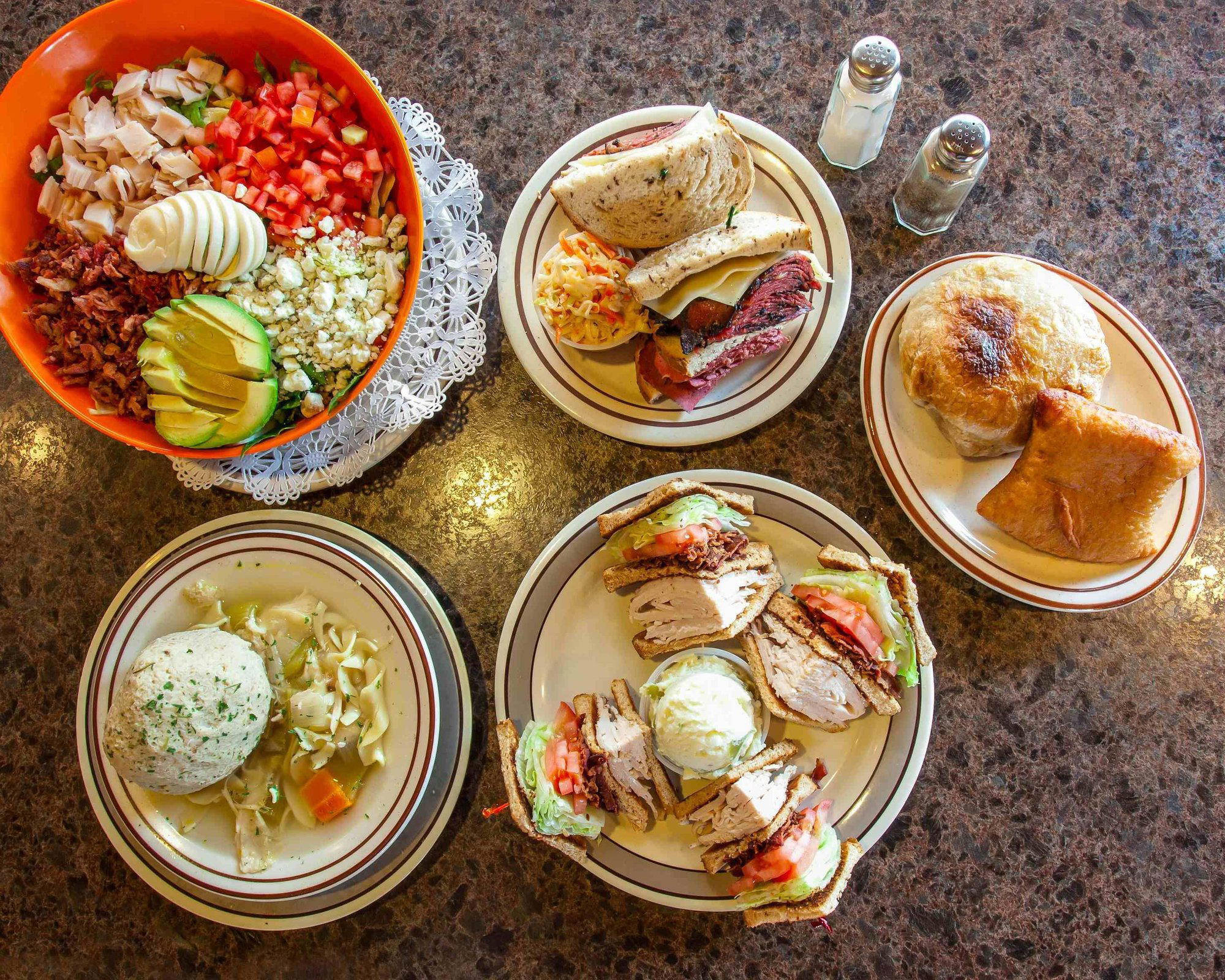
Denver's Deli Gap and Where East Hampden Fits
New York Deli News is a New York-Style Deli in Denver, serving casual counter dining at about $20 per person. the vegetable-forward tasting menus of places like The Wolf's Tailor, the technique-driven contemporary cooking at Brutø, and the refined regional Mexican at Alma Fonda Fina. That conversation, legitimate as it is, tends to skip past the older, less photogenic category of the American deli, a format that arrived in cities like Denver through mid-century Jewish migration patterns and never fully assimilated into the farm-to-table era that followed. New York Deli News, at 7105 East Hampden Avenue in the Virginia Village corridor, sits inside that gap. It is not competing with Beckon or Annette. It is competing with the idea that a corned beef sandwich requires a New York zip code.
The Physical Logic of a Deli on East Hampden
East Hampden Avenue between Colorado Boulevard and Yosemite Street is a commercial strip that reads more practically than scenically. The storefronts here serve a working neighbourhood rather than a destination dining public, which is part of what makes a deli operation viable in this location. The deli format, historically, thrived in exactly this kind of urban context: accessible by car, priced for frequency, and built around a menu that rewards regulars who know what they want before they reach the counter. The interior logic of a well-run deli, long communal tables or counter seating, display cases of cured meat and prepared salads, the ambient smell of warm rye, is designed for efficiency and comfort in roughly equal measure. Atmosphere here is a byproduct of function, not a designed outcome, and that is precisely the register in which delis have always operated.
New York Technique, Colorado Context
The editorial angle worth examining at any American deli operating outside New York is what happens when the technique travels. Pastrami curing, brisket braising, the specific tension of a properly constructed Reuben: these are methods with a documented geography, developed in the delicatessens of the Lower East Side and later in the Jewish neighbourhoods of Brooklyn and Queens. When those methods migrate to a city like Denver, the interesting question is not whether the result is authentic in some narrow definitional sense, but whether the execution holds. Across the broader American deli revival, the operations that have found their footing are those that respect the structural demands of the format, properly smoked and rested meat, bread with enough structural integrity to carry the load, pickles that cut rather than merely accompany, while adapting sourcing and scale to their actual location. Denver's food supply chain has matured significantly in the past decade, giving any serious kitchen in the metro area reasonable access to quality inputs. What the city cannot replicate is the density of deli culture itself, the decades of customer feedback that calibrated the Katz's or Carnegie counter to near-obsessive precision.
Where the Deli Sits in Denver's Price Architecture
Denver's dining tiers have compressed and clarified in recent years. At the upper end, prix-fixe operations in the $$$$ bracket, the comparable set that includes The Wolf's Tailor and Brutø, occupy a category that requires advance booking and a commitment of two to three hours. The middle tier, restaurants like Alma Fonda Fina in the $$ bracket, offers full-service dining at accessible price points. The deli occupies a different axis entirely: counter-service or light-table-service, lunch-weighted, and priced for return visits rather than occasion dining. That positioning is not a concession; it is a distinct format with its own discipline. In cities where the deli tradition is deep, like New York, the format commands genuine loyalty and, in some cases, premium pricing for landmark product. In Denver, the deli operates closer to neighbourhood utility, which gives it a different kind of value but does not diminish the craft demands of the format.
How This Compares to the Deli Tradition at Scale
The American deli at its most technically demanding is not far removed from the careful sourcing and preparation logic that drives places like Blue Hill at Stone Barns or Single Thread Farm in Healdsburg: the meat matters, the timing matters, and the margin for error is smaller than it looks. The difference is that fine-dining kitchens narrate that process explicitly, while the deli buries it inside a wax paper wrapper. Internationally, the idea of imported technique applied to local context is a constant across dining categories. At the ambitious end, kitchens like Atomix in New York City or 8½ Otto e Mezzo Bombana in Hong Kong build entire identities around the tension between imported method and local ingredient. The deli operates on the same principle, just without the tasting-menu price point or the critical apparatus that follows those kitchens around. Closer to the deli's own register, the same transfer of regional American culinary DNA across city lines is visible in operations like Emeril's in New Orleans, where the cuisine carries a geography but the kitchen must perform it in a specific local context every service.
Planning a Visit
New York Deli News is located at 7105 East Hampden Avenue in Denver's Virginia Village area, a southeast neighbourhood that is straightforwardly accessible by car from central Denver and from the Tech Center corridor to the south. The format is deli-casual: no dress code applies, and the expectation is counter or casual table service rather than a structured dining experience. Those looking for comparison points at the upper end of American fine dining can reference Le Bernardin in New York City, Alinea in Chicago, The French Laundry in Napa, Providence in Los Angeles, Addison in San Diego, The Inn at Little Washington, and Lazy Bear in San Francisco, all of which represent the opposite end of the format spectrum from the deli but share the same underlying logic: method, sourced material, and consistent execution.
At a Glance
Comparable venues nearby, for context on price, style, and recognition.
| Venue | Cuisine | Price | Notes |
|---|---|---|---|
| New York Deli NewsThis venue — the venue you are viewing | Hampden, New York-Style Deli | $$ | Not listed |
| Broken Bow | Five Points, Western bar with food | $$ | Not listed |
| Kona Grill - Denver | Not listed | $$ | Cherry Creek, Contemporary American with Sushi |
| Hops & Pie | Not listed | $$ | Berkeley, Artisan Detroit & NY-Style Sourdough Pizza with Craft Beer |
| Paperboy | West Highland, Modern American Brunch | $$ | Not listed |
| Jelly Cafe | Capitol Hill, American Breakfast Cafe | $$ | Not listed |
Continue exploring
More in Denver
Restaurants in Denver
Browse all →

Bars in Denver
Browse all →
Hotels in Denver
Browse all →

At a Glance
- Classic
- Cozy
- Well Known
- Casual Hangout
- Family
- Group Dining
- Brunch
- Standalone
- Beer Program
Current opening hours
- Monday
- 8 AM–8 PM
- Tuesday
- 8 AM–8 PM
- Wednesday
- 8 AM–8 PM
- Thursday
- 8 AM–8 PM
- Friday
- 8 AM–8 PM
- Saturday
- 8 AM–8 PM
- Sunday
- 8 AM–8 PM
Hours can change for holidays and private events. Last verified .