
Tabelog 100 #86
Our verdict
Nagoya’s Meieki ramen scene rewards speed, clarity and a clear house idea. New Old Style Niku Soba Keisuke Dainagoya birudingu ten sits in that station-side bracket with a meat-led soy-sauce niku soba format, counter seating and selection for Tabelog Ramen AICHI 100 in 2025.

Pearl is the En Primeur Club membership app, where members save venues, book tables and use the concierge.
The menu
What to order
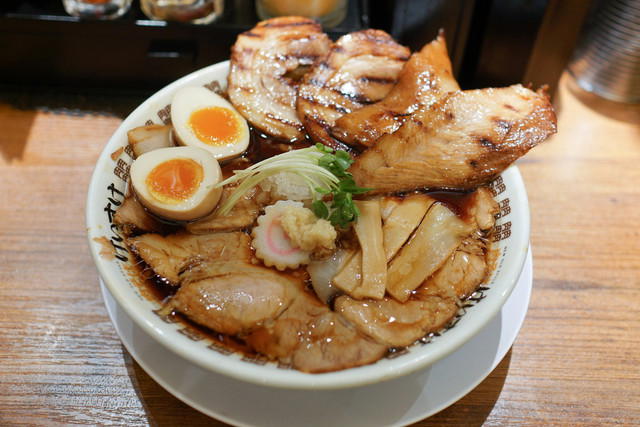
- Niku Soba Soy Sauce
- Niku Soba Tsukemen
- Salt Niku Soba
- Backfat Soy Sauce Niku Soba
The restaurant rhythm in Nagoya is built for decisive eating: commuters, office workers and shoppers moving between daily routines and compact counters. Here, ramen must announce its point quickly. New Old Style Niku Soba Keisuke Dainagoya birudingu ten does so through a ramen format that favors a clear, direct bowl rather than chef’s-table performance or leisurely tasting-menu pacing.
That matters in Nagoya, where many versions of casual Japanese eating sit close together. City ramen competes less on ceremony than identity: broth style, topping emphasis, queue tolerance and value. This shop’s Tabelog recognition in 2025 places it in a recognized ramen tier, while its format stays closer to everyday Nagoya eating than destination fine dining.
Meat-led ramen in a Nagoya format
Niku soba defines the shop: ramen built around a meat-forward idea and a bowl designed to read clearly from the first look. The appeal is not subtle minimalism. It belongs to modern ramen that makes topping emphasis part of the argument, giving the bowl visual and structural identity before the first sip.
Ramen in Japan often divides by broth school, regional habit and shop format. Nagoya is not tied to one ramen orthodoxy in the way some cities are popularly linked with a single style. In Nagoya, the more useful lens is urban function: quick-turn counters, compact menus, direct flavors and prices that keep ramen a frequent meal rather than an occasion. This venue fits that pattern, using a focused ramen identity as its difference.
The wine-list brief is almost inverted, which helps explain the category. At a serious ramen counter, curation happens in the bowl rather than the cellar: broth, noodles, toppings and condiments do the work a sommelier might handle in a longer meal. The question is balance, not breadth. A meat-forward bowl needs lift, salt control and aromatic contrast without turning the format into fusion theatre.
Compared with nearby casual peers in the same price-sensitive Nagoya orbit, the distinction is specific. Solo Pizza Napoletana Da Lucio Nagoya eki ten sits in a quick Italian lane, Tsubameya Dainagoya birudingu ten works a sweets-led register, and Cutlet Matsumura moves toward a higher-spend specialist meal. Ramen’s advantage here is concentration: one seat, one bowl, one sharply defined craving.
What the Tabelog recognition says about Nagoya ramen
Tabelog’s recognition is not a Michelin-style star system, but in Japan’s crowded casual-dining culture it is a meaningful sorting mechanism. It identifies ramen shops that break through local noise in a category where tiny differences in broth, noodle handling and service rhythm matter to regulars. For visitors, that recognition narrows the field without making the meal luxury.
The shop’s 3.59 Tabelog score also reads differently in Japan than many international diners expect. The platform’s scoring culture is conservative, especially for casual categories, so numbers in this range can indicate strong local traction rather than lukewarm consensus. Read it comparatively: this is a recognized ramen address in Nagoya, not a broad-service restaurant covering every mood.
A compact ramen setup reinforces the point. Ramen is sharpest when the room supports turnover and focus, with little distance between production and eating. The format does not need drawn-out drinking or a multi-course arc; the bowl is the full composition. The lack of a wine-centered identity is not a limitation, but part of ramen grammar. Pairing is handled through seasoning and pace.
For readers mapping Nagoya more broadly, this is one piece of a city often more interesting at the everyday table than in grand dining narratives. Nagoya rewards short-form eating, while other dining traditions appear in different proportions across the city. Start with Our full Nagoya restaurants guide for the food map, then use Our full Nagoya hotels guide, Our full Nagoya bars guide, Our full Nagoya wineries guide and Our full Nagoya experiences guide to place the meal inside a fuller city plan.
How to read it against Japan's casual dining spectrum
The useful comparison is not formal kaiseki or omakase sushi, but Japan’s broader high-discipline casual restaurants. A ramen counter can be as exacting as a more expensive room, but the discipline is compressed: broth temperature, noodle timing, topping ratio and seat turnover. That compression lets a meal feel complete without a long menu’s architecture.
Across Japan, casual specialists often succeed by refusing breadth. A curry counter, onigiri shop, sake bar or grill can build loyalty through repetition and tight execution rather than luxury signals. For a wider reading of that spectrum, compare the ramen-counter logic here with other compact-format dining rooms in Japan. The categories differ, but the editorial question is the same: how much conviction can a focused format carry?
Within Nagoya’s dining index, nearby and related listings such as Setsugekka Nagoya, ガイーナ and other unnamed Nagoya dining rooms show how varied the city’s restaurant search becomes once ramen is only the starting point. For national context beyond ramen, the same lesson applies across casual specialists: tight menus, clear identity and repeatable execution often matter more than luxury signals.
The editorial case for New Old Style Niku Soba Keisuke Dainagoya birudingu ten is precise: a recognized ramen counter with a meat-led ramen identity in Nagoya. Choose it when the meal needs focus rather than ceremony, and when the measure is not cellar depth or tablecloth polish, but whether a single bowl has a clear reason to exist.
Frequently asked questions
What should I budget for a meal at New Old Style Niku Soba Keisuke Dainagoya birudingu ten?
Pricing at New Old Style Niku Soba Keisuke Dainagoya birudingu ten is listed as Dinner: JPY 1,000 - JPY 1,999; Lunch: JPY 1,000 - JPY 1,999.
What are the operating hours at New Old Style Niku Soba Keisuke Dainagoya birudingu ten?
Specific operating hours are not provided here; check current details before visiting New Old Style Niku Soba Keisuke Dainagoya birudingu ten.
Where do I go for New Old Style Niku Soba Keisuke Dainagoya birudingu ten?
Nagoya.
What's the defining dish or idea at New Old Style Niku Soba Keisuke Dainagoya birudingu ten?
The defining idea is niku soba, a ramen format built around a meat-forward bowl. At this Nagoya venue, the setup keeps the focus on the ramen, and the shop received Tabelog recognition in 2025.
Cuisine and Credentials
Comparable venues side-by-side for orientation.
| Venue | Cuisine | Price | Awards | Notes |
|---|---|---|---|---|
| New Old Style Niku Soba Keisuke Dainagoya birudingu tenThis venue (the venue you are viewing) | Japanese Ramen | $1–10 | Tabelog 100 #86 | Not listed |
| Atsuta Horaiken (あつた蓬莱軒 本店) | Traditional Japanese Eel (Hitsumabushi) | $30–50 | Tabelog 100 #3 | Atsuta-ku |
| Yakiniku Horumon Koshin | Yakiniku & Horumon Japanese BBQ | $30–50 | Tabelog 100 #50 | Higashi |
| Koyo Ken | Traditional Japanese Ramen | $10–20 | Tabelog 100 #84 | Shōwa |
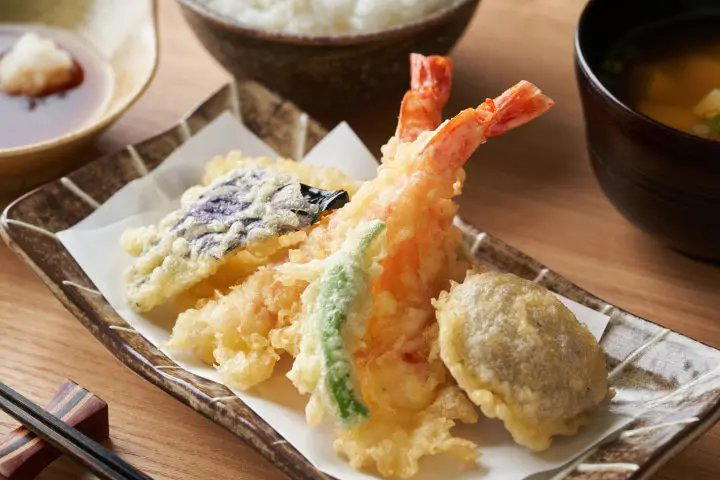
| Shunsai Tempura Shinra | Seasonal Tempura Course Dining | $10–20 | Tabelog 100 #69 | Nakagawa |
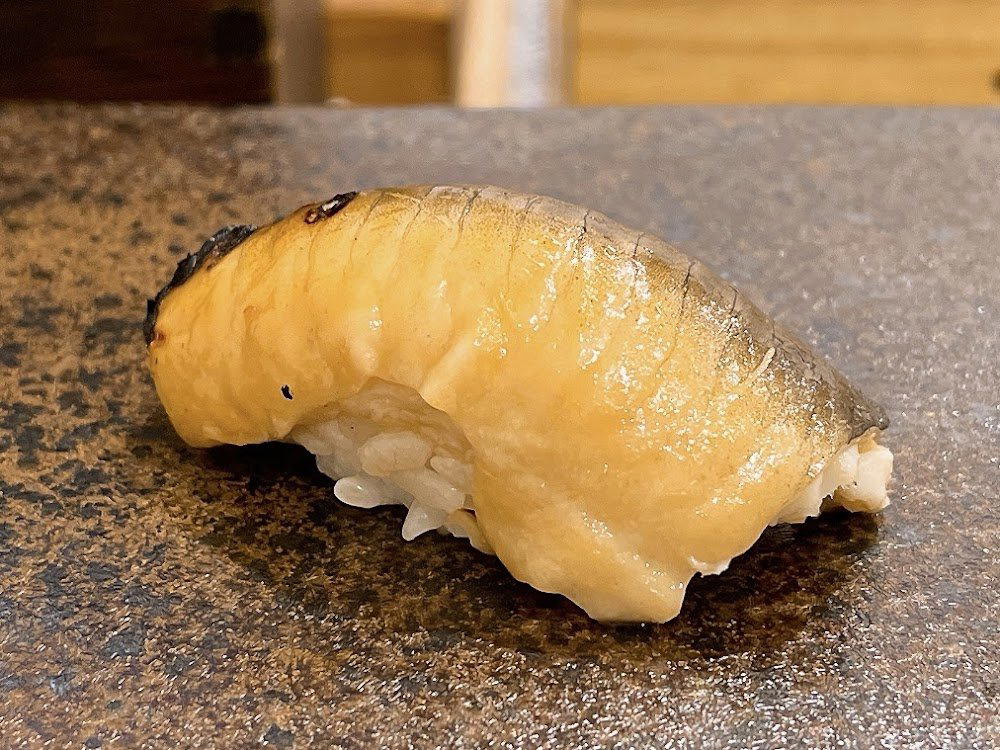
| 右江田 | Traditional Sushi Omakase | $150–200 | Not listed | Nakagawa |
Recognition history
Dated appearances from independent guides and award organizations, with the underlying list record or original source where available.
Tabelog 100 #86 · No. 86
Tabelog · Tabelog 100 - Ramen - AICHI - 2025
Continue exploring
More in Nagoya

Details
- Casual
- Modern
- Energetic
- Well Known
- Solo
- Casual Hangout
- Group Dining
- Family
- Standalone
- Beer Program
- A La Carte
- Counter Dining
- Beer
Current opening hours
- Monday
- 11 AM–10:30 PM
- Tuesday
- 11 AM–10:30 PM
- Wednesday
- 11 AM–10:30 PM
- Thursday
- 11 AM–10:30 PM
- Friday
- 11 AM–10:30 PM
- Saturday
- 11 AM–10:30 PM
- Sunday
- 11 AM–10:30 PM
Hours can change for holidays and private events. Hours as of .
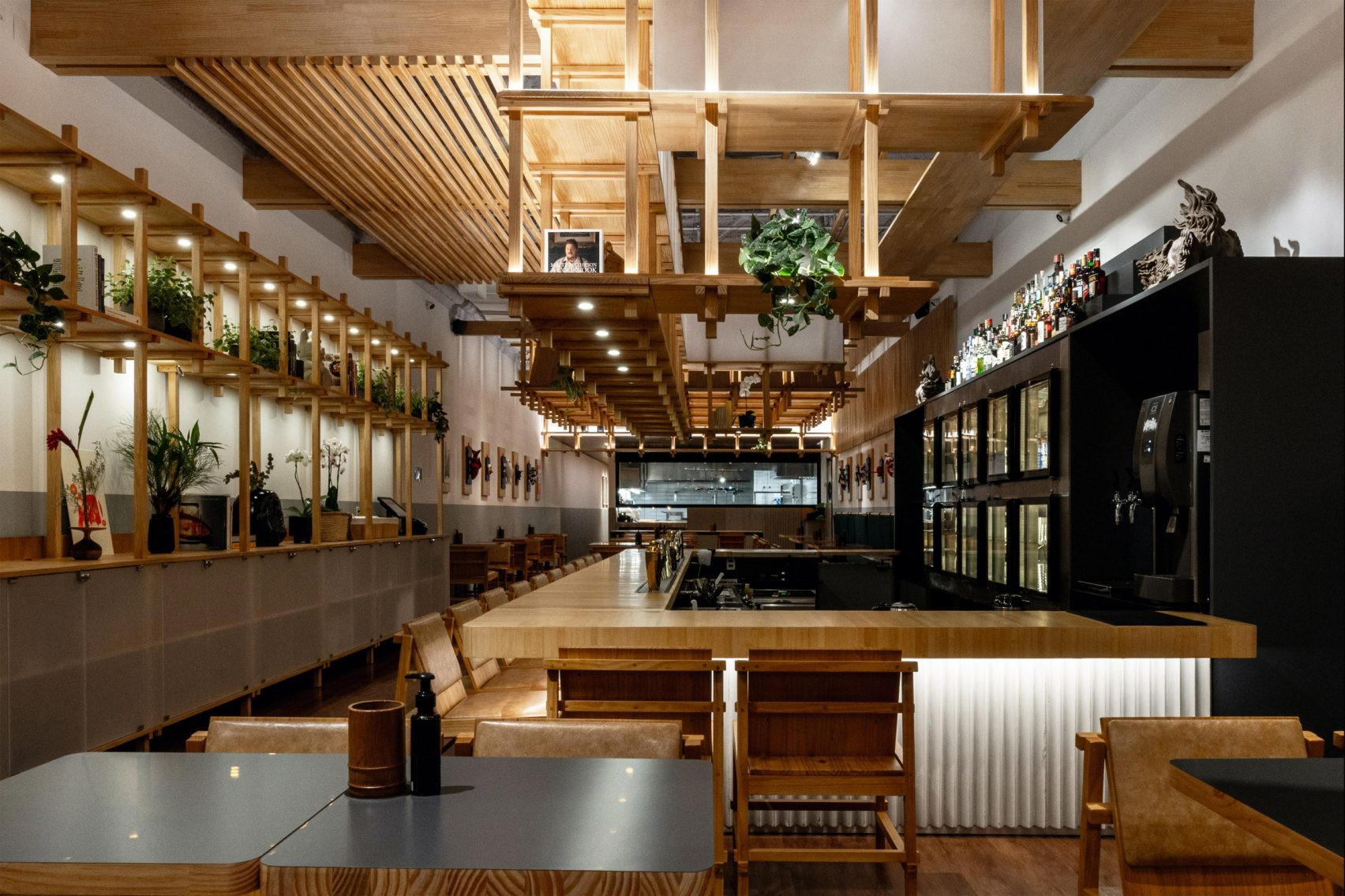
A compact basement ramen shop with a lively, fast-moving, casual atmosphere inside the Dai Nagoya Building.