

Michelin Plate · Tabelog 100 #82
Our verdict
At Wagyuchugokusai Kumanohanare in Osaka's Kita Ward, the premise is specific and executed with precision: Japanese wagyu beef reinterpreted through Chinese culinary technique, with Western inflections folded in. Prix fixe offerings built around that thesis, char-grilled chateaubriand in Peking duck pancakes, beef cheek simmered in black vinegar sharpened with balsamic, place it in a small category of restaurants genuinely renegotiating what Chinese cooking in Japan can mean.

Pearl is the En Primeur Club membership app, where members save venues, book tables and use the concierge.
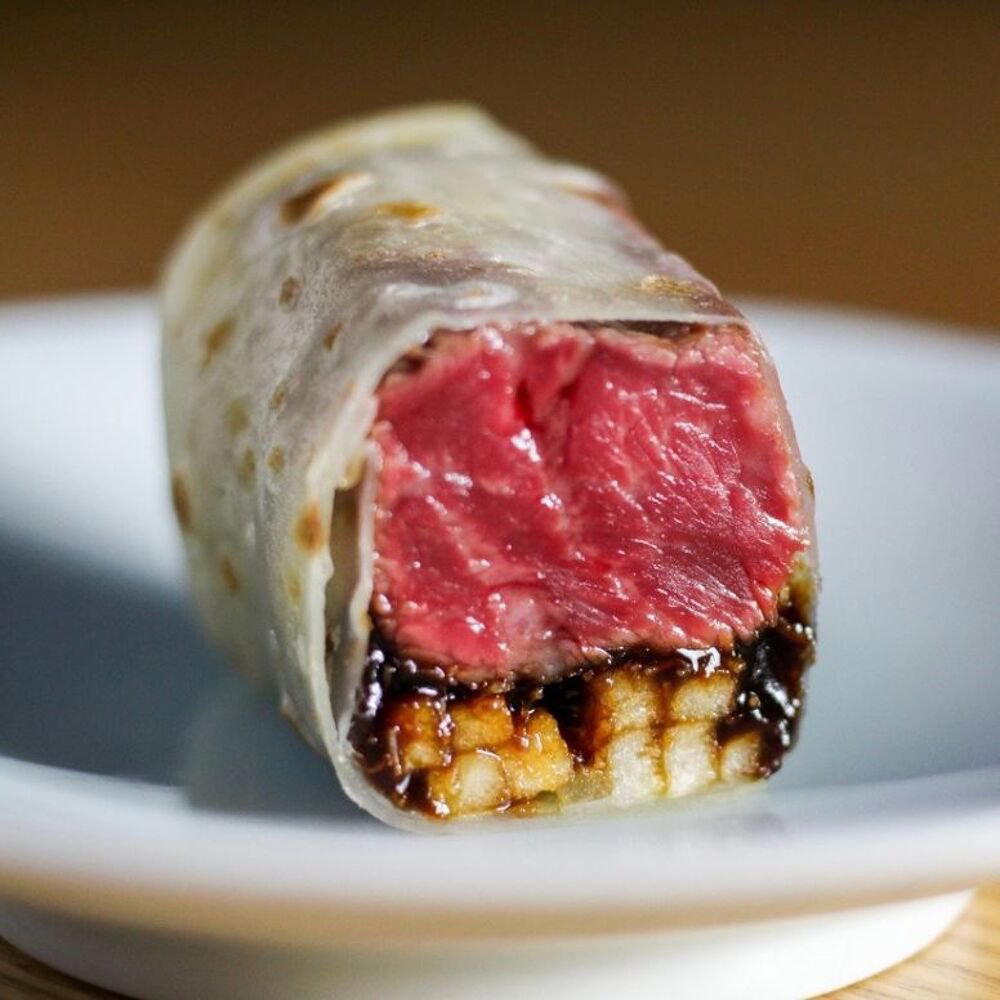
Where Chinese Technique Meets Japan's Premium Beef Culture
Osaka has long occupied an unusual position in Japan's dining hierarchy. While Tokyo accumulates Michelin stars at a rate that draws international attention, and Kyoto enforces kaiseki orthodoxy with near-institutional seriousness, Osaka tends to reward restaurants that play with convention. The city's kuidaore spirit, eat until you drop, has historically favoured abundance and invention over reverence. It's the environment that produced Fujiya 1935, one of the country's most technically ambitious innovative restaurants, and HAJIME, where French haute cuisine is filtered through a distinctly Japanese precision. Wagyuchugokusai Kumanohanare belongs to this tradition of category-defying ambition, though it approaches that goal from an angle most Osaka restaurants haven't attempted: Chinese cooking built around Japan's most celebrated beef.
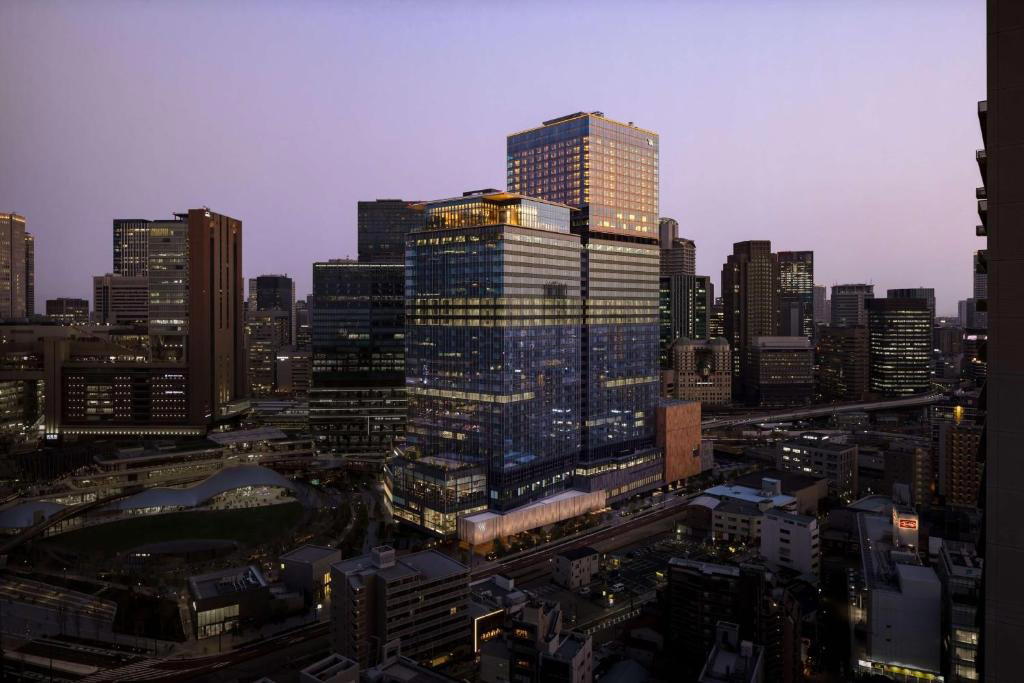
The restaurant occupies the ground floor of Aqua Dojima Fontana in Dojimahama, Kita Ward, a district that sits between Osaka's financial core and the dense restaurant corridors of Umeda. The Dojima area carries its own history as a former rice futures exchange, the world's first commodity market of that kind, and the neighbourhood retains a certain deliberateness about it, a sense that serious transactions occur here. A restaurant proposing something as considered as wagyu-centred Chinese cuisine fits that register.
The Concept: A Specific Thesis, Pursued Seriously
The name translates directly: Wagyu Chugoku-sai means Chinese cuisine made with wagyu. That's not a marketing slogan, it's a structural commitment that shapes every prix fixe offering. The format is prix fixe throughout, which signals something about intent. Restaurants that anchor on fixed menus are typically making an argument, not just offering options. The argument here is that wagyu beef, when approached through Chinese culinary logic rather than the teppanyaki or shabu-shabu frameworks that dominate its presentation in Japan, reveals different qualities.
Chef, trained in Japanese cuisine, brings that cross-disciplinary background to bear on techniques rooted in Chinese cooking. In practice, this produces dishes that would read as disorienting on paper but apparently cohere on the plate. Beef cheek braised in black vinegar is a recognisably Chinese preparation, the long, collagen-softening cook, the deep acidic reduction, but balsamic vinegar enters as a secondary note, a Western inflection that adjusts the finish without displacing the technique's logic. Char-grilled chateaubriand wrapped in Peking duck pancakes takes one of France's most ceremonial beef cuts and folds it into one of China's most recognisable service formats, the result sitting at an intersection that doesn't have an established name yet.
This kind of culinary triangulation, Japanese ingredient premium, Chinese structural technique, Western accent, is not common in Osaka or anywhere in Japan. The city has strong Chinese dining traditions, particularly in the Tsuruhashi and Namba areas, and those traditions run from Cantonese banquet restaurants to more casual Shanghainese operations. What Kumanohanare is doing sits well outside that spectrum. Its closest conceptual peers might be found in the small tier of Japanese restaurants that treat Chinese technique as a vocabulary rather than a genre, an approach that has more precedent in Tokyo's high-end creative dining scene than in Osaka's. For broader context on how Osaka's premium restaurant landscape distributes across cuisines and price points, the full Osaka restaurants guide maps the category clearly.
Critical Reception and Industry Position
Assessing Kumanohanare's industry standing requires some precision. The restaurant's documented recognition centres on what it has built conceptually: a prix fixe format constructed around a defined culinary thesis, with technique depth sufficient to make that thesis credible. In Osaka's high-end dining tier, where restaurants like Taian and Kashiwaya Osaka Senriyama operate within the recognised frameworks of kaiseki, and where La Cime holds a strong position in French-influenced fine dining, a restaurant that genuinely refuses those categories occupies a different kind of niche. It isn't competing for the same diner as a traditional kaiseki house.
The comparison that may be most useful is not within Osaka at all. At Atomix in New York City, Korean culinary tradition is reframed through a fine-dining tasting menu format with rigorous technique; the result sits outside Korean-American dining conventions while engaging deeply with Korean culinary knowledge. Le Bernardin in New York City made a comparable argument about French seafood for decades, that restraint and technique could redefine a category. Kumanohanare's ambition, translating wagyu into Chinese structural cooking, belongs to that broader class of restaurants that treat a single ingredient or tradition as the ground for a complete culinary proposition rather than a menu feature.
Within Japan, the analogous creative seriousness appears at restaurants like Harutaka in Tokyo, Gion Sasaki in Kyoto, and akordu in Nara, each anchoring on a specific tradition and executing it at a level that generates critical attention. Goh in Fukuoka and 1000 in Yokohama represent the same instinct across different cities and cuisines. What these restaurants share is the willingness to define their own category rather than compete within an established one.
Planning Your Visit
Wagyuchugokusai Kumanohanare is located at 1 Chome-4-4 Aqua Dojima Fontana, 1F, Dojimahama, Kita Ward, Osaka. The Dojima area is accessible from both Kitashinchi Station and Higashi-Umeda Station, placing it within walking distance of Osaka's main transport interchange. Given the prix fixe format and the precision involved in sourcing wagyu for a set menu, advance reservation is strongly advisable; walk-in availability at restaurants operating at this level of concept specificity is generally limited. Contact and booking details are best confirmed directly through the venue, as specific hours and reservation channels are not available here. Visitors planning a broader Osaka itinerary can consult the Osaka hotels guide, bars guide, wineries guide, and experiences guide for a full picture of the city. For restaurants in Japan beyond Osaka, 6 in Okinawa represents another example of singular culinary positioning worth noting.
Questions About Wagyuchugokusai Kumanohanare
- What kind of setting is Wagyuchugokusai Kumanohanare?
- The restaurant occupies the ground floor of a commercial building in Dojimahama, Kita Ward, one of Osaka's more considered dining districts, between the financial centre and Umeda. The prix fixe format and conceptual specificity of the menu suggest a focused, deliberate dining environment rather than a casual one.
- What do people recommend at Wagyuchugokusai Kumanohanare?
- The documented signature preparations include beef cheek braised in black vinegar with a balsamic accent, and char-grilled chateaubriand wrapped in Peking duck pancakes. Both reflect the restaurant's core premise, Japanese wagyu reinterpreted through Chinese technique with Western inflections, and both appear in the restaurant's own description of what defines its cuisine. The prix fixe format means the menu is curated rather than à la carte, so those dishes should be understood as part of a structured sequence.
- Is Wagyuchugokusai Kumanohanare reservation-only?
- Restaurants operating with prix fixe menus anchored around premium wagyu sourcing almost invariably require advance reservations, the logistics of ingredient procurement make walk-in service impractical. In Osaka's competitive high-end dining tier, where restaurants at the level of HAJIME and La Cime book weeks or months ahead, a restaurant with this level of concept definition is almost certainly in the same booking category.
- What's the standout thing about Wagyuchugokusai Kumanohanare?
- The structural proposition is what distinguishes it: a prix fixe format built entirely around the thesis that Japanese wagyu beef, when handled through Chinese culinary technique rather than the teppanyaki or sukiyaki frameworks that usually govern it, produces something categorically different. The chef's background in Japanese cuisine adds a third layer of technical reference. The result is a restaurant that doesn't compete within an existing genre so much as define its own, which is relatively rare in a city with as many strong conventional alternatives as Osaka.
- Can Wagyuchugokusai Kumanohanare handle vegetarian requests?
- Given that the entire concept centres on wagyu beef as the primary ingredient across a fixed menu, vegetarian accommodation would represent a fundamental departure from the restaurant's thesis. It is unlikely that meaningful vegetarian alternatives exist within the current format, but this should be confirmed directly with the restaurant. Contacting the venue before booking is the appropriate step for anyone with dietary requirements.
Quick Comparison
Comparable venues nearby, for context on price, style, and recognition.
| Venue | Cuisine | Price | Awards | Notes |
|---|---|---|---|---|
| Wagyuchugokusai KumanohanareThis venue (the venue you are viewing) | Chinese Wagyu Cuisine | Not listed | Michelin Plate · Tabelog 100 #82 | Not listed |
| Hinotori | Classical Chinese Fine Dining | $100–150 | Tabelog Bronze #115 | Chūō |
| xiang hua | Seasonal Regional Chinese Fine Dining | $100–150 | Michelin Plate · Tabelog 100 #61 | Kita |
| Canton Ryori Minsei Hiruton puraza uesuto ten | Traditional Cantonese & Dim Sum in Hilton Plaza West | $50–100 | Tabelog 100 #37 | Kita |
| Chukashunsai Morimoto | Modern Sichuan Chinese | $30–50 | Michelin Bib Gourmand | Chūō |
| Tanaka Yoshihide | Modern Cantonese with Japanese Seasonality | $150–200 | Tabelog Silver #139 | Miyakojima |
Recognition history
Dated appearances from independent guides and award organizations, with the underlying list record or original source where available.
Michelin Plate
Michelin
Tabelog 100 #82 · No. 82
Tabelog · Tabelog 100 - Chinese cuisine - WEST - 2026
Continue exploring
More in Osaka
Restaurants in Osaka
All restaurants in Osaka →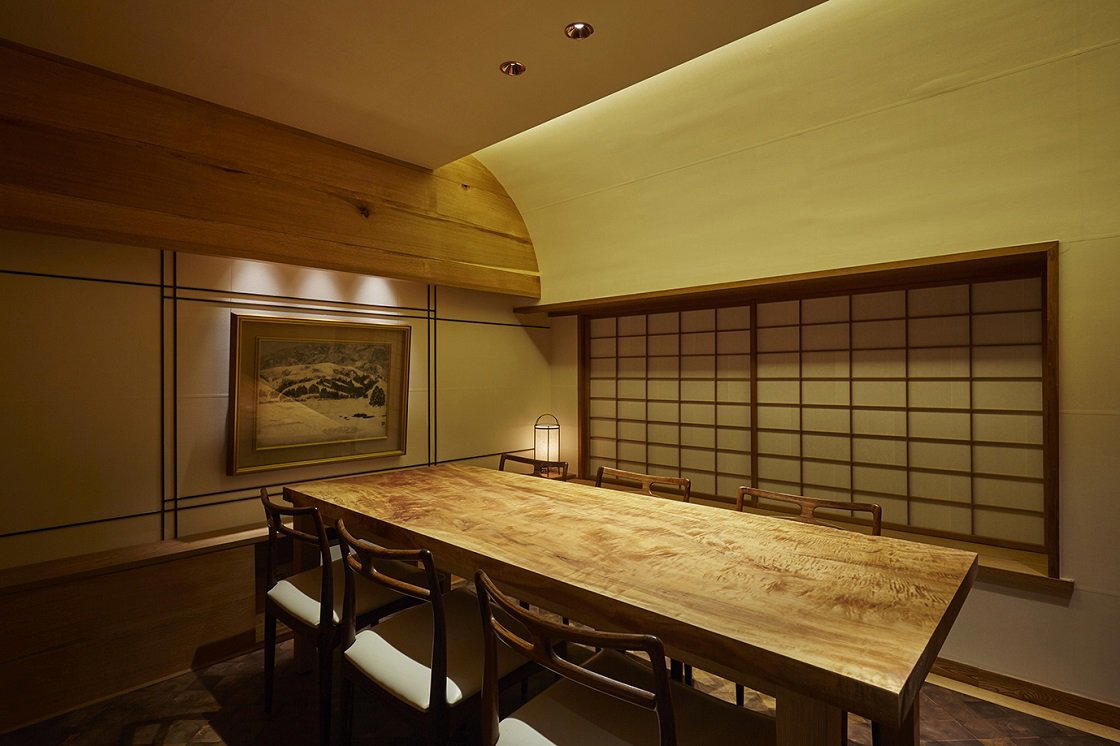


Bars in Osaka
All bars in Osaka →


Hotels in Osaka
All hotels in Osaka →



Wineries in Osaka
Browse all →
Details
- Elegant
- Sophisticated
- Modern
- Special Occasion
- Celebration
- Business Dinner
- Open Kitchen
- Tasting Menu
Current opening hours
- Monday
- 12–2 PM, 6–11 PM
- Tuesday
- 12–2 PM, 6–11 PM
- Wednesday
- 12–2 PM, 6–11 PM
- Thursday
- 12–2 PM, 6–11 PM
- Friday
- 12–2 PM, 6–11 PM
- Saturday
- 12–2 PM, 6–11 PM
- Sunday
- Closed
Hours can change for holidays and private events. Hours as of .