"Get Local Flavor If you need fuel in between bargaining at the Grand Bazaar and Spice Market in Eminönü, stop in for lunch at the restaurant above Namlı Pastırmacı. A language barrier won’t be a big issue, as you can point to whatever looks tasty; good bets are mercimek (red lentil) soup and stuffed eggplant. You can find edible souvenirs at Namlı’s downstairs deli, including charcuterie and all manner of cured meats. Namlı also has a gourmet shop in Karaköy, selling olive oil, honey, pickles, and other foodstuffs, and is a popular spot for breakfast."
Pearl is the En Primeur Club membership app — saves, bookings, and concierge access live there. Same editors, same standards.
- Address
- Rüstem Paşa, Hasırcılar Cd. No:14, 34116 Fatih/İstanbul, Türkiye
- Phone
- +90 212 511 63 93
- Website
- namlipastirma.com.tr
- Directions
- Get directions
 Saves & bookings on Pearl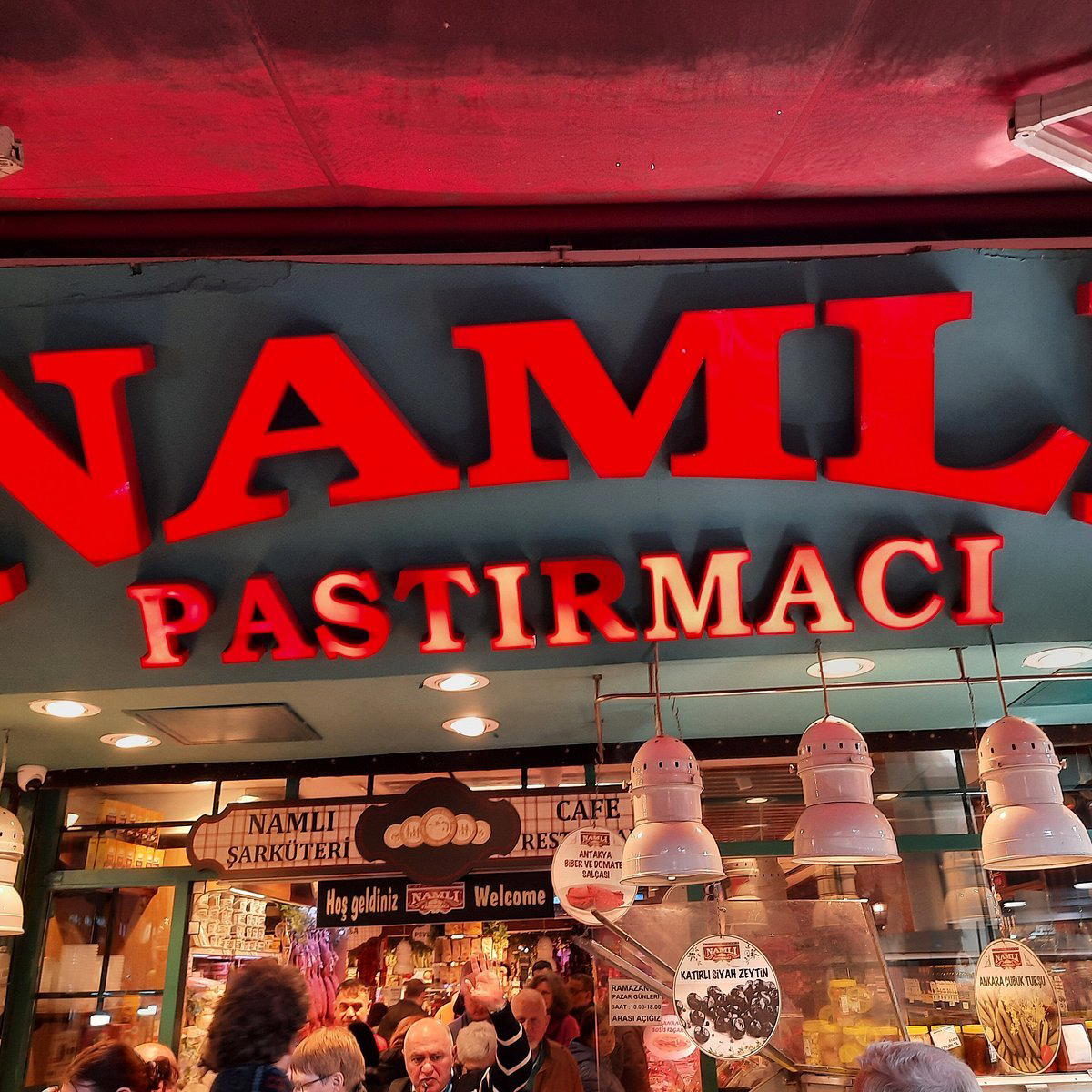
Where Istanbul's Oldest Cured-Meat Tradition Still Operates on Its Own Terms
Hasırcılar Caddesi, the narrow commercial artery cutting through the Eminönü side of the Grand Bazaar district, has been a working traders' street for centuries. It smells of spice before you turn the corner: cumin, fenugreek, dried pepper. The shopfronts are small and functional, merchandise stacked to the ceiling. Namli Pastirmaci sits at number 14, on a street that has not softened itself for tourism and shows no signs of starting. This is not a neighbourhood of tablecloths and candlelight; it is a neighbourhood of tradespeople, and the shop fits accordingly.
Pastirma and the Cured-Meat Tradition It Represents
To understand what Namli Pastirmaci represents, it helps to understand what pastirma is and where it sits in Turkish food culture. Pastirma is a cured, air-dried beef pressed under stone weights and coated in a paste called çemen, made from fenugreek, garlic, cumin, and red pepper. The method is older than the Ottoman Empire, with roots traced to Central Asian preservation techniques carried westward across centuries. By the time Istanbul became a major food city, pastirma had already taken on the character of a luxury product: labour-intensive, aggressively flavoured, eaten in thin slices.
The trade in pastirma has historically been concentrated in specific districts of Istanbul, and Eminönü's spice and provisions quarter has been one of them. Namli Pastirmaci occupies the specialist end of that tradition, operating as a provisions shop rather than a restaurant in any conventional sense. The distinction matters. Istanbul's high-end dining scene, represented by ₺₺₺₺-tier restaurants such as Turk Fatih Tutak, Mikla, and Neolokal, tends to frame traditional ingredients inside composed, technique-driven menus. A specialist pastirma shop represents a different orientation: the product itself is the point, not its transformation.
How the Provisions Shop Model Has Shifted
The editorial angle here is evolution. Istanbul's food economy has changed dramatically over the past two decades. The tourist influx that reshaped Sultanahmet and parts of Beyoglu created pressure on traditional provisions traders to either pivot toward hospitality formats or retreat to a more local clientele. Many did one or the other. Some shops that once sold raw produce or cured meats began offering prepared food, seating, and menus. Others closed or relocated as rents rose in historically commercial neighbourhoods.
Namli Pastirmaci's address on Hasırcılar Caddesi places it in a zone that has remained more functionally commercial than the areas immediately around major tourist sites, which has likely insulated it from some of those pressures. The street continues to attract buyers who are there to purchase goods, not experiences. That context shapes what the shop is: a place where pastirma and related cured products such as sucuk (dried beef sausage heavily spiced with garlic) are sold as provisions, with the transaction oriented toward locals, professional buyers, and the kind of traveller who seeks out source-level access to ingredients rather than plated interpretations of them.
This represents a different kind of evolution than what has happened at Istanbul's modern Turkish restaurants. Where Arkestra or Casa Lavanda have adapted traditional flavours for a dining-room format, Namli Pastirmaci's evolution, if it can be called that, has been one of persistence: maintaining a specialist trade in a city where the incentives for generalism have only increased.
What You Are Actually Buying
Pastirma's quality varies significantly by producer, cut, and çemen application. Kayseri, a city in central Anatolia, has historically been considered the primary producing region for high-quality pastirma, and much of what reaches Istanbul's better provisions shops originates there. Sucuk quality similarly varies, with fat content, spice balance, and curing time all affecting the result. A specialist shop's value proposition rests on sourcing selectivity, which means the product range at a place like Namli Pastirmaci reflects specific procurement decisions rather than generic wholesale supply.
For a traveller with a serious interest in Turkish food culture, this kind of provisions shop sits closer to the source of culinary tradition than any restaurant. Restaurants, even those committed to traditional technique, interpret and mediate. A pastirma shop sells the ingredient in its direct form, which is both more revealing and more demanding of the buyer's knowledge. There is no menu to guide you, no chef to explain the provenance. The product speaks in the language of fat distribution, depth of çemen crust, and the controlled funk of well-aged beef.
Turkey's food culture across regions offers similarly source-level encounters. Kokorecci Asim Usta in Bornova takes a single offal preparation to a level of specialist focus analogous to what Namli Pastirmaci does with cured beef. In coastal regions, fish-focused spots such as Poyraz Sahil Balik Restaurant in Beykoz operate on a similarly product-forward logic. The common thread is that the ingredient's quality is the primary variable.
Getting There and Planning Your Visit
Hasırcılar Caddesi runs between the Egyptian Spice Bazaar (Mısır Çarşısı) and the Grand Bazaar, making it walkable from either landmark. The closest public transport is the Eminönü tram stop on the T1 line. The street itself is most active during morning and midday hours on weekdays, when the provisions trade runs at full capacity. Visitors arriving in the late afternoon on a weekend will find a quieter and potentially less representative version of the experience. No website or phone number is publicly listed for Namli Pastirmaci, and no booking is applicable given the shop format, so the visit is necessarily a walk-in proposition. Cash remains standard for transactions in this type of provisions trade, though payment norms vary.
For context on how Istanbul's broader food scene is structured, our full Istanbul restaurants guide maps the city's dining across price tiers and neighbourhoods. Travellers building a wider Turkey itinerary might also consider the very different register offered by Maçakızı in Bodrum or the Cappadocian tradition at Aravan Evi in Ürgüp. Further afield, Narımor in Izmir and Nahita Cappadocia in Nevsehir each represent strong regional alternatives for those seeking ingredient-driven cooking outside Istanbul. For contrast at the composed-dining end of Turkish cuisine, Mezegi in Fethiye and Divia by Maksut Aşkar in Marmaris offer well-regarded options in the Aegean southwest. International reference points for the kind of product-serious sourcing culture Namli Pastirmaci represents would include the charcuterie traditions behind places like Le Bernardin in New York City or the ingredient-obsessive ethos at Lazy Bear in San Francisco, though the format and price register are entirely different. For dining-room options in Istanbul when the provisions approach satisfies curiosity rather than appetite, Agora Pansiyon in Milas and Ahãma in Göcek round out the coastal south.
How Namli Pastirmaci Istanbul compares with similar nearby venues.
| Venue | Cuisine | Price |
|---|---|---|
| Pandeli | Turkish | ₺ |
At a Glance
- Classic
- Cozy
- Casual Hangout
- Standalone
Current opening hours
- Monday
- 7:30 AM–8 PM
- Tuesday
- 7:30 AM–8:30 PM
- Wednesday
- 7:30 AM–8:30 PM
- Thursday
- 7:30 AM–8 PM
- Friday
- 7:30 AM–8 PM
- Saturday
- 7:30 AM–8 PM
- Sunday
- Closed
Hours can change for holidays and private events. Last verified .
Know Before You Go
- Getting there
- Rüstem Paşa, Hasırcılar Cd. No:14, 34116 Fatih/İstanbul, Türkiye