Mutsu
Our verdict
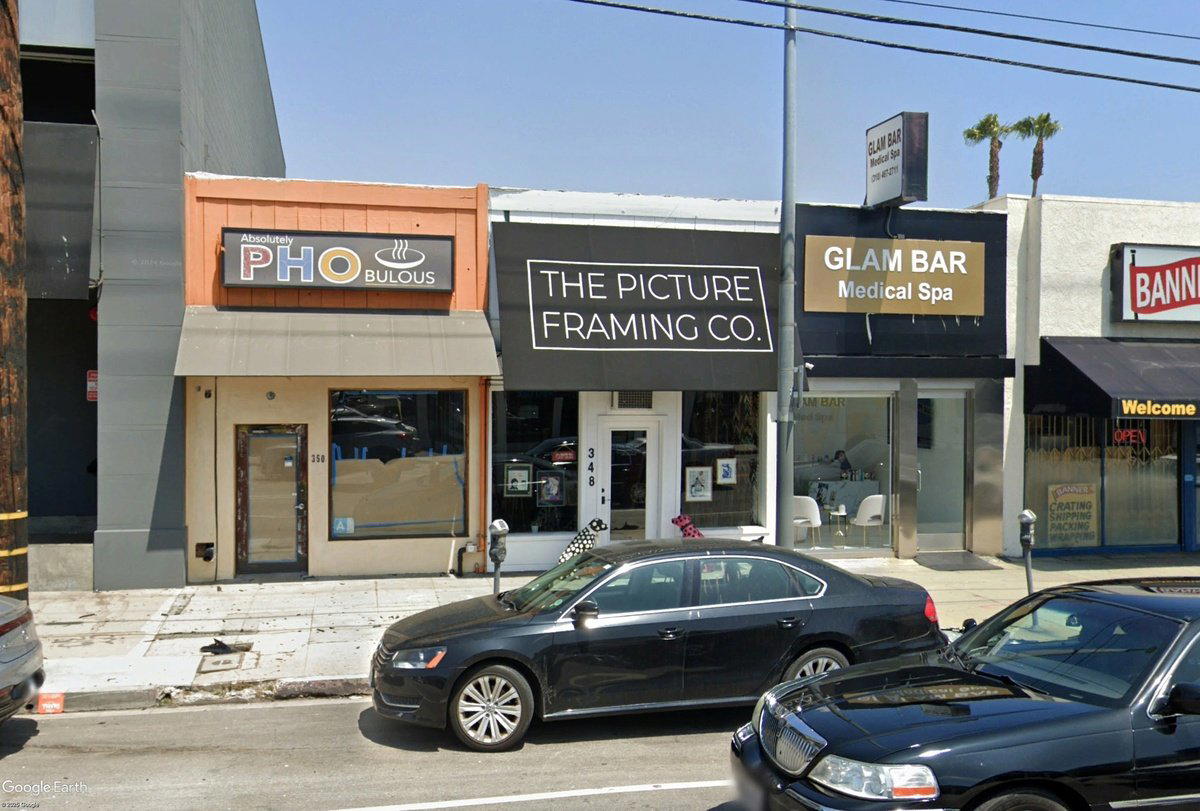
On North La Cienega Boulevard, Mutsu occupies a stretch of Los Angeles where serious Japanese dining has quietly consolidated over the past decade. The address alone signals a particular kind of intent: this is a corridor where regulars return on their own terms, guided by habit and trust rather than trending reservation apps. What keeps them coming back is what defines the room.

Pearl is the En Primeur Club membership app — saves, bookings, and concierge access live there. Same editors, same standards.
- Address
- 350 N La Cienega Blvd, Los Angeles, CA 90048
- Phone
- (424) 204-9494
- Hours
- Daily 5–9:30 PM
- Website
- mutsu.love
- Directions
- Get directions
- Booking
- Book on OpenTable
The menu
What to order
- Wagyu & Uni Temaki
- Toro & Takuan Temaki
- Sweet Shrimp & Caviar Temaki
- Yakitori Skewers
- Chirashi Bowl
La Cienega and the Logic of Return
North La Cienega Boulevard has a specific gravitational pull in Los Angeles dining. It is not a destination strip in the influencer sense — no murals, no neon — but it concentrates a particular category of restaurant that rewards sustained attention over novelty. Mutsu, at 350 N La Cienega Blvd, sits inside that logic. The address is legible to anyone who has spent real time eating through this city: close enough to Beverly Grove to draw a neighbourhood regular base, far enough from the West Hollywood spectacle strip to function on its own terms. In Los Angeles, that distinction matters more than it might in a smaller city, because the competition for a diner's habitual loyalty is unusually fierce.
The regulars at places like this rarely need to consult a menu by their third or fourth visit. That is not a cliché, it describes a specific operational reality. When a restaurant earns a repeat clientele in a city with the dining density of Los Angeles, it has cleared a high bar: the food is consistent enough to remember, the room is comfortable enough to revisit without occasion, and the staff understand that returning guests expect to be recognised, not merely accommodated. These are the conditions Mutsu appears to have built its reputation on, on a boulevard where that kind of loyalty is quietly competitive.
What the La Cienega Corridor Tells You
Japanese cuisine in Los Angeles occupies a more varied and contested space than almost any other American city outside New York. The range runs from hyper-technical omakase counters, where prix-fixe progression and sourcing lineage are the entire point, through to neighbourhood-facing formats where accessibility and consistency are the draw. Hayato, in the Row DTLA complex, represents one pole of that spectrum: a kaiseki-oriented counter with strict capacity and advance booking requirements. Mutsu on La Cienega operates differently, shaped by a different set of neighbourhood pressures and a different relationship with its clientele.
Across Los Angeles's premium dining tier more broadly, the pattern is familiar. Tasting-menu formats dominate the upper price bracket, Kato with its New Taiwanese progression, Somni with molecular precision, Providence anchoring contemporary seafood with Michelin recognition. Mutsu does not advertise itself inside that rarefied cluster. Its La Cienega address places it closer to a different kind of seriousness: the restaurant that earns its standing through repetition and a kitchen that does not drift.
The Regulars' Logic
In most cities, the regulars at a Japanese restaurant of this category have worked out a personal canon from the menu: the dish they order every time, the variation they try when something new appears, the drink pairing that the staff have stopped asking about because they already know. That unwritten menu, the one that only exists in the relationship between a returning guest and a room that pays attention, is the actual product at a restaurant like Mutsu.
This is worth taking seriously as a dining consideration, not just a sentimental observation. Restaurants that cultivate regulars tend to maintain tighter quality control than those chasing one-time visitors, because the audience notices deviation. A diner who has ordered the same preparation twelve times across six months is a more exacting critic than any reviewer on a single visit. The La Cienega corridor, with its mix of residential proximity and professional-class regulars, is exactly the kind of environment that selects for that dynamic.
For a first-time visitor, the practical implication is direct: treat your first meal as orientation. Notice what the tables around you are ordering without a second look at the menu. In rooms like this, the regulars have already done the curation work.
Los Angeles Japanese Dining in Its Wider Frame
Los Angeles is one of three American cities, alongside New York and San Francisco, where Japanese cuisine across every register has developed a self-sustaining critical mass. That means the floor is high: even mid-tier Japanese restaurants in LA are competing against a customer base that has eaten at serious counters in Tokyo, Osaka, and Kyoto. It also means that the ceiling, at the upper end, is genuinely competitive with comparable cities globally.
Nationally, the reference points for Japanese-influenced or Japanese-rooted fine dining have expanded considerably. Atomix in New York has repositioned what Korean-Japanese tasting menus can do at a two-Michelin-star level. Le Bernardin in New York City sets the standard for technical precision applied to seafood, a discipline with obvious relevance to the Japanese tradition. The French Laundry in Napa and Alinea in Chicago define what American tasting-menu ambition looks like at its most formal. Against that context, the restaurants that survive by cultivating loyalty rather than spectacle occupy a specific and durable niche.
Elsewhere in California, Lazy Bear in San Francisco and Single Thread Farm in Healdsburg demonstrate that the state has appetite for destination-level, commitment-required dining outside the tasting-menu capitals. Addison in San Diego holds California's only three-Michelin-star outside the Bay Area and Napa. Osteria Mozza in LA anchors the Italian side of the city's serious dining, with a loyal regulars base built over nearly two decades. Each of these operates on different terms, but all share the quality that defines restaurants worth returning to: they do not need the novelty cycle to fill seats.
Planning a Visit to Mutsu
| Venue | Cuisine | Price Tier | Format | Booking Lead Time |
|---|---|---|---|---|
| Mutsu | Japanese | Confirm on booking | Confirm on booking | Confirm directly |
| Hayato | Japanese (Kaiseki) | $$$$ | Counter, tasting menu | 4-6 weeks typical |
| Kato | New Taiwanese, Asian | $$$$ | Tasting menu | 3-5 weeks typical |
Specific hours, pricing, and booking method for Mutsu should be confirmed directly via the venue's current contact details, as this information is subject to change. The La Cienega address (350 N La Cienega Blvd, Los Angeles, CA 90048) is confirmed. Street parking is available on surrounding blocks; the immediate strip tends toward valet at higher-volume neighbours. For wider context on serious dining across the city, our full Los Angeles restaurants guide maps the key tiers and neighbourhoods.
Readers planning longer itineraries beyond California may also reference Blue Hill at Stone Barns in Tarrytown, The Inn at Little Washington, Bacchanalia in Atlanta, Emeril's in New Orleans, and 8 1/2 Otto e Mezzo Bombana in Hong Kong for comparable serious-dining reference points across different cities and formats.
Frequently asked questions
Where exactly is Mutsu?
Mutsu is located at 350 N La Cienega Blvd, Los Angeles, CA 90048, Los Angeles.
How does Mutsu fit into the broader Los Angeles Japanese dining scene?
Los Angeles is one of three American cities, alongside New York and San Francisco, where Japanese cuisine has developed a self-sustaining critical mass across every register. Mutsu occupies the La Cienega corridor, a stretch that attracts a returning local clientele rather than trend-driven foot traffic, placing it in a different conversation from the high-visibility omakase counters in Downtown or Beverly Hills. That positioning, on a boulevard with gravitational pull among the city's regular dining public, tends to reward consistency over novelty.
What's the best thing to order at Mutsu?
Mutsu's menu details are not published, which is itself a signal: the kitchen at 350 N La Cienega works best when you follow the house direction rather than building your own order. On a corridor where regulars tend to develop a personal canon over multiple visits, the practical answer is to ask the staff on arrival what's moving that day. Kitchens at this level on La Cienega typically rotate based on what's in best condition, not what's been on the menu the longest.
Do they take walk-ins at Mutsu?
No booking or walk-in policy is listed for Mutsu at 350 N La Cienega Blvd, Los Angeles. Given the competitive density of Japanese dining on this corridor, calling ahead is the safer approach than arriving without a reservation, particularly on weekend evenings when the West Hollywood-adjacent dining public moves in force.
What's the signature at Mutsu?
Mutsu has not published a declared signature dish or defining preparation. On La Cienega, where Japanese restaurants at this level tend to let technique rather than a single dish carry the room, the signature is more often a style of service or a particular handling of one ingredient category. The full picture requires a visit to the address at 350 N La Cienega Blvd.
What It’s Closest To
Comparable venues nearby, for context on price, style, and recognition.
| Venue | Cuisine | Price | Notes |
|---|---|---|---|
| MutsuThis venue — the venue you are viewing | Modern Japanese Izakaya - Hand Roll Bar | $50–100 | Not listed |
| The Izaka-ya by Katsu-ya (Beverly Grove) | Modern Japanese Izakaya | $50–100 | Beverly Grove |
| Lucky Mizu | Modern Japanese Shabu-Shabu & Seiro Mushi | $50–100 | Downtown |
| Eigikutei | Japanese Kaiseki & Omakase Sushi | $100–150 | Little Tokyo |
| Sushi Fumi | Japanese Sushi | $50–100 | Beverly Grove |
| Aki Restaurant | Traditional Japanese | $20–30 | Sawtelle |
Continue exploring
More in Los Angeles
Restaurants in Los Angeles
Browse all →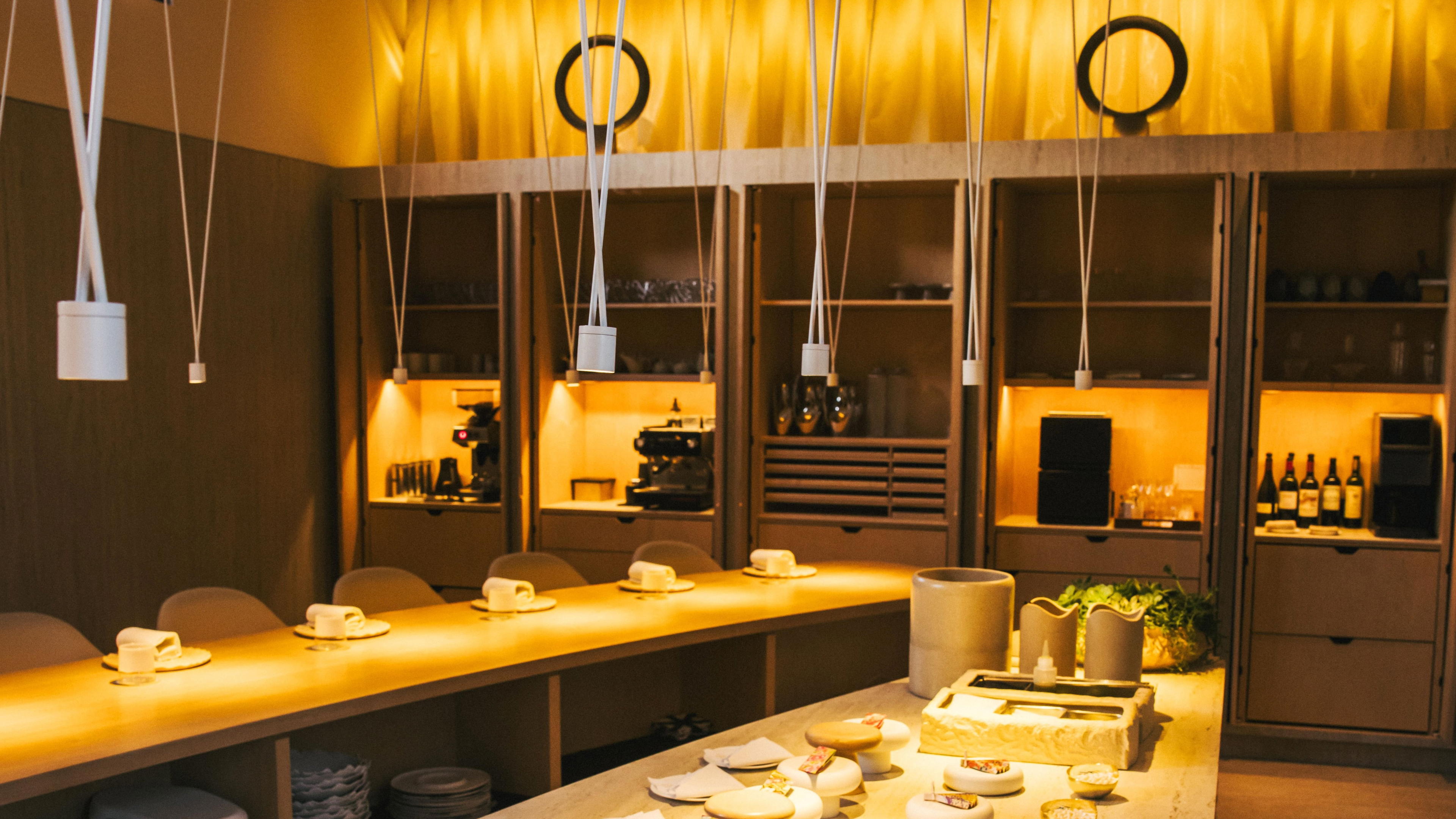
Bars in Los Angeles
Browse all →
Hotels in Los Angeles
Browse all →
Wineries in Los Angeles
Browse all →
Details
- Sophisticated
- Intimate
- Quiet
- Minimalist
- Elegant
- Date Night
- Special Occasion
- Casual Hangout
- Chefs Counter
- Open Kitchen
- Private Dining
- Sake Program
- Local Sourcing
- Counter Dining
- A La Carte
- Small Plates
- Sake
- Japanese Whisky
- Pescatarian Friendly
Current opening hours
- Monday
- 5–9:30 PM
- Tuesday
- 5–9:30 PM
- Wednesday
- 5–9:30 PM
- Thursday
- 5–9:30 PM
- Friday
- 5–9:30 PM
- Saturday
- 5–9:30 PM
- Sunday
- 5–9:30 PM
Hours can change for holidays and private events. Last verified .
Warm, sculpted dining space with soft light and natural textures creating a calm, refined atmosphere that invites guests to slow down and savor each bite.