Sushi Fumi
"Don’t be fooled by the fancy clientele or the fact that a line starts to form outside the restaurant approximately one hour before it opens: Sushi Fumi is actually a casual neighborhood sushi spot. However, unlike a lot of L.A. sushi restaurants, the hype around Sushi Fumi is warranted, and worth the “walk-ins only” chaos for the spicy tuna alone., Florence O’Connor"
Pearl is the En Primeur Club membership app — saves, bookings, and concierge access live there. Same editors, same standards.
- Address
- 359 N La Cienega Blvd, Los Angeles, CA 90048
- Phone
- +1 310 855 0006
- Website
- sushifumi.site
- Directions
- Get directions
 Saves & bookings on Pearl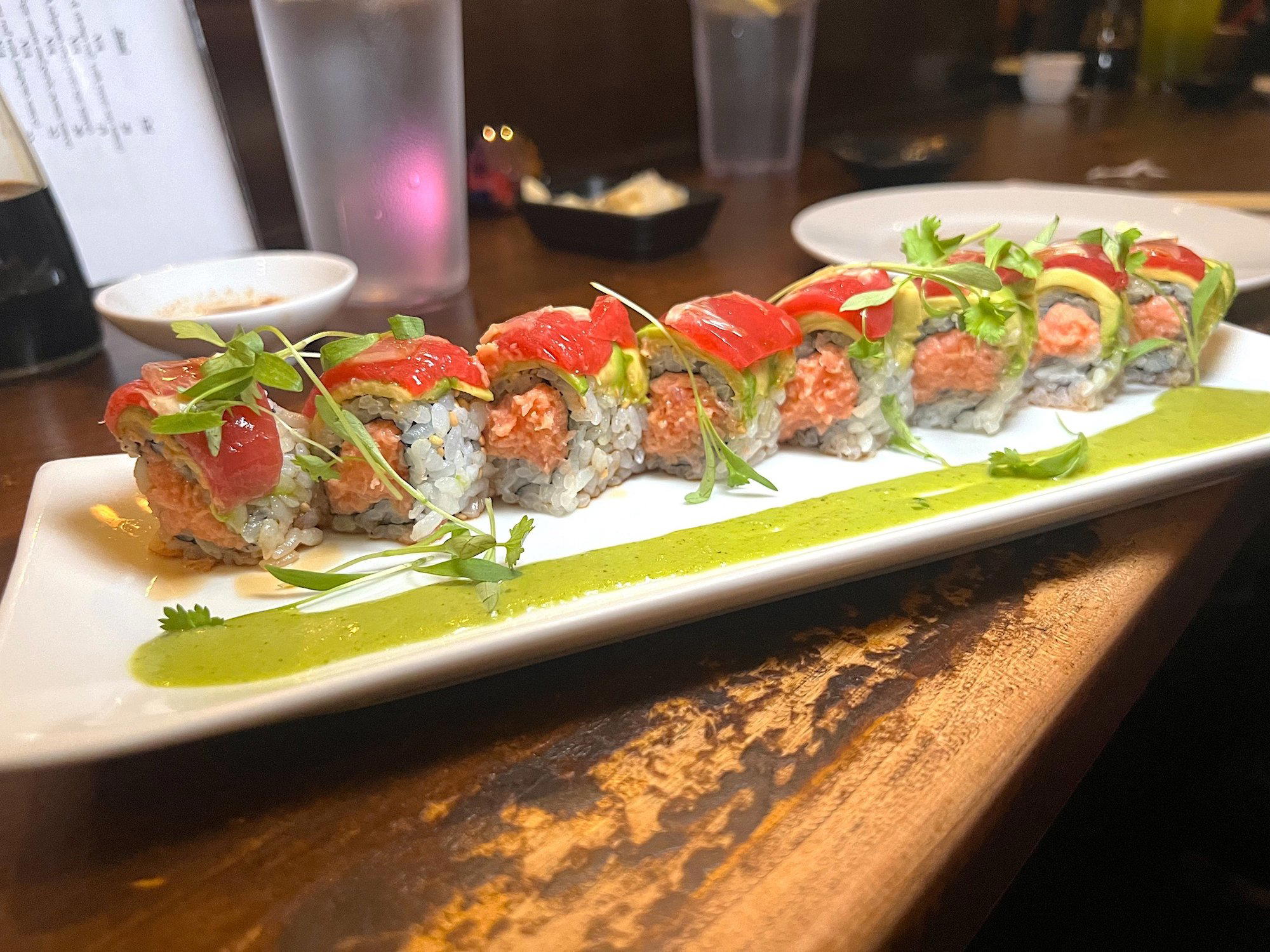
La Cienega's Quiet Counter
On a stretch of La Cienega Boulevard where restaurant concepts compete loudly for attention, Sushi Fumi occupies its space without theatrical announcement. The address, 359 N La Cienega Blvd in West Hollywood's dining corridor, places it among one of the denser concentrations of serious restaurants in Los Angeles, a city where premium Japanese dining has expanded considerably over the past decade. Walking in, the register shifts: the room asks you to slow down. That quality, the deliberate pace of a sushi counter rather than the velocity of a modern casual dining room, is the defining atmospheric condition of serious omakase in Los Angeles, and Sushi Fumi operates within that tradition.
Where Sushi Fumi Sits in the Los Angeles Japanese Dining Scene
Los Angeles now runs a spectrum of Japanese counter dining that ranges from accessible neighborhood sushi to allocation-driven omakase at the level of Hayato, the kaiseki-leaning destination in the Arts District that represents one pole of the city's Japanese dining ambition. Closer in format and price tier to Sushi Fumi, Kato on the Westside bridges Taiwanese and Japanese precision into a format that has drawn sustained national recognition. Sushi Kaneyoshi, operating downtown in a basement counter format, has positioned itself at the upper end of the omakase price band. Sushi Fumi does not operate at that same altitude of critical documentation, but La Cienega as a dining corridor carries its own weight: Osteria Mozza anchors the Italian side of the street, and the block has produced durable, serious restaurants across categories for many years. Location here is a signal in itself.
The broader context matters for calibrating expectations. In cities like New York, where Atomix has redefined what Korean fine dining means internationally, or where counter-format Japanese restaurants now operate at price points that rival Le Bernardin, the premium sushi tier has become genuinely stratified. Los Angeles is undergoing a similar stratification. The city's top-tier counters increasingly price and book like their New York equivalents. Sushi Fumi sits in a cohort below that ceiling, which in practical terms means it may be more accessible without being less serious about the fundamentals of nigiri technique and product sourcing.
The Wine Dimension at a Sushi Counter
The editorial angle on any serious sushi counter's beverage program is worth addressing directly, because the assumptions travellers carry from other fine dining formats do not always transfer cleanly. The dominant beverage logic at Japanese counter restaurants is sake, and for good reason: the flavor architecture of aged fish, seasoned rice, and minimal sauce interference aligns more precisely with sake's fermentation character than with most wine. Counter-format omakase, where the progression moves through lighter white fish before arriving at fattier cuts and aged pieces, tends to create beverage pairing sequences that reward sake's range across junmai daiginjo, junmai, and kimoto styles.
That said, the broader shift across Los Angeles fine dining has moved toward wine lists that acknowledge the counter format's possibilities. Houses like Somni, the progressive tasting menu in West Hollywood that has pushed beverage pairing into genuinely experimental territory, represent one direction. Sushi counters have generally been more conservative, but the better ones in LA now carry Burgundy-influenced whites, particularly Chablis and Puligny-Montrachet, that can function alongside delicate fish courses without overwhelming them. Champagne, specifically blanc de blancs with high acidity and low dosage, has become a standard opening pairing at serious counters nationally, from The French Laundry in Napa to the omakase tier in New York. Whether Sushi Fumi's list extends into that territory is not documented in publicly available data, but the format and address suggest a beverage program calibrated to the seriousness of the food.
For comparison, properties like Frasca Food and Wine in Boulder have demonstrated that wine list curation depth can become a primary editorial distinction even in markets where it is not the obvious expectation. In sushi specifically, the sommelier's role tends to be narrower but more demanding: the margin for error is smaller when the food's flavors are as precise and time-sensitive as properly tempered nigiri.
What to Order and How to Approach the Meal
At a counter operating in the omakase tradition, the question of what to eat is largely resolved by the format itself: you eat what the chef prepares, in the sequence the chef determines. The relevant reader decision is whether to add supplemental pieces if offered, whether to communicate dietary restrictions before the meal begins, and whether to engage with sake or wine pairing as a structured option rather than ordering by the glass ad hoc. Diners who arrive without a beverage strategy at omakase-format counters often find themselves ordering reactively, which tends to produce less coherent experiences than a pre-arranged pairing progression.
The food tradition Sushi Fumi draws from, Edomae sushi, centers on aging, curing, marinating, and seasoning fish at the chef's discretion rather than presenting raw product neutrally. This is a meaningfully different proposition from the casual American sushi restaurant model. The rice temperature, the ratio of vinegar seasoning, and the hand pressure applied to each piece are all variables that trained counter chefs control deliberately. Diners coming from casual sushi backgrounds will notice the difference; those arriving from other serious counter experiences, whether at Providence on Melrose or at tasting menu formats elsewhere in the city, will recognize the structural logic immediately.
Planning Your Visit
For the broader Los Angeles fine dining picture, our full Los Angeles restaurants guide covers the range from Westside counters to Arts District tasting menus. Comparable benchmark experiences nationally include Smyth in Chicago, Single Thread Farm in Healdsburg, Addison in San Diego, Blue Hill at Stone Barns in Tarrytown, Lazy Bear in San Francisco, Emeril's in New Orleans, The Inn at Little Washington, and Atelier Moessmer Norbert Niederkofler in Brunico for those calibrating where a serious sushi counter sits in the international fine dining hierarchy.
Know Before You Go
- Address: 359 N La Cienega Blvd, Los Angeles, CA 90048
- Neighbourhood: West Hollywood / Beverly Grove dining corridor
- Format: Counter-style sushi; omakase format standard for serious nigiri counters
- Booking: Contact the restaurant directly; advance reservation recommended for counter seating at this format
- Beverage: Sake pairing is the conventional approach; confirm wine availability when booking
- Nearby context: La Cienega corridor with Osteria Mozza and other established restaurants within short walking distance
Continue exploring
More in Los Angeles
Restaurants in Los Angeles
Browse all →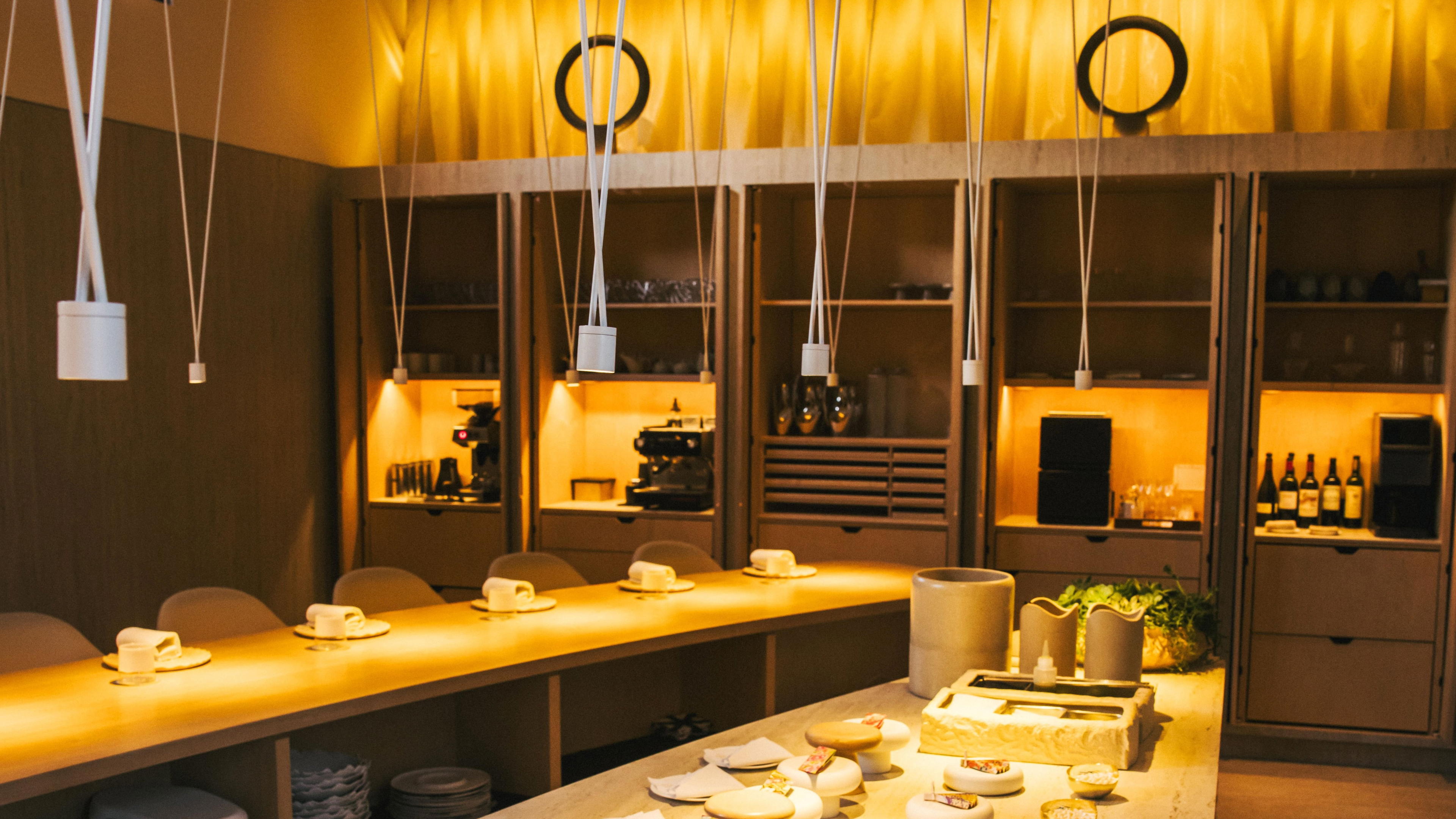
Bars in Los Angeles
Browse all →
Hotels in Los Angeles
Browse all →
Wineries in Los Angeles
Browse all →
At a Glance
- Casual
- Cozy
- Casual Hangout
- Date Night
- Sake Program
Current opening hours
- Monday
- 12–2 PM, 5:30–9:30 PM
- Tuesday
- 12–2 PM, 5:30–9:30 PM
- Wednesday
- 12–2 PM, 5:30–9:30 PM
- Thursday
- 12–2 PM, 5:30–9:30 PM
- Friday
- 12–2 PM, 5:30–9:30 PM
- Saturday
- 5:30–9:30 PM
- Sunday
- Closed
Hours can change for holidays and private events. Last verified .
Small, plain 80s-style interior with basic, unassuming atmosphere.
Know Before You Go
- Getting there
- 359 N La Cienega Blvd, Los Angeles, CA 90048