Our verdict
This listing is retired after a June 2026 status audit.
The menu
What to order
- Octopus
Cihangir's Approach to the Table
There is a version of Istanbul dining that gets most of the international attention: the rooftop addresses with Bosphorus panoramas, the tasting menus at Turk Fatih Tutak or Mikla that position Istanbul on the same circuit as Copenhagen or Tokyo. Then there is the version that operates below that frequency, neighbourhood restaurants in Beyoğlu's residential folds where the clientele is largely local, the format is informal, and the food is anchored in the kind of vegetable and mezze traditions that predate any modernist reframing. Mücver, on Türkgücü Caddesi in Cihangir, belongs to the second category.
Cihangir itself is worth understanding as a context before arriving. The neighbourhood sits on a slope between Taksim and the Bosphorus shoreline, and its streets have historically drawn artists, writers, and long-term expats who prefer the human scale of old apartment buildings to the hotel density of Sultanahmet. Restaurants here tend to serve the neighbourhood rather than attract it as a destination, which shapes both format and expectation. This is not where you come for occasion dining; it is where you come when you want to eat well without the architecture of a special-event evening around you.
The Logic of the Name
Mücver, the Turkish zucchini fritter, made with egg, flour, and white cheese, fried until the exterior crisps and the interior stays yielding, is one of those dishes that appears on nearly every meyhane table in Turkey without anyone treating it as notable. Naming a restaurant after it is a considered act. It places the kitchen's orientation in full view: this is a space interested in the ordinary depth of Turkish vegetable and herb cooking, not in refined departures from it. That framing puts Mücver in a different conversation than Neolokal, which approaches the same source material through a research-led, design-conscious lens at a considerably higher price point.
The broader Istanbul scene has split along this axis for some years. At one end, a cohort of internationally visible restaurants, including Arkestra and the modern Turkish flagships, competes for the attention of food-focused travellers and awards recognition. At the other, a quieter set of neighbourhood addresses maintains the meyhane and lokanta tradition without institutional ambition. Mücver sits in that quieter register, which makes it useful for a different kind of reader: one who wants to understand what Beyoğlu residents actually eat rather than what the city's restaurant industry wants to export.
A Meal Read as Sequence
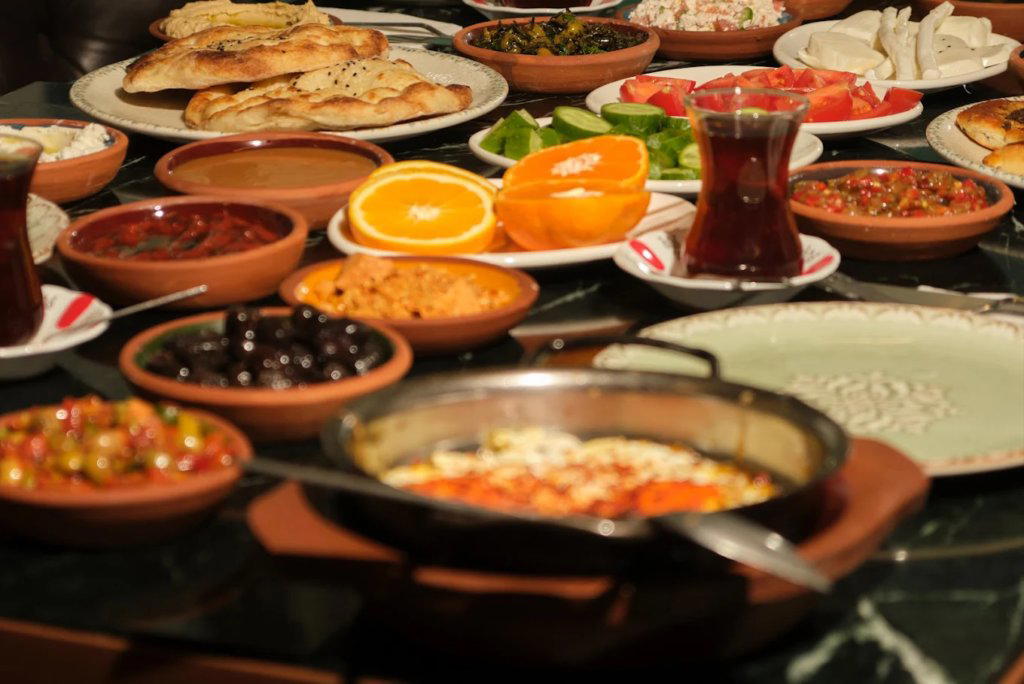
Turkish eating, at its most traditional, is structured around the progression from cold mezze to hot starters to a main, with rakı or wine threading through the meal rather than punctuating it. This sequence is not arbitrary, it follows a logic of temperature, texture, and intensity that Western tasting-menu formats have occasionally borrowed without always crediting. Cold plates arrive first: vegetable preparations in olive oil, yogurt-based dips, herb-forward salads that reset the palate and slow the pace of eating. The role of these dishes is not to impress but to anchor.
Hot starters, including, presumably, the eponymous mücver, follow in a register that shifts from ambient to cooked, from cool to warmth. Fried and pan-cooked preparations at this stage of the meal function as a bridge: they add substance without the weight of a protein-centred main. The final arc, whether grilled fish, a slow-cooked meat dish, or a larger vegetable preparation, arrives when the table is already settled into the meal's rhythm. At neighbourhood restaurants in Cihangir, that rhythm tends to be unhurried; tables are not turned quickly, and the expectation of a long evening is built into the format.
This progression is worth holding in mind when comparing Istanbul's more casual addresses to the structured tasting menus at internationally recognised rooms. At Le Bernardin in New York or Lazy Bear in San Francisco, the sequencing is curated and choreographed from outside. In a Cihangir meyhane, the guest assembles the sequence themselves from a menu of cold and hot plates, which requires a different kind of engagement and rewards those who know how to read a Turkish menu rather than defer to a tasting format.
Where Mücver Sits in Istanbul's Wider Map
For travellers building a broader picture of Turkish restaurant culture, Mücver represents an access point to a register that exists throughout the country but presents differently by region. The Aegean vegetable traditions that inform much of Istanbul's mezze culture appear in different forms at Narımor in Izmir and along the Bodrum coast at Maçakızı. In Cappadocia, Nahita Cappadocia and Aravan Evi in Ürgüp draw on Central Anatolian pantry logic. On the Aegean coast, Mezegi in Fethiye and Ahãma in Göcek offer coastal framings of similar source ingredients. What connects them is an approach to vegetables, olive oil, and herbs as primary flavour carriers rather than supporting cast.
Within Istanbul itself, Casa Lavanda occupies a comparable neighbourhood-focused register. For a complete picture of where Mücver sits relative to the city's full dining range, our full Istanbul restaurants guide maps the scene across price tiers and neighbourhoods.
For seafood-focused eating in a more local context, Poyraz Sahil Balık Restaurant in Beykoz represents the Bosphorus-shore tradition. Agora Pansiyon in Milas and Kokorecci Asim Usta in Bornova show how deeply specific the Turkish street and casual dining tradition runs when you move outside the main city centres. Divia by Maksut Aşkar in Marmaris bridges the fine-dining and coastal-casual registers in a way that has few equivalents in Istanbul proper.
Planning a Visit
Mücver is located at Türkgücü Caddesi 55/A in Cihangir, Beyoğlu, a ten-minute walk from Taksim Square or reachable from the Tünel end of İstiklal Caddesi. The neighbourhood is leading approached on foot; the streets around Cihangir Meydanı are pedestrian-friendly and the restaurant is on a residential side street rather than a main thoroughfare.
Frequently asked questions
Where exactly is Mücver?
Mücver is located at Cihangir, Türkgücü Cd. 55/A, 34425 Beyoğlu/İstanbul, Türkiye.
How does Mücver in Cihangir compare to Istanbul's more prominent dining neighbourhoods?
Mücver is a restaurant in Cihangir, Beyoğlu, serving Modern Turkish Live Fire Cooking at a price tier of about USD 50 per person. Reservations are recommended.
What's a useful thing to order at Mücver?
Start with the mücver fritter, the dish the restaurant takes its name from, made with zucchini, egg, flour, and white cheese, fried to a crisp exterior. Build around it with cold vegetable mezze before moving to hot starters. This sequencing follows the traditional Turkish meal structure and gives the clearest read of what the Cihangir kitchen is doing.
What's a useful way to book Mücver?
Reservations are recommended. Mücver is at Türkgücü Caddesi 55/A, Cihangir, Beyoğlu, İstanbul.
What's Mücver best at?
Mücver serves Modern Turkish Live Fire Cooking, and the restaurant is best approached with reservations recommended and a smart casual dress code.
A Tight Comparison
Comparable venues nearby, for context on price, style, and recognition.
| Venue | Cuisine | Price | Awards | Notes |
|---|---|---|---|---|
| MücverThis venue (the venue you are viewing) | Not listed | Not listed | Not listed | Not listed |
| Balat Sahil Restaurant | Traditional Turkish Meyhane with Seafood Mezes | $20–30 | Gault & Millau Türkiye 1 Toque | Avcibey, Traditional Turkish Meyhane with Seafood Mezes |
| Ticarethane Sk. No:8 | Turkish with International Flair | $20–30 | Not listed | Alemdar, Turkish with International Flair |
| Meat Moot Istanbul Taksim | Modern Turkish Smoked Meats | $50–100 | Not listed | Sehit Muhtar, Modern Turkish Smoked Meats |
| Makarna Sariyi | Turkish Pasta House | Not listed | Not listed | Molla Fenari, Turkish Pasta House |
| FATİH KARADENİZ PİDECİSİ İBRAHİM USTA - FATİH ŞUBE | Karadeniz-Style Turkish Pide | $10–20 | Not listed | Zeyrek, Karadeniz-Style Turkish Pide |