
Isehara’s bread scene rewards planning rather than ceremony, and Moulus a la Meule sits in that practical, ingredient-led lane. The appeal is the bakery format itself: stone-mill identity, take-out service, repeated Tabelog Bread 100 recognition, and a suburban Kanagawa setting that makes the visit feel closer to a provisions run than a restaurant appointment.
Pearl is the En Primeur Club membership app — saves, bookings, and concierge access live there. Same editors, same standards.
- Address
- 645-5 Itado, Isehara, Kanagawa 259-1145, Japan
- Phone
- +81 463-57-3085
- Website
- instagram.com
- Directions
- Get directions
 Saves & bookings on Pearl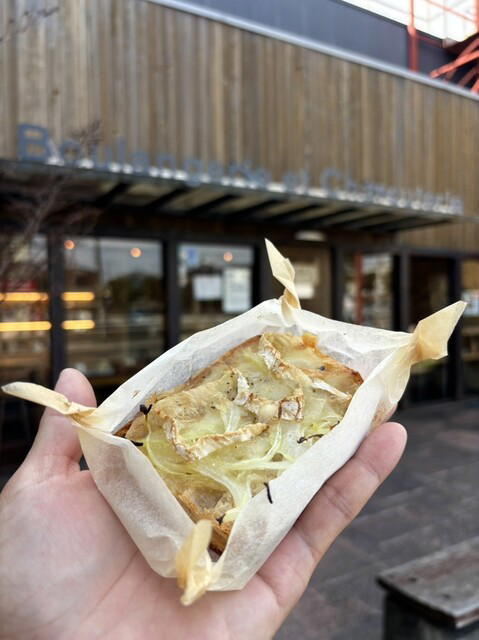
Approaching a house-format bakery in suburban Isehara changes the rhythm of eating out. There is no dining room performance to decode, no long counter ritual, and no plated sequence competing for attention. The focus narrows to bread as an object of sourcing, milling, fermentation, and timing. Moulus a la Meule belongs to that quieter Japanese bakery tradition, where the act of buying bread can carry the same seriousness that Tokyo gives to sushi counters or Kyoto gives to wagashi shops.
That seriousness is not theoretical. The name itself points to process: “Moulus” refers to grinding, and “Meule” to a stone mill. In a country where premium bread often splits between French-influenced boulangerie technique and Japanese softness, that naming matters. It signals a shop built around grain treatment rather than decoration. For travelers using Isehara as a base, the bakery makes sense alongside a wider food itinerary in Our full Isehara restaurants guide, especially when compared with the simpler local-price bracket of MEGURI rather than the higher spend of destination dining elsewhere in Kanagawa.
Stone-mill identity in a take-out bakery town
Japan’s serious bread culture is often misunderstood from abroad. The category is not just convenience-store shokupan on one end and Parisian cosplay on the other. A growing tier of small bakeries treats flour choice, milling style, hydration, and oven work as the defining grammar. In that context, a stone-mill reference is not a decorative flourish. It places the bakery inside a grain-first conversation, where the origin and handling of flour matter before any topping, filling, or display case abundance.
Moulus a la Meule’s recognition by Tabelog Bread EAST 100 in 2022 gives that local craft a broader signal. Tabelog’s bread category is especially useful for Japan because it catches specialist bakeries that would never appear in fine-dining award systems. The venue was also selected in earlier Bread 100 years, including 2017, 2018, 2019, and 2020, which points to consistency across cycles rather than a single-season spike. That is the relevant credential here: not celebrity, but repeat inclusion in a category judged around everyday craft.
The take-out-only format also changes expectations. This is not a bakery-café built for lingering; it is a buying stop. That distinction matters for travelers. The experience is closer to seeking out a respected provisions shop before a rail journey or a hotel breakfast than scheduling a restaurant meal. For lodging context around that kind of itinerary, Our full Isehara hotels guide is the more useful companion than a conventional dinner list.
Why the Isehara setting sharpens the appeal
Isehara does not carry the automatic dining shorthand of central Tokyo or Yokohama. Its appeal is more local and more practical: suburban roads, pilgrimage traffic toward Mount Ōyama, neighborhood shops, and restaurants that serve residents first. That setting suits bread. A bakery does not need skyline drama to make its case; it needs a dependable catchment, regular customers, and a product that can justify a detour without asking for an evening commitment.
Within Kanagawa, that places Moulus a la Meule in a different category from out-of-metro destination restaurants such as ZUND-BAR or Cafe Suzuki, which also sit in accessible price brackets but operate around different occasions. Yakiniku Waganse occupies a higher dinner-spend lane, while Atsugi Honmaru Tei sits closer to low-cost everyday eating. The bakery’s lane is narrower: ingredient-led bread, compact purchase, and reputation built through repeat category recognition. That narrowness is a strength, not a limitation.
There is also a useful travel lesson here. Japanese regional dining often rewards visitors who stop thinking only in meals. Bakeries, confectioners, tofu shops, tea vendors, and prepared-food counters can be as revealing as restaurants because they show how a city eats between set appointments. In Isehara, bread of this kind works as a morning or afternoon anchor, especially when paired with the city’s slower hospitality and drinking circuits. For broader planning, see Our full Isehara bars guide, Our full Isehara wineries guide, and Our full Isehara experiences guide.
How to place it in a wider Japan food itinerary
For travelers crossing Japan, the value of a bakery like this is comparative. It gives a grounded counterpoint to more formal regional meals: sukiyaki in Kamakura, charcoal-led drinking food in Tokyo, café culture in Osaka, curry in Sapporo, or sake-bar formats overseas. The point is not to rank these experiences against one another. It is to notice how Japanese eating culture moves between precision and informality without losing standards.
That wider map can include -Grilled beef Sukiyaki- KAMAKURA TANUKIAN 鎌倉 たぬき庵 in Kamakura, . 鮪と炭火焼き うお炭 秋葉原店 in Tokyo, .cafe in Osaka.know in Kumamoto, (Shoku) Vietnam in Kawasaki, [Curry Senmon Ten] Maruyama Kyoju. in Sapporo, [ki:] in Kyoto, #肉といえば松田 奈良本店 in Kashihara, 1/3 HAMBURGER FACTORY in Kanazawa, and 1000 in Yokohama. For readers following Japanese food culture beyond Japan, Jōdo Saké Bar in Los Angeles and Onigiri Time in Pasadena show how portable formats become cultural signals abroad.
The editorial case for the restaurant is therefore specific. It is not a grand destination restaurant, and treating it like one would miss the point. Its value lies in how ingredient sourcing and milling identity translate into a compact bakery format, backed by repeat recognition in Japan’s bread category. For a traveler with time in Isehara, that makes it a serious provisions stop: modest in form, disciplined in category, and more revealing than its scale suggests.
At-a-Glance Comparison
Comparable venues by cuisine and price in the same metro.
| Venue | Cuisine | Price | Notes |
|---|---|---|---|
| Moulus a la Meule | Artisanal bakery with house-milled flour | $ | Isehara |
| MEGURI | Farm-direct gelato & ice cream shop | $ | Isehara |
| BASCULE | Cake shop & Western-style desserts | $ | Tsuzuki |
| FruFull Gotemba. | Fresh fruit jelly specialty shop | $ | Higashitanaka |
| Komugi to Kobo Hamada Ya Sangenjaya honten | Japanese neighborhood bakery | $ | Setagaya |
| Parlor Ekoda | Bakery café with sandwiches and light plates | $ | Nerima |
Recognition history
Dated appearances from independent guides and award organizations, with the underlying list record or original source where available.
Tabelog 100 #26 · No. 26
Tabelog · Tabelog 100 - Bread - EAST - 2022








At a Glance
- Solo
- Casual Hangout
- After Work
- Standalone
- Local Sourcing
Current opening hours
- Monday
- 12–5 PM
- Tuesday
- Closed
- Wednesday
- Closed
- Thursday
- Closed
- Friday
- 12–5 PM
- Saturday
- 12–5 PM
- Sunday
- 12–5 PM
Hours can change for holidays and private events. Last verified .