
Tenma’s stand-up drinking culture is compact, fast-moving, and built around value rather than ceremony. Motsuyaki Doppo Tenma ten belongs to that lane: a 20-seat tachinomi and grilled-tripe counter near Temma Station, selected for Tabelog 100 Tachinomi 2025, with a dinner spend in the JPY 2,000 to JPY 2,999 bracket.
Pearl is the En Primeur Club membership app — saves, bookings, and concierge access live there. Same editors, same standards.
- Address
- 大阪府大阪市北区錦町3-12 アウロラBLD 1F
- Website
- tabelog.com
 Saves & bookings on Pearl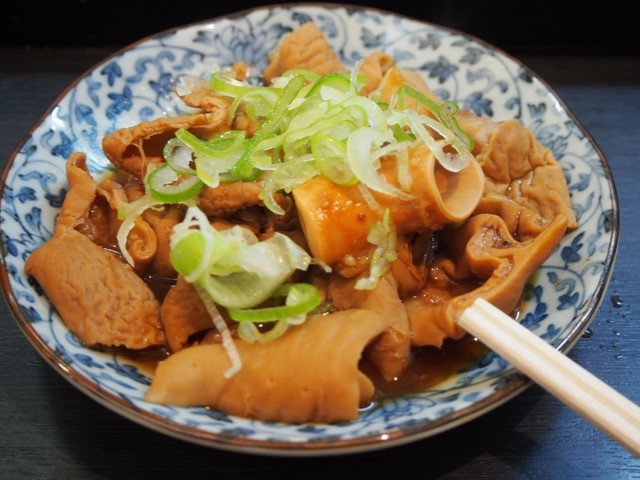
Tenma compresses Osaka’s after-work appetite into dense blocks: rail noise, narrow shopfronts, counter seats, smoke, and the quick arithmetic of what to eat with a drink before the next place. This is not the polished side of the city’s dining culture. It is Osaka at standing height, where tachinomi bars reward speed, appetite, and comfort with close quarters. In that setting, Motsuyaki Doppo Tenma ten is better read as a neighbourhood habit than a formal destination restaurant.
The format matters. Tachinomi in Osaka is not just drinking without a chair; it is a pricing and pacing system. The room stays small, the bill contained, and the food must carry enough salt, fat, and grill character to justify another glass. Grilled tripe fits neatly: economical, direct, and tied to the city’s preference for offal, teppan counters, kushikatsu, okonomiyaki, and other democratic heat-and-drink dining. Motsuyaki Doppo Tenma ten sits in the JPY 2,000 to JPY 2,999 dinner band, above cheaper everyday lunch-and-snack peers such as Rika Shokudo Tenma honten, Spice Curry Harmonia, and Okonomiyaki Chigusa, but in the same spending lane as MAR.
Tenma's standing-bar grammar: small room, grilled offal, quick decisions
The room is listed as a 20-seat standing bar with counter seating and simple tables, which explains much before the first order. This is compact, not a place for lingering over courses. The rhythm is Osaka bar-hopping: order, eat, drink, make room. It also makes solo dining natural. A counter-heavy tachinomi removes the awkwardness of a table for one and makes eating alone part of the room’s operating logic.
Recognition by Tabelog 100 Tachinomi 2025 gives the address a useful external signal. Tabelog’s Hyakumeiten lists are category-specific rather than luxury rankings, and tachinomi rewards different credibility from tasting-menu restaurants. Here, value, consistency, and local use matter more than linen, stemware, or culinary theatre. The listed Tabelog score of 3.48 puts the venue in a competitive middle-upper band for a small standing bar, where fractions of a point can reflect heavy local scrutiny rather than international name recognition.
For travellers mapping Osaka by food type, this counters the city’s more exported images. The pork buns at 551 Horai (551蓬莱), bakery precision of 52CHO-ME BAKERY, the café lane around .cafe, and Italian cooking at a canto (Italian) show other versions of the city’s appetite. Tenma’s tachinomi bars offer fewer comforts and a sharper local code. That is the point.
Why the address changes the meal
Location is the engine in Tenma. Around Temma Station, the area has long been a casual eating-and-drinking zone, where small operators benefit from commuter traffic and the city’s appetite for second and third stops. A stand-up grilled-tripe bar works because the neighbourhood already teaches diners how to use it. The meal will likely be short, the room close, and the ordering practical. Pleasure comes from fitting into the current, not being insulated from it.
That makes the venue a corrective for visitors treating Osaka dining as a checklist of famous dishes. Okonomiyaki, takoyaki, sushi, curry, and bakeries all have their place, but Tenma adds a less scripted layer: places defined by posture and pace as much as cuisine. Grilled tripe at a tachinomi counter belongs to a drinking culture valuing texture, seasoning, and affordability over formality. Shochu on the drinks side reinforces the bar-first identity, even as the food category does much of the editorial work.
The Osaka comparison set is instructive. Rika Shokudo Tenma honten, Spice Curry Harmonia, and Okonomiyaki Chigusa occupy the JPY 1,000 to JPY 1,999 tier, useful for diners seeking a lower-cost stop in the same casual field. Sushidokoro Kaihara shifts the decision toward sushi, while 99 Pizza Napoletana Gourmet shows how Osaka’s casual range extends beyond Japanese formats. Motsuyaki Doppo Tenma ten is narrower: stand, drink, eat grilled tripe, and let the neighbourhood do the rest.
How to place it in an Osaka itinerary
This is a sharp choice for travellers wanting one evening to feel less curated. Do not build the night around a single seat; treat Tenma as a district for progression. Expect a compact counter meal, then leave space for another nearby stop. The format suits one or two diners; larger groups change the geometry of a small standing bar and can make the experience harder to read.
There are clear caveats. Smoking is allowed, and the bar is not comfort-led. Private rooms are not part of the format. Payment is cash-only; credit cards, electronic money, and QR code payments are not accepted. Reservations are unavailable, which suits tachinomi culture but requires patience when recognition pushes demand. The opening date, October 21, 2015, gives the place a decade-long operating history by 2026, enough time to be shaped by regulars rather than novelty.
For broader planning, use Our full Osaka restaurants guide to balance Tenma with sushi, Italian, bakeries, and counter dining across the city. The practical trip frame can extend beyond food: Our full Osaka hotels guide, Our full Osaka bars guide, Our full Osaka wineries guide, and Our full Osaka experiences guide help place a stand-up bar night inside a wider Osaka stay. Travellers comparing Japanese casual formats across regions might also look at -Grilled beef Sukiyaki- KAMAKURA TANUKIAN 鎌倉 たぬき庵 in Kamakura. 鮪と炭火焼き うお炭 秋葉原店 in Tokyo.know in Kumamoto, (Shoku) Vietnam in Kawasaki, [Curry Senmon Ten] Maruyama Kyoju. in Sapporo, and [ki:] in Kyoto. For a transpacific echo of Japanese drinking culture, Jōdo Saké Bar in Los Angeles and Onigiri Time in Pasadena show how different the format becomes once removed from a station-side Osaka context.
A Lean Comparison
Comparable venues in the metro at similar price points.
| Venue | Cuisine | Price |
|---|---|---|
| Motsuyaki Doppo Tenma tenThis venue — the venue you are viewing | Kita, Japanese motsuyaki standing bar | $ |
| Kokopelli Curry | Kita, Japanese curry house | $ |
| Odoru Udon Umeda ten | Kita, Japanese Udon | $ |
| Teishokudo Kongoseki | Chūō, Japanese Curry & Teishoku | $ |
| Tenmasa | Chūō, Budget Udon & Soba Noodle Shop | $ |
| Mutekko Oosaka ten | Naniwa, Rich Tonkotsu Ramen | $ |
Recognition history
Dated appearances from independent guides and award organizations, with the underlying list record or original source where available.
Tabelog 100 #60 · No. 60
Tabelog · Tabelog 100 - Tachinomi - 2025
Continue exploring
More in Osaka
Restaurants in Osaka
Browse all →




Bars in Osaka
Browse all →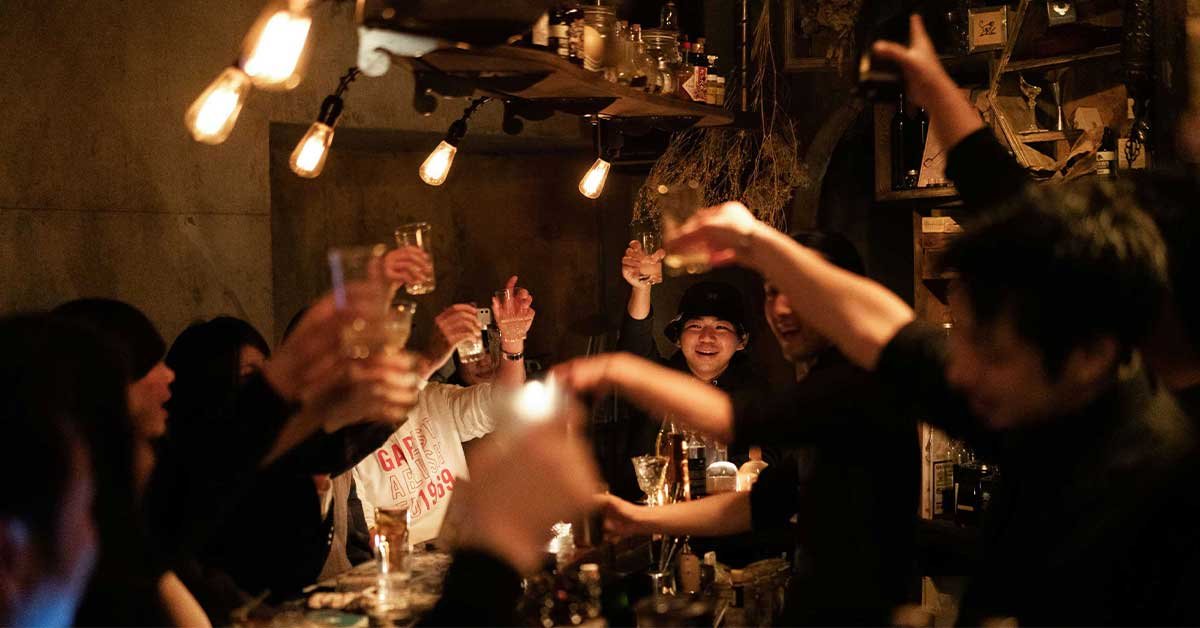



Hotels in Osaka
Browse all →



Wineries in Osaka
Browse all →
At a Glance
- Lively
- Energetic
- Cozy
- Solo
- After Work
- Casual Hangout
- Group Dining
- Late Night
- Standalone
- Beer Program
Bustling standing bar with counter and simple tables, casual and smoky, focused on quick drinks and grilled offal in a compact interior near the station where guests stand shoulder‑to‑shoulder.