
In Umeda’s basement dining grid, Odoru Udon Umeda ten belongs to Osaka’s practical noodle culture rather than its special-occasion circuit. The appeal is format and place: udon and tempura in a 32-seat room below Osaka Station Building 3, with Tabelog 100 Udon WEST recognition in 2024 and pricing that keeps it in the everyday bracket.
Pearl is the En Primeur Club membership app — saves, bookings, and concierge access live there. Same editors, same standards.
- Address
- Japan, 〒530-0001 Osaka, Kita Ward, Umeda, 1 Chome−1−1 Osaka Station 3 Building, 地下2階
- Phone
- +81 6-6344-3760
- Website
- tabelog.com
 Saves & bookings on Pearl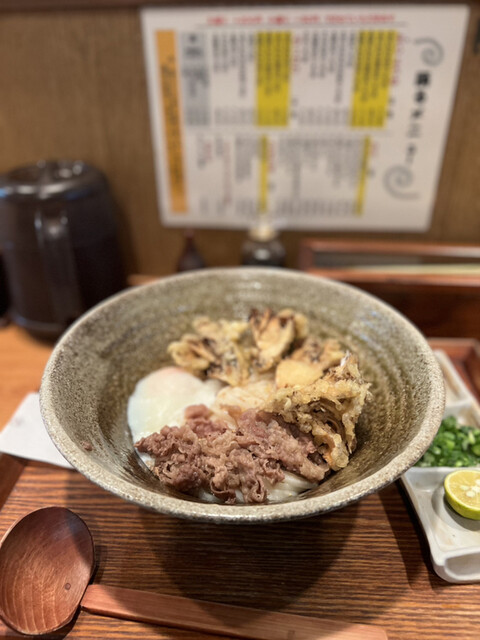
The approach is pure Umeda: stairs, station corridors, basement signage, and the low thrum of office workers moving between trains and lunch counters. Osaka’s underground dining floors reward precision more than ceremony. In that setting, udon does not need theatrical plating or a long explanation; it needs speed, texture, heat, and enough consistency to survive repeat custom from people who already know where they are going.
Odoru Udon Umeda ten sits in that commuter-dense world, on the second basement floor of Osaka Station Building 3, close to Kitashinchi’s business district and the larger Umeda rail complex. The room is compact, with 32 seats across counter and table seating, which puts the experience closer to Osaka’s working noodle counters than to the city’s reservation-led dining rooms. That matters: the meal is shaped by turnover, proximity, and the rhythm of a station neighbourhood, not by a chef’s biography or a tasting-menu arc.
Umeda's basement udon culture, stripped of ceremony
Osaka is often flattened into takoyaki and okonomiyaki shorthand, but its noodle culture is just as revealing. Udon in Kansai tends to read differently from the heavier, darker broth associations many travellers bring from eastern Japan. The pleasure is often quieter: wheat noodles, tempura, dashi, and a room calibrated for people who want a proper meal without surrendering an afternoon. In Umeda, that utility becomes part of the flavour of the experience.
The Tabelog 100 Udon WEST 2024 selection places this address inside a competitive western Japan udon category rather than a general tourist checklist. Its Tabelog score of 3.75 gives another signal: not luxury dining, not novelty dining, but a specialist noodle counter with enough sustained approval to register beyond the neighbourhood. Selection in the same Tabelog udon category in 2022 reinforces the point. For a city where many serious meals happen in modest rooms, recognition like this is often a better guide to everyday excellence than imported fine-dining markers.
The category pairing is also telling: udon and tempura. That combination sits at the centre of a Japanese quick-meal grammar in which contrast does much of the work. Noodles supply chew and warmth; tempura adds crunch and oil; the counter format keeps the meal direct. No named signature dish is needed to understand the proposition. The format itself is the argument.
Why the basement address changes the meal
Umeda’s station-adjacent food floors are not romantic in the postcard sense. They are dense, legible once learned, and ruthless about value. A restaurant in this environment competes not only with other udon shops, but with bakeries, curry counters, pork-bun queues, coffee rooms, and department-store dining floors. Nearby editorial alternatives on EP Club show how broad the city’s casual spectrum gets, from 551 Horai (551蓬莱) to 52CHO-ME BAKERY and .cafe.
That setting makes price part of the editorial story. With the listed average price under JPY 999 and review-based spend commonly sitting around JPY 1,000 to JPY 1,999, the restaurant occupies a tier that is increasingly hard to square with the international image of Osaka as a reservation-heavy dining destination. Compare it with Osaka options such as a canto (Italian), 99 Pizza Napoletana Gourmet, Pineapple, or Kitashinchi Fukutatei, and the distinction is not simply cuisine. It is the difference between planned dining and useful dining. Umeda needs both, but station-basement udon carries a particular kind of authority because it has to win diners who could defect in any direction within minutes.
Within the comparison set, Udon Bo Oosaka honten sits closer in spirit than Osaka’s steakhouse or Italian rooms, because both belong to the city’s affordable noodle lane. The useful distinction is geographic and experiential: Odoru Udon Umeda ten is tied to the Osaka Station Building 3 basement system and the Kitashinchi edge, a location that works for travellers crossing Umeda as much as for office diners. The address gives the meal a tactical quality: it can fit before a train, after shopping, or between meetings without turning into an itinerary event.
The practical appeal is value, capacity, and directness
There is no reservation buffer here; reservations are unavailable, so the decision is governed by timing and tolerance for a queue. The listed hours split lunch and dinner service, and the venue notes service may end when sold out. In a 32-seat room, that is not a footnote. It is the difference between treating the meal as flexible and treating it as something to build a narrow window around.
Payment is another part of the old-school equation: credit cards, electronic money, and QR payments are not accepted. That places the shop squarely in Japan’s cash-dependent casual dining tradition, where low prices and quick service often come with fewer transaction conveniences. Non-smoking status and wheelchair access are useful practical signals, while the absence of parking fits the location; this is a rail-and-walk restaurant, not a drive-up meal.
The broader Osaka lesson is simple. Premium travel dining in Japan does not always mean a counter with omakase pricing or a hotel-backed dining room. Sometimes the sharper read on a city comes from the places that compress local habits into a small, efficient format. For travellers mapping Umeda, this udon counter adds a grounded point between high-spend dining and grab-and-go snacks. For a wider view of the city’s food and stay options, use Our full Osaka restaurants guide, Our full Osaka hotels guide, Our full Osaka bars guide, Our full Osaka wineries guide, and Our full Osaka experiences guide.
Travellers building a Japan-wide casual-dining map can also compare the way regional formats behave outside Osaka: -Grilled beef Sukiyaki- KAMAKURA TANUKIAN 鎌倉 たぬき庵 in Kamakura. 鮪と炭火焼き うお炭 秋葉原店 in Tokyo.know in Kumamoto, (Shoku) Vietnam in Kawasaki, [Curry Senmon Ten] Maruyama Kyoju. in Sapporo, [ki:] in Kyoto, Jōdo Saké Bar in Los Angeles, and Onigiri Time in Pasadena. The comparison clarifies what Osaka does well: food that is direct, crowded into transport arteries, and often more serious than its price suggests.
A Credentials Check
Comparable venues at the same tier for side-by-side context.
| Venue | Cuisine | Price | Notes |
|---|---|---|---|
| Odoru Udon Umeda tenThis venue — the venue you are viewing | Japanese Udon | $ | Not listed |
| KALUTARA | Sri Lankan Curry House | $ | Nishi |
| Hirokawa Tailor | Japanese stand-up bar (tachinomi) | $ | Chūō |
| Gyoza Tateyama Umeda ten | Gyoza and Japanese Dumpling Bar | $ | Kita |
| Udonya Kisuke | Osaka-style udon and tempura | $ | Kita |
| Osaka Naniwaya | Japanese taiyaki & kakigori sweets shop | $ | Kita |
Recognition history
Dated appearances from independent guides and award organizations, with the underlying list record or original source where available.
Tabelog 100 #79 · No. 79
Tabelog · Tabelog 100 - Udon - WEST - 2024
Continue exploring
More in Osaka
Restaurants in Osaka
Browse all →




Bars in Osaka
Browse all →




Hotels in Osaka
Browse all →
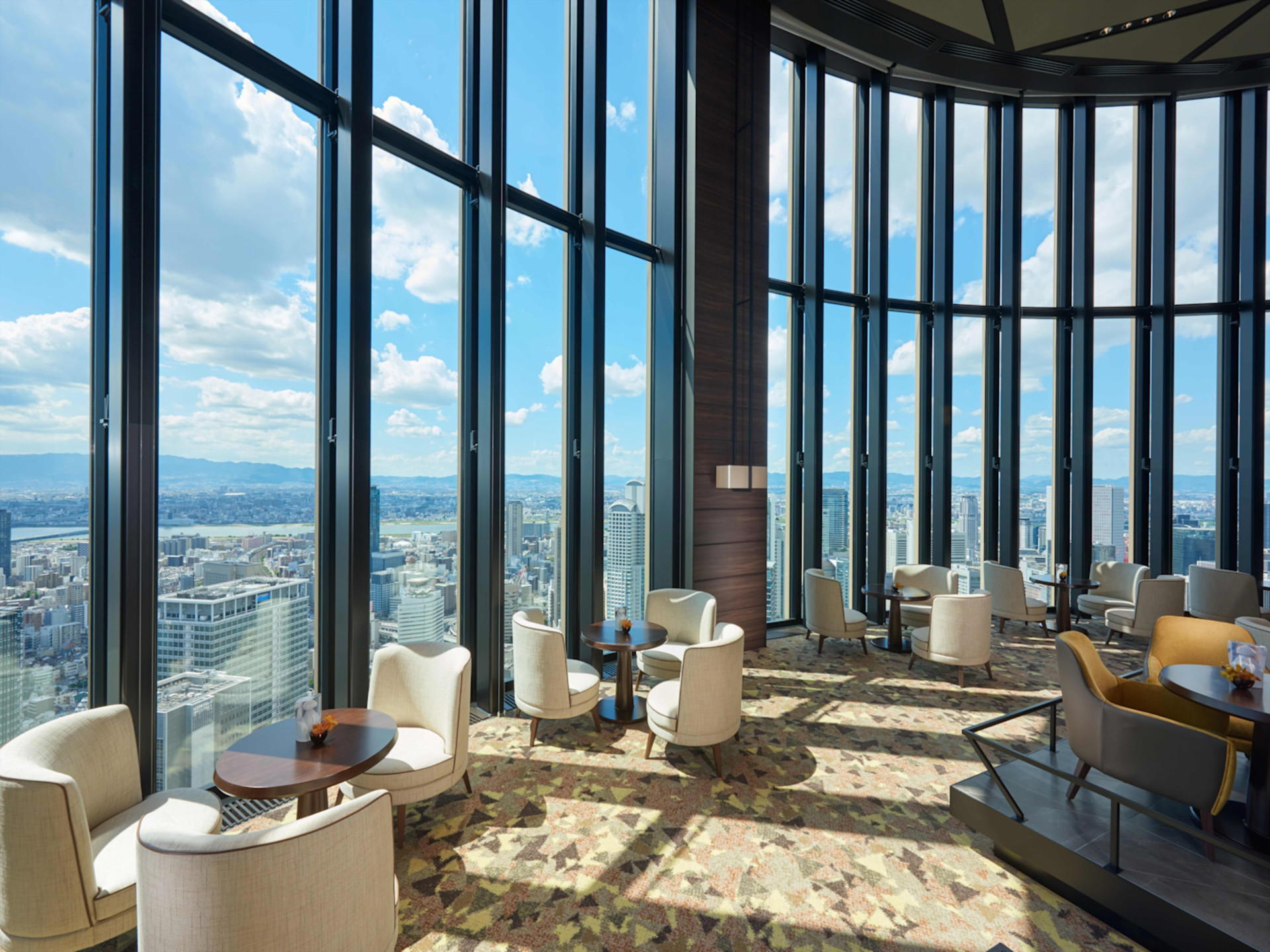



Wineries in Osaka
Browse all →
At a Glance
- Casual
- Classic
- Solo
- Casual Hangout
- Group Dining
- Standalone
Current opening hours
- Monday
- 11 AM–3 PM, 5–9 PM
- Tuesday
- 11 AM–3 PM, 5–9 PM
- Wednesday
- 11 AM–3 PM, 5–9 PM
- Thursday
- 11 AM–3 PM, 5–9 PM
- Friday
- 11 AM–3 PM, 5–9 PM
- Saturday
- 11 AM–3 PM, 5–9 PM
- Sunday
- 11 AM–3 PM, 5–9 PM
Hours can change for holidays and private events. Last verified .
Simple, casual basement noodle shop atmosphere with counter seating and a compact dining room; busy but approachable rather than polished.