On Calle de la Princesa in Madrid's Moncloa-Aravaca district, Mosaico occupies a stretch of the city where neighbourhood dining operates at a different register than the high-concept rooms further east. The address places it among residents rather than tourists, which shapes both its clientele and its character. For visitors working through Madrid's broader dining scene, it represents a local-facing counterpoint to the capital's more acclaimed destination tables.
Pearl is the En Primeur Club membership app — saves, bookings, and concierge access live there. Same editors, same standards.
- Address
- Calle de la Princesa, 27, Moncloa - Aravaca, 28008 Madrid, Spain
- Phone
- +34914546304
- Website
- melia.com
- Directions
- Get directions
 Saves & bookings on Pearl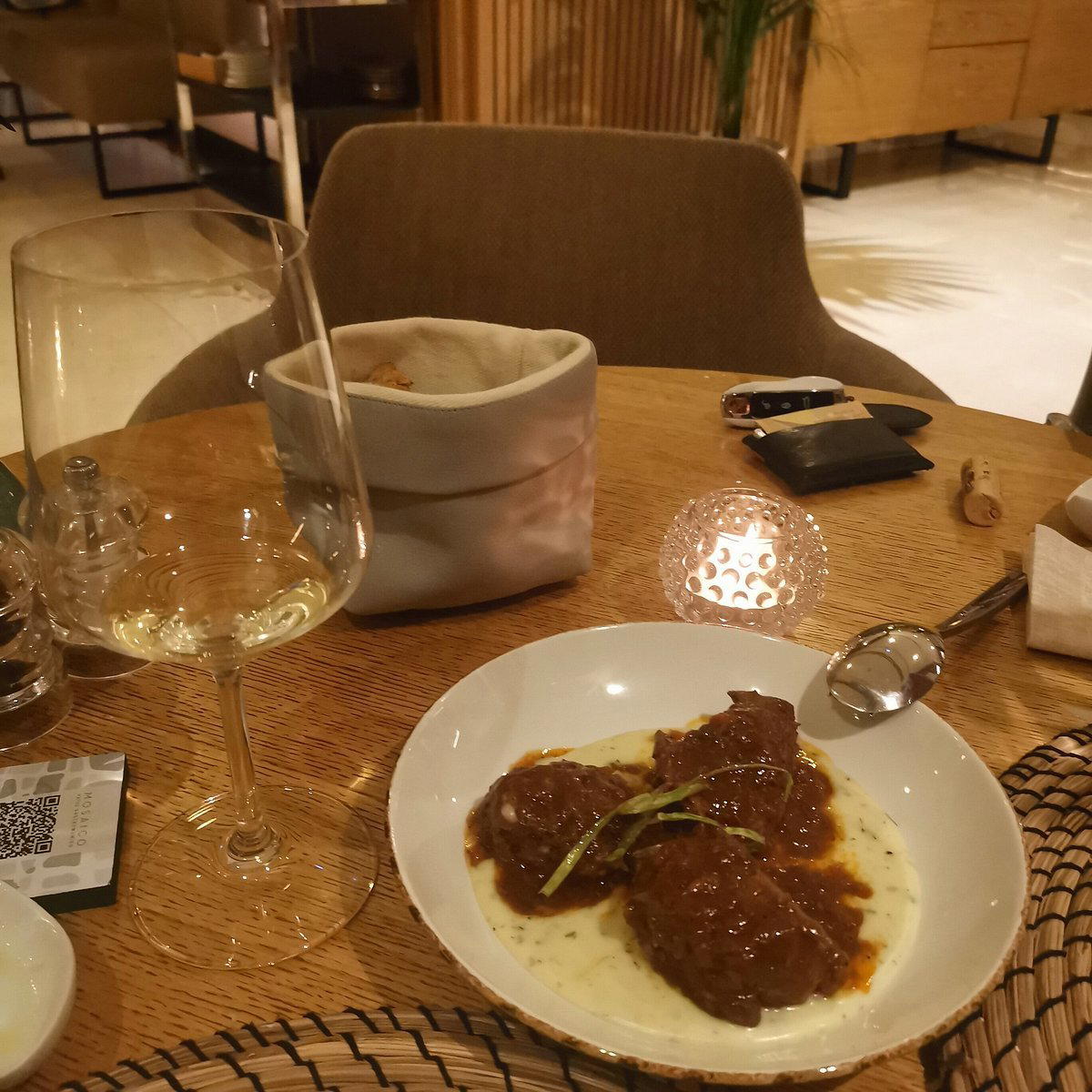
Calle de la Princesa and the Logic of the Neighbourhood Table
Madrid's dining geography is rarely discussed as such, but it matters. The axis running from Salamanca through Chueca toward the Gran Vía holds the city's highest-profile addresses: the three-Michelin-star theatre of DiverXO, the architecturally considered rooms of Coque, the technically precise work at DSTAgE. Calle de la Princesa, running northwest toward Moncloa, sits outside that circuit. It is a residential artery, home to university students, longtime madrileños, and the kind of foot traffic that has no particular interest in tasting menus or booking windows measured in months. Mosaico, at number 27, operates inside that context.
That placement is not incidental. Spanish cities have long sustained two parallel dining registers: the destination restaurant, which draws eaters from across the country or abroad, and the neighbourhood table, which draws from the surrounding blocks. The second category is rarely covered in depth, but it is where most Spaniards actually eat most of the time, and where the informal conventions of Spanish hospitality, the long lunch, the shared plate, the expectation of being known by the staff, are most legible.
What the Moncloa-Aravaca Setting Implies
Moncloa-Aravaca is one of Madrid's larger administrative districts, anchored at its eastern edge by the Moncloa transport interchange and extending west toward the Casa de Campo and the university campus of Ciudad Universitaria. The district has no particular fine-dining reputation; it does not appear in the same conversations as Salamanca or Malasaña. What it has is density of permanent residents, proximity to several major institutions, and a dining culture shaped by those facts.
In practical terms, this means restaurants in the area tend toward formats built for repeat custom rather than occasion dining. The metrics that matter in Salamanca, Michelin recognition, prix-fixe length, sommelier depth, give way to different signals here: consistency, value relative to the area, the capacity to serve a Tuesday lunch as capably as a Saturday evening. These are harder qualities to write about and easier to underestimate.
For context on where Mosaico's city sits within Spain's broader culinary conversation, the reference points are significant. Spain holds more three-star Michelin restaurants than almost any country outside France and Japan. Institutions like El Celler de Can Roca in Girona and Martin Berasategui in Lasarte-Oria have shaped international perceptions of what Spanish cooking can be. Closer to Madrid, Aponiente in El Puerto de Santa María and Azurmendi in Larrabetzu represent the kind of conceptually driven work that dominates international coverage. Mosaico operates in a different register entirely, which is precisely what makes it legible as a neighbourhood choice rather than a destination one.
Spanish Dining Culture at Street Level
The cultural roots of the neighbourhood restaurant in Madrid run through the tradition of the mesón and the casa de comidas, formats that prioritised daily changing menus, proximity to local markets, and a clientele that returned weekly rather than annually. That tradition has been partially displaced by the international café-restaurant format, but it persists in areas like Moncloa-Aravaca where the residential density supports it.
Spanish lunch culture remains structurally different from Northern European norms. The midday meal is the main event for many madrileños, often running from two to four in the afternoon, with the menú del día, a set lunch format typically including multiple courses and a drink, functioning as the practical backbone of neighbourhood dining. The leading neighbourhood tables in Madrid manage to deliver this format with kitchen discipline and sourcing that punches above the price point implied by the format. That is a less glamorous achievement than a starred tasting menu, but it is a genuine one.
For comparison, Madrid's higher-end creative restaurants, including Deessa and Paco Roncero, operate at the €€€€ tier with tasting-menu formats and multi-week booking windows. The neighbourhood table works at a different scale entirely, prioritising accessibility over occasion. Neither register is superior; they answer different questions about what a city's eating life should look like.
Across Spain, the tension between these registers plays out in different ways in different cities. In San Sebastián, the pintxos bar democratises access to serious cooking in a way that the formal restaurant cannot. In Barcelona, Cocina Hermanos Torres sits at the high end while the city's market culture sustains a parallel ecosystem of quality at lower price points. In Valencia, Ricard Camarena represents the destination tier while the city's rice and seafood traditions are kept alive in unremarkable rooms with checked tablecloths. Madrid follows a similar logic.
Placing Mosaico Within the Madrid Picture
What the address does confirm is its orientation: a Moncloa-Aravaca location on a major residential corridor signals a local-facing operation rather than a destination one. That is a starting point, not a limitation.
Visitors to Madrid who spend their entire trip inside the destination-restaurant circuit, working through the starred rooms and the creative tasting menus, miss a significant portion of what the city's eating life actually consists of. The neighbourhood table, whatever its specific format, is where the city feeds itself day to day, and that has its own kind of authority. For a fuller picture of the Madrid dining scene, including the destination tables that anchor the city's international reputation, see our full Madrid restaurants guide.
Spain's dining conversation extends well beyond Madrid, of course. Arzak in San Sebastián, Mugaritz in Errenteria, Quique Dacosta in Dénia, and Atrio in Cáceres represent the geographic spread of serious Spanish cooking. Internationally, the comparison points shift further: Le Bernardin in New York City and Atomix in New York City illustrate how differently the same conversation plays out in other food cities. Mosaico belongs to none of those conversations directly, but understanding where it sits relative to them sharpens the picture of what Madrid's dining ecology actually contains.
Planning a Visit
| Venue | Area | Format | Price Tier | Booking Window |
|---|---|---|---|---|
| Mosaico | Moncloa-Aravaca | Neighbourhood restaurant | Not confirmed | Not confirmed |
| DiverXO | Cuatro Caminos | Tasting menu | €€€€ | Weeks to months |
| Coque | Salamanca | Tasting menu | €€€€ | Weeks to months |
| DSTAgE | Chueca | Tasting menu | €€€€ | Weeks ahead |
| Paco Roncero | Centro | Tasting menu | €€€€ | Weeks ahead |
Mosaico is located at Calle de la Princesa, 27, in the Moncloa-Aravaca district of Madrid, postcode 28008. The Moncloa interchange, served by multiple metro lines and urban bus routes, is a short walk from the address.
Continue exploring
More in Madrid
Restaurants in Madrid
Browse all →
Bars in Madrid
Browse all →
Hotels in Madrid
Browse all →

At a Glance
- Elegant
- Sophisticated
- Business Dinner
- Special Occasion
- Hotel Restaurant
Current opening hours
- Monday
- 1:30–4 PM, 8:30–11 PM
- Tuesday
- 1:30–4 PM, 8:30–11 PM
- Wednesday
- 1:30–4 PM, 8:30–11 PM
- Thursday
- 1:30–4 PM, 8:30–11 PM
- Friday
- 1:30–4 PM, 8:30–11 PM
- Saturday
- 1:30–4 PM, 8:30–11 PM
- Sunday
- 1:30–4 PM, 8:30–11 PM
Hours can change for holidays and private events. Last verified .
Nice and quiet atmosphere with excellent service as noted in guest reviews.
Know Before You Go
- Getting there
- Calle de la Princesa, 27, Moncloa - Aravaca, 28008 Madrid, Spain