Morella
Our verdict
Morella sits on Chestnut Street in San Francisco's Marina district, a neighbourhood that runs quieter than the city's more-visited dining corridors. Cross-reference with the broader San Francisco fine-dining tier before confirming expectations.

Pearl is the En Primeur Club membership app, where members save venues, book tables and use the concierge.

Planning a Visit to Morella: What the Booking Experience Tells You
Chestnut Street in San Francisco's Marina district occupies a different register from the city's louder dining addresses. The stretch around 2001 Chestnut runs residential-adjacent, with the kind of foot traffic that belongs to a neighbourhood rather than a destination corridor. Restaurants here tend to draw from a local base first and a wider reservation audience second, a pattern that shapes how booking works, how full rooms feel on a Tuesday, and what a new or low-profile venue can build before the wider city takes notice. Morella sits at this address, at suite 2027, and the relative quiet of its public footprint is itself a piece of useful information for anyone trying to plan a visit.
San Francisco's fine-dining tier has consolidated significantly over the past decade. The venues that hold sustained attention Lazy Bear, Atelier Crenn, Benu, Quince, Saison, carry Michelin recognition, multi-month booking windows, and the kind of documented credential sets that make pre-visit research direct. Morella, at this point in its public record, does not sit in that tier of documented visibility.
The Marina Context and What It Means for a First Visit
The Marina is not where San Francisco's most-discussed restaurants have historically clustered. Hayes Valley, SoMa, the Financial District, and the Mission have absorbed the majority of the city's ambitious openings over the past fifteen years. The Marina has instead developed a dining identity around neighbourhood reliability, venues that serve a residential population well and earn word-of-mouth before they earn press. That dynamic creates a particular kind of dining experience: less performance, more consistency, and a room that reads as lived-in rather than staged.
For a visitor cross-referencing Morella against the city's higher-profile tier, it helps to calibrate expectations around neighbourhood character rather than against headline venues. The comparison set for a Marina address is not The French Laundry in Napa or Single Thread Farm in Healdsburg. It is the layer of San Francisco dining that operates below the award-documented surface but above the purely casual, a tier that exists in every major American food city and that often produces more useful meals for a repeat visitor than the headline destinations do.
That positioning also appears across other U.S. cities with strong fine-dining cultures. Providence in Los Angeles, Addison in San Diego, and Bacchanalia in Atlanta each occupy neighbourhood or district positions that required time before they accumulated the documentation to match their actual quality. The absence of a thick public record does not resolve to absence of quality, but it does require a different approach to research.
Walk-in reconnaissance during off-peak hours is a reasonable first move for a local.
This is a pattern that recurs across the mid-tier of most major food cities. At the opposite end of the planning spectrum, a venue like Atomix in New York City or Alinea in Chicago publishes advance booking windows, structured reservation systems, and documented cancellation policies precisely because demand requires that infrastructure. A venue without that apparatus is usually one that either has not yet reached that demand level or has chosen a more informal operating model. Both are legitimate, but they produce different booking experiences, and the visitor who treats a low-documentation venue like a Michelin-booked counter will be frustrated.
Allergy and dietary queries follow the same logic. In the absence of a published menu or a confirmed contact channel, the only reliable path is direct communication ahead of the visit. This is standard practice at smaller venues across the city and, broadly, across the American restaurant tier that operates without a reservations management team. Compare the approach required at Le Bernardin in New York City, where allergy protocols are managed through an established front-of-house system, with the reality at a Marina neighbourhood restaurant where the same question may land with the owner or a single front-of-house contact. Neither is worse; they are simply different processes.
How Morella Fits a San Francisco Itinerary
For a visitor working through our full San Francisco restaurants guide, Morella is most useful as a neighbourhood option rather than a destination anchor. If your itinerary already includes a booking at one of the city's documented fine-dining counters, Morella on Chestnut fills a different slot, a local-facing meal in a residential neighbourhood, the kind of evening that gives a city texture beyond its award-documented layer.
The comparison set extends internationally too. Venues like 8½ Otto e Mezzo Bombana in Hong Kong or The Inn at Little Washington represent the fully-documented, credential-rich end of the spectrum. Morella, at this stage of its public record, represents something different: a venue that warrants direct investigation rather than remote booking confidence. That is not a criticism. It is a description of where it sits in the information architecture of the city's dining scene, and understanding that position is the most useful thing a visitor can take into their planning.
The Marina's quieter energy, a neighbourhood address rather than a destination corridor, and a public record that is thin but not absent: these are the coordinates. What they add up to depends on what you find when you make contact. For anyone who has eaten their way through San Francisco's documented tier and wants to go a layer deeper, that kind of venue is exactly where the more interesting meals sometimes happen. Verify first, book directly, and set expectations against neighbourhood context rather than headline peers. That is the operating framework here, and it applies to Morella as clearly as it does to any low-profile venue in any major American food city.
Booking Logistics: Morella vs. Peer San Francisco Venues
| Venue | Cuisine | Price Tier | Booking Lead Time | Booking Method |
|---|---|---|---|---|
| Morella | Not confirmed | Not confirmed | Direct contact recommended | |
| Lazy Bear | Progressive American | $$$$ | Weeks to months in advance | Online ticketing system |
| Atelier Crenn | Modern French | $$$$ | Weeks to months in advance | Tock / online reservation |
| Benu | French-Chinese | $$$$ | Weeks to months in advance | Online reservation platform |
| Quince | Italian Contemporary | $$$$ | Weeks in advance | Online reservation platform |
| Saison | Progressive Californian | $$$$ | Weeks in advance | Online reservation platform |
Frequently asked questions
How do I find Morella?
Morella is located at 2001 Chestnut St #2027, San Francisco, CA 94123, San Francisco.
Where exactly is Morella located in San Francisco, and how does the neighbourhood shape the experience?
Morella is at 2001 Chestnut St, San Francisco, CA 94123, in the Marina district. Chestnut Street runs as a walkable commercial strip serving a largely residential neighbourhood, which means the surrounding context is low-key compared to the city's higher-traffic dining corridors in Hayes Valley or the Mission.
What dish is Morella famous for?
The cuisine type is also unconfirmed, which means ordering decisions are best guided by checking the current menu directly with the venue before visiting.
What's the best way to book Morella?
No website or phone number is listed in Morella's current public record. Search for an active Google Business profile or check reservation platforms such as Resy or OpenTable using the address 2001 Chestnut St, San Francisco, CA 94123 to find a current booking method.
What makes Morella worth seeking out?
Morella's address on Chestnut Street places it in the Marina, a neighbourhood that functions more as a local dining corridor than a destination circuit. For visitors who prefer eating where San Francisco residents actually eat rather than where critics cluster, that positioning is itself the draw.
Is Morella allergy-friendly?
No menu or allergy information appears in Morella's confirmed public record. check the venue's official channels at 2001 Chestnut St, San Francisco before visiting if dietary requirements need to be confirmed in advance.
Is Morella good value for money?
Price range has not been confirmed for Morella, which makes a direct comparison with San Francisco's documented fine-dining tier premature. The Marina address on Chestnut Street typically skews toward mid-range neighbourhood pricing rather than the $$$$ brackets common in SoMa or the Financial District, but that should be verified with the venue directly.
Side-by-Side Snapshot
Comparable venues nearby, for context on price, style, and recognition.
| Venue | Cuisine | Price | Notes |
|---|---|---|---|
| MorellaThis venue (the venue you are viewing) | Argentinian-Italian Fusion | $30–50 | Not listed |
| Cioppino's | Italian Seafood | $30–50 | North Beach |
| The Italian Homemade Company | Homemade Italian Pasta | $20–30 | North Beach |
| Calzone's Pizza Cucina | Italian Pizza and Calzones | Not listed | North Beach |
| Trattoria Contadina | Traditional Italian Trattoria | $30–50 | Chinatown |
| Patxi's Pizza | Chicago-Style Deep Dish Pizza | $20–30 | Hayes Valley |
Continue exploring
More in San Francisco
Restaurants in San Francisco
All restaurants in San Francisco →
Bars in San Francisco
All bars in San Francisco →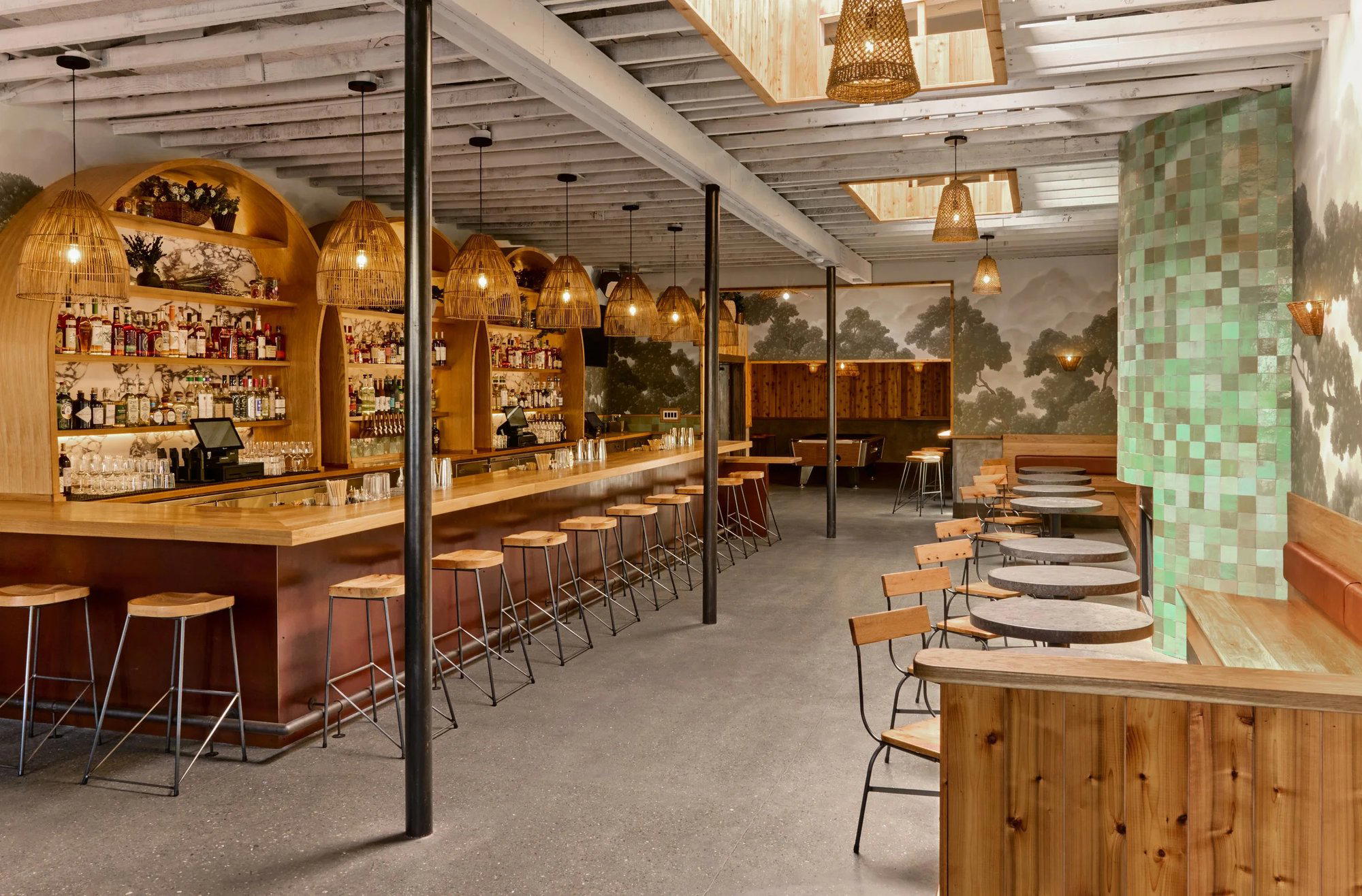
Details
- Lively
- Modern
- Cozy
- Trendy
- Date Night
- Group Dining
- Casual Hangout
- Open Kitchen
- Craft Cocktails
- A La Carte
- Internationally Inspired Drinks
Current opening hours
- Monday
- Closed
- Tuesday
- 4:30–10 PM
- Wednesday
- 4:30–10 PM
- Thursday
- 4:30 PM–12 AM
- Friday
- 4:30 PM–2 AM
- Saturday
- 11 AM–2 AM
- Sunday
- 11 AM–9 PM
Hours can change for holidays and private events. Hours as of .
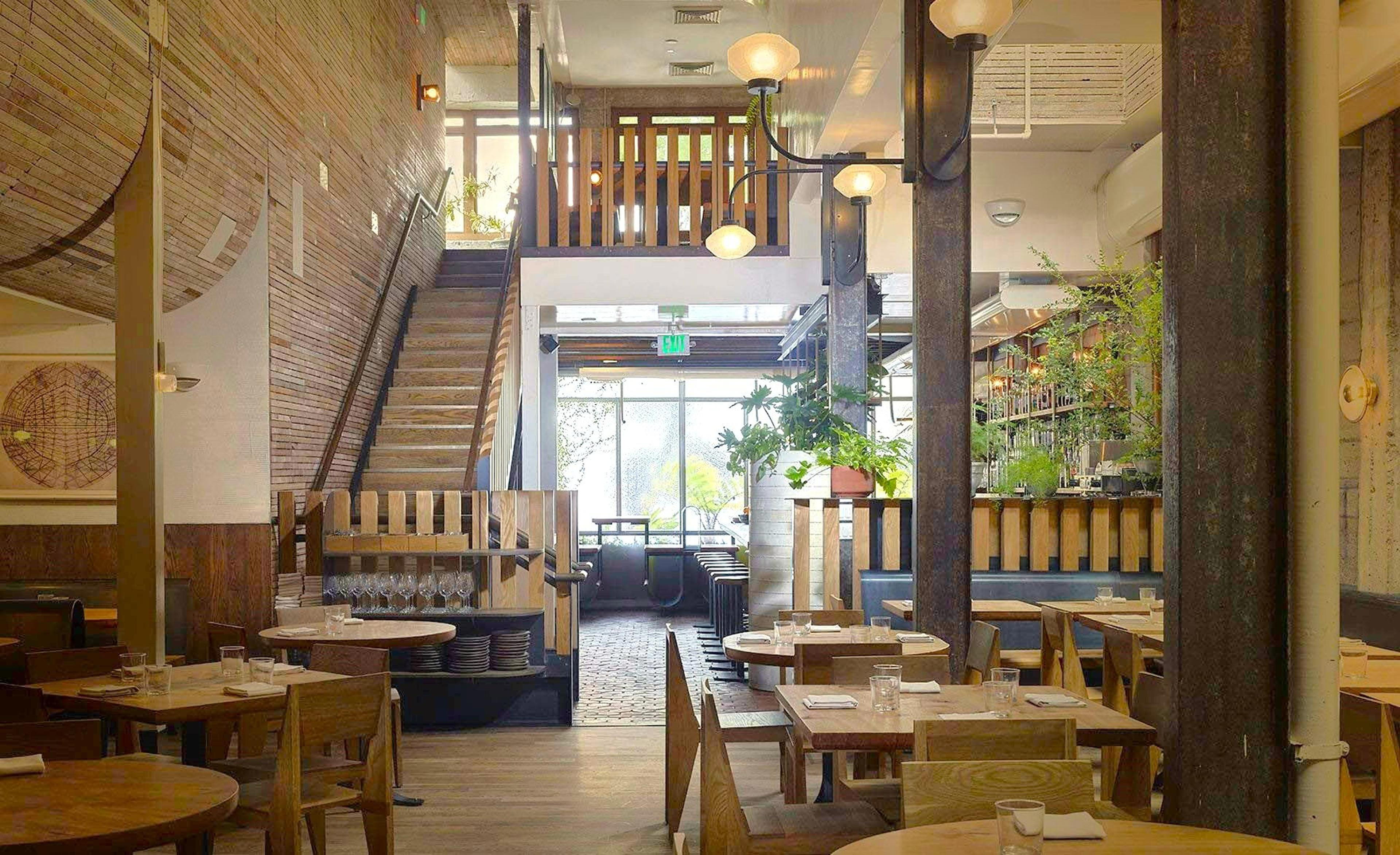
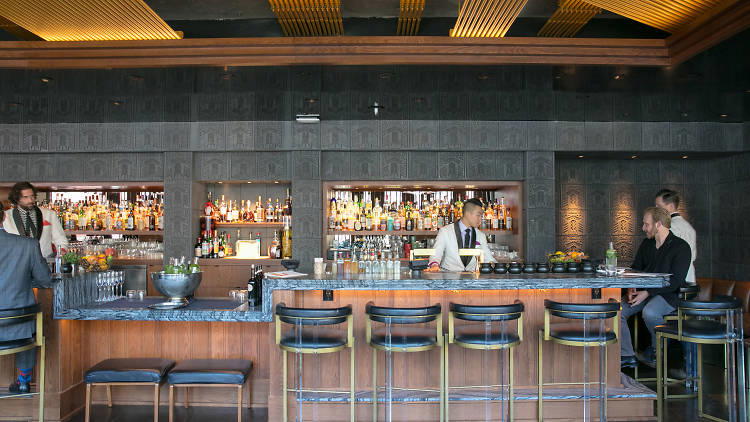
Bright, convivial space with sensual dining room, beautiful bar, and semi-private mezzanine.