Our verdict
Mongolian restaurant Sukhe occupies a floor of a Tenjin building in central Fukuoka, bringing a cuisine rarely encountered in Japan's dining circuit to one of the country's most food-concentrated cities. The format sits outside Fukuoka's dominant ramen, sushi, and yakitori traditions, making it a reference point for anyone tracing how far the city's restaurant range has extended beyond its regional specialities.

Pearl is the En Primeur Club membership app — saves, bookings, and concierge access live there. Same editors, same standards.
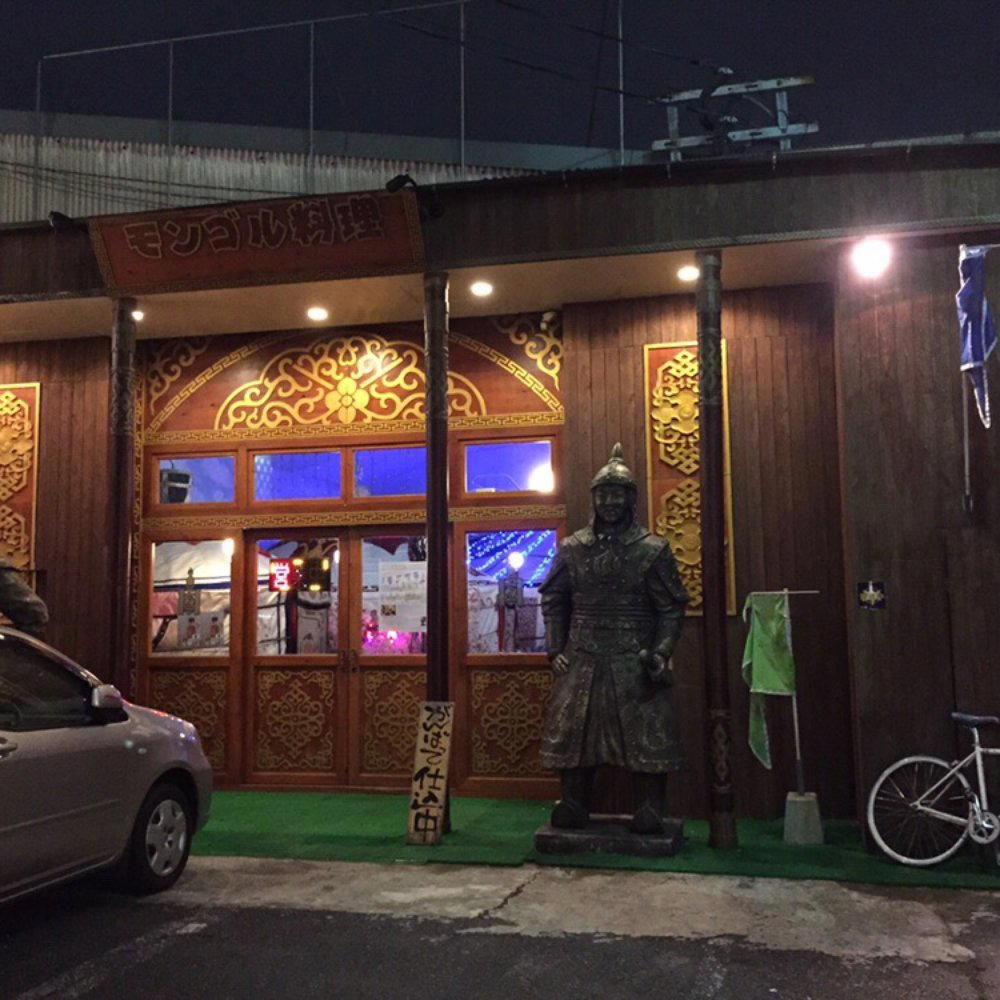
A Different Starting Point in Tenjin
Fukuoka's central dining district, Tenjin, is dense with options that reinforce the city's existing reputation: ramen counters, yakitori alleys, kaiseki rooms, and sushi bars that hold their own against Tokyo comparisons. Against that backdrop, a Mongolian restaurant registers as a genuine departure. Mongolian cuisine remains one of the least-represented major food traditions in Japan's restaurant market, and its presence in Fukuoka's commercial core signals the degree to which the city's dining range has extended beyond the regional identities that defined it a generation ago.
Mongolian restaurant Sukhe is located on the third floor of a building at 3 Chome-4-14 Tenjin in Chuo Ward, an address that places it squarely within the commercial and restaurant concentration of central Fukuoka. Reaching it requires navigating a multi-storey building rather than arriving at a ground-level shopfront, which is a practical detail worth factoring into a first visit, particularly if you are arriving after dark or without a precise floor reference.
The Cuisine Tradition Behind the Menu
Mongolian food is built around pastoral and nomadic ingredients: mutton and lamb as the protein foundation, dairy fermented in forms that have no direct Japanese counterpart, and cooking methods centred on open heat rather than precision technique. The tradition is emphatically not delicate. It represents a culinary logic shaped by steppe conditions, seasonal availability, and communal eating, and it occupies the opposite end of the register from the restrained, ingredient-showcasing approach that defines much of Fukuoka's celebrated restaurant culture.
In Japan's urban restaurant ecosystem, Mongolian cuisine tends to appear in two formats: informal all-you-can-eat operations built around yakiniku-style tabletop grills, and smaller specialist restaurants that attempt a more considered representation of the cuisine. The distinction matters when framing what kind of meal Sukhe offers, though the venue data does not confirm which format applies here. What is clear is that the address and building type in Tenjin suggest a mid-scale commercial operation rather than a casual food-court format.
For diners arriving from a sequence of Japanese meals, the tasting arc of a Mongolian dinner reverses familiar patterns. Where a kaiseki progression moves from restraint to richness, Mongolian meals often open with fermented dairy and salted preparations before moving to meat-centred centrepieces with strong, direct seasoning. The cuisine does not build toward a delicate finish; it delivers weight early and sustains it. This makes meal pacing a different proposition, and ordering with that arc in mind generally produces a more coherent experience than approaching the menu as a series of independent dishes.
Fukuoka as a Context for Range
The presence of a Mongolian restaurant in Tenjin is partly a product of what Fukuoka has become as a dining city. The city's restaurant density per capita is among the highest in Japan, and that concentration has historically been justified by depth within a few categories rather than breadth across many. Chikamatsu represents the sushi end of that depth; Asago and Bekk point to how far the city's non-Japanese and contemporary formats have developed. Goh, applying French technique to Kyushu ingredients, and Beef Taigen, focusing the entire operation on a single protein category, both demonstrate that Fukuoka's serious diners have appetite for format precision. Sukhe operates in a different register entirely, filling a gap that the city's otherwise tightly defined restaurant culture leaves largely open.
Nationally, restaurants working outside Japan's dominant dining traditions tend to cluster in Tokyo and Osaka. HAJIME in Osaka and the broader range of the Tokyo market, including operations like Harutaka, illustrate how those cities absorb global formats while maintaining strong local reference points. Fukuoka's equivalent is smaller in scale but developing in a similar direction. A restaurant like Sukhe is part of that development, serving a segment of the local population and visiting diner base with specific interest in cuisines that Fukuoka's traditional restaurant culture does not address.
Elsewhere in Japan, specialist formats in underrepresented cuisines hold their own by matching ingredient sourcing and preparation to the standards of the local market. Gion Sasaki in Kyoto and akordu in Nara both demonstrate how non-native culinary traditions can establish credibility in cities with strong indigenous food identities. The challenge for any Mongolian restaurant in Japan is that the reference framework for the cuisine is thin among most diners, which means the restaurant itself carries more of the interpretive burden.
Planning a Visit
For those building a broader Fukuoka itinerary, our full Fukuoka restaurants guide maps the city's dining range across categories and price tiers. Comparisons further afield, including Le Bernardin in New York City and Atomix in New York City, illustrate how cities absorb specialist cuisine formats at the premium end; Sukhe operates in a different market position but within the same broader pattern of culinary range expanding beyond a city's established identity.
Frequently asked questions
Where is Mongolian restaurant Sukhe located?
Mongolian restaurant Sukhe is located at ã¹ã¿ã¼ãã«, ï¼é, 3 Chome-4-14 Tenjin, Chuo Ward, Fukuoka, 810-0001, Japan, Fukuoka.
Is Mongolian restaurant Sukhe in Fukuoka suitable for diners unfamiliar with Mongolian cuisine?
Mongolian food's core building blocks, lamb, mutton, and fermented dairy, differ significantly from the Japanese cuisines that dominate Fukuoka's Tenjin district, but the ingredient logic is straightforward once explained. The cuisine's nomadic pastoral origins mean dishes tend to be protein-forward and ingredient-focused rather than reliant on complex sauce structures. Sukhe's location in central Tenjin, one of Fukuoka's most accessible neighbourhoods by both subway and rail, makes it easy to include as part of a broader evening in the area.
What's the best thing to order at Mongolian restaurant Sukhe?
Mongolian cooking is anchored in mutton and lamb, and those proteins are the place to focus. Traditional preparations lean on slow cooking and wood-fired or open-heat methods that suit the pastoral ingredient base. Fermented dairy dishes, where available, represent a side of the cuisine that rarely appears elsewhere in Fukuoka's Tenjin district, making them worth prioritising if they appear on the current menu.
Should I book Mongolian restaurant Sukhe in advance?
Sukhe is located in Tenjin, Fukuoka's densest commercial dining zone, where foot traffic is consistently high and niche cuisines attract both curious locals and repeat visitors. Mongolian restaurants are rare in the city, which tends to concentrate demand at the few that operate. Contacting the restaurant directly before visiting is advisable, particularly on weekends or during Fukuoka's peak dining periods.
What makes Mongolian restaurant Sukhe worth seeking out?
Fukuoka's restaurant scene is dominated by ramen, yakitori, and kaiseki, so a kitchen working in Mongolian pastoral traditions occupies genuinely underrepresented ground in the city. Sukhe sits at 3 Chome-4-14 Tenjin in Chuo Ward, placing it at the centre of the city's dining activity rather than on a peripheral dining strip. For anyone tracking the breadth of what Fukuoka now supports as a dining city, this is a meaningful data point.
A Credentials Check
Comparable venues nearby, for context on price, style, and recognition.
| Venue | Cuisine | Price | Awards | Notes |
|---|---|---|---|---|
| Mongolian restaurant SukheThis venue (the venue you are viewing) | Authentic Mongolian | $20–30 | Not listed | Not listed |
| Nikka Bar Nanashima | Whisky Bar | $20–30 | Tabelog 100 #58 | Hakata |
| Coffee Bimi | Traditional Japanese kissaten & specialty coffee | $1–10 | Tabelog 100 | Chūō |
| MOMOTA Bar | Cocktail & Whisky Bar | $30–50 | Tabelog 100 #57 | Chūō |
| æç åç¿ | Japanese Coffee House | Not listed | Not listed | Chūō |
| Kawa Ya Shirogane ten | Hakata yakitori & izakaya | $20–30 | Tabelog 100 #46 | Chūō |
Continue exploring
More in Fukuoka
Restaurants in Fukuoka
All restaurants in Fukuoka →

Details
- Rustic
- Cozy
- Family
- Casual Hangout
- Group Dining
- Standalone
- Sake Program
- A La Carte
- Vegetarian Friendly
Current opening hours
- Monday
- 6–11:30 PM
- Tuesday
- 6–11:30 PM
- Wednesday
- 6–11:30 PM
- Thursday
- 6–11:30 PM
- Friday
- 6–11:30 PM
- Saturday
- 6–11:30 PM
- Sunday
- 6–11:30 PM
Hours can change for holidays and private events. Last verified .
Cozy ger atmosphere evoking Mongolian heritage.