
Tabelog 100 #77
Our verdict
Modern Thai CIEL Oosaka honten places Thai cooking inside Osaka’s ingredient-conscious dining culture rather than treating it as a casual spice stop. The 19-seat Fukushima room, selected for Tabelog 100 Asian cuisine / Ethnic cuisine WEST 2024, suits diners interested in Thai flavors with wine, cocktails, and a sommelier-led drinking frame.

Pearl is the En Primeur Club membership app, where members save venues, book tables and use the concierge.
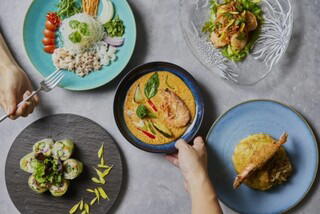
The menu
What to order
- Yum Woon Sen
- Som Tam
- Laab Moo
- Green Curry
- Khao Man Gai
- Tom Yum Goong
Fukushima’s dining streets reward restaurants with a point of view: service rhythm, compact dining formats, and kitchens that must make a sharp argument because the area leaves little room for empty theatre. Modern Thai CIEL Oosaka honten belongs to Osaka’s Thai category, where heat, herbs, acidity, and the shape of a meal matter as much as the comfort of curry or stir-fry. The expectation is focused rather than generic. This is not simply Thai cooking treated as a broad catch-all; it is a Fukushima restaurant where balance, pacing, and a clear point of view carry the experience.
Osaka has long translated varied cuisines into local dining formats without flattening them into theme restaurants. Thai food in Japan often appears across a range of settings, from everyday lunch counters to casual night-out rooms and more composed restaurants that treat herbs, seafood, meat, and rice with care. CIEL sits in that more focused lane. Its selection for Tabelog Hyakumeiten 2024 gives it a useful external marker in a category where serious restaurants can be hard to separate from cheerful neighbourhood addresses.
Thai structure, Osaka dining logic, and a focused frame
The ideal way to read this kitchen is through structure rather than novelty. Thai cooking depends on tension: sour against sweet, chile against fat, herbs against smoke or richness. In Osaka, where diners notice seasonality and product quality, that grammar can move from everyday energy into edited restaurant language. The appeal is not that Thai cuisine has been softened for Japan; it is that the format asks diners to notice ingredients that might otherwise vanish beneath heat and fragrance.
The restaurant’s position reinforces the point. Thai food exposes weak balances quickly: lime, chile, fish sauce, coconut, herbs, and fermented notes can make a meal feel vivid or muddled depending on how they are handled. A focused Thai restaurant must manage acidity, aromatics, heat, sweetness, and texture with care. For diners used to casual drinks and quick Asian meals, this is a more deliberate frame, one where seasoning and pacing become part of the pleasure rather than background comfort.
Fukushima’s comparison set clarifies the positioning without needing to force direct equivalence. KANNOSUKE, Ramen Kozou, Korean Shokudo Iru, Sumibiyakitori Coquelet, and Evoluer show how varied the district’s dining map can be. CIEL’s Thai category and Fukushima setting place it within that wider independent-restaurant field, exactly where Osaka often produces its more interesting focused dining rooms.
Why Fukushima suits this kind of Thai restaurant
In Osaka dining terms, Fukushima works because it is more than a transit-side convenience district. It has density for repeat local trade, proximity to central Osaka for destination diners, and enough small-format restaurants to make concise concepts viable. A focused Thai restaurant makes sense here in a way it might not in a hotel-heavy or tourist-first quarter. The neighbourhood rewards specialization, especially when a kitchen has a clear culinary language and service that supports dates, small groups, and focused dinners without becoming ceremonial.
The ingredient angle also fits local dining habits. Osaka diners are accustomed to restaurants foregrounding produce, meat, seafood, and seasonality even outside Japanese cuisine. In Thai cooking, that attention appears as ingredient clarity rather than named luxury products: herbs need lift, acidity needs precision, and sauces need depth without muddiness. The restaurant’s Tabelog Hyakumeiten 2024 selection suggests it is being noticed beyond an ordinary listing, not only treated as another casual address.
The practical picture points to a grown-up but not rigid meal. The better fit is a diner who wants focused restaurant energy rather than a loose, all-purpose stop. With Tabelog listing Thai as the category and a 2024 Hyakumeiten recognition, the appeal is strongest for readers who care about flavor balance, clear identity, and a restaurant that can hold its own within Fukushima’s dense field of independent dining.
How to place it within a wider Fukushima itinerary
For readers mapping Fukushima around food rather than sightseeing, CIEL argues for treating the ward as more than a ramen-and-izakaya stop. The area can absorb a full evening of eating and drinking, especially when built around one focused dinner rather than a crawl. For broader local context, Our full Fukushima restaurants guide is the natural starting point, with adjacent planning through Our full Fukushima hotels guide, Our full Fukushima bars guide, Our full Fukushima wineries guide, and Our full Fukushima experiences guide.
Within the city’s restaurant network, compare styles rather than collecting names. Other Fukushima dining rooms show the area’s range, while CIEL’s place is defined by its Thai category, Fukushima setting, and Tabelog Hyakumeiten 2024 recognition. For travelers connecting Osaka with other Japanese and overseas dining threads, the more useful lesson is not a list of unrelated addresses, but the way a local restaurant can turn a familiar cuisine into a focused urban meal.
The editorial case is clear: this Thai restaurant belongs to Osaka’s ingredient-and-balance conversation, not merely its craving-satisfaction category. Diners who value seasoning precision, structure, and focused identity will understand the appeal faster than those seeking a broad, casual Thai spread. In Fukushima’s crowded dining field, that specificity is the point.
Frequently asked questions
Does Modern Thai CIEL Oosaka honten work for a family meal?
Modern Thai CIEL Oosaka honten is best approached as a focused Fukushima Thai restaurant. Specific family-service details are not provided here, so diners planning with children should confirm directly before booking.
What kind of setting is Modern Thai CIEL Oosaka honten?
It is a Thai restaurant in Fukushima. Tabelog lists it in the Thai category and records a 2024 Hyakumeiten recognition, giving it a clearer editorial marker than a casual quick-stop listing.
What should I budget for a meal at Modern Thai CIEL Oosaka honten?
Tabelog lists the budget as Dinner: JPY 5,000 - JPY 5,999; Lunch: JPY 1,000 - JPY 1,999.
What days is Modern Thai CIEL Oosaka honten closed?
Specific closing days are not provided here. Confirm the current schedule directly with Modern Thai CIEL Oosaka honten before visiting.
How It Stacks Up
Comparable venues by cuisine and price in the same metro.
| Venue | Cuisine | Price | Awards | Notes |
|---|---|---|---|---|
| Modern Thai CIEL Oosaka hontenThis venue (the venue you are viewing) | Modern Thai | $30–50 | Tabelog 100 #77 | Not listed |
| Oshima | Fire-Driven Italian Fusion | $50–100 | Tabelog 100 #79 | Shin-Fukushima |
| Koubai Honrou | Chinese Omakase | $100–150 | Tabelog 100 #12 | Fukushima |
| Yakitori Kokure | Modern Yakitori & Natural Wine | $50–100 | Tabelog 100 #34 | Fukushima |
| Sakenameshi Brio | Reservation-only Japanese izakaya course | $50–100 | Tabelog 100 #58 | Fukushima |
| Shoppe Shoppe | Japanese Ramen | $10–20 | Tabelog 100 #11 | Fukushima |
Recognition history
Dated appearances from independent guides and award organizations, with the underlying list record or original source where available.
Tabelog 100 #77 · No. 77
Tabelog · Tabelog 100 - Asian cuisine / Ethnic cuisine - WEST - 2024
Continue exploring
More in Fukushima
Restaurants in Fukushima
All restaurants in Fukushima →




Bars in Fukushima
Browse all →



Hotels in Fukushima
Browse all →



Wineries in Fukushima
Browse all →
Modern Thai CIEL Oosaka honten
The wine
- Extensive wine list
- Sommelier-led
- Beer program
Details
- Modern
- Sophisticated
- Intimate
- Romantic
- Date Night
- Special Occasion
- Business Dinner
- Group Dining
- Wine Cellar
- Design Destination
- Standalone
- Sommelier Led
- Extensive Wine List
- Beer Program
- Local Sourcing
- A La Carte
- Set Menu
- Tasting Menu
- Wine
- Beer
- Champagne
- Vegetarian Friendly
Current opening hours
- Monday
- 11 AM–2:30 PM, 5–10 PM
- Tuesday
- 11 AM–2:30 PM, 5–10 PM
- Wednesday
- 5–10 PM
- Thursday
- 5–10 PM
- Friday
- 5–10 PM
- Saturday
- 11 AM–2:30 PM, 5–10 PM
- Sunday
- 8:30–10:30 AM, 11 AM–2:30 PM, 5–10 PM
Hours can change for holidays and private events. Hours as of .
Refined, modern, and intimate, with a restaurant feel suited to dates and wine pairing rather than casual noisy dining.