Mitsitam Cafe
Mitsitam Cafe sits inside the Smithsonian's National Museum of the American Indian on the National Mall, making it one of the few museum dining rooms in Washington that functions as a serious destination in its own right. The menu draws from Indigenous culinary traditions across North and South America, organized by geographic region. For visitors to the Mall, it occupies a different tier from the average institutional cafeteria.
Pearl is the En Primeur Club membership app — saves, bookings, and concierge access live there. Same editors, same standards.
- Address
- Independence Ave SW & 4th Street Southwest, Washington, DC 20004
- Phone
- +12026336644
- Website
- si.edu
- Directions
- Get directions
 Saves & bookings on Pearl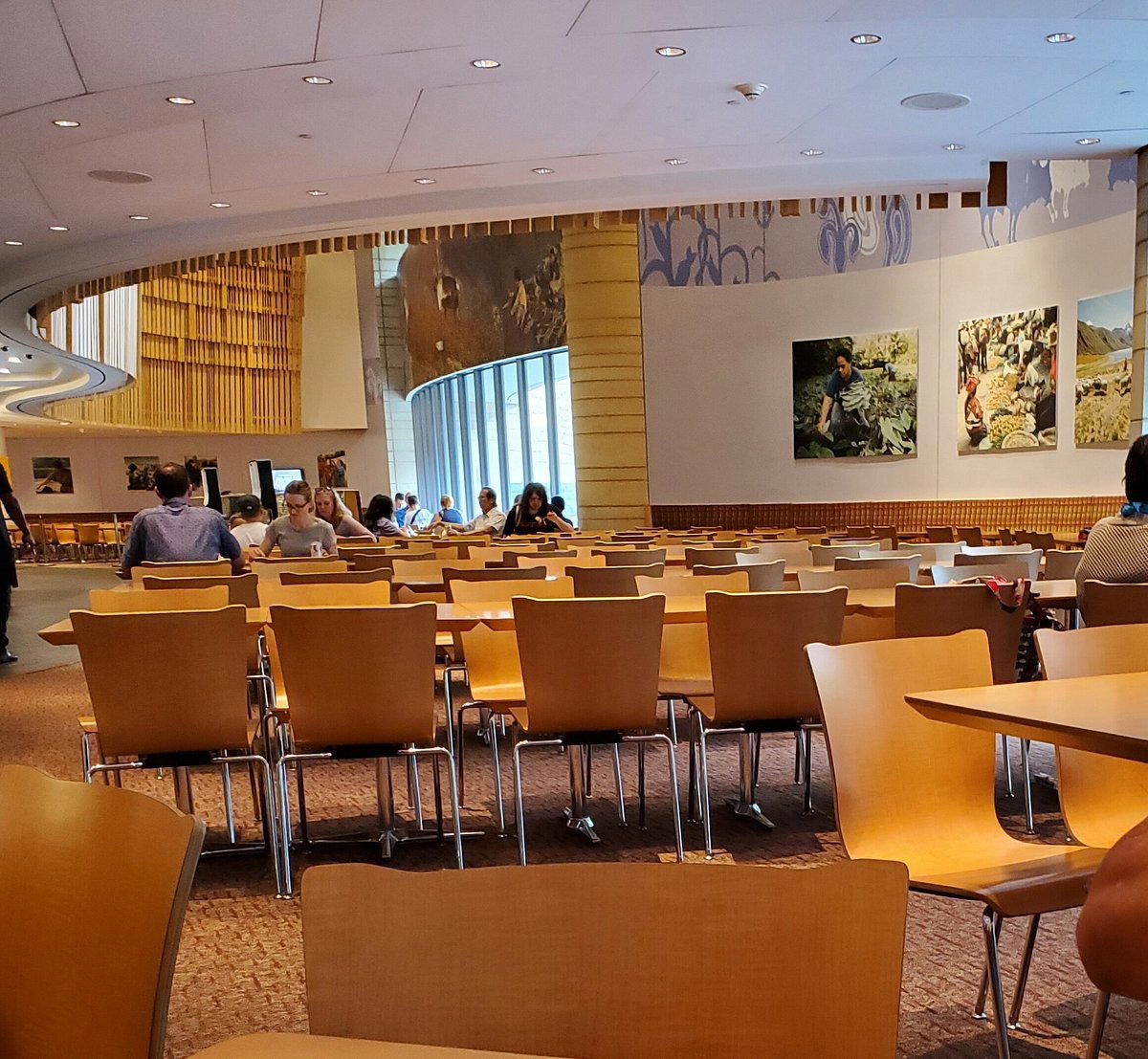
Eating on the Mall: What the Address Actually Means
Mitsitam Cafe is a casual Native American Regional Foods restaurant in Washington, D.C. priced around $20 per person. Mitsitam Cafe, located inside the Smithsonian's National Museum of the American Indian at Independence Ave SW and 4th Street Southwest, sits at the southeastern end of the Mall where it meets the Capitol grounds. That placement matters. Visitors arriving from the Capitol building or crossing from the Air and Space Museum are already in a specific frame of mind: they are engaging with institutions that take historical context seriously. The cafe operates within that context, and it does so more deliberately than most museum dining rooms in the country.
The National Museum of the American Indian itself is a statement building, designed by architects from the GBQC and Douglas Cardinal with input from Indigenous communities, clad in Kasota limestone with curvilinear forms intended to evoke natural landforms. Walking into the museum's interior before reaching the cafe puts the dining experience in immediate physical and cultural context in a way that few restaurant approaches can replicate. The building is part of the meal, whether or not the visitor has thought about it that way.
Indigenous Cuisines as a Category, Not a Curiosity
American museum restaurants tend to organize their menus around institutional catering logic: sandwiches, salads, soups, items that move quickly and offend no one. Mitsitam operates on a different premise. The menu is structured around Indigenous culinary traditions from distinct regions of North and South America, including the Northern Woodlands, the Great Plains, the Pacific Northwest, Meso America, and the South America zone. Each station draws from the foodways associated with those regions, using ingredients and preparations that have documented historical and contemporary roots in those communities.
This format places Mitsitam in a small national category of institutional restaurants that function as curriculum, not just convenience. Comparable positions are rare. Mitsitam's regional-station structure makes the food itself an interpretive layer of the museum visit. For a visitor who has spent time in the museum's permanent collection, moving to a lunch station organized around Great Plains bison preparations or Pacific Northwest salmon traditions is a deliberate continuation of the experience, not a break from it.
In Washington's broader dining scene, Indigenous American cuisine remains dramatically underrepresented relative to the city's depth in other categories. The city has developed serious programs in Peruvian cooking (see Causa), Middle Eastern traditions (see Albi), and sustainable-forward American cooking (see Oyster Oyster), but Indigenous American food has no comparable restaurant anchor in the private sector. Mitsitam holds that position by institutional default, which gives it an unusual kind of authority.
Where It Sits Relative to the Mall's Dining Options
The comparison set for Mitsitam is not the city's tasting-menu tier, where restaurants like Jônt and minibar operate at the summit of Washington's fine-dining market. The relevant comparison is the institutional dining category: what does a visitor to the National Mall eat, and how seriously has the institution thought about that question? Against that frame, Mitsitam's curatorial approach is distinctive. Museum cafeterias at peer institutions across the country rarely organize their menus around the intellectual content of the museum itself with this degree of consistency.
Nationally, the conversation about mission-driven institutional restaurants has been shaped by places like Blue Hill at Stone Barns in Tarrytown, where the dining program is explicitly tied to agricultural research, or Single Thread Farm in Healdsburg, where sourcing philosophy is built into the format. Mitsitam's version of that integration is less about sourcing documentation and more about cultural representation, but the underlying logic is the same: the food is making an argument about something beyond lunch.
A Note on the Category's National Context
Across the country, the question of how Indigenous food traditions are represented in public dining institutions is gaining more attention. Restaurants at cultural institutions in cities from Minneapolis to Santa Fe have begun taking regional Native food traditions more seriously as a programming category. Mitsitam has been doing this work for longer than most, operating under the Smithsonian's mandate since the museum opened in 2004. That two-decade track record gives it a different kind of credibility than newer entrants, even if the format remains cafeteria-scaled rather than restaurant-formal. For context on how other American cities are handling mission-driven dining, Lazy Bear in San Francisco and Providence in Los Angeles each represent distinct approaches to food with a point of view, though in different registers.
Planning Your Visit
Mitsitam Cafe is open daily from 11 AM to 3 PM. The cafe is walk-in friendly and offers a casual, mid-range stop for museum visitors. Midweek lunch service during quieter shoulder months offers one relaxed experience. The building's architecture alone rewards a visit at less crowded hours, when the atrium spaces and exhibition areas are easier to move through before or after eating.
A Lean Comparison
Comparable venues nearby, for context on price, style, and recognition.
| Venue | Cuisine | Price | Notes |
|---|---|---|---|
| Mitsitam CafeThis venue — the venue you are viewing | Not listed | $$ | Not listed |
| L'Enfant Plaza SW | Not listed | $$ | Southwest Federal Center, American Food Court |
| Buck's Fishing & Camping | Chevy Chase, Seasonal American Bistro | $$ | Not listed |
| Milk & Honey - The Wharf | Not listed | $$ | Southwest Waterfront, Southern Inspired Kitchen |
| Spotted Zebra | Not listed | $$ | East End, Modern American with Political Whimsy |
| PopUp Bagels | Georgetown, Artisan Bagels & Schmears | $$ | Not listed |
Continue exploring
More in Washington DC
Restaurants in Washington DC
Browse all →
Bars in Washington DC
Browse all →
Hotels in Washington DC
Browse all →
At a Glance
- Scenic
- Casual
- Casual Hangout
- Family
- Historic Building
- Local Sourcing
Current opening hours
- Monday
- 11 AM–3 PM
- Tuesday
- 11 AM–3 PM
- Wednesday
- 11 AM–3 PM
- Thursday
- 11 AM–3 PM
- Friday
- 11 AM–3 PM
- Saturday
- 11 AM–3 PM
- Sunday
- 11 AM–3 PM
Hours can change for holidays and private events. Last verified .
Bright and educational atmosphere overlooking a curving pool and waterfall, with a casual cafeteria-style setup amid museum surroundings.