
Tabelog 100 #18
Our verdict
Minshuku Aotsuka Shokudo is a Shukutsu seafood shokudo where Otaru’s port-city appetite is expressed through scale, speed, and fish-first cooking rather than ceremony. Its Tabelog 100 Diner selection in 2026 and 200-seat format place it in a different lane from Otaru’s sushi counters and small izakaya rooms: casual, coastal, and built for people who came to eat from Hokkaido waters.

Pearl is the En Primeur Club membership app — saves, bookings, and concierge access live there. Same editors, same standards.
- Address
- 3 Chome-210 Shukutsu, Otaru, Hokkaido 047-0047, Japan
- Phone
- +81 134-22-8034
- Website
- aotsuka.com
- Directions
- Get directions
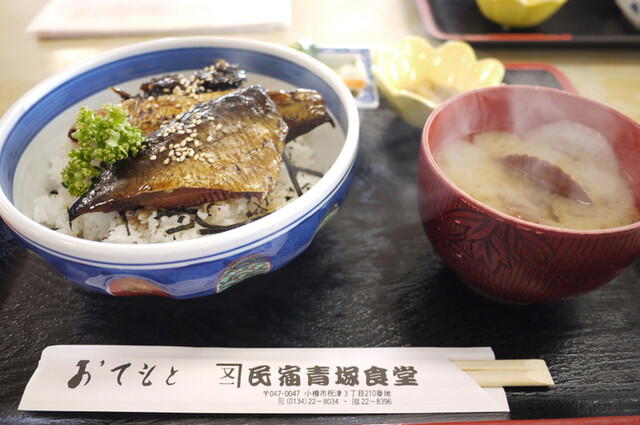
The menu
What to order
- Grilled herring set meal
- Mackerel set meal
- Sashimi set meal
- Sea urchin and scallop dishes
- Flower fish (kichiji) rice bowl
Otaru feels different when attention turns from postcard scenery to water, fishing traffic, and the appetite that follows cold seas. Here, Minshuku Aotsuka Shokudo belongs to a Hokkaido tradition that treats seafood less as luxury theater than daily infrastructure: a straightforward shokudo format, a practical pace, and a venue identity shaped by what a port town knows.
That distinction matters in Otaru, where visitors often expect sushi as the default local seafood expression. Sushi has its place, especially in a city with a strong counter culture, but the shokudo answers a different question: how seafood is approached in an everyday dining format rather than as a formal counter meal. The restaurant’s selection for Tabelog 100 Diner 2026 gives that everyday category formal recognition, not by turning it into fine dining, but by acknowledging that Japan’s cafeteria and set-meal culture has its own hierarchy.
Port-town seafood without the counter ritual
Otaru’s seafood economy is not only about delicacy. It is also about proximity, season, and direct cooking in a port city. The useful lens is format: a shokudo in Otaru gains authority from being close to the reason people travel this far north. The restaurant’s listed categories, cafeteria, seafood, and ryokan, are revealing. It sits between public dining room and lodging-house hospitality, closer to a coastal canteen than a polished urban restaurant.
The room’s style reinforces that point. This is not the hushed grammar of omakase. It is a practical seafood address with a clear social contract: eat well, keep the pace moving, and accept an atmosphere closer to everyday dining than ceremony. That makes it a useful counterweight to smaller Otaru addresses such as Shirokuma Shokudo, and to sushi-focused dining represented locally by 伊勢鮨. The comparison is not rank; it is choosing the format that matches the meal.
For an Otaru food day, read the city as a sequence of formats, not a single seafood genre. Seafood bowls, casual dining rooms, and other local stops each explain a different part of the city’s appetite. Minshuku Aotsuka Shokudo is the coastal-volume chapter: seafood, a cafeteria format, and less interest in ceremony than in feeding people directly.
Why the sourcing angle matters in Otaru
Hokkaido dining is often flattened into a premium-products checklist: crab, uni, scallops, salmon roe, dairy. The better reading is regional. Around Otaru, seafood restaurants compete not only on product but on how honestly they match product to format. A seafood donburi shop foregrounds abundance in a bowl; a sushi counter foregrounds handwork; a shokudo foregrounds accessibility and repetition. Minshuku Aotsuka Shokudo’s fish-first identity belongs to that last group, where cooking is meant to make sense as an everyday meal rather than perform for a counter.
The Tabelog score of 3.67 and inclusion in the 2026 Tabelog 100 Diner list are useful signals because the award category is not luxury dining. It rewards a style travelers chasing formal tasting menus can overlook. Within Japan, shokudo culture is a serious part of eating out: set meals, simple combinations, and local variations that reflect the region. In Otaru, the sea is not a theme. It is the organizing principle.
There is also a practical class dimension. Lunch sits in the JPY 2,000 to JPY 2,999 band, dinner in the JPY 3,000 to JPY 3,999 band, placing the restaurant in a middle-accessible bracket for seafood in a tourist-heavy port city. That price position is part of the story. Otaru can sell seafood as spectacle; this format sells it as a meal. Travelers comparing it with other Otaru dining, Yamanaka Bokujou Otaru ten, or Yoichiya Uni Specialty Restaurant, Hokkaido-Otaru are choosing between different local formats, specialties, and port-town breadth.
How to read the room before you go
The setting rewards the right expectations. This is a casual shokudo-style meal, not a slow, private one. The atmosphere is best approached as straightforward cafeteria and seafood dining in Otaru. That is evidence of the category working as intended.
Access shapes the meal. Otaru is compact enough that seafood can be planned as part of a broader city itinerary, but this is still best treated as a planned meal rather than a quick add-on. Use it as the seafood anchor of an Otaru half-day, not just a pause between central stops.
Practical planning is sensible. The listed phone number is +81-134-22-8034, and a concise call can help confirm current details before you go. As with many Hokkaido dining rooms outside the most formal circuits, it is wise to check the latest operating information rather than assume every detail is fixed for visitors.
Otaru’s dining map is stronger when read across categories. Use our full Otaru restaurants guide for the city’s food circuit, then widen the trip through our full Otaru hotels guide, our full Otaru bars guide, our full Otaru wineries guide, and our full Otaru experiences guide. For contrast outside Hokkaido, compare how everyday Japanese formats shift by region at unnamed dining rooms in other cities, where the same logic of format, price, and local appetite can look very different.
Frequently asked questions
Can I bring kids to Minshuku Aotsuka Shokudo?
Minshuku Aotsuka Shokudo is a casual shokudo in Otaru, so it is best read as a practical, everyday dining room rather than an intimate counter. Check the venue's official channels for the latest details.
What is the atmosphere like at Minshuku Aotsuka Shokudo?
Expect a straightforward cafeteria and seafood format rather than a quiet fine-dining setting. The appeal is the shokudo style in Otaru.
How much does it cost to eat at Minshuku Aotsuka Shokudo?
Pricing at Minshuku Aotsuka Shokudo is listed as dinner JPY 3,000 - JPY 3,999 and lunch JPY 2,000 - JPY 2,999.
Where do I go for Minshuku Aotsuka Shokudo?
Otaru.
Do I need a reservation for Minshuku Aotsuka Shokudo?
The Tabelog 100 Diner 2026 selection suggests it is a recognized stop for this style of Otaru dining.
What do critics highlight about Minshuku Aotsuka Shokudo?
The clearest editorial signal is the Tabelog 100 Diner 2026 selection, alongside its listed categories of cafeteria, seafood, and ryokan in Otaru. The listed budget is dinner JPY 3,000 - JPY 3,999 and lunch JPY 2,000 - JPY 2,999.
Side-by-Side Snapshot
Comparable venues by cuisine and price in the same metro.
| Venue | Cuisine | Price | Awards | Notes |
|---|---|---|---|---|
| Minshuku Aotsuka ShokudoThis venue — the venue you are viewing | Traditional Hokkaido seafood cafeteria | $30–50 | Tabelog 100 #18 | Not listed |
| オタル ダイニング ノーネーム | Otaru Yoshoku (Japanese Western Cuisine) | $20–30 | Not listed | Shinonomecho |
| Aotsuka Shokudo (青塚食堂) | Traditional Hokkaido seafood cafeteria | $30–50 | Tabelog 100 #18 | Shukutsu |
| Shirokuma Shokudo | Cozy Hokkaido izakaya & cafeteria | $30–50 | Tabelog 100 #92 | Ironai |
| Yoichiya Uni Specialty Restaurant, Hokkaido-Otaru | Premium Sea Urchin Donburi & Seafood Bowls | $50–100 | Not listed | Otaru Unga / Sakai-machi Street |
| 伊勢鮨 | Edomae Sushi | $100–150 | Tabelog 100 #64 | Sakaimachi |
Recognition history
Dated appearances from independent guides and award organizations, with the underlying list record or original source where available.
Tabelog 100 #18 · No. 18
Tabelog · Tabelog 100 - Diner - 2026
Continue exploring
More in Otaru
Restaurants in Otaru
Browse all →
Bars in Otaru
Browse all →
Hotels in Otaru
Browse all →
Wineries in Otaru
Browse all →
Details
- Scenic
- Lively
- Rustic
- Classic
- Family
- Group Dining
- Casual Hangout
- Solo
- Celebration
- Waterfront
- Hotel Restaurant
- Standalone
- Local Sourcing
- Sustainable Seafood
- Waterfront
- A La Carte
- Set Menu
- Pescatarian Friendly
Bustling, cafeteria-style seafood hall with simple rustic decor, big shared tables, and bright daylight from its coastal setting, creating a casual but special destination feel away from central Otaru.