Ming Mun
Ming Mun occupies a specific address on Smith Street in Brooklyn's Cobble Hill, a corridor that has tracked the borough's broader shift from neighborhood staple to serious dining destination.
Pearl is the En Primeur Club membership app — saves, bookings, and concierge access live there. Same editors, same standards.
- Address
- 196 Smith St, Brooklyn, NY 11201
- Phone
- +17188735236
- Website
- mingmun.com
- Directions
- Get directions
 Saves & bookings on Pearl
Smith Street and the Outer-Borough Turn
Brooklyn's Smith Street corridor in Cobble Hill has undergone a sustained repositioning over the past two decades. What began as a stretch of functional neighborhood dining rooms, the kind anchored by longtime family operators and modest prix fixe menus, has gradually attracted the attention of more ambitious kitchen projects, pulled in part by rising Manhattan rents and in part by a Brooklyn dining public that now expects more from its local options. Ming Mun, at 196 Smith St, sits inside that transition, at an address that places it among the mix of independent operators who define the street's current character rather than its tourist-facing reputation.
This matters as context because Smith Street's evolution mirrors a broader pattern visible across New York's outer boroughs: the slow migration of serious culinary intent away from predictable Manhattan zip codes toward neighborhoods where rent structures allow longer runway and smaller-format experiments. Venues like Atomix and Jungsik New York remain anchored in Manhattan's upper tier, but the conditions that produced their ambition increasingly originate in Brooklyn kitchens and outer-borough dining rooms where operators can take more considered risks.
The Evolution Question: What Ming Mun Has Become
Ming Mun is a restaurant serving authentic Cantonese dim sum at 196 Smith St, Brooklyn, NY 11201, with a casual dress code and reservations recommended. In the context of how New York dining has evolved, this is itself a signal worth reading. The restaurants that generate the densest paper trail, Michelin citations, press profiles, OpenTable rankings, exist in a different operating model than venues that rely primarily on neighborhood loyalty and word-of-mouth continuity.
That model, quieter and less legible to algorithm-driven discovery platforms, was once the default for most New York dining. The transformation of the city's restaurant coverage, from print-first criticism in the era of the New York Times dining section to the current fragmentation across review platforms, social channels, and curated editorial outlets, has created a split. On one side sit venues like Le Bernardin, Per Se, and Masa, where documented credentials anchor every published description. On the other sit smaller operators whose evolution is visible only to regulars and neighbors, and whose continued presence on a block often says more about community durability than any award would.
The restaurant's position on Smith Street places it in the latter category. Whatever changes it has undergone, shifts in format, ownership, menu orientation, or the surrounding competitive pressure from newer openings, those changes register locally rather than nationally. For a reader accustomed to the information density available around venues like Blue Hill at Stone Barns or The French Laundry, the opacity here requires a different kind of engagement.
Brooklyn's Independent Tier: A Comparison Frame
Across American dining cities, the gap between the documented top tier and the underdocumented independent layer has widened. At the high end, venues like Alinea in Chicago, Single Thread Farm in Healdsburg, Addison in San Diego, and Providence in Los Angeles carry the kind of institutional data, star counts, press records, booking architecture, that allows detailed editorial treatment. Further down the visibility curve, restaurants like Ming Mun operate in a register where useful information tends to come from direct contact.
This is not a comment on quality. Particularly consistent neighborhood restaurants in New York, and in cities like New Orleans, where Emeril's coexists with dozens of unheralded operators, or San Francisco, where Lazy Bear sits near a dense layer of quieter Mission and Outer Sunset rooms, are precisely the ones without press kits, publicists, or booking integrations. The absence of a phone number and website in the restaurant's public record, while unusual, is not disqualifying. It positions the venue within a tradition of New York dining that predates the infrastructure of online discoverability entirely.
Cobble Hill's Smith Street appears in that context as a corridor in transition, not yet finished with its repositioning.
Global Reference Points for Independent Dining
The phenomenon of restaurants that operate effectively below the threshold of international documentation is not distinctive to Brooklyn. In Hong Kong, venues like 8½ Otto e Mezzo Bombana generate dense institutional records precisely because they court that visibility. In Monte Carlo, Alain Ducasse at Louis XV exists within an ecosystem of documented prestige. The contrast with venues like Ming Mun is instructive: different operating models, different relationships to coverage, and different reader approaches required. For Washington D.C. visitors comparing notes, The Inn at Little Washington represents the fully documented regional anchor; for Atlanta, Bacchanalia occupies an equivalent position. The restaurant is a different animal altogether: neighborhood-anchored, locally legible, and leading approached without assumptions borrowed from venues in those higher-visibility tiers.
Planning a Visit
Because the restaurant has no publicly listed phone number, website, or booking method at the time of this writing, reservations are recommended.
At-a-Glance Comparison
Comparable venues nearby, for context on price, style, and recognition.
| Venue | Cuisine | Price | Notes |
|---|---|---|---|
| Ming MunThis venue — the venue you are viewing | Authentic Cantonese Dim Sum | $$ | Not listed |
| Kung Fu Xiao Long Bao | Shanghai-Style Xiao Long Bao | $$ | Queensboro Hill |
| Vybes 109 ï¼æ°æ´¾é æ¥¼ï¼ | Southern Style Chinese | $$ | SoHo-Little Italy-Hudson Square |
| Dimsum Garden | Hong Kong-Style Dim Sum | $$ | Murray Hill-Kips Bay |
| Jabä | Modern Taiwanese | $$ | Upper East Side-Lenox Hill-Roosevelt Island |
| Han Dynasty Upper West Side | Authentic Sichuan Chinese | $$ | Upper West Side (Central) |
Continue exploring
More in New York City
Restaurants in New York City
Browse all →


Bars in New York City
Browse all →
Hotels in New York City
Browse all →








At a Glance
- Cozy
- Lively
- Brunch
- Casual Hangout
Current opening hours
- Monday
- 11 AM–9:30 PM
- Tuesday
- Closed
- Wednesday
- 11 AM–9:30 PM
- Thursday
- 11 AM–9:30 PM
- Friday
- 11 AM–9:30 PM
- Saturday
- 11 AM–9:30 PM
- Sunday
- 11 AM–9:30 PM
Hours can change for holidays and private events. Last verified .
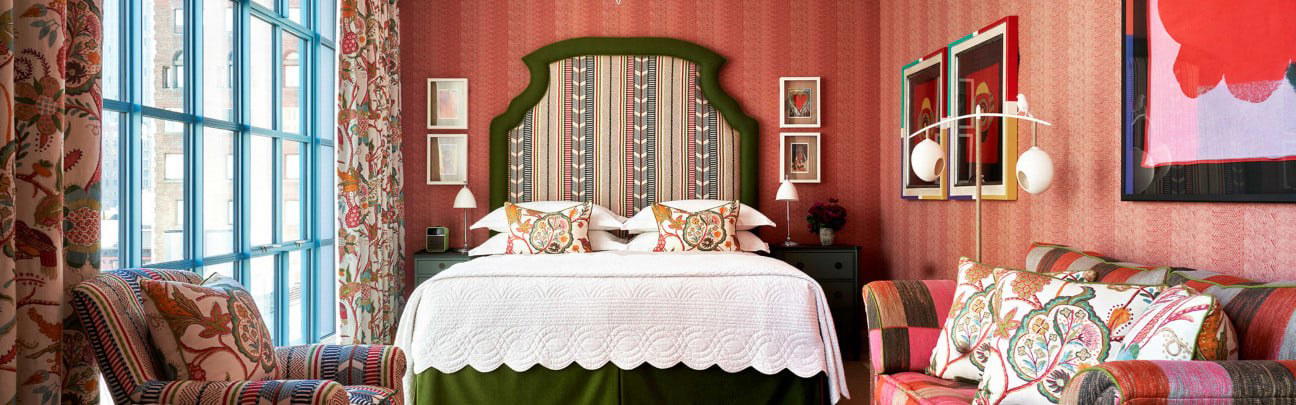
Cozy atmosphere inspired by lively Chinese tea houses with warm hospitality and a blend of modern and traditional Chinese aesthetics.