
Mendoriya places Asakura’s everyday shokudo culture in a sharper frame: chicken-led cafeteria cooking, low pricing, and a compact room recognized by Tabelog’s 2026 Diner 100. The draw is not luxury theatre but regional utility, where kara-age, yakitori, counter seats, table seating, and raised-platform seating point to a local lunch rhythm rather than destination fine dining.
Pearl is the En Primeur Club membership app — saves, bookings, and concierge access live there. Same editors, same standards.
- Address
- 37-2 Ainokubo, Asakura, Fukuoka 838-0025, Japan
- Phone
- +81 946-21-0558
- Website
- instagram.com
 Saves & bookings on Pearl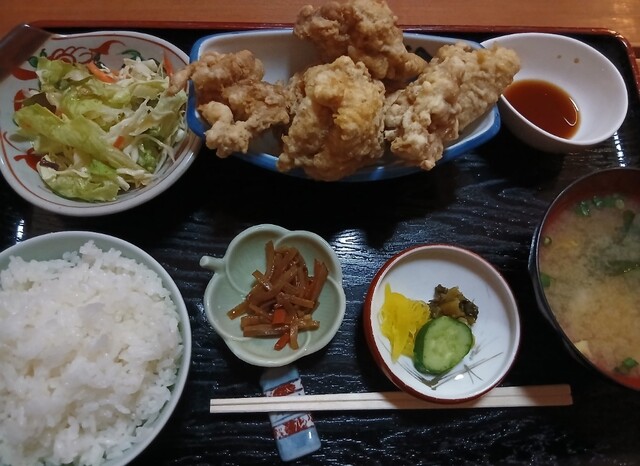
Approaching a rural Fukuoka shokudo changes the dining contract. The cues are practical before they are theatrical: a small building, parking out front, a room divided between counter, tables, and a raised tatami-style platform. In Asakura, that format matters because lunch is not built around ceremony. It is built around speed, price, familiar proteins, and the expectation that cooking can be direct without being careless.
Mendoriya belongs to that tradition. Its categories, cafeteria, kara-age, and yakitori, place it in the Japanese diner lineage rather than the polished restaurant tier. That distinction is useful for travellers: this is a chicken-focused local room operating within the everyday economy of Fukuoka Prefecture, not a tasting-menu address. Recognition on Tabelog’s Diner 100 for 2026 gives the place a national signal inside a category often overlooked by visitors who chase sushi counters and kaiseki rooms first.
Chicken as the local measure, not a luxury signal
Ingredient sourcing in this kind of shokudo is not usually expressed through long producer lists or chef manifestos. It appears through repetition: kara-age, grilled skewers, rice, set-meal logic, and a menu structure that treats chicken as a working ingredient rather than a prestige object. In Kyushu, poultry has deep everyday presence, from charcoal-grilled styles in the south to fried chicken counters across northern Kyushu. Asakura’s contribution is quieter, closer to the commuter lunch and local errand stop than the urban dining room.
That is why the award category is telling. Tabelog’s Diner 100 is not measuring luxury in the Michelin sense; it recognizes shokudo and casual dining rooms where consistency, local attachment, and value carry weight. Mendoriya’s listed price band under JPY 999 puts it in the same broad affordability bracket as nearby casual peers such as Maa Boya, Marukou Ramen Center Kiyama honten, Tachibana Udon, and Maruboshi Ramen. Dharmasagara, by contrast, sits in a higher price band, which makes the comparison less about cuisine and more about how different casual formats price themselves outside the large-city restaurant economy.
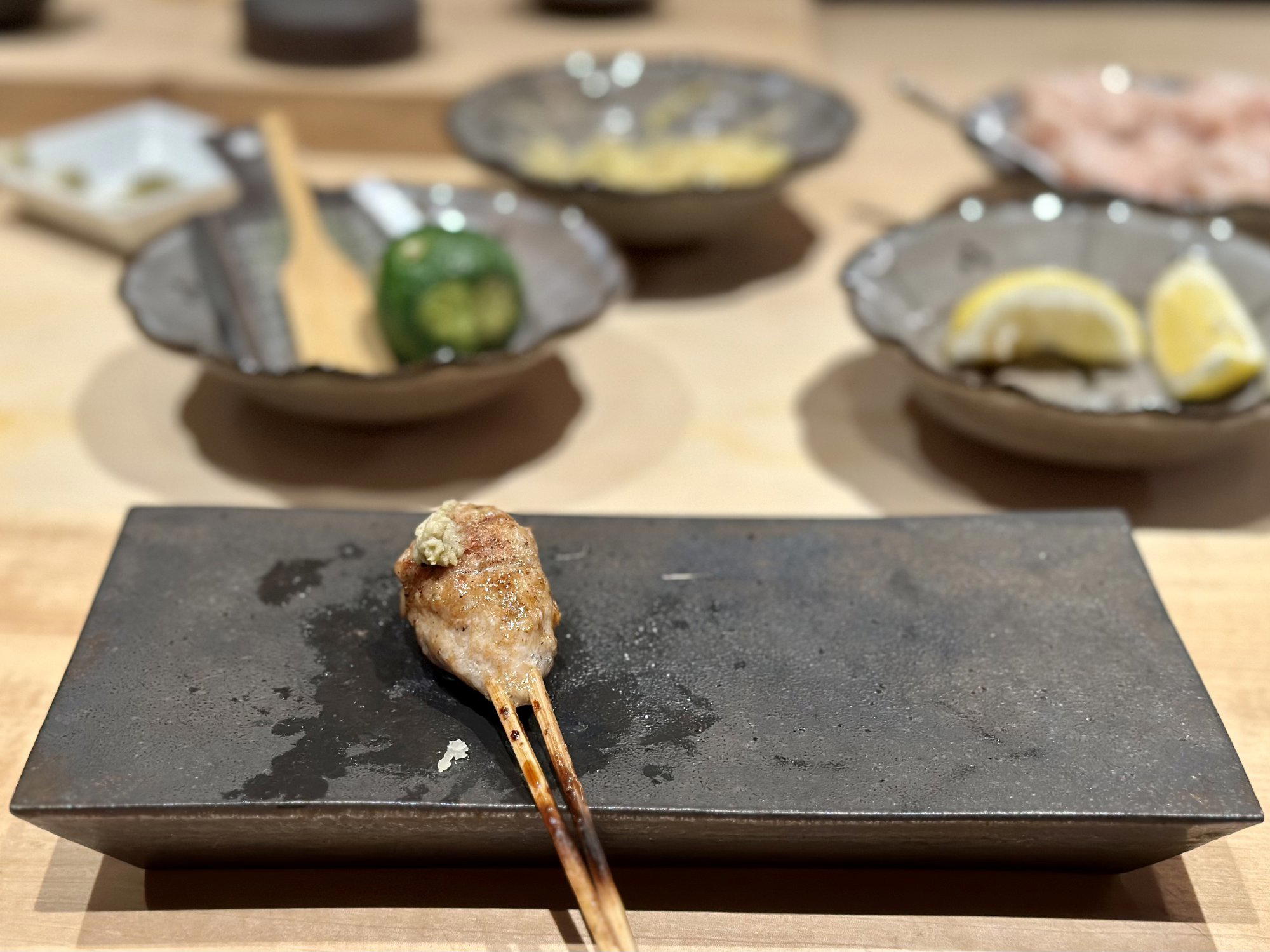
The practical strength of a chicken-led diner is that sourcing pressure shows up quickly. Fried chicken and skewers leave less room for distraction than composed plates: portioning, oil management, grilling rhythm, and rice service do the judging. No named signature dish is needed to understand the proposition. The kitchen’s category already says enough: this is a place where familiar preparations have to earn repeat custom from locals who know the difference between convenience and competence.
A compact room with shokudo logic
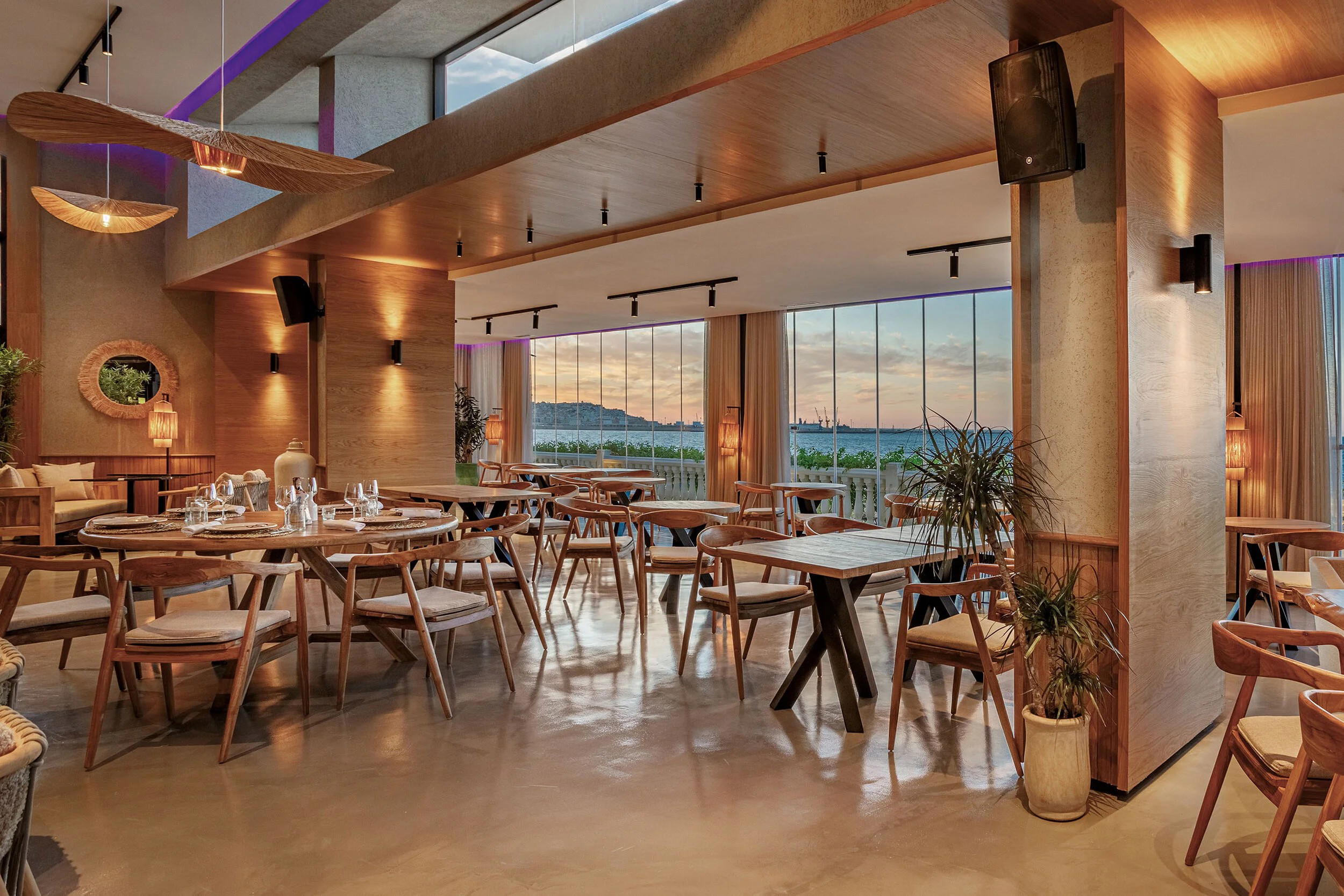
The seating plan, 8 counter seats, 12 table seats, and 8 seats on the raised platform, explains the experience better than any grand adjective could. The counter suits solo diners and quick lunches; tables handle small groups; the raised platform points to the Japanese diner habit of accommodating family-style meals without turning the room into a formal private restaurant. Private rooms and private use are listed, but the underlying mood remains casual and local.
For Asakura, this matters. The city does not behave like Fukuoka City, where restaurant choice often clusters around station districts and nightlife corridors. Asakura’s dining map is more dispersed, and a restaurant can be valued as much for access, parking, and lunch utility as for culinary ambition. Seven parking spaces in front of the store and a location more than three kilometres from Amagi Station make the car the natural mode of arrival. That detail is not incidental; it places the restaurant inside rural and suburban Kyushu’s food culture, where good everyday cooking often sits beyond the rail-friendly tourist grid.
The hours reinforce the point. Service is lunch-focused and runs from late morning until sold out, with weekends and public holidays closed. That schedule favours local routines over visitor convenience. Travellers who treat it as a flexible dinner stop will misread the format. The better read is to fold it into an Asakura day built around countryside drives, local produce stops, and short, purposeful meals rather than a long evening reservation.
How to place it in an Asakura itinerary
Mendoriya is strongest as a lens on Fukuoka’s everyday dining, especially for travellers who already understand that Japan’s restaurant culture is not only about high-counter precision. The appeal is the opposite of the scarce-seat omakase economy: a modest price band, recognisable categories, and a room scaled for repeat neighbourhood use. Its Tabelog 2026 Diner 100 selection gives that modesty a credential, which is precisely why it belongs on a serious Asakura food map.
Use it as the casual anchor in a broader local plan. For more city context, start with Our full Asakura restaurants guide, then widen the trip through Our full Asakura hotels guide, Our full Asakura bars guide, Our full Asakura wineries guide, and Our full Asakura experiences guide. Travellers comparing Japan’s casual dining range can also scan different formats, from -Grilled beef Sukiyaki- KAMAKURA TANUKIAN 鎌倉 たぬき庵 in Kamakura and . 鮪と炭火焼き うお炭 秋葉原店 in Tokyo to .cafe in Osaka, .know in Kumamoto, (Shoku) Vietnam in Kawasaki, [Curry Senmon Ten] Maruyama Kyoju. in Sapporo, [ki:] in Kyoto, #肉といえば松田 奈良本店 in Kashihara, 1/3 HAMBURGER FACTORY in Kanazawa, 1000 in Yokohama, and 1000mヒュッテ 1000m Hut in Kutchan. For Japanese food culture abroad, Jōdo Saké Bar in Los Angeles and Onigiri Time in Pasadena show how different the conversation becomes once the format leaves Japan.
Comparison Snapshot
Comparable venues by cuisine and price in the same metro.
| Venue | Cuisine | Price | Notes |
|---|---|---|---|
| MendoriyaThis venue — the venue you are viewing | Japanese Cafeteria / Teishoku | $ | Not listed |
| Ippudo (一風堂) | Tonkotsu Ramen | $ | Narita International Airport |
| 幻の中華そば加藤屋 百万遍にぼ次朗 | Niboshi (Dried Sardine) Jiro-Style Ramen | $ | Hyakumanben, Sakyo Ward |
| Seiko Udoku | Soupless Tantanmen Ramen | $ | Uji |
| Miyazato Soba | Okinawan Soba | $ | Miyazato |
| Tempura Dokoro Hirao Honten | Casual Tempura Specialist | $ | Hakata |
Recognition history
Dated appearances from independent guides and award organizations, with the underlying list record or original source where available.
Tabelog 100 #94 · No. 94
Tabelog · Tabelog 100 - Diner - 2026
At a Glance
- Cozy
- Classic
- Family
- Casual Hangout
- Group Dining
- Solo
- Standalone
Current opening hours
- Monday
- 11 AM–3 PM
- Tuesday
- 11 AM–3 PM
- Wednesday
- 11 AM–3 PM
- Thursday
- 11 AM–3 PM
- Friday
- 11 AM–3 PM
- Saturday
- Closed
- Sunday
- Closed
Hours can change for holidays and private events. Last verified .
Simple, cozy, and traditional, with an intimate neighborhood eatery feel.