
Sanuki Tsukemen Sangawa sits in Takamatsu’s serious udon culture with a narrower, evening-led rhythm than the city’s daytime self-service shops. Its Tabelog 100 Udon Kagawa 2024 selection, 25-seat scale, counter-and-table layout, and JPY 1,000–1,999 range place it in the affordable specialist tier rather than the formal dining bracket.
Pearl is the En Primeur Club membership app — saves, bookings, and concierge access live there. Same editors, same standards.
- Address
- 4-16 Kajiyamachi, Takamatsu, Kagawa 760-0028, Japan
- Phone
- +81 87-826-7505
- Website
- sanukitsukemen-sangawa.com
 Saves & bookings on Pearl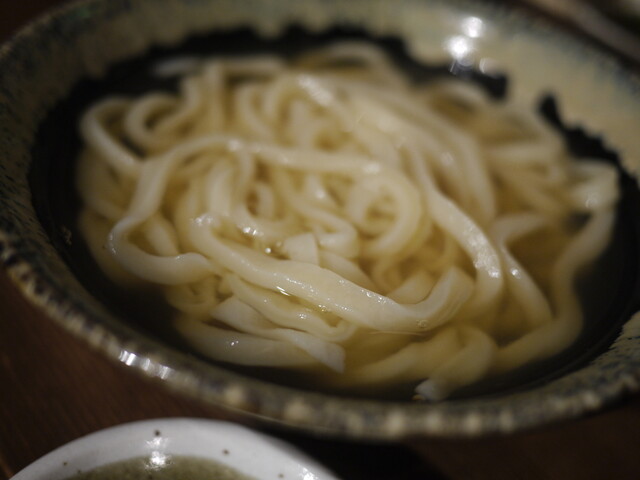
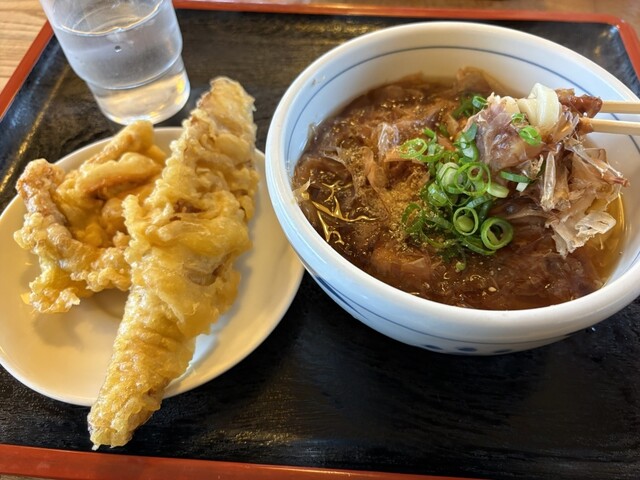
Kajiyamachi after dark is a different Takamatsu from the udon mornings that define Kagawa for many visitors. The city’s noodle culture is often mapped through early counters, self-service trays, and quick bowls between errands, but the evening version asks for another tempo: a seat, a drink, a slower pull through wheat, broth, and side dishes. Sanuki Tsukemen Sangawa belongs to that nocturnal lane, where udon moves closer to izakaya ritual without losing the regional grammar that makes Kagawa so exacting about noodles.
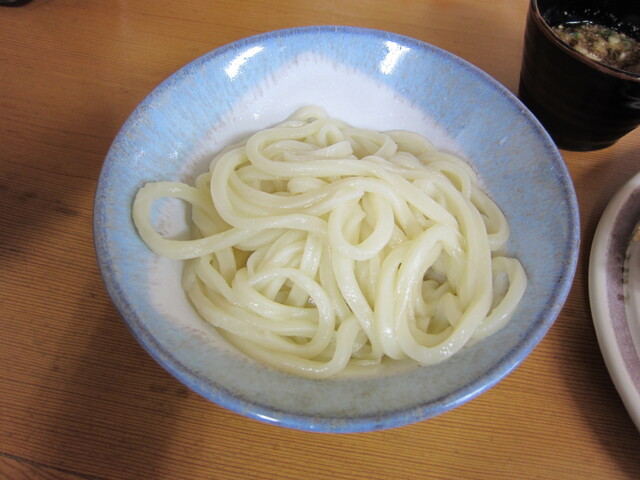
That distinction matters in Takamatsu. Sanuki udon is not a generic local specialty; it is the prefecture’s daily measure of craft, price, and texture. Visitors chasing only the lunch circuit often miss how the form changes after work, when the meal can stretch beyond a fast bowl. In that context, this address functions less like a tourist checkpoint and more like a compact study in how tsukemen format adapts the Sanuki habit: noodles separated from the dipping element, pacing set by the diner, and the meal structured around repetition rather than ceremony.
Sanuki udon, slowed into an evening tsukemen ritual
The essential difference between a standard bowl and tsukemen is control. Broth no longer dictates the pace from the start; the diner does. Each dip adjusts intensity, temperature, and seasoning contact. In a udon prefecture, that shift puts unusual pressure on noodle character because the wheat has to carry more of the meal on its own. The format rewards chew, surface, and timing over embellishment.
Sanuki Tsukemen Sangawa’s recognition in Tabelog 100 Udon Kagawa 2024 is useful because the list is category-specific, not a general popularity badge. It places the restaurant inside a crowded local discipline where small differences in udon style are judged against other Kagawa specialists. The Tabelog score attached to the listing is 3.68, a signal of sustained local attention rather than international gloss. For a traveler, that combination is more meaningful than broad acclaim: it points to a place operating within the prefecture’s own noodle conversation.
The price bracket also says something about the genre. At JPY 1,000–1,999, the meal sits far below Takamatsu’s formal reservation restaurants and well outside the expense logic of sushi or counter tasting menus. Compare that with Sushi Nakagawa in Takamatsu at JPY 20,000–29,999, or the JPY 10,000–14,999 range attached to Grill a Table and Osteria enne, and the point becomes clear: serious eating in Kagawa does not require luxury dining codes. Udon remains democratic, but the craft hierarchy is sharp.
For a wider Takamatsu crawl, Sanuki Tsukemen Sangawa makes better sense beside other noodle addresses than beside celebratory dining rooms. Azuma, Chikusei Honten, Furukawa Udon, and Furusato Udon help map the breadth of the local udon field, while Fumiya Okonomiyaki Honten shows another side of Takamatsu’s casual dining muscle. Honetsukidori Ikkaku Takamatsu ten, at a slightly higher casual bracket, belongs to a different Kagawa appetite: chicken, beer, and a louder table rhythm.
A compact room where the counter matters
The room scale reinforces the meal’s pace. Twenty-five seats, with five counter seats and five tables, creates a format that can serve solo diners without turning the experience into a purely functional stop. Counter seating is not a decorative detail in a noodle shop; it changes the social contract. A single diner can eat with focus, while tables allow the izakaya side of the category to come forward. The listed categories, udon and Japanese-style tavern, explain that dual role more accurately than a single cuisine label would.
This is where etiquette becomes practical rather than performative. Tsukemen is not meant to be treated as a composed plate. The point is to manage the noodles and dipping element through the meal, keeping texture in play rather than surrendering everything to the bowl at once. In Kagawa, that kind of restraint is part of the pleasure. The diner is expected to pay attention, but not to overcomplicate the act.
The restaurant opened on 14 June 2018, which gives it enough operating history to be read as part of the current generation of Kagawa udon specialists rather than an inherited institution. That matters because Takamatsu’s udon reputation can make the scene feel timeless from the outside. It is not. Newer shops, evening formats, and hybrid izakaya models keep changing how visitors encounter a dish that locals often treat as everyday food.
For broader planning around the city, our full Takamatsu restaurants guide is the natural starting point. Travelers building a longer stay can pair it with our full Takamatsu hotels guide, our full Takamatsu bars guide, our full Takamatsu wineries guide, and our full Takamatsu experiences guide. The comparison is useful: Takamatsu’s strongest food identity is still casual and regional, not hotel-led or cocktail-led.
How to read it against Japan's casual specialists
The appeal here is not maximalism. Japan’s casual specialist restaurants often succeed by narrowing the decision: one category, a clear ritual, repeatable craft, fair pricing. That is why an udon address in Takamatsu can belong in the same travel conversation as category-focused places elsewhere, even when the cuisines have nothing in common. -Grilled beef Sukiyaki- KAMAKURA TANUKIAN 鎌倉 たぬき庵 in Kamakura. 鮪と炭火焼き うお炭 秋葉原店 in Tokyo.cafe in Osaka.know in Kumamoto, (Shoku) Vietnam in Kawasaki, and [Curry Senmon Ten] Maruyama Kyoju. in Sapporo all sit in that broader Japanese habit of precision through limitation.
The same logic travels overseas in different forms. Jōdo Saké Bar in Los Angeles and Onigiri Time in Pasadena show how single-category Japanese formats can carry cultural weight when the execution is tight and the premise is legible. In Takamatsu, the stakes are higher because udon is not imported identity; it is the local benchmark. The restaurant is compelling for that reason: it asks the visitor to treat an inexpensive noodle meal with the seriousness usually reserved for a tasting counter, while keeping the customs of udon intact.
Cuisine-First Comparison
Side-by-side context: comparable cuisine and price.
| Venue | Cuisine | Price | Notes |
|---|---|---|---|
| Sanuki Tsukemen SangawaThis venue — the venue you are viewing | Sanuki udon & tsukemen izakaya | $ | Not listed |
| Gyoza Ya | Gyoza specialty shop | $ | Takamatsu |
| Oshima Udon | Traditional Sanuki udon | $ | Takamatsu |
| Ikegami Seimensho | Sanuki Udon | $ | Takamatsu |
| Honkaku Teuchi Moriya | Sanuki Udon | $ | Takamatsu |
| Teuchi Udon Hariya | Traditional Sanuki Udon Counter | $ | Takamatsu |
Recognition history
Dated appearances from independent guides and award organizations, with the underlying list record or original source where available.
Tabelog 100 #38 · No. 38
Tabelog · Tabelog 100 - Udon - KAGAWA - 2024
Continue exploring
More in Takamatsu
Restaurants in Takamatsu
Browse all →
At a Glance
- Cozy
- Lively
- Late Night
- After Work
- Casual Hangout
- Group Dining
- Solo
- Standalone
- Beer Program
- Sake Program
Current opening hours
- Monday
- Closed
- Tuesday
- Closed
- Wednesday
- 7–11:30 PM
- Thursday
- 7–11:30 PM
- Friday
- 7–11:30 PM
- Saturday
- 12–12:30 AM, 7–11:30 PM
- Sunday
- 12–12:30 AM
Hours can change for holidays and private events. Last verified .
A small, cozy udon bar with counter and table seating, a casual izakaya feel, and an energetic yet relaxed nighttime atmosphere suited to drinking and late dinners.