
Akihabara’s ramen scene rewards precision over ceremony, and Mendokoro Honda Akihabara honten fits that compact, station-side model: ramen, tsukemen, and brothless tantan-men served in a small room with counter seating and tables. Its repeated Tabelog Ramen TOKYO 100 selections place it in a serious Tokyo noodle bracket without moving it into luxury-restaurant territory.
Pearl is the En Primeur Club membership app — saves, bookings, and concierge access live there. Same editors, same standards.
- Address
- 1-19 Kanda Hanaokacho, Chiyoda City, Tokyo 101-0028, Japan
- Phone
- +81 70-7793-3979
- Website
- tabelog.com
 Saves & bookings on Pearl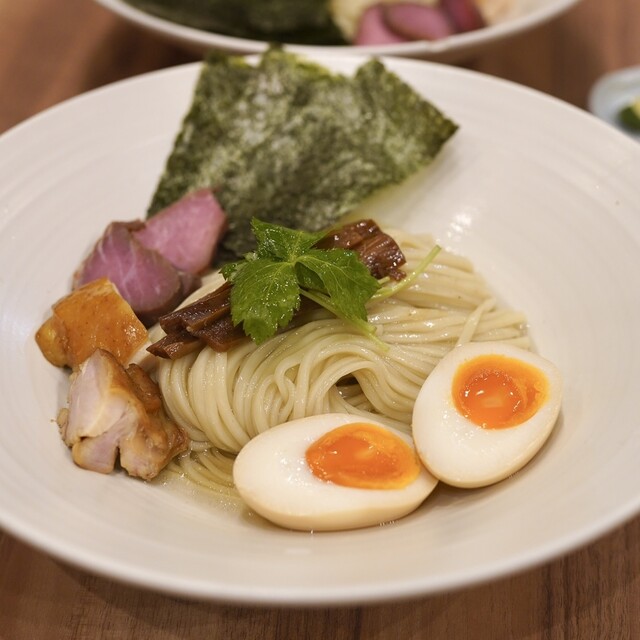
Akihabara changes register fast. Step away from the electronics façades and game-center noise, and the city compresses into narrow lunch counters, station-adjacent dining rooms, and short-form meals built for people who know exactly what they came to eat. Ramen belongs naturally in that rhythm. The genre is quick, but not casual in ambition: Tokyo’s serious noodle shops compete on broth structure, noodle texture, tare balance, and queue discipline rather than tablecloth ceremony.
Mendokoro Honda Akihabara honten sits inside that Akihabara logic. The room is compact, with counter seating and tables, which matters in a neighbourhood where many meals are solo, timed between train connections, shopping rounds, or office breaks. Its categories cover ramen, tsukemen, and brothless tantan-men, a useful spread for Tokyo diners who increasingly treat noodle shops as specialists rather than generic ramen stops. Selection for Tabelog Ramen TOKYO 100 in 2020, 2021, 2022, 2023, and 2025 gives the place a clear trust signal in a city where ramen credibility is earned through repeat attention, not room size.
Akihabara ramen, stripped of tourist theatre
Akihabara can be misunderstood by visitors who read it only through anime stores and electronics retail. Food here often works on a different axis: efficient, densely located, and built around repeat local use. The stronger restaurants in the area do not need long dining arcs; they need a tight offer, readable value, and a format that can absorb both commuters and destination diners. In that sense, a ramen counter can explain the neighbourhood better than a themed café.
The local comparison set is broad. Nearby casual options range from the same spend band at The French Toast Factory Yodobashi Akiba ten to the curry-and-tandoor lane represented by Indian Restaurant Aarti, while another noodle address, Tokyo Style Noodle Hotate Biyori, competes for diners looking for a focused bowl rather than a full evening. Mendokoro Honda Akihabara honten operates in the noodle-specialist tier, where recognition from a ramen-specific list carries more weight than general popularity. The distinction is useful: this is not Akihabara as novelty dining, but Akihabara as a high-density food district where small shops can draw serious attention.
That also makes the venue a sensible counterpoint to other Tokyo meals that require more time or planning. A fish-and-charcoal stop such as . 鮪と炭火焼き うお炭 秋葉原店 reads as a fuller sit-down choice in the same broader area, while 12/10 Shinjuku ten and 124. KAGURAZAKA (Yakitori) point to different Tokyo dining tempos entirely. The value of a focused ramen address is that it can anchor a day without consuming the day.
Why the format matters more than the décor
Tokyo ramen culture prizes specialization. The city has room for pork-bone concentration, clear chintan broths, dried-fish intensity, shellfish-led bowls, dipping noodles, and tantan-men variations, but each serious shop is judged by coherence. A menu that includes ramen, tsukemen, and brothless tantan-men is not automatically broad in the Western sense; in Tokyo, it can still sit within a narrow noodle discipline if the kitchen keeps the categories controlled.
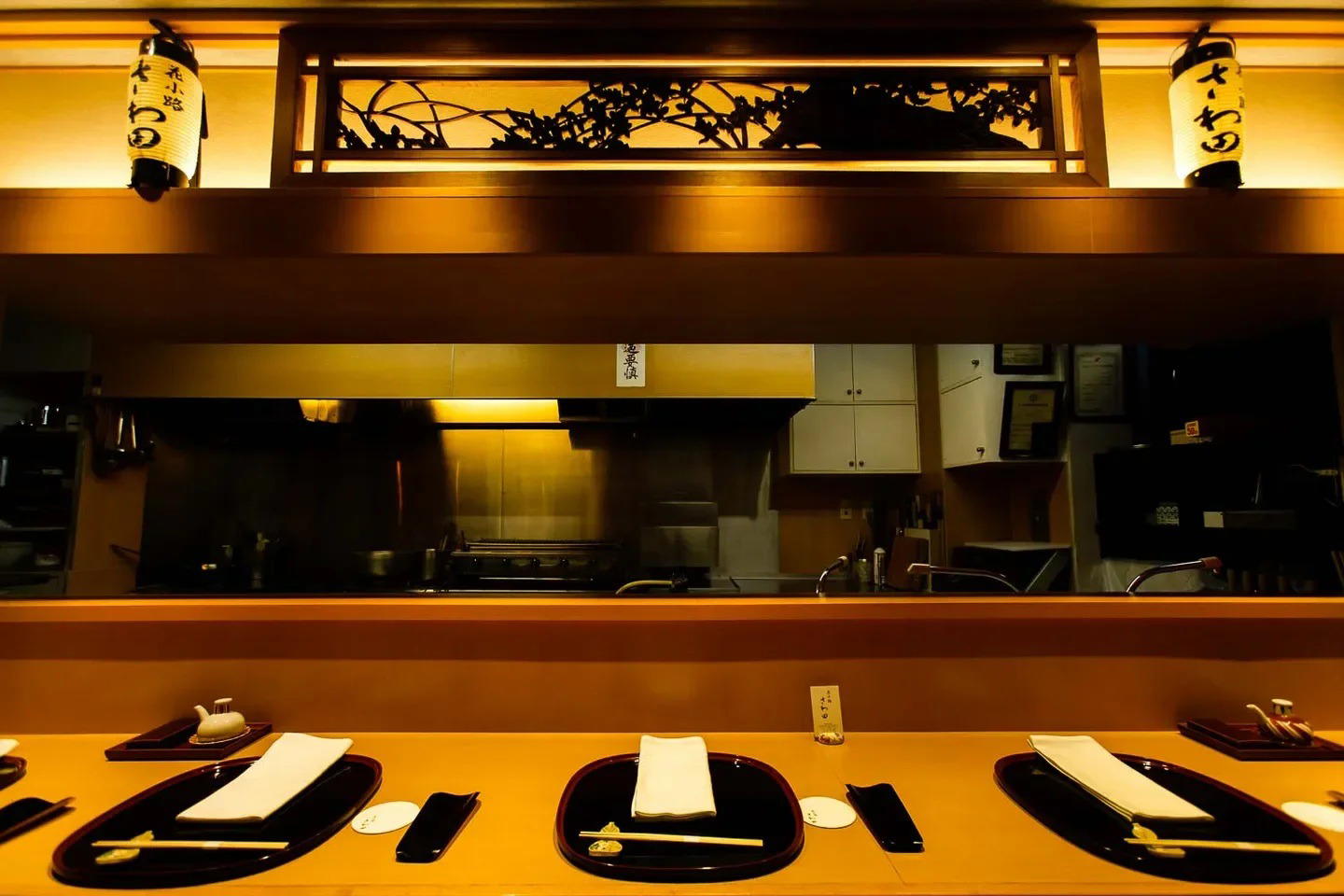
The 18-seat scale reinforces that discipline. Four counter seats and several small tables create a room that can serve solo diners, pairs, and families without pretending to be a long-stay restaurant. Non-smoking status and children-welcome guidance also matter in Tokyo ramen, where the stereotype of the solitary counter can obscure how many neighbourhood noodle shops function as practical family meals. The absence of private rooms and private-use format keeps expectations clear: this is public, compact, and functional.
Payment details also say something about the category. Cashless convenience is partial rather than universal: electronic money such as transportation IC cards is accepted, while credit cards and QR payments are not. That pattern remains common in Tokyo’s lower-price specialist dining, where operational speed and narrow margins often shape the guest experience more than hospitality polish. For travellers, it is a reminder to treat ramen as serious food with casual infrastructure.
For a wider Tokyo itinerary, this is the sort of place to pair with contrast rather than repetition. 2D Cafe offers a more visual café format, 3 Chome no Curry Ya San sits in another everyday Japanese comfort-food lane, and the broader Tokyo restaurants guide helps map how these short-form meals sit beside sushi counters, yakitori rooms, curry shops, and contemporary dining rooms. The same city can also be read through Tokyo hotels, Tokyo bars, Tokyo wineries, and Tokyo experiences, but ramen remains one of its clearest daily rituals.
How to place it in a Japan food itinerary
The appeal here is not luxury scarcity. It is the confidence of a low-friction Tokyo meal with documented ramen recognition and a neighbourhood that rewards precision. Akihabara is also well suited to visitors who want a serious bowl without making food the only agenda: rail access, dense retail, and nearby casual dining make it easy to fold lunch or dinner into a larger day around Chiyoda and the east side of central Tokyo.
Outside Tokyo, Japan’s casual-specialist spectrum takes many forms. A traveller building a wider route might compare the everyday comfort register of -Grilled beef Sukiyaki- KAMAKURA TANUKIAN 鎌倉 たぬき庵 in Kamakura, the café mode of.cafe in Osaka, the regional-city dining perspective of.know in Kumamoto, or the international everyday cooking at (Shoku) Vietnam in Kawasaki. Curry in Sapporo at [Curry Senmon Ten] Maruyama Kyoju. and Kyoto dining at [ki:] show how compact formats vary by city.
For overseas Japan-facing itineraries, the comparison shifts again. Jōdo Saké Bar in Los Angeles and Onigiri Time in Pasadena reflect how Japanese drinking and comfort-food formats translate abroad. In Tokyo, though, ramen remains inseparable from place. At Mendokoro Honda Akihabara honten, the point is Akihabara’s speed, scale, and seriousness: a compact room, a focused noodle format, and enough third-party recognition to justify choosing it over a random station bowl.
At a Glance
Comparable venues to calibrate price, style, and recognition.
| Venue | Cuisine | Price | Notes |
|---|---|---|---|
| Mendokoro Honda Akihabara hontenThis venue — the venue you are viewing | Chiyoda, Modern Tokyo Ramen & Tsukemen | $ | Not listed |
| Buta Daigaku (豚大学) | Not listed | $ | Shimbashi, Grilled Pork Bowl (Butadon) |
| Karinto Yushima Kagetsu | Bunkyō, Japanese Confectionery | $ | Not listed |
| Nihonbashi Nagato | Not listed | $ | Chūō, Traditional Edo-style Japanese wagashi (sweets) |
| Gion Tsujiri Toukyou sukaitsurii taun soramachi ten | Sumida, Matcha sweets & Japanese cafe | $ | Not listed |
| 北島亭 | Shinjuku, Japanese Izakaya | $ | Not listed |
Recognition history
Dated appearances from independent guides and award organizations, with the underlying list record or original source where available.
Tabelog 100 #12 · No. 12
Tabelog · Tabelog 100 - Ramen - TOKYO - 2025






At a Glance
- Lively
- Cozy
- Modern
- Well Known
- Solo
- Family
- Casual Hangout
- After Work
- Chefs Counter
- Standalone
- Street Scene
Current opening hours
- Monday
- 11:30 AM–3 PM, 6–9 PM
- Tuesday
- 11:30 AM–3 PM, 6–9 PM
- Wednesday
- Closed
- Thursday
- 11:30 AM–3 PM, 6–9 PM
- Friday
- 11:30 AM–3 PM, 6–9 PM
- Saturday
- 11:30 AM–3 PM, 6–9 PM
- Sunday
- 11:30 AM–3 PM, 6–9 PM
Hours can change for holidays and private events. Last verified .
A compact, non‑smoking ramen shop with counter and small tables under or near the train tracks, featuring a relaxed but busy atmosphere with fast turnover and a casual, modern feel.