
Tabelog 100 #95
Our verdict
Men no Youji belongs to Osaka’s serious ramen circuit: an eight-seat Kozu shop with a compact architecture of ramen, tsukemen, abura-soba and maze-soba. Its Tabelog 100 Ramen Osaka 2025 selection, score of 3.70, and long run of Hyakumeiten recognition place it in the city’s small-shop tier rather than casual convenience dining.

Pearl is the En Primeur Club membership app, where members save venues, book tables and use the concierge.
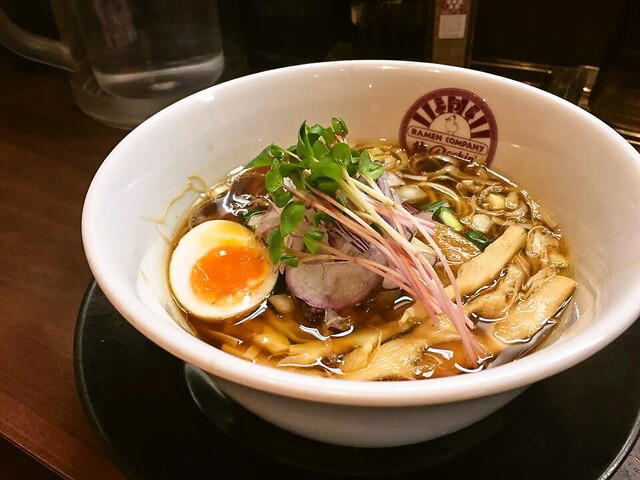
Approach Men no Youji in Osaka and the ramen map of the city starts to feel less like a tourist trail and more like a set of small rooms with precise habits. The room is best understood through focus rather than spectacle: a compact noodle-shop format, a casual price signal, and a menu structure that suits solo diners as easily as pairs. In Osaka, where eating can swing from quick everyday meals to more elaborate dining in the same day, that scale matters. It keeps attention on the bowl and makes the menu structure easier to read.
Ramen, tsukemen, and a menu built in four lanes
Osaka ramen is not governed by a single orthodoxy. The city accommodates soup-led bowls, dipping noodles, mixed noodles and dry-style formats with less regional defensiveness than some more narrowly identified ramen regions. That makes menu architecture a useful signal. Men no Youji sets its frame around ramen, tsukemen, abura-soba and maze-soba, a spread that gives diners four different ways to read the same kitchen: soup-led, dipping-led, oil-led and mixed-noodle-led.
The useful point is not a decorative list of specialties, but the way those categories change the meal. Ramen keeps the experience soup-led, while tsukemen shifts attention toward noodle texture and a separate dipping element. Abura-soba and maze-soba remove the full soup experience altogether, pushing seasoning, fat, tare and mixing technique forward. The point is not breadth for its own sake; it is a compact taxonomy of how broth, tare and noodle can be rearranged inside one small shop.
The Tabelog signal is unusually specific for a casual-price ramen counter. Recognition from Tabelog Hyakumeiten in 2025 places the shop inside a curated dining context rather than a broad neighbourhood directory. A Tabelog score of 3.70 is also a useful Japanese dining clue: on that platform, scores cluster tightly, and movement above the mid-threes can indicate sustained local approval rather than novelty traffic. The display order is not an official rank, but the 2025 recognition is the stronger point.
What the Osaka setting says about Osaka dining
Men no Youji sits within Osaka’s broader everyday dining rhythm, where quick, focused meals can carry as much interest as longer destination dinners. That difference helps explain the appeal of small ramen rooms in the city. They are practical, quick, and often more focused than multi-category casual restaurants, but they can also carry the discipline of serious counter dining. The format creates a natural limit on how much ceremony is needed; timing and patience can become part of the diner’s calculation.
Opus One, Tempura Sakugetsu, Okonomiyaki Momiji, Mikuni Tei and Seiran each give a different way to read Osaka dining, but they do not occupy the same narrow noodle-counter lane. Against that range, Men no Youji is best understood through its low-ticket ramen format, where recognition has to come from repeatable execution, menu clarity and the ability to make a short meal feel considered.
That is why the categories matter more than decorative biography. Ramen, tsukemen, abura-soba and maze-soba each ask for a different balance of soup, sauce, fat and noodle structure. A shop that lists all four is making a statement about technical range within a narrow field. For a traveller building an Osaka eating day, this is the kind of stop that works between broader meals rather than replacing them: a focused bowl before other Osaka dining, a midday counter lunch during a city walk, or a low-commitment dinner when the city’s heavier food traditions start to stack up.
How to place it in a sharper Osaka itinerary
The smarter way to use Men no Youji is to treat it as part of Osaka’s spectrum rather than as a single destination meal. A noodle counter in Osaka gives a different reading of the city from other quick snacks, casual stops, coffee breaks, and broader dining elsewhere in the city. For wider planning, use Our full Osaka restaurants guide alongside Our full Osaka hotels guide, Our full Osaka bars guide, Our full Osaka wineries guide and Our full Osaka experiences guide.
Readers building a Japan-wide food itinerary can also place this ramen stop against different formats beyond Osaka without needing to force a direct comparison. Other cities offer their own versions of counter dining, casual noodle shops, drinking food, rice-based formats and specialist kitchens; Men no Youji is best read on its own Osaka terms, through its listed categories, price signal and Tabelog recognition.
The editorial case is concise: this is a small Osaka ramen counter whose credibility rests on structure, repetition and selection history. The menu gives enough choice to compare broth, dipping and mixed-noodle formats without drifting into generalist sprawl. In a city that rewards both appetite and editing, that restraint is the useful part.
Frequently asked questions
Where do I go for Men no Youji?
Osaka.
What's the price range at Men no Youji?
Pricing at Men no Youji is listed as - JPY 999 - JPY 999.
What days is Men no Youji closed?
Specific closing days are not provided in the supplied venue details.
What is Men no Youji known for?
Men no Youji is known for ramen, tsukemen, abura-soba and maze-soba in Osaka, with Tabelog Hyakumeiten 2025 recognition and a Tabelog score of 3.70.
Comparable Options
Comparable venues at the same tier.
| Venue | Cuisine | Price | Awards | Notes |
|---|---|---|---|---|
| Men no YoujiThis venue (the venue you are viewing) | Japanese Ramen | $1–10 | Tabelog 100 #95 | Not listed |
| Opus One | Seasonal Fine Chinese with Shark Fin & Seafood Courses | $50–100 | Tabelog 100 #96 | JPY 15,000 - JPY 19,999 JPY 5,000 - JPY 5,999 |
| Okonomiyaki Momiji | Osaka-style okonomiyaki restaurant | $20–30 | Tabelog 100 #95 | JPY 4,000 - JPY 4,999 JPY 1,000 - JPY 1,999 View spending breakdown |
| Tempura Sakugetsu | Modern Tempura Omakase | $150–200 | Michelin Plate | Tempura |
| Mikuni Tei | Traditional Chinese counter restaurant | $30–50 | Tabelog 100 #43 | JPY 5,000 - JPY 5,999 View spending breakdown |
| Seiran | Chinese Fine Dining | $30–50 | Tabelog 100 #48 | JPY 6,000 - JPY 7,999 JPY 1,000 - JPY 1,999 |
Recognition history
Dated appearances from independent guides and award organizations, with the underlying list record or original source where available.
Tabelog 100 #95 · No. 95
Tabelog · Tabelog 100 - Ramen - OSAKA - 2025
Continue exploring
More in Osaka
Restaurants in Osaka
All restaurants in Osaka →



Bars in Osaka
All bars in Osaka →
Hotels in Osaka
All hotels in Osaka →



Wineries in Osaka
Browse all →
Details
- Casual
- Cozy
- Classic
- Solo
- Casual Hangout
- Late Night
- Standalone
- A La Carte
- Counter Dining
Current opening hours
- Monday
- 11:30 AM–2:20 PM, 6–8:30 PM
- Tuesday
- 11:30 AM–2:20 PM, 6–8:30 PM
- Wednesday
- 11:30 AM–2:20 PM, 6–8:30 PM
- Thursday
- 11:30 AM–2:20 PM, 6–8:30 PM
- Friday
- 11:30 AM–2:20 PM, 6–8:30 PM
- Saturday
- 11:30 AM–2:20 PM, 6–8:30 PM
- Sunday
- 11:30 AM–2:20 PM, 6–8:30 PM
Hours can change for holidays and private events. Hours as of .
A compact, laid-back ramen counter atmosphere focused on a concentrated bowl experience rather than spectacle, with an easygoing casual feel.