
Tabelog 100 #43
Our verdict
Mikuni Tei is a compact Chinese restaurant in Osaka’s Shimanouchi area, selected for Tabelog 100 Chinese cuisine WEST in 2021, 2023, 2024, and 2026. The draw is not luxury theatre but a focused Kansai reading of Chinese cooking: counter-led, sake-friendly, and priced in the JPY 5,000–5,999 dinner band.

Pearl is the En Primeur Club membership app, where members save venues, book tables and use the concierge.
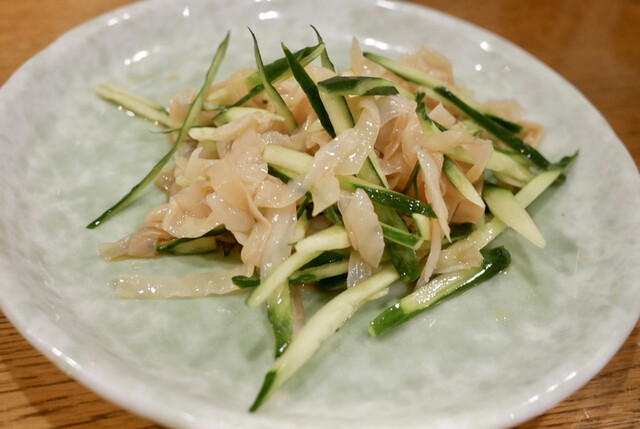
Osaka changes texture quickly after dusk. The glare of the city’s busiest dining streets sits close by, but the city also settles into a more local register: modest dining rooms, focused kitchens, and restaurants that do not need a hotel lobby or a tasting-menu script to announce seriousness. In that setting, Chinese cooking in Osaka occupies a useful middle ground between everyday comfort and technical discipline. Mikuni Tei belongs to that category: a Chinese restaurant in Osaka, and recognised by Tabelog Hyakumeiten in 2026.
Osaka’s reputation often gets flattened into takoyaki, okonomiyaki, and late-night appetite, but the city has a deeper habit of absorbing outside cuisines without turning them into replicas. Chinese restaurants here tend to be judged less by ceremony than by control: timing, seasoning balance, portion rhythm, and whether a meal works for different kinds of diners. That matters in Osaka, where dinner can be a prelude to a longer night or the main event before a quiet walk back through the city.
Chinese technique filtered through Osaka's counter culture
The editorial interest here is the way Chinese cooking fits Osaka rather than how a single restaurant tells its own origin story. In many Japanese cities, Chinese restaurants split between banquet rooms, casual shops, and higher-price tasting formats. Osaka adds another layer: dining rooms where close-range attention and practical pacing often matter as much as ceremony. Mikuni Tei reads naturally in that context, with its listing pointing to Chinese cooking in an Osaka register rather than to a spectacle-driven format.
That context changes how Chinese food can read in the city. Instead of only the large-table logic that defines much Chinese dining elsewhere, a meal in Osaka can feel more flexible: dishes can be shared, paced lightly, or approached without the scale of occasion dining. The category itself is useful in Osaka, where serious eating is not always tied to ceremony. The appeal is less about imported pairing orthodoxy or theatrical luxury than about how Chinese technique adapts to local appetite and tempo.
The price band, listed at JPY 5,000 - JPY 5,999 for dinner, places it above casual snacking but below the city’s most expensive dining plans. That middle tier is where Osaka can be particularly persuasive: the spend is high enough to suggest an intentional meal, yet not so high that the restaurant has to perform luxury. Compared with Osaka options such as utage dotonbori or Horumon Gibier Myojo, the value proposition sits in recognition and category focus rather than volume alone. Yakiniku Horumon Mansen appears as another useful Osaka comparison point, but the comparison underlines a different choice: meat-grill directness versus Chinese cooking.
Why the Tabelog 100 signal matters in this category
Tabelog Hyakumeiten recognition is not a decoration to be read like a Michelin star. Its value is more granular, especially in Japan, where user depth and category-specific lists can reveal restaurants that local diners repeatedly return to. Recognition in 2026 gives Mikuni Tei a meaningful trust signal in a field that does not always receive the same international attention as sushi, kaiseki, or tempura.
That recognition also says something about Kansai’s Chinese dining culture. The category is broad, covering everything from refined regional cooking to neighbourhood restaurants, and the western Japan context pulls Osaka into conversation with other parts of the region. A restaurant does not need grand architecture to register in that field. It needs repeatable cooking, a clear service identity, and enough appeal to survive comparison across a region where diners are notably precise about value.
For travellers, that makes the restaurant a sharper pick than another night built entirely around spectacle. The surrounding city already supplies sensory overload; dinner here belongs to the quieter Osaka tradition of technical eating without excessive ceremony. It is better understood as part of the city’s working culinary intelligence than as a trophy stop. Tempura Sakugetsu, another Osaka comparison point in a different discipline, illustrates the same broader pattern: single-category focus often tells more about the city than venues trying to cover every mood.
How to fold it into an Osaka food itinerary
The strongest way to plan around this kind of restaurant is by contrast. Pairing a Chinese restaurant with Osaka’s broader food map gives the city more definition than chasing only famous street-food corridors. A day might move through casual local rhythm, quick snacks, and other Osaka dining rooms, then into a more controlled dinner register at Mikuni Tei. For a different reading of the city, other restaurants show how Osaka absorbs imported formats without losing its appetite-first character.
City pacing matters. Osaka’s nightlife can make dinner feel connected to a wider evening circuit, while a recognised restaurant still asks for a more intentional slot than a walk-by snack. The practical appeal is straightforward: a Chinese restaurant in a manageable dinner budget, with enough local credibility to justify planning ahead. Rather than treating it as a spectacle, the better approach is to treat it as a deliberate pause within a larger Osaka food day.
Readers building a wider Osaka trip can use Our full Osaka restaurants guide for dining context, then match the evening with broader hotel, bar, winery, and experience planning in the city. For comparison across Japan and beyond, EP Club also tracks focused formats in other cities and other kinds of Osaka dining. Against that wider field, Mikuni Tei’s appeal is concise: Chinese cooking, Osaka setting, and enough recognition to justify planning rather than leaving the meal to chance.
Frequently asked questions
What should I budget for a meal at Mikuni Tei?
Pricing at Mikuni Tei is listed as JPY 5,000 - JPY 5,999 View spending breakdown.
What are the opening hours for Mikuni Tei?
Opening hours for Mikuni Tei are not provided in the available venue details.
Where is Mikuni Tei located?
Osaka.
What is Mikuni Tei known for?
Mikuni Tei is known as a Chinese restaurant in Osaka with Tabelog Hyakumeiten recognition in 2026.
Cost and Credentials
Comparable venues by cuisine and category.
| Venue | Cuisine | Price | Awards | Notes |
|---|---|---|---|---|
| Mikuni TeiThis venue (the venue you are viewing) | Traditional Chinese counter restaurant | $30–50 | Tabelog 100 #43 | Not listed |
| Raofu Tsai Hanshin umeda ten | Modern Sichuan Chinese | $30–50 | Tabelog 100 #11 | Kita, Modern Sichuan Chinese |
| Marusho Gyoza Ten Dai2 hanna ten | Gyoza-focused Chinese dumpling shop | $20–30 | Tabelog 100 #61 | Daito, Gyoza-focused Chinese dumpling shop |
| Suigyoza no Mise Harbin | Traditional Chinese dumpling house | $20–30 | Tabelog 100 #73 | Ibaraki, Traditional Chinese dumpling house |
| Ippotei Honten | Traditional Osaka-style Chinese & dim sum | $10–20 | Tabelog 100 #8 | Naniwa, Traditional Osaka-style Chinese & dim sum |
| Tachinomi Izakaya LIBERTY | Chinese Izakaya / Standing Bar | $20–30 | Tabelog 100 #64 | Kita, Chinese Izakaya / Standing Bar |
Recognition history
Dated appearances from independent guides and award organizations, with the underlying list record or original source where available.
Tabelog 100 #43 · No. 43
Tabelog · Tabelog 100 - Chinese cuisine - WEST - 2026
Continue exploring
More in Osaka
Restaurants in Osaka
All restaurants in Osaka →


Bars in Osaka
All bars in Osaka →


Hotels in Osaka
All hotels in Osaka →


Wineries in Osaka
Browse all →
Details
- Cozy
- Classic
- Intimate
- Solo
- Casual Hangout
- After Work
- Date Night
- Standalone
- A La Carte
- Counter Dining
Current opening hours
- Monday
- 5–9:30 PM
- Tuesday
- 5–9:30 PM
- Wednesday
- Closed
- Thursday
- 5–9:30 PM
- Friday
- 5–9:30 PM
- Saturday
- 5–9:30 PM
- Sunday
- 5–9:30 PM
Hours can change for holidays and private events. Hours as of .
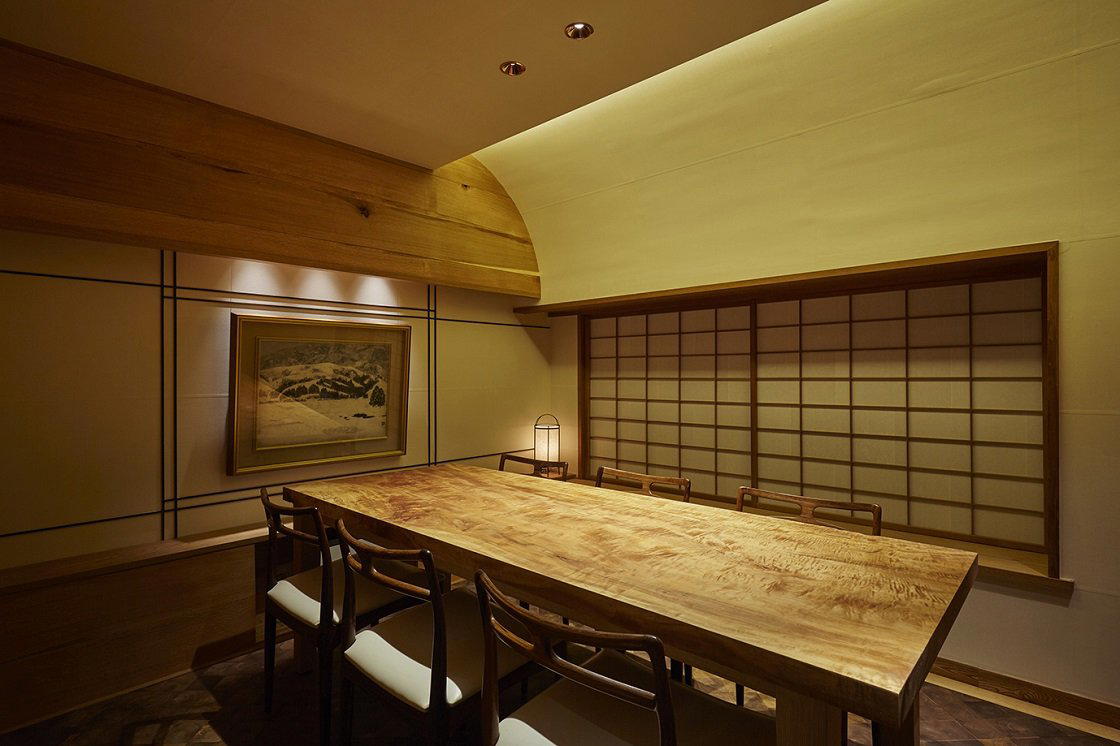
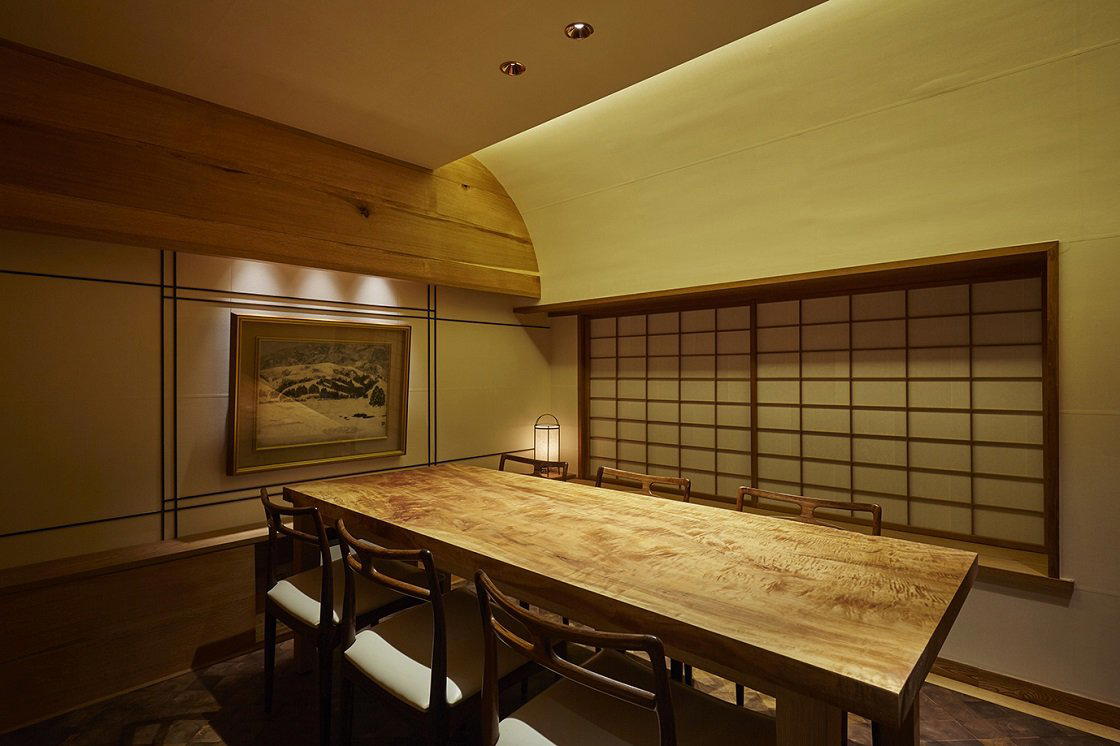
A small, non-smoking space with 18 seats (mostly counter) that feels stylish yet relaxed, with the lively bustle of a popular neighborhood Chinese spot and an inviting atmosphere suited to solo diners and small groups of friends.