
Okonomiyaki Momiji sits in Osaka’s serious okonomiyaki conversation rather than the souvenir-food lane, with repeated Tabelog 100 selections from 2018 through 2025. The draw is Kansai comfort cooking treated with enough care to merit a destination detour, plus the notable presence of wine in a category more often framed around beer, highballs, and quick counter turnover.
Pearl is the En Primeur Club membership app — saves, bookings, and concierge access live there. Same editors, same standards.
- Address
- 9-19 Ikutamacho, Tennoji Ward, Osaka, 543-0071, Japan
- Phone
- +81 6-6773-3080
- Website
- instagram.com
- Directions
- Get directions
 Saves & bookings on Pearl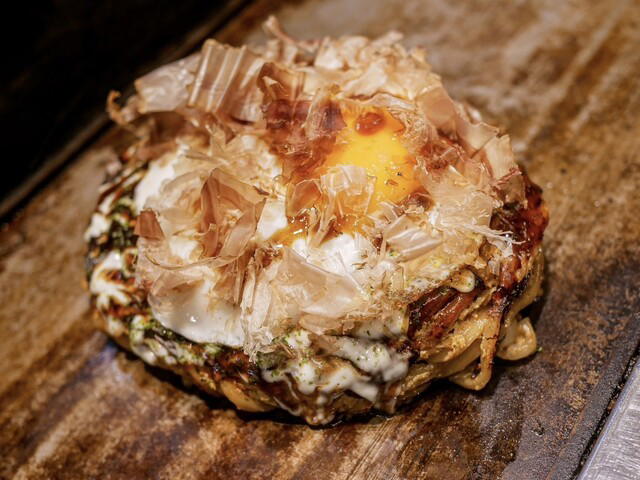
The first cue is heat, not luxury: the griddle’s authority, the small-room rhythm, the Osaka habit of turning flour, cabbage, sauce, and timing into civic identity. In a city where okonomiyaki can be lunch, late supper, family fallback, or after-drinks ballast, better rooms are judged less by novelty than by control. Okonomiyaki Momiji belongs to that serious tier, a Tennoji-side address selected for Tabelog’s Okonomiyaki 100 in 2018, 2019, 2022, 2023, 2024, and 2025.
That matters because Osaka’s okonomiyaki culture is crowded with casual competence. A plate can satisfy almost anywhere; distinction comes from repetition, griddle management, portion discipline, and a room that keeps the food social without letting it feel slack. For travellers mapping the city through eating rather than monuments, this is the difference between merely trying okonomiyaki and understanding why Osaka treats it as a grammar of everyday appetite.
Okonomiyaki with a wine signal, not just a beer-and-sauce script
Okonomiyaki is usually discussed through batter, cabbage, pork, seafood, sauce, mayonnaise, and bonito flakes, but the drink cue here is unusually useful: wine is part of the program. That does not make the meal formal, nor should it be read through a sommelier-led lens. It places the restaurant in a flexible strand of Osaka casual dining, where griddle food has enough structure and seasoning to sit with wine rather than default only to draft beer or highballs.
The broader point is cultural. Osaka has long excelled at food that collapses snack and meal: takoyaki, kushikatsu, ramen, boxed pork buns, curry, and okonomiyaki all reward decisive eating over ceremony. A visitor might pair this address with other high-signal casual stops, from 551 Horai (551蓬莱) to 52CHO-ME BAKERY, while saving another evening for the more formal register of comparison venues such as Sushi Yuden, Shunten Shin, Opus One, or Teruya.
Within that spread, Okonomiyaki Momiji is not competing with tempura counters or sushi rooms on ceremony. Its value is concentrating Osaka’s flour-and-griddle tradition into a room with recognition signals and enough beverage breadth to interest diners who care what they drink with sauce-heavy food. For a broader itinerary, Our full Osaka restaurants guide gives the wider dining map, while Our full Osaka bars guide is better for post-dinner drinks.
The serious end of Osaka comfort food
Tabelog’s category lists are imperfect shorthand, but repeated selection across multiple years remains a useful public signal in a field defined by volume. Okonomiyaki restaurants do not need white tablecloths to show ambition; ambition is embedded in consistency. A 2025 Tabelog score of 3.61, a place on the Okonomiyaki 100 list, and prior selections put this address above interchangeable neighbourhood fallback.
The format also suits the food. Counter seating matters for griddle cooking because it keeps preparation close to the diner, even when the meal stays casual. Table seating keeps it social, equally important: okonomiyaki is rarely a solitary performance dish in Osaka. It is built for conversation, shared ordering, and the relaxed tempo of a city that treats good casual food with unusual seriousness.
There is no chef mythology needed here. The tradition is stronger than any individual backstory. Hiroshima-style okonomiyaki often foregrounds layered construction and noodles; Osaka-style generally folds ingredients into the batter before cooking, creating a different relationship between cabbage, protein, and structure. That regional distinction is essential for travellers who think okonomiyaki is a single national dish. In Osaka, it is local identity on a hot plate.
The wine note sharpens that identity rather than softening it. Sauce, char, cabbage sweetness, and savoury toppings can expose clumsy pairings. A restaurant willing to include wine in this category acknowledges okonomiyaki as dinner with decisions, not just a quick refuel. Readers interested in how Japanese casual food translates abroad can compare that question with the sake-and-small-plates framing at Jōdo Saké Bar in Los Angeles or the rice-focused minimalism of Onigiri Time in Pasadena, but Osaka remains the reference point.
How to place it in an Osaka itinerary
The neighbourhood context is useful. Tennoji and the Tanimachi 9-chome area sit outside the easiest tourist shorthand of Dotonbori, framing this as a deliberate food stop rather than a neon-canal impulse. That does not make it obscure; repeated Tabelog recognition argues otherwise. It means the meal fits travellers willing to let Osaka’s everyday food culture lead them slightly away from the obvious circuit.
For a compact Osaka dining run, use contrast. Put okonomiyaki against noodles at Men no Youji, high-price sushi at Sushi Yuden, or a polished Italian meal such as a canto (Italian). Add casual international counterpoints like 99 Pizza Napoletana Gourmet or café stops such as.cafe, and the city reads less like a dish checklist than a set of eating speeds.
Travellers extending the route beyond restaurants should treat Osaka as a base rather than a single-category destination. Our full Osaka hotels guide helps anchor the stay, Our full Osaka experiences guide covers cultural planning, and Our full Osaka wineries guide is the wider drinks reference. For cross-city comparisons within Japan, the spectrum runs from [ki:] in Kyoto to. 鮪と炭火焼き うお炭 秋葉原店 in Tokyo.know in Kumamoto, (Shoku) Vietnam in Kawasaki, [Curry Senmon Ten] Maruyama Kyoju. in Sapporo, and -Grilled beef Sukiyaki- KAMAKURA TANUKIAN 鎌倉 たぬき庵 in Kamakura.
The editorial read is simple: choose this for Osaka-style okonomiyaki treated with enough consistency to earn repeated category recognition, plus the added interest of wine in a genre too often reduced to sauce and beer. It is stronger for diners wanting a grounded local meal with public credibility than for those seeking ceremony, chef theatre, or a long tasting-menu arc.
Where It Fits
Comparable venues at a glance for context.
| Venue | Cuisine | Price | Notes |
|---|---|---|---|
| Okonomiyaki Momiji | Osaka-style okonomiyaki restaurant | $ | Tennōji |
| Chiikawa Bakery | Chiikawa-themed Japanese bakery café | $ | Umeda |
| Osaka Naniwaya | Japanese taiyaki & kakigori sweets shop | $ | Kita |
| Chuka Soba Kirimen Souhonten | Ramen & Tsukemen | $ | Yodogawa |
| Gokuju Bimen umami | Ramen shop | $ | Higashi-Osaka |
| Chuka Soba Sen | Japanese Ramen | $ | Sumiyoshi |
Recognition history
Dated appearances from independent guides and award organizations, with the underlying list record or original source where available.
Tabelog 100 #95 · No. 95
Tabelog · Tabelog 100 - Okonomiyaki - 2025
Continue exploring
More in Osaka
Restaurants in Osaka
Browse all →




Bars in Osaka
Browse all →

Hotels in Osaka
Browse all →




Wineries in Osaka
Browse all →
At a Glance
- Cozy
- Lively
- Casual Hangout
- Family
- Group Dining
- Late Night
- Solo
- Standalone
Current opening hours
- Monday
- 5 PM–2 AM
- Tuesday
- Closed
- Wednesday
- 5 PM–2 AM
- Thursday
- 5 PM–2 AM
- Friday
- 5 PM–2 AM
- Saturday
- 5 PM–2 AM
- Sunday
- 5 PM–2 AM
Hours can change for holidays and private events. Last verified .
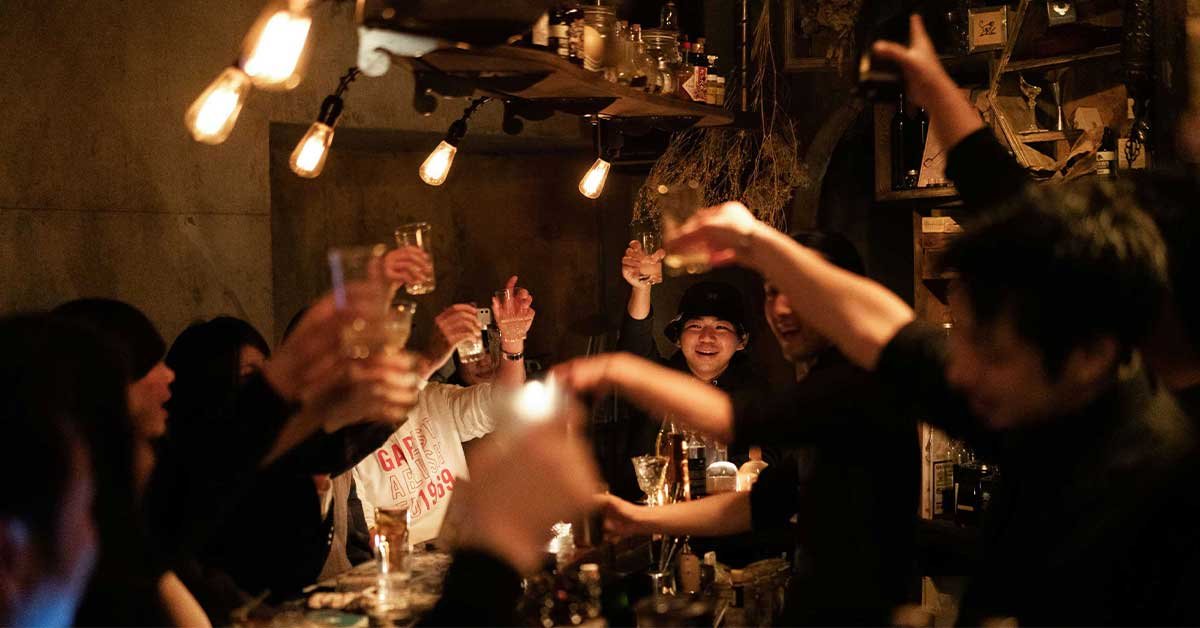
A compact, informal neighborhood joint with counter and a few tables, where guests sit close to the hot griddle in a warm, bustling, down-to-earth atmosphere typical of local Osaka okonomiyaki shops.