Men & Beasts
Men & Beasts occupies a specific and pointed position in Los Angeles dining: a Modern Chinese restaurant built around a largely plant-based menu, where vegetables function as the primary argument rather than a concession to dietary preference. In a city where vegan fine dining has grown from novelty to a credible culinary category, Men & Beasts represents one of the more philosophically grounded entries in that conversation.

Pearl is the En Primeur Club membership app — saves, bookings, and concierge access live there. Same editors, same standards.
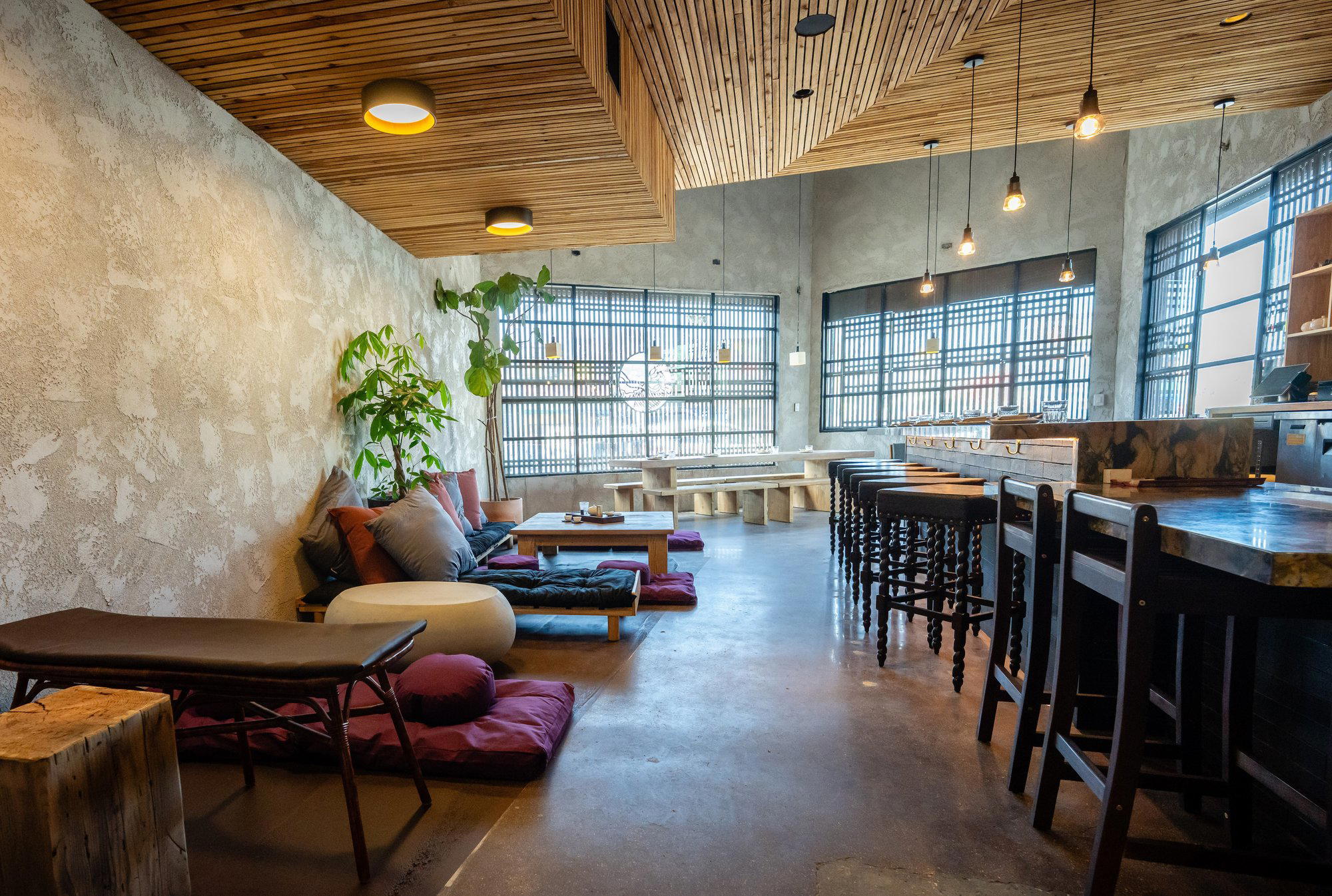
Where the Plant Leads
Los Angeles has spent the better part of a decade sorting out what plant-forward fine dining actually means. The early wave leaned heavily on substitution logic: remove the protein, fill the space with something green. The more recent cohort, the one worth paying attention to, starts from a different premise. The vegetable is not a replacement. It is the point. Men & Beasts belongs to that second generation, framing its Modern Chinese menu around plant ingredients as primary subjects rather than supporting cast. That distinction, small on a menu but significant in execution, places it in a specific and demanding tier of Los Angeles dining.
Chinese culinary tradition has always held vegetables in higher regard than Western dining culture tends to acknowledge. Buddhist temple cuisine, seasonal Cantonese vegetable preparation, the layered fermentation and pickling traditions of Sichuan and Hunan cooking — the raw material for a serious plant-forward Chinese menu is deep and well-documented. Men & Beasts draws on that tradition without treating it as a costume. The mostly vegan and vegetarian format is not a compromise position; it is a culinary argument made in full sentences.
The Competitive Context in Los Angeles
To understand where Men & Beasts sits, it helps to map the broader terrain of serious Los Angeles dining. The city's fine dining tier is anchored by technically demanding tasting-menu formats: Providence at the seafood end, Kato pressing New Taiwanese cuisine into a refined contemporary frame, Somni operating in the molecular register, and Hayato representing the Japanese kaiseki discipline. Osteria Mozza holds a different kind of authority, Italian and ingredient-led in its own way.
Los Angeles is home to one of the largest Chinese-American populations in the United States, and it supports a dining culture with serious expectations around Chinese food at multiple price points and registers. A restaurant proposing a vegetables-first interpretation of that cuisine is not making a safe commercial calculation. It is making a culinary one.
The comparison set for Men & Beasts in broader American fine dining terms includes operations like Blue Hill at Stone Barns in Tarrytown, where the farm-to-table argument is made with similar philosophical weight, and Single Thread Farm in Healdsburg, where ingredient sourcing is the structuring logic of the menu. The difference is cultural register: Men & Beasts works within Chinese culinary grammar, which brings its own vocabulary of texture, heat, fermentation, and umami depth that does not depend on animal protein to function.
Plant Philosophy at the Fine Dining Level
The challenge of a serious plant-forward tasting menu is not nutritional. It is textural and structural. A menu built around animal proteins has a reliable arc: fat, acid, char, rest. A menu built around vegetables has to manufacture that arc through different means — fermentation for depth, controlled dehydration for concentration, high-heat wok technique for char and smoke, and careful sequencing to prevent the palate from going flat by the fourth course. Chinese cooking tradition is particularly well-equipped for this, given its extensive use of preserved and fermented ingredients, and its repertoire of cooking methods that transform texture as much as flavor.
Comparable approaches across American fine dining, Alinea in Chicago, Lazy Bear in San Francisco, demonstrate that the format of progressive multi-course dining is flexible enough to absorb radical changes to the ingredient base without losing structural coherence. What Men & Beasts adds to that conversation is a specific cultural framework, one that grounds the experimentation in a living culinary tradition rather than in pure technique for its own sake.
Los Angeles as the Right City for This
Few American cities could support this particular restaurant in 2024. Los Angeles has the Chinese-American dining culture to contextualize it, the wellness-oriented consumer base to sustain a plant-forward format at fine dining prices, and a restaurant ecosystem sophisticated enough to treat the combination seriously. The same concept would face a different reception in cities where Chinese dining is understood primarily through a narrower historical lens, or where vegan fine dining remains a category associated with health rather than craft.
The broader American fine dining conversation, from Le Bernardin in New York to The French Laundry in Napa to Addison in San Diego, is largely organized around proteins, French technique, or European culinary inheritance. Men & Beasts operates with different source material and different assumptions, and Los Angeles is the American city most capable of receiving that on its own terms. For further context on the full range of serious dining options across the city, our full Los Angeles restaurants guide maps the competitive field in detail.
Other cities with their own ambitious formats, Emeril's in New Orleans, Bacchanalia in Atlanta, The Inn at Little Washington, tend to work within Western culinary frameworks that have little overlap with what Men & Beasts is doing. The more instructive international comparison is perhaps Atomix in New York, where Korean culinary tradition is reframed at fine dining scale, or 8½ Otto e Mezzo Bombana in Hong Kong, where a Western culinary idiom has been successfully transplanted into a Chinese dining culture. Men & Beasts inverts that logic: Chinese culinary tradition, operating in a Western fine dining format, in an American city.
Planning Your Visit
Prospective visitors should treat reservations as a research task: check the restaurant's direct channels or current aggregator listings for availability and format. Given that the plant-forward fine dining tier in Los Angeles is small and the most serious operations in this category tend to run limited seatings, advance planning is advisable. The comparison table below positions Men & Beasts relative to its nearest peers on logistics where data is available.
Quick Comparison
Comparable venues nearby, for context on price, style, and recognition.
| Venue | Cuisine | Price | Notes |
|---|---|---|---|
| Men & BeastsThis venue — the venue you are viewing | Modern Plant-Based Chinese | $$ | Not listed |
| Pine and Crane Silverlake | Fast-Casual Taiwanese | $$ | Silver Lake |
| Panda Inn | Classic Chinese-American | $$ | Pasadena |
| Dolan's Uyghur Cuisine | Authentic Uyghur Cuisine | $$ | Alhambra |
| FIVE on the Hill | Modern American | $$ | Hollywood Hills |
| Shaherzad | Authentic Persian | $$ | Westwood |
Continue exploring
More in Los Angeles
Restaurants in Los Angeles
Browse all →
Bars in Los Angeles
Browse all →

Hotels in Los Angeles
Browse all →
Wineries in Los Angeles
Browse all →
At a Glance
- Modern
- Trendy
- Cozy
- Date Night
- Brunch
- Casual Hangout
- Open Kitchen
- Craft Cocktails
Current opening hours
- Monday
- Closed
- Tuesday
- Closed
- Wednesday
- 5–10 PM
- Thursday
- 5–10 PM
- Friday
- 5–10 PM
- Saturday
- 12–4 PM, 5–10 PM
- Sunday
- 12–4 PM, 5–9 PM
Hours can change for holidays and private events. Last verified .
Casual enclosed patio for dining pairs with an intimate indoor tea lounge offering a bar-like atmosphere with wine and beer.