Dolan's Uyghur Cuisine

LA Times 101 Best Restaurants #63
Our verdict
Among Los Angeles's most recognised Uyghur restaurants, Dolan's in Alhambra has appeared on the LA Times 101 Best Restaurants list in both 2024 (#44) and 2025 (#63), placing it firmly within the San Gabriel Valley's most compelling dining destinations. The menu draws from centuries of spice-trade influence across Central Asia, with big plate chicken, hand-pulled laghman noodles, and cumin-laced lamb among the dishes that bring regulars back repeatedly.

Pearl is the En Primeur Club membership app — saves, bookings, and concierge access live there. Same editors, same standards.
The menu
What to order
- Big Plate Chicken
- Goshnaan
- Laghman
- Spicy Noodles
Where the San Gabriel Valley's Spice Routes Converge
Drive west along Valley Boulevard in Alhambra on a weekday afternoon and the restaurant signage shifts register quickly: Cantonese roast duck, Vietnamese pho, Shanghainese soup dumplings. The San Gabriel Valley has long operated as one of the most concentrated Chinese-American dining corridors in the country, but within it sits a cuisine that has almost nothing to do with China's eastern culinary traditions. Uyghur cooking, the food of the Turkic-speaking Muslim population of Xinjiang in China's northwest, draws its character from a different axis entirely: Central Asian spice routes connecting modern-day India, Afghanistan, Iran, and Tibet. At 742 West Valley Boulevard, Dolan's Uyghur Cuisine makes that geography tangible on the plate.
The LA Times placed Dolan's at number 44 on its 101 Best Restaurants list in 2024, then again at number 63 in 2025, a sustained double appearance that signals consistent execution rather than a single moment of critical attention. For context, that's the same list that tracks Providence, Kato, and Hayato among Los Angeles's serious dining options. Dolan's sits in an entirely different price tier and format from those counters, but its repeated appearance on the same editorial shortlist says something about how the Times frames the city's dining conversation: not as a hierarchy of expense, but as a map of cultural specificity.
The Room Before the Food
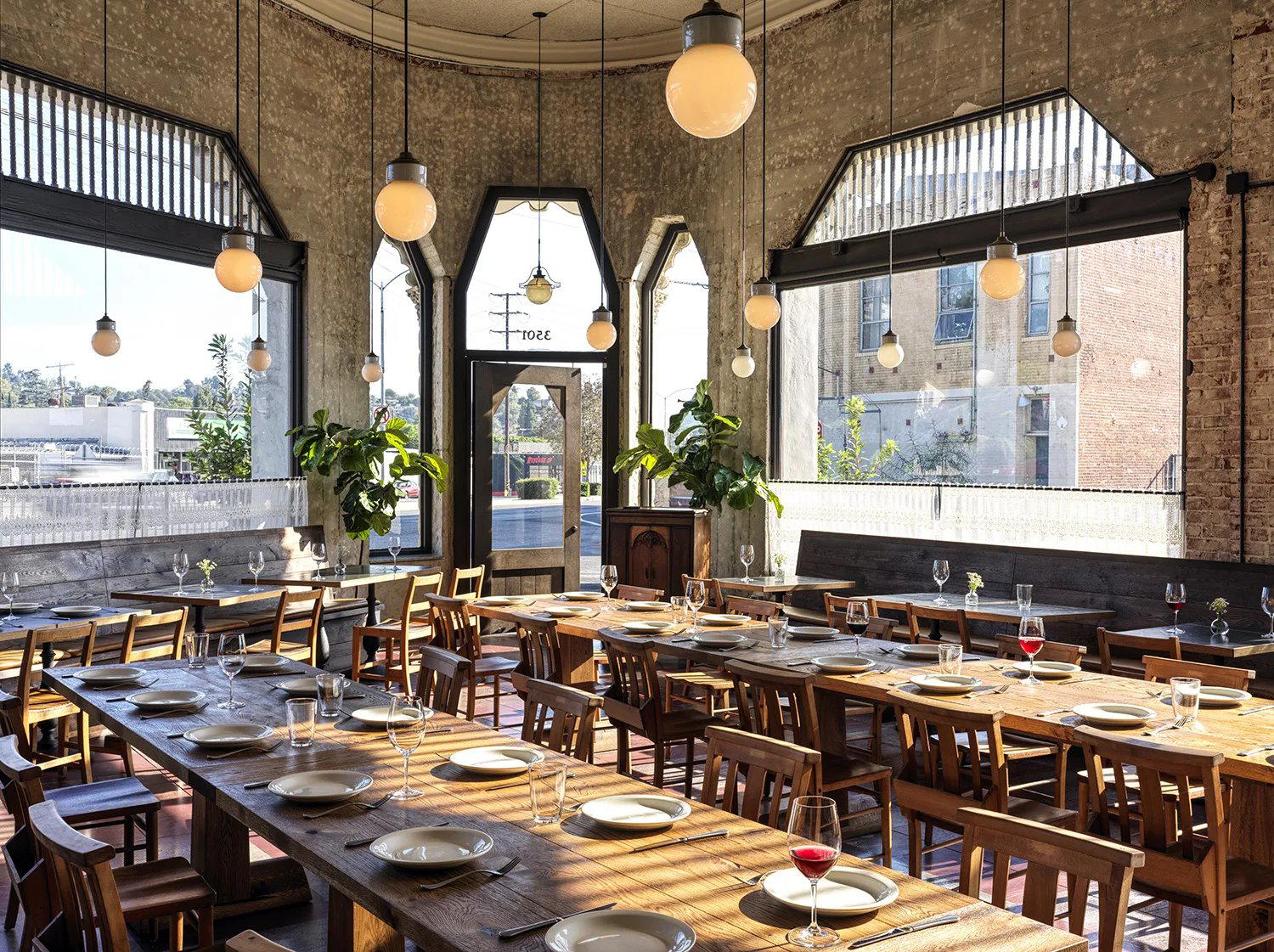
Uyghur cultural identity is present throughout the dining room at Dolan's in ways that go beyond decor as backdrop. Murals depicting Uyghur life run along the walls, and globe-shaped glass lamps patterned in starbursts and geometric forms reference the architectural and craft traditions of Xinjiang. The space communicates a specific cultural origin rather than a generalised pan-Central Asian aesthetic, which matters when the cuisine itself is so frequently collapsed into vague "Silk Road" branding at less considered venues.
The practical result for diners is that the room reads differently at lunch versus dinner. In daylight, the murals and patterned lamps read as detail in a casual, cafeteria-paced dining room. After dark, with the geometric lamps glowing, the atmosphere shifts toward something more deliberate, and the dinner crowd tends to linger longer over shared plates.
Lunch vs. Dinner: Two Different Arguments for the Same Kitchen
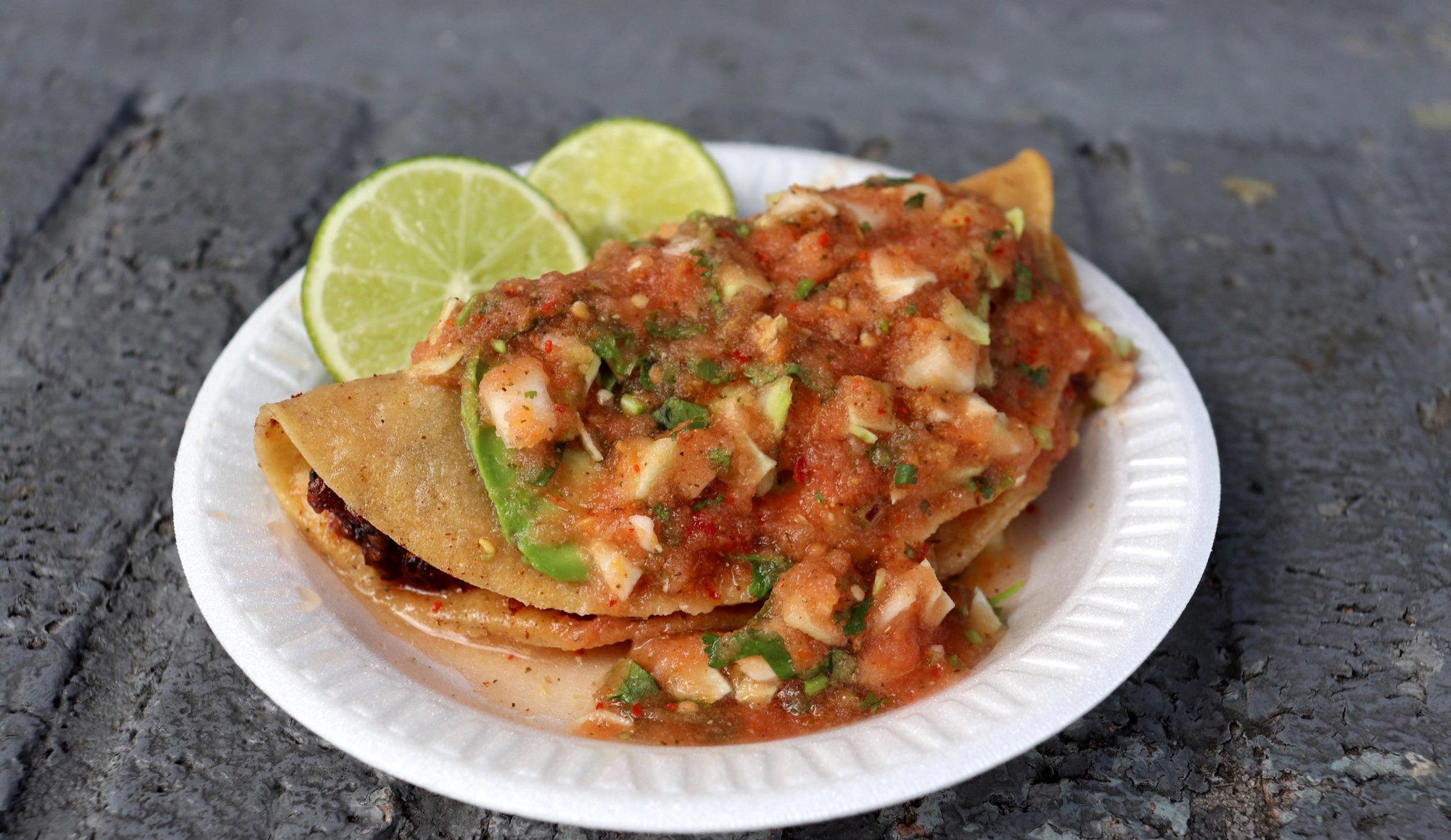
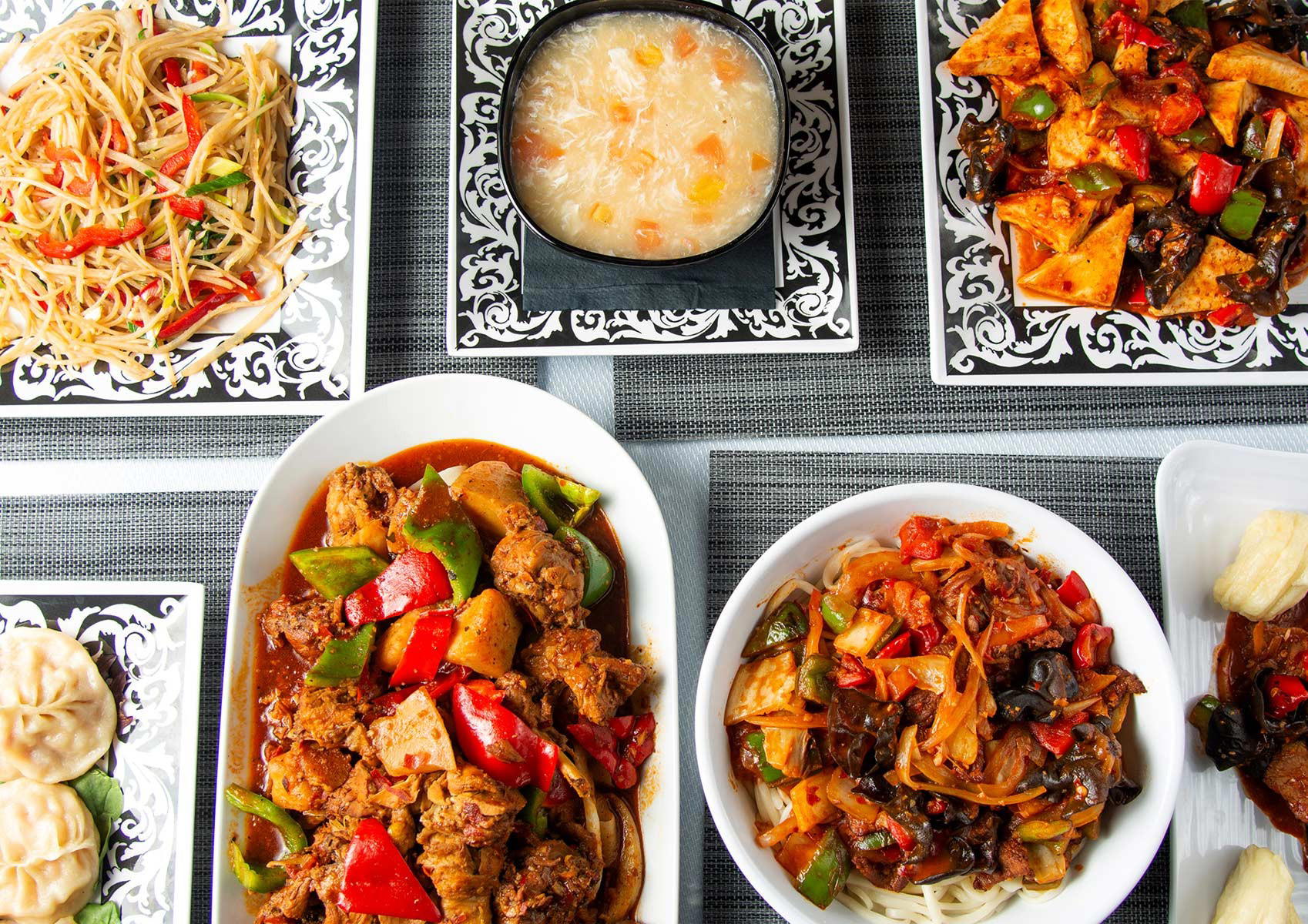
The LA Times description of Dolan's is essentially a lunch argument: arrive hungry, order the big plate chicken, eat communally, leave satisfied. That framing is accurate and remains the most efficient way to encounter the kitchen's strengths. The big plate chicken arrives heaped with potatoes, red and green peppers, slivers of garlic, and dried chiles, with wide looping noodles underneath and currents of Sichuan peppercorn and star anise running through the broth. It is a dish designed for a table, not a solo diner, and its portion logic assumes sharing.
Dinner case is more textured. Ordering across categories reveals the kitchen's range: stir-fried lamb scattered with cumin seeds; manta dumplings filled with earthy diced pumpkin and minced onion, their pleated skins dense and yielding; laghman, long noodles nearly as thick as taffy, buried under stir-fried vegetables and tender beef strips. The quyash qatlima, a pinwheel-shaped savory pie packed with spiced meat and mozzarella, functions as both an outlier and a crowd signal. It reads as a menu item designed to pull in diners less familiar with Uyghur cooking while also being genuinely good on its own terms.
At dinner, the pacing slows, the table orders more broadly, and the food's internal logic becomes clearer: this is a cuisine built on wheat-based staples (noodles, dumplings, flatbreads), lamb as the dominant protein, and a spice vocabulary that sits closer to the Fergana Valley than to Sichuan despite some overlapping ingredients. The Sichuan peppercorn that appears in the big plate chicken is a regional trade artifact, not a defining characteristic of the cuisine.
The San Gabriel Valley Context
Los Angeles has the deepest bench of Chinese regional cuisines outside mainland China, and the San Gabriel Valley is where most of that depth resides. Within that framework, Uyghur restaurants occupy a position different from, say, the Shanghainese, Cantonese, or Sichuan clusters that dominate the corridor. The cuisine is Muslim, which means no pork, no alcohol in the kitchen, and a protein emphasis on halal lamb and beef. That dietary framework opens Dolan's to a dining audience that many of the Valley's Chinese restaurants do not serve, and in practice the room reflects that: the clientele is mixed across ethnicity and cultural background in ways that distinguish it from more insular regional Chinese spots nearby.
Bugra Arkin operates three locations, with Alhambra and Rowland Heights in the San Gabriel Valley and a third in Irvine. The multi-location model at this price point is unusual for a cuisine this specific, and the sustained LA Times recognition across two years suggests the Alhambra original has maintained its standard rather than diluting across sites.
For a fuller picture of where Dolan's sits within Los Angeles's broader dining map, the EP Club Los Angeles restaurants guide covers the city's range from Michelin-tracked omakase to San Gabriel Valley specialists. Dolan's occupies a distinct tier: LA Times-recognised, culturally specific, and operating at a price point that invites return visits rather than single occasions. Contrast that with the commitment required for Somni or Osteria Mozza, both of which demand more planning and significantly more spend per head.
For those building a broader Los Angeles itinerary, the EP Club Los Angeles hotels guide, bars guide, and experiences guide cover the city's other tiers. The wineries guide is worth consulting if you're extending toward the coast or into Malibu wine country after an eastside dining excursion.
Planning a Visit
| Venue | Cuisine | Price Tier | Booking Required | LA Times 101 |
|---|---|---|---|---|
| Dolan's Uyghur Cuisine | Uyghur / Central Asian | $–$$ | Walk-in friendly | #44 (2024), #63 (2025) |
| Kato | New Taiwanese | $$$$ | Advance booking essential | Yes |
| Hayato | Japanese (kaiseki) | $$$$ | Weeks in advance | Yes |
| Osteria Mozza | Italian | $$$ | Recommended | Yes |
Dolan's sits at 742 West Valley Boulevard in Alhambra. Weekend evenings, when the shared-plate format draws larger groups, are the most crowded windows. A weekday lunch lets you experience the big plate chicken format at its most relaxed.
Frequently asked questions
Is Dolan's Uyghur Cuisine award-winning?
Dolan's Uyghur Cuisine has received recognition including: LA Times 101 Best Restaurants #63 (2025); LA Times 101 Best Restaurants 2024 - Ranked #44. Among the constellation of cuisines that light up the San Gabriel Valley, Bugra Arkin’s restaurants in Alhambra and Rowland Heights (with a third loc….
What's the address for Dolan's Uyghur Cuisine?
Dolan's Uyghur Cuisine is located at 742 W Valley Blvd, Alhambra, CA 91803, Los Angeles.
What do regulars order at Dolan's Uyghur Cuisine?
The big plate chicken is the default anchor order: a wide, communal dish of bone-in chicken, potatoes, red and green peppers, dried chiles, and wide looping noodles submerged in a broth threaded with Sichuan peppercorn and star anise. Regulars also circle back to the laghman, long hand-pulled noodles nearly as thick as taffy served under stir-fried vegetables and beef, and the cumin-heavy stir-fried lamb. The LA Times, which ranked Dolan's #44 on its 2024 list of 101 Best Restaurants, called all three superb.
How far ahead should I plan for Dolan's Uyghur Cuisine?
Dolan's operates across three Southern California locations — Alhambra, Rowland Heights, and Irvine — which distributes demand and generally makes walk-ins viable, particularly on weekday afternoons. That said, the Alhambra location on Valley Boulevard draws a consistent crowd following back-to-back appearances on the LA Times 101 Best Restaurants list in 2024 and 2025. Weekend evenings warrant arriving early or calling ahead.
What's the signature at Dolan's Uyghur Cuisine?
The big plate chicken is the dish that defines the menu and the restaurant's reputation in the San Gabriel Valley. Beyond that, the quyash qatlima — a pinwheel-shaped savory pie filled with spiced meat and mozzarella — functions as the most distinctive single item, representing the centuries of trade influences, from Central Asia to the Middle East, that shape Uyghur cooking. Bugra Arkin's restaurants are among very few in California presenting this regional cuisine with this level of depth.
Is Dolan's Uyghur Cuisine allergy-friendly?
Dolan's menu is built around wheat (laghman noodles, manta dumplings, pastry), lamb, chicken, and beef, so guests with gluten sensitivities or wheat allergies will find the menu limited. The Uyghur kitchen draws on spice traditions spanning India, Iran, Afghanistan, and Tibet, which means dishes can carry complex spice profiles including dried chiles, cumin, star anise, and Sichuan peppercorn. Diners with specific dietary needs should contact the Alhambra location directly at 742 W Valley Blvd before visiting.
How does Dolan's Uyghur Cuisine differ from other Chinese regional restaurants in the San Gabriel Valley?
Uyghur cooking is distinct from Han Chinese culinary traditions: the Uyghurs are Turkic-speaking Muslims, and their cuisine reflects centuries of spice-trade contact with what are now India, Tibet, Afghanistan, and Iran rather than the soy- and rice-wine foundations common in Cantonese or Shanghainese cooking. In a San Gabriel Valley dining corridor with deep representation of Chinese regional cuisines, Dolan's occupies a lane with very little direct competition. Owner Bugra Arkin reinforces that cultural specificity through the dining room itself, where murals and handcrafted globe-shaped glass lamps reference Uyghur visual tradition. The LA Times has listed Dolan's among its 101 Best Restaurants in both 2024 (#44) and 2025 (#63).
The Minimal Set
| Venue | Cuisine | Price | Awards | Notes |
|---|---|---|---|---|
| Dolan's Uyghur CuisineThis venue (the venue you are viewing) | Authentic Uyghur Cuisine | $20–30 | LA Times 101 Best Restaurants #63 | Not listed |
| Kato | Modern Taiwanese Fine Dining | $300–500 | 2 Michelin Stars · World's 50 Best #49 | New Taiwanese, Asian |
| Hayato | Traditional Japanese Kaiseki | $300–500 | 2 Michelin Stars · La Liste Top Restaurants | Japanese |
| Vespertine | Avant-Garde Tasting Menu | $200–300 | 2 Michelin Stars · La Liste Top Restaurants | Progressive, Contemporary |
| Camphor | Modern French with Southeast Asian influences | $150–200 | Michelin Plate · World Best Burgers World's 101 Best Burgers #15 | French-Asian, French |
| Gwen | Contemporary American Steakhouse | $50–100 | Michelin Plate · Wine Spectator Best of Award of Excellence | New American, Steakhouse |
Recognition history
Dated appearances from independent guides and award organizations, with the underlying list record or original source where available.
LA Times 101 Best Restaurants #63
LA Times
Full recognition history (2 entries)
LA Times 101 Best Restaurants #44
LA Times