Shaherzad Restaurant

Our verdict
On Westwood Boulevard, Shaherzad has served Los Angeles's Iranian community and curious diners alike for decades, operating as one of the city's most enduring Persian restaurants. The menu reads as a primer on the architecture of classical Iranian cooking: slow-braised stews, char-marked kebabs, and saffron-steeped rice dishes that carry the weight of a culinary tradition rarely represented at this depth in the American West.

Pearl is the En Primeur Club membership app, where members save venues, book tables and use the concierge.
The menu
What to order
- Beef Shish Kabob
- Lamb Shish Kabob
- Chicken Koobideh
- Ghorme Sabzi
Where Persian Cooking Finds Its Structure
Westwood has long functioned as Los Angeles's de facto Persian neighborhood, a consequence of the large Iranian diaspora community that settled in the area from the late 1970s onward. The stretch of Westwood Boulevard running south from Wilshire carries more Persian restaurants, bakeries, and grocers per block than almost anywhere outside Tehran, and within that concentrated scene, Shaherzad at 1422 Westwood Blvd has operated as a reference point. It is not a fusion experiment or a reimagining. It is a restaurant where the menu itself functions as an argument about what Iranian cuisine actually is, presented with the confidence of an institution that has never needed to explain itself to a trend.
For readers accustomed to tracking Los Angeles's higher-profile dining circuit, where venues like Kato reframe Asian culinary traditions through a contemporary lens, or where Hayato applies kaiseki discipline to Japanese cooking, Shaherzad occupies a different position entirely. Its authority comes not from reinvention but from fidelity to a cuisine whose classical architecture is intricate enough that faithful execution is itself a form of mastery.
The Menu as a Map of Iranian Cooking
The editorial angle that matters most at Shaherzad is structural: how the menu is organized reveals how Iranian cooking thinks about itself. Unlike European tasting-menu formats, where a single narrative arc runs from amuse to dessert, classical Persian restaurant menus are built around categories of technique and ingredient that operate in parallel. Stews (khoresh), grilled meats (kebab), and rice preparations (polo) each represent a distinct pillar of the cuisine, and a well-ordered Persian meal draws from all three rather than treating one as the main event.
Stews like ghormeh sabzi, a herb-intensive braise that balances dried limes and kidney beans against lamb, or fesenjan, the walnut-and-pomegranate reduction that coats poultry with a sauce of almost medieval complexity, represent the khoresh tradition at its most demanding. These are dishes measured in hours of preparation, and they carry flavor profiles that have almost no equivalent in other Middle Eastern cuisines. The pomegranate and walnut pairing in fesenjan, for instance, places Iranian cooking in conversation with northern Persian regional traditions around the Caspian, not with the grilled-meat emphasis that outsiders often associate with the broader region.
Kebab preparations here follow a parallel logic. Koobideh, ground lamb or beef mixed with onion and spices and pressed onto wide flat skewers, is grilled over open flame and served with rice and charred tomato. Barg, thinly sliced marinated lamb fillet, sits at the other end of the register: leaner, more delicate, demanding precise timing on the grill. The contrast between these two preparations is itself a lesson in how kebab culture in Iran is not a single technique but a spectrum of approaches to heat and meat that varies by region, occasion, and cut.
Rice is the thread that runs through everything. Persian polo is not boiled rice; it is a two-stage preparation in which parboiled rice is steamed in a sealed vessel over low heat, developing a golden crust called tahdig at the bottom of the pot. Tahdig is arguably the most discussed element of Iranian home cooking among people who grew up eating it, and its presence at Shaherzad signals that the kitchen is not cutting corners on the most labor-intensive part of the meal. Saffron-stained rice served alongside stews and kebabs anchors the plate in a way that no other starch in Western or Asian cooking quite replicates.
Vegetarian Depth in a Meat-Dominant Tradition
Iranian cooking, despite its reputation for lamb and beef, contains a substantial vegetarian repertoire rooted in the herb-intensive and legume-based traditions of Persian home cooking. Ash-e reshteh, a thick noodle soup loaded with spinach, beans, and kashk (a fermented whey), is a traditional dish with deep cultural resonance, served at Nowruz and other significant occasions. Mirza ghasemi, a smoked eggplant preparation from the Caspian region, demonstrates the cuisine's capacity to build complexity without meat. For diners prioritizing plant-based options, a Persian restaurant operating at this level of classical fidelity tends to offer more genuine depth than a modern fusion kitchen where vegetarian dishes are often afterthoughts. Confirming current menu specifics directly with the restaurant is recommended, since preparation details and availability can shift seasonally.
Westwood in the Broader Los Angeles Dining Context
Los Angeles's dining geography is expansive enough that no single neighborhood defines the city's ambitions, but Westwood's Persian corridor represents something that the city's more publicized restaurant scenes do not: a community-rooted dining tradition that has operated continuously for over four decades without requiring validation from food media or award bodies. This is a different kind of durability than the critical recognition that drives visibility for venues like Providence or Somni, or the chef-driven ambition that places Osteria Mozza inside an Italian-American conversation. Shaherzad's longevity is community-sustained, which is its own form of credential.
For context within the American fine dining conversation, the gap between Persian cuisine's complexity and its representation in the national critical apparatus is notable. Restaurants like Le Bernardin in New York City, Alinea in Chicago, or The French Laundry in Napa have institutional recognition systems that amplify their profiles. Persian cooking in America operates largely outside those systems, not because the cuisine lacks depth but because the award infrastructure was built around European and Japanese culinary frameworks. Shaherzad exists in a category where the relevant credentials are communal rather than institutional.
Diners approaching Westwood from other Los Angeles neighborhoods might also consider how this part of the city fits into a broader day of eating. The neighborhood is a short drive from Culver City, where Kato operates its New Taiwanese tasting menu format, or from downtown, where Hayato runs one of the city's most demanding kaiseki programs. Shaherzad operates in a different register from either of those, and that difference is the point. Our full Los Angeles restaurants guide maps the city's dining by neighborhood, cuisine, and price tier for readers planning across multiple meals.
Planning Your Visit
Shaherzad is located at 1422 Westwood Blvd, Los Angeles, CA 90024, in the heart of the Westwood neighborhood's Persian commercial corridor. Street parking on Westwood Boulevard can be limited during peak dinner hours; the adjacent side streets and nearby structures are generally more reliable. Given the venue's neighborhood reputation and community following, walk-in availability varies by day and time.
Address: 1422 Westwood Blvd, Los Angeles, CA 90024
Frequently asked questions
What do regulars order at Shaherzad?
Among the core pillars of an Iranian restaurant menu, the stews and rice preparations are the clearest indicator of kitchen commitment. At a restaurant with Shaherzad's community standing in Westwood, regulars typically anchor their orders around khoresh dishes like ghormeh sabzi or fesenjan alongside saffron rice with tahdig, using kebab preparations as a complement rather than the centerpiece. The depth of the stew program is where a Persian kitchen's standards are most clearly legible.
Can I walk in to Shaherzad?
Westwood's Persian dining corridor sees consistent foot traffic from both the local Iranian community and UCLA-area diners, which means walk-in availability at Shaherzad depends heavily on the day and time. Weekend evenings in particular draw higher volumes.
What's the defining dish or idea at Shaherzad?
The defining idea at Shaherzad is structural rather than tied to a single dish: the menu presents Iranian cooking across all three of its classical pillars simultaneously, with stews, kebabs, and rice preparations each receiving full treatment rather than one dominating at the expense of others. In practical terms, fesenjan and koobideh represent the two poles of the menu most clearly, the walnut-pomegranate stew demonstrating the khoresh tradition's complexity, the ground-meat kebab showing the grill program's precision.
Is Shaherzad good for vegetarians?
If you are prioritizing vegetarian options, classical Persian cooking offers more structural depth than most Middle Eastern cuisines represented in Los Angeles, and a restaurant with Shaherzad's community roots tends to carry that repertoire. Herb-based stews, legume soups like ash-e reshteh, and smoked eggplant preparations like mirza ghasemi are traditional categories with genuine complexity.
Is eating at Shaherzad worth the cost?
Persian restaurants in the Westwood corridor generally operate at mid-range price points relative to the Los Angeles dining spectrum, positioned well below the tasting-menu tier occupied by venues like Somni or Providence. The value case at a community-anchored restaurant like Shaherzad rests on the labor intensity of the cuisine: slow-braised stews and properly executed tahdig represent hours of kitchen work that does not appear in the ticket price the way it does at European fine dining venues. Specific pricing should be confirmed directly with the restaurant.
How does Shaherzad fit into the history of Persian dining in Los Angeles?
Los Angeles developed one of the largest Iranian diaspora communities outside Iran following the 1979 revolution, and Westwood became the geographic center of that community through the 1980s and 1990s. Restaurants that established themselves in that period, operating on Westwood Boulevard within what residents came to call "Tehrangeles," built their clientele from within the community rather than from the broader American dining public. Shaherzad's address on Westwood Blvd places it squarely inside that history, giving it a contextual depth that newer Persian-influenced restaurants in other parts of the city do not carry in the same way.
Category Peers
Comparable venues nearby, for context on price, style, and recognition.
| Venue | Cuisine | Price | Awards | Notes |
|---|---|---|---|---|
| ShaherzadThis venue (the venue you are viewing) | Authentic Persian | $20–30 | Not listed | Not listed |
| Al Baraka Restaurant | Authentic Palestinian | $20–30 | LA Times 101 Best Restaurants #32 | Little Arabia |
| SORA CRAFT KITCHEN | Modern Turkish Fusion | $20–30 | Michelin Plate · LA Times 101 Best Restaurants #39 | Downtown |
| Tehran Market | Persian Market with Kebabs | $10–20 | Not listed | Encino |
| Levant Bistro + Bake Shop | Levantine Lebanese Bistro | $20–30 | Not listed | Echo Park |
| Attari Sandwich Shop | Persian Sandwich Shop | Not listed | Not listed | Westwood |
Recognition history
Dated appearances from independent guides and award organizations, with the underlying list record or original source where available.
Opinionated About Dining Casual in North America Recommended
Opinionated About Dining
Continue exploring
More in Los Angeles
Restaurants in Los Angeles
All restaurants in Los Angeles →
Bars in Los Angeles
All bars in Los Angeles →
Hotels in Los Angeles
All hotels in Los Angeles →
Wineries in Los Angeles
All wineries in Los Angeles →

Details
- Casual
- Cozy
- Family
- Group Dining
- Casual Hangout
- Open Kitchen
- A La Carte
- Vegetarian Friendly
- Halal
Current opening hours
- Monday
- 11 AM–10 PM
- Tuesday
- 11 AM–10 PM
- Wednesday
- 11 AM–10 PM
- Thursday
- 11 AM–10 PM
- Friday
- 11 AM–10 PM
- Saturday
- 11 AM–10 PM
- Sunday
- 11 AM–10 PM
Hours can change for holidays and private events. Hours as of .
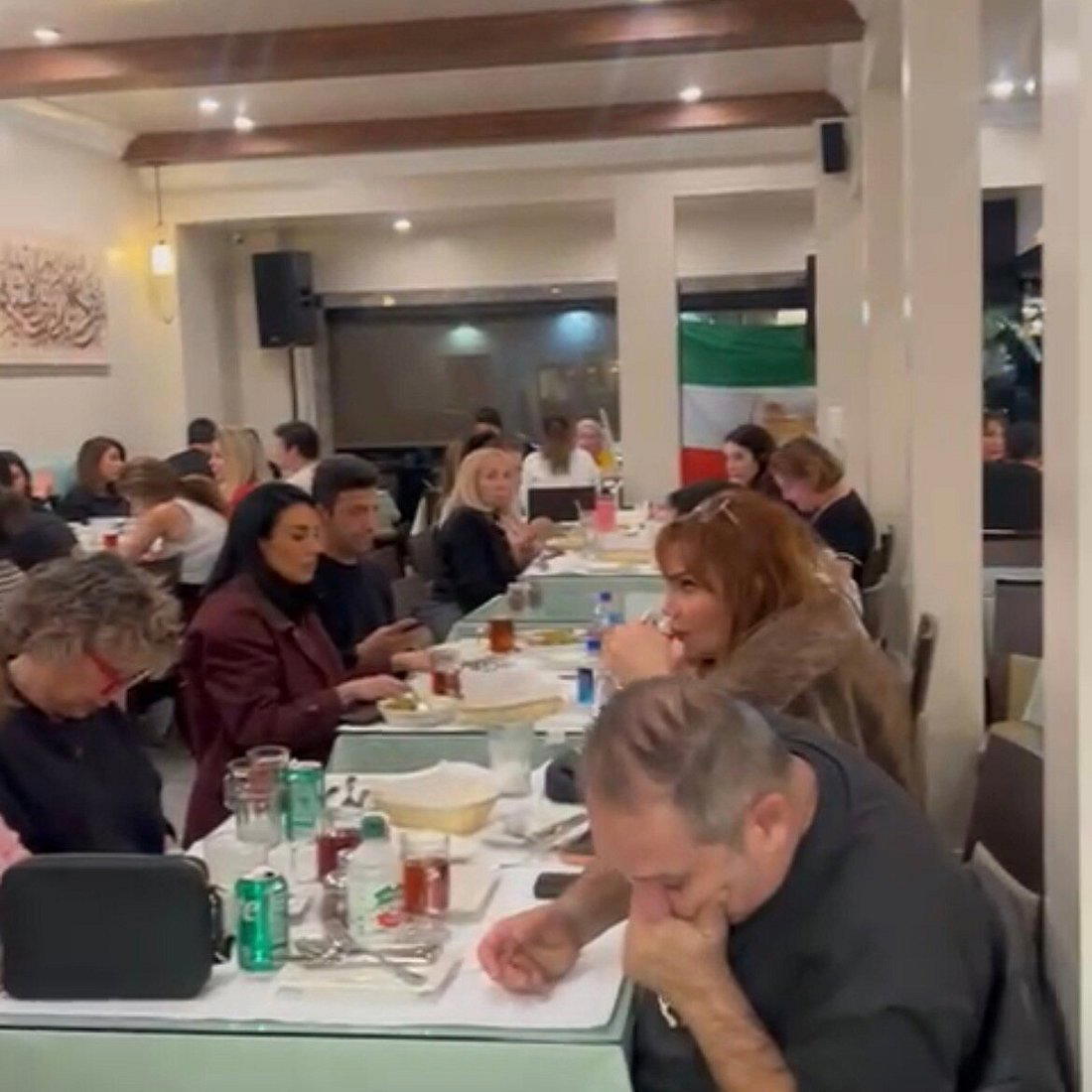
Casual and pleasant dining room with a lively yet conversational atmosphere, recently renovated, popular with the local Persian community.