FIVE on the Hill
Our verdict
Situated along Universal Hollywood Drive in Universal City, FIVE on the Hill occupies the entertainment-district tier of Los Angeles dining, where spectacle and accessibility share space with genuine culinary ambition. The address places it squarely within a visitor-heavy corridor, yet the format signals a more deliberate kitchen program than its surroundings might suggest. Full cuisine, pricing, and award data are pending verification.

Pearl is the En Primeur Club membership app, where members save venues, book tables and use the concierge.
The menu
What to order
- Chicken and Waffles
- Seafood Platter
- Margarita Flights
- Champagne Flights
The Entertainment Corridor and What It Asks of a Restaurant
Universal City sits in a peculiar position on the Los Angeles dining map. The stretch of Universal Hollywood Drive feeds one of the highest-traffic tourist corridors in Southern California, yet the area has historically produced little that demands serious attention from the city's food press. Restaurants here face a structural pull toward convenience and volume, the same gravitational force that shapes dining in any district where theme-park footfall sets the commercial baseline. FIVE on the Hill enters that context and, by virtue of its address at 555 Universal Hollywood Drive, carries the challenge of that location into every service.
Providence on Melrose has anchored the city's seafood-focused fine dining conversation for years. Kato in Culver City operates a tasting format that has drawn sustained national attention. Somni and Hayato function at the counter-only, allocation-driven tier.
Sourcing in a City That Has Built the Vocabulary for It
Los Angeles is, more than most American cities, a place where ethical sourcing has moved from niche selling point to baseline expectation. The farmers' markets at Hollywood and Santa Monica have operated as de facto supply chains for restaurant kitchens for two decades. The conversation around regenerative agriculture and closed-loop kitchen waste is more advanced here than in cities where fine dining culture is younger. Blue Hill at Stone Barns in Tarrytown built its reputation around the farm-to-kitchen model at a time when that model required explanation. In Los Angeles today, it requires execution.
Restaurants operating in the sustainability-conscious tier of American dining have a shared vocabulary of signals: named farm relationships, seasonal menu rotations that reflect actual harvest windows, kitchen waste programs that go beyond composting, and sourcing transparency communicated without the performative quality that can undercut the credibility of the whole project. Single Thread Farm in Healdsburg operates an eleven-acre farm in direct service of its kitchen, a model that sets a high bar for integration. Smyth in Chicago built a comparable farm-kitchen relationship in the Midwest. These are reference points, not benchmarks that every restaurant must match, but they define the seriousness threshold against which sourcing claims get evaluated.
Cuisine type, chef credentials, and sourcing program details are not yet in the available information. What can be said is that the broader Los Angeles dining environment makes genuine sustainability claims more legible and more scrutinised here than in most comparable American cities. A restaurant that commits to that framework in this market is operating in a place where the audience has the knowledge to distinguish the real from the performed.
The Universal City Dining Environment: What the Address Signals
The entertainment-district positioning shapes expectations before a guest arrives. Visitors arriving from the Universal Studios complex bring different baseline assumptions than the reservation-forward diner who books weeks ahead at a Koreatown counter or a Michelin-tracked Westside kitchen. That is not a criticism of the Universal City corridor so much as a description of how dining environments are shaped by their surrounding traffic. Osteria Mozza, on Highland, made a different argument about what Los Angeles Italian dining could be, and it made that argument in part by choosing a neighbourhood that signalled serious restaurant culture. Location communicates intent.
For a restaurant at this address to position itself in the sustainability-and-craft conversation, it would need to do consistent work against the gravitational pull of its surroundings. That is achievable, and the precedents in other cities are instructive. Emeril's in New Orleans built credibility inside a tourist-heavy district through longevity and a clearly defined kitchen identity. The Inn at Little Washington operates in a similarly visitor-oriented context and has earned sustained recognition by maintaining discipline regardless of who is at the table. The address is a constraint, not a disqualification.
What a Serious Sourcing Commitment Would Look Like Here
In practical terms, the restaurants in the American sustainability tier that have earned lasting recognition share a few operational commitments. They build supplier relationships that survive menu rotations rather than sourcing opportunistically when heritage-breed ingredients happen to be available. They communicate those relationships to guests in ways that are specific rather than decorative. And they apply waste-reduction discipline not as a marketing position but as a kitchen standard, measured against actual output rather than stated intention.
Atelier Moessmer Norbert Niederkofler in Brunico has taken the Alpine sourcing model to an extreme of geographic restriction that functions as both an ethical and creative constraint. Addison in San Diego operates at the top tier of Southern California fine dining with a sourcing program calibrated to the region's agricultural calendar. Frasca Food and Wine in Boulder has built its wine and kitchen sourcing around a coherent regional identity. These examples are drawn from different price tiers and competitive sets, but they share the quality of having made sourcing a structural commitment rather than a seasonal gesture.
For the full range of Los Angeles dining in this conversation, the EP Club Los Angeles restaurants guide maps the city's kitchen programs against each other in more granular detail.
Comparable Reference Points Across American Cities
For readers calibrating FIVE on the Hill against the national picture: the sustainability-forward restaurant conversation in America runs from farm-integrated destination formats like The French Laundry in Napa and Lazy Bear in San Francisco at the higher-investment end, down through neighbourhood-scale programs where local sourcing is genuine but the format is more casual. Le Bernardin in New York City and Atomix operate with defined sourcing philosophies that inform the menu structure. The shared quality across that range is transparency backed by specificity.
The Universal City corridor has enough visitor volume to support a restaurant that takes that transparency seriously without depending on the local diner who tracks chef lineage and award cycles closely. The question is whether the kitchen program at FIVE on the Hill is built to that standard or to a more generalised version of contemporary American dining.
Planning Your Visit
FIVE on the Hill is located at 555 Universal Hollywood Drive in Universal City, accessible from the 101 freeway and within walking distance of the Universal Studios complex.
Frequently asked questions
Would FIVE on the Hill be comfortable with kids?
Check the venue directly for family seating and menu options before booking in Los Angeles.
What should I expect atmosphere-wise at FIVE on the Hill?
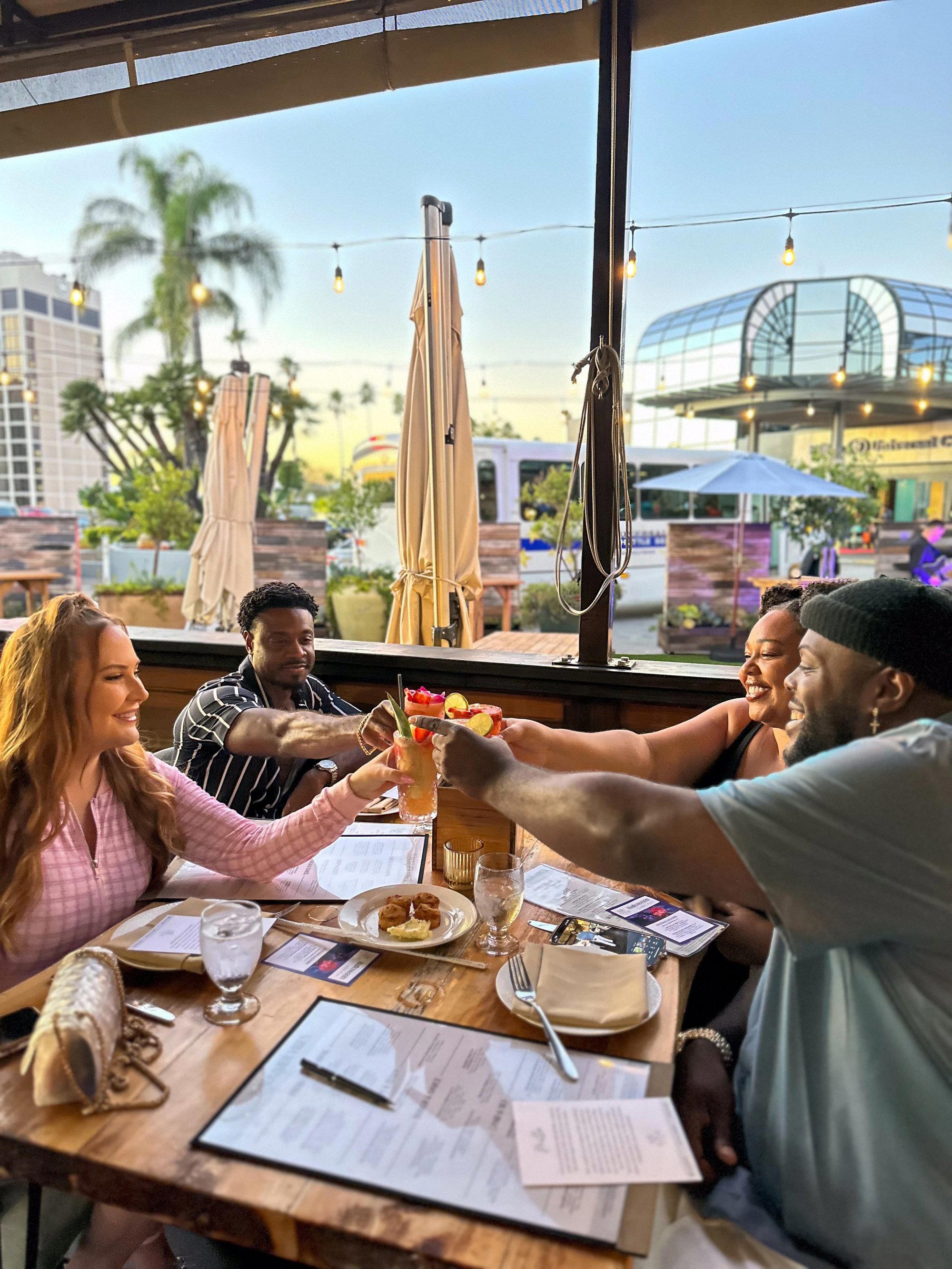
The Universal Hollywood Drive address places the restaurant inside one of Los Angeles's highest-traffic visitor corridors, which typically produces a more animated, crowd-oriented dining environment than the quieter reservation-forward rooms found in West Hollywood or Culver City. The broader context suggests a venue calibrated for accessibility as much as precision.
What should I order at FIVE on the Hill?
Cuisine type, signature dishes, and chef credentials are not in the available information, which makes specific ordering recommendations unreliable. For Los Angeles restaurants where the menu and kitchen philosophy are well documented, Kato and Hayato represent the city's tasting-format tier with clear culinary identities that make ordering direct.
Is FIVE on the Hill connected to a sustainability or farm-sourcing program?
In a Los Angeles dining environment where farm relationships and seasonal sourcing are increasingly standard at the upper tiers, as seen at venues like Providence, any specific claims about this venue's environmental commitments should be verified directly with the restaurant before they inform a booking decision.
Pricing, Compared
A short peer table to compare basics side-by-side.
| Venue | Cuisine | Price | Awards | Notes |
|---|---|---|---|---|
| FIVE on the HillThis venue (the venue you are viewing) | Modern American | $30–50 | Not listed | Not listed |
| Kato | Modern Taiwanese Fine Dining | $300–500 | 2 Michelin Stars · World's 50 Best #49 | New Taiwanese, Asian |
| Hayato | Traditional Japanese Kaiseki | $300–500 | 2 Michelin Stars · La Liste Top Restaurants | Japanese |
| Vespertine | Avant-Garde Tasting Menu | $200–300 | 2 Michelin Stars · La Liste Top Restaurants | Progressive, Contemporary |
| Holbox | Modern Mexican Seafood | $30–50 | 1 Michelin Star · World's 50 Best #26 | Mexican Seafood, Mexican |
| Sushi Kaneyoshi | Edomae Omakase | $300–500 | 1 Michelin Star · LA Times 101 Best Restaurants #24 | Sushi, Japanese |
Continue exploring
More in Los Angeles
Restaurants in Los Angeles
All restaurants in Los Angeles →
Bars in Los Angeles
All bars in Los Angeles →
Hotels in Los Angeles
All hotels in Los Angeles →


Wineries in Los Angeles
All wineries in Los Angeles →

Details
- Lively
- Trendy
- Scenic
- Celebration
- Group Dining
- Brunch
- Special Occasion
- Rooftop
- Terrace
- Panoramic View
- Hotel Restaurant
- Private Dining
- Craft Cocktails
- Extensive Wine List
- Local Sourcing
- Skyline
- A La Carte
- Cocktails
- Wine
- Vegetarian Friendly
- Gluten Free Options
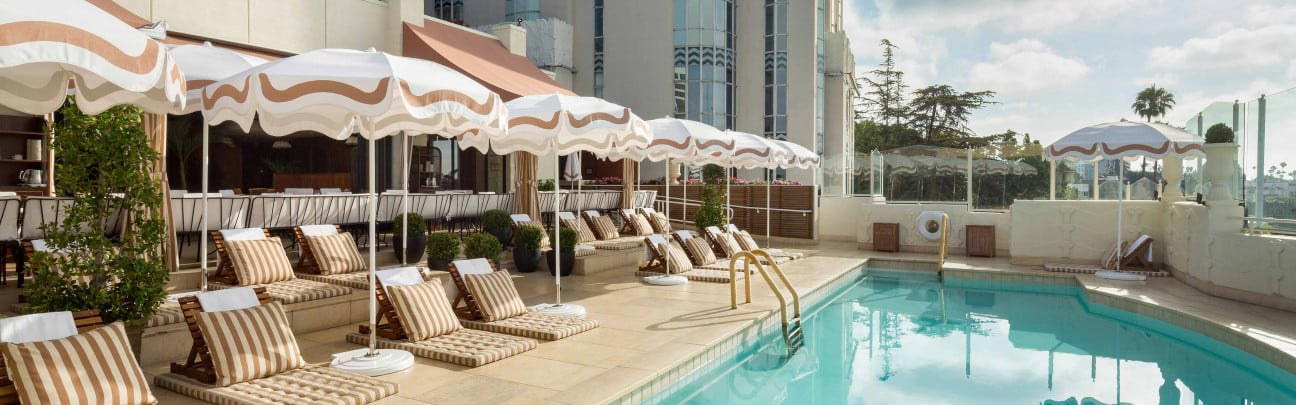
Lively and lively atmosphere with dramatic sunsets, peaceful live music at times, and an inviting setting well-suited for celebrations.