

Michelin Plate · Macarfi 7.4 Food Rating
Our verdict
A Michelin Plate-recognised izakaya in the Costa Brava town of Palamós, Matsu is run by two Dominican Republic-born partners who trained in Barcelona before opening their first solo venture. The menu weaves Japanese technique with Caribbean instinct, moving from crispy shiso and burrata stracciatella to sushi rolls and robata-grilled plates, including a Katshu Sando that bridges Dominican smoked pork and Japanese tonkatsu in a single dish.

Pearl is the En Primeur Club membership app — saves, bookings, and concierge access live there. Same editors, same standards.
- Address
- Carrer Indústria, 4, 17230 Palamós, Girona, Spain
- Phone
- +34 872 20 05 11
- Website
- matsuizakaya.com
- Directions
- Get directions
- Booking
- Book on TheFork
The menu
What to order
- Tuna carpaccio
- Wagyu beef
- Chicken karaage
- Nigiri
- Sashimi
Where Japanese Ritual Meets an Unlikely Coastal Address
There is a particular pacing to izakaya dining that resists the impatience of resort tourism. Small plates arrive in sequence rather than simultaneity, the robata grill sets its own tempo, and the expectation is that you will settle in rather than move on. In Palamós, a working fishing town on the Costa Brava better known for its prawns than for Japanese cuisine, Matsu Izakaya has introduced that rhythm to an audience that has, by most accounts, taken to it warmly. The restaurant holds a Michelin Plate for 2025, a signal that the guide's inspectors found consistent cooking and a clear identity here, not merely an interesting concept.
The address is Carrer Indústria, 4, in the centre of Palamós, away from the marina-facing terraces that define much of the town's dining offer. That placement is not incidental. Izakaya culture in Japan developed as a neighbourhood institution, somewhere locals returned to on a weeknight rather than reserved for celebrations, and Matsu appears to have replicated something of that social function in a Catalan context.
The Sequence of the Meal
Izakaya menus are designed for improvisation within a loose structure: something cold and sharp to begin, something grilled to anchor the middle, and a gradual accumulation of flavour rather than a single climactic course. Matsu follows that architecture while pulling references from further afield. The cooking has its roots in Japanese technique but draws on the partners' backgrounds, both of whom are from the Dominican Republic and spent several years working in restaurants in Barcelona before opening here.
The crispy shiso starter with burrata stracciatella, truffled honey, and Iberian pork jowl sits early in the meal and illustrates the kitchen's instinct for contrast: the shiso leaf provides bitterness and herbal sharpness, the stracciatella rounds it with dairy fat, and the jowl anchors the whole thing in something recognisably Iberian. It is the kind of opening plate that signals a kitchen comfortable working across registers without losing coherence. Michelin's Plate designation, which recognises good cooking rather than awarding formal stars, suggests that coherence holds across the menu.
The sushi rolls occupy the middle register, and while nigiri and sashimi are available, the kitchen's personality is clearer in the rolls, where the combination of ingredients reflects a more active editorial choice. The menu structure here mirrors a broader trend in Japanese dining outside Japan: the format of the meal remains recognisably Japanese while the filling details absorb local and cultural context. Similar moves are being made at very different price points elsewhere in Europe, from The Japanese Restaurant in Andermatt to Eika in Taipei, where Japanese Contemporary has become a category broad enough to absorb significant regional variation.
The Robata as the Meal's Centre of Gravity
In traditional Japanese grilling culture, the robata occupies a specific ceremonial position. The grill is slow, the heat is radiant rather than direct, and the cook's relationship to the fire is one of attention rather than intervention. That unhurried quality transfers well to a restaurant where the dining pace is already calibrated toward lingering. At Matsu, the robata section of the menu is where the kitchen's identity is most concentrated.
The Katshu Sando is the dish most frequently cited by visitors. It brings together the smoked pork chop tradition of Dominican Republic cookery, where the cut and its preparation carry specific cultural weight, with tonkatsu sauce from Japan, a thick, sweet-savoury condiment with roots in Worcestershire and fruit paste. The result is neither fusion in the casual sense nor a direct Japanese dish: it is a specific synthesis that could only emerge from this particular kitchen, with these particular cooks, in this particular moment. That the synthesis is executed well enough to earn Michelin recognition in its first solo outing is the more relevant point.
Palamós as a Context for This Kind of Cooking
The Costa Brava has become one of the more contested dining territories in Spain, partly because of the gravitational pull of El Celler de Can Roca in Girona, which has reset expectations across the whole province. That influence filters down in ways that are not always obvious: a heightened openness among local diners to ambitious or unconventional cooking, a regional food media that takes independent restaurants seriously, and a visitor profile that increasingly includes people making dedicated food trips rather than passing through on beach holidays.
Palamós itself has a small but competitive restaurant scene at the €€ price tier. DVISI operates in the contemporary register, Kaos takes a farm-to-table approach, La Salinera anchors the traditional Catalan end, and Entre dos Mons brings Peruvian references into the mix. Matsu sits within this peer group in terms of price and format but occupies a different category entirely in terms of culinary reference. For a town of Palamós's size, the density of distinct culinary approaches at a single price point is more than you would typically expect, and Matsu's Michelin recognition gives it a specific authority within that group. Spain's broader creative dining culture, represented at the high end by venues like Disfrutar in Barcelona, DiverXO in Madrid, Arzak in San Sebastián, Quique Dacosta in Dénia, Azurmendi in Larrabetzu, and Aponiente in El Puerto de Santa María, has created a national appetite for cooking that takes identity and origin seriously as creative material. Matsu is doing something smaller in scale but comparable in intent.
Planning Your Visit
Matsu Izakaya is at Carrer Indústria, 4, in central Palamós, a short walk from both the beach and the town's main market. The price range sits at €€, putting it in line with the town's other independent restaurants. No website or phone number is listed in current directories; the most reliable approach is to visit in person to check availability or enquire through the restaurant directly on arrival. For broader orientation, see our full Palamós restaurants guide, as well as our guides to hotels, bars, wineries, and experiences in Palamós.
Frequently asked questions
Where is Matsu Izakaya in Palamós?
Matsu Izakaya is located at Carrer Indústria, 4, 17230 Palamós, Girona, Spain, Palamós.
What's Matsu Izakaya known for in terms of accolades?
Matsu Izakaya has received recognition including: This simple “izakaya” is run by two young partners from the Dominican Republic who have embarked upon their first solo venture following several years working in restaurants in Barcelona. Thankfully, it has had a positive impression on loca….
What's the best thing to order at Matsu Izakaya?
The crispy shiso starter with burrata stracciatella, truffled honey, and Iberian pork jowl draws consistent attention from both Michelin inspectors and the local crowd. Most tables follow it with a selection of sushi rolls before moving to the robata grill, where the Katshu Sando — a fusion of Dominican smoked pork chop and Japanese tonkatsu sauce — is the dish that most clearly defines what the kitchen is doing. At the €€ price range, the robata section offers the strongest value-to-interest ratio on the menu.
Recognition Snapshot
| Venue | Cuisine | Price | Awards | Notes |
|---|---|---|---|---|
| Matsu IzakayaThis venue — the venue you are viewing | Fusion Japanese Izakaya | Not listed | Michelin Plate · Macarfi 7.4 Food Rating | Not listed |
| DVISI | Mediterranean-Asian-Latin Fusion | $50–100 | Michelin Plate · Guía Repsol 1 Sol | Contemporary |
| Kaos | Modern Mediterranean Farm-to-Table | $50–100 | Michelin Plate · Macarfi 7.7 Food Rating | Farm to table |
| La Salinera | Mediterranean Seafood | $50–100 | Michelin Plate · Macarfi 7.5 Food Rating | Traditional Cuisine |
| Entre dos Mons | Peruvian-Catalan Fusion | $50–100 | Michelin Plate | Peruvian |
Recognition history
Dated appearances from independent guides and award organizations, with the underlying list record or original source where available.
Michelin Plate
Michelin
Macarfi 7.4 Food Rating
Macarfi
Full recognition history (3 entries)
Michelin Plate
Michelin
Continue exploring
More in Palamós
Restaurants in Palamós
Browse all →

Bars in Palamós
Browse all →
Hotels in Palamós
Browse all →


Details
- Cozy
- Intimate
- Trendy
- Date Night
- Special Occasion
- Open Kitchen
- Sake Program
- Local Sourcing
- Small Plates
- Tasting Menu
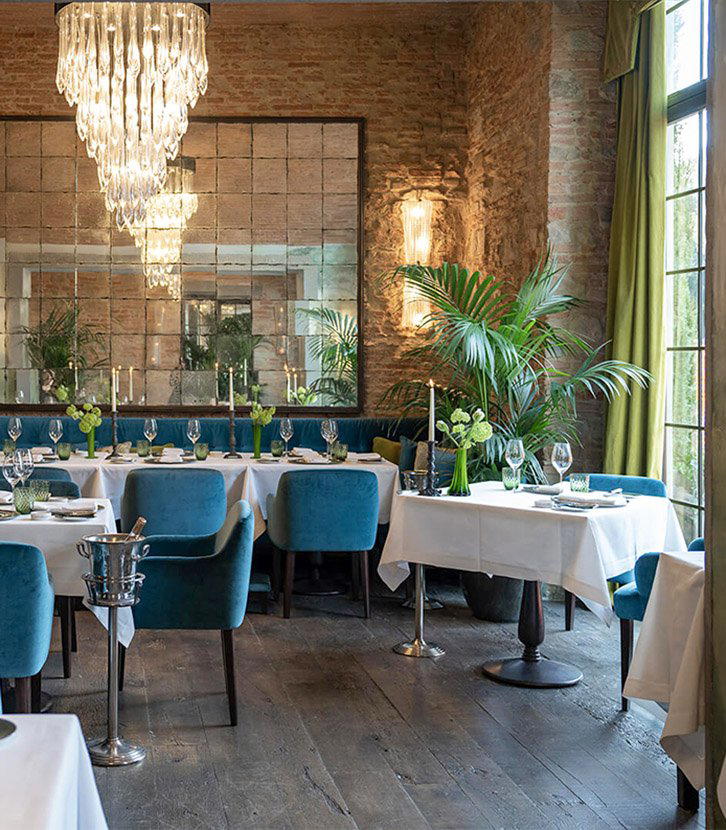
Cozy atmosphere with nice interior, open kitchen, lovely and inviting setting praised for its warmth.