

Set within the landscaped gardens of Casa Vincke hotel in Palamós, DVISI holds consecutive Michelin Plates (2024 and 2025) for Chef Jordi Simón's contemporary menu, which draws on Asian and Latin American technique alongside Costa Brava ingredients. The à la carte and tasting menu both favour sharing formats, with oysters appearing three ways as a recurring reference point across the card.
Pearl is the En Primeur Club membership app — saves, bookings, and concierge access live there. Same editors, same standards.
- Address
- Carrer de l'Avió, 5, 17230 Palamós, Girona, Spain
- Phone
- +34 673 55 74 87
- Website
- restaurantdvisi.com
- Directions
- Get directions
 Saves & bookings on Pearl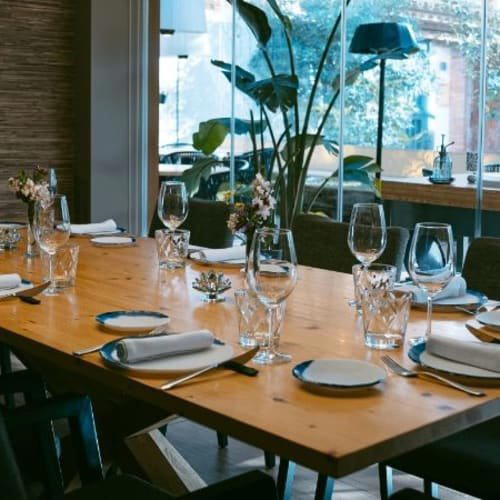
A Garden Setting on the Costa Brava
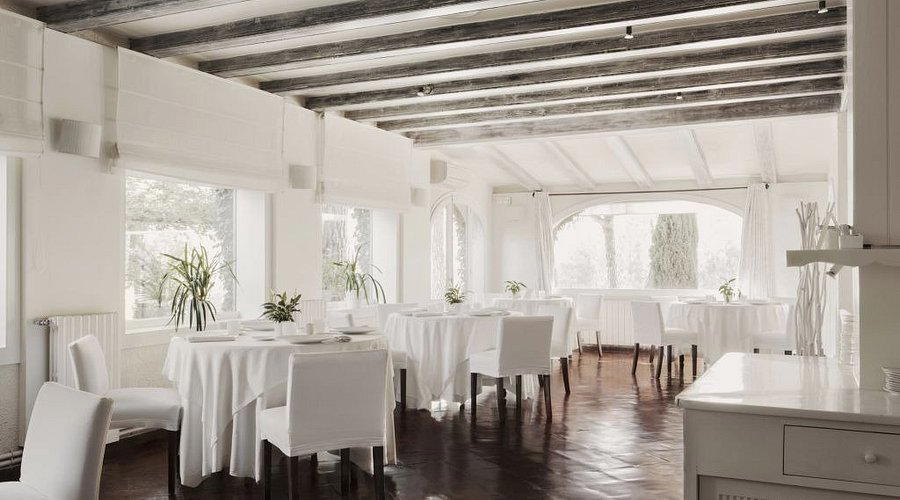
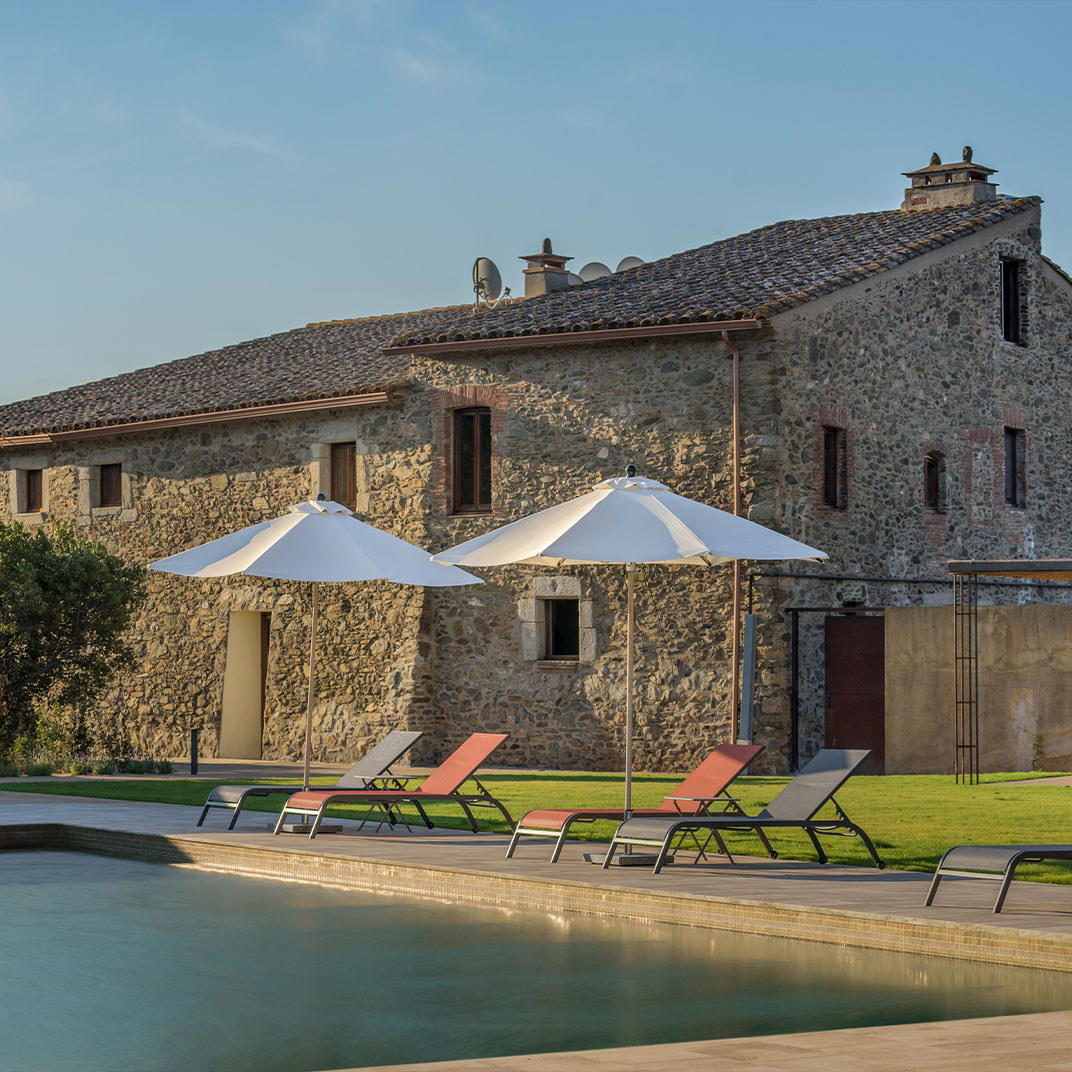
The approach to DVISI tells you something about what the Costa Brava's dining scene has become. The restaurant sits within the landscaped gardens of Casa Vincke, a striking hotel on Carrer de l'Avió in Palamós, and its physical arrangement, a bright dining room with large picture windows framing the swimming pool, opening onto an annexe that functions as a covered terrace, reflects the way the region's better restaurants now think about the relationship between space and meal. This is not a white-tablecloth room sealed from the outside; the light moves through it, and the outdoor connection is structural rather than decorative.
Palamós itself sits at the southern end of the Costa Brava, a working fishing port that has, over the past decade, developed a dining character distinct from the more heavily touristed towns to its north. The town's gamba de Palamós, a deep-water prawn with protected geographic status, anchors a local food identity that draws serious visitors, and the restaurant scene around it has grown to include a range of formats and price points. DVISI, priced at the mid-tier €€ level and carrying Michelin Plate recognition in both 2024 and 2025, positions itself as the contemporary option within that set.
The Menu's Cross-Continental Logic
Contemporary Spanish cooking has spent the last two decades working through questions about what international technique looks like when applied to local product. The answer, at restaurants from El Celler de Can Roca in Girona to DiverXO in Madrid, has generally involved some form of absorption: Asian precision, Latin American acidity, or the structural logic of French technique, folded into Spanish product without erasure. DVISI operates at a more accessible price point than those references, but the underlying logic is consistent. Chef Jordi Simón's menu draws on influences from Asia and Latin America, applied to an à la carte and tasting menu designed around sharing. The format is deliberate: sharing dishes at a mid-range price point distribute the experience more evenly across the table and lower the cost of ranging across the menu.
The oyster section illustrates the approach with unusual clarity. Rather than offering a single oyster preparation, the menu presents three: raw with a Bloody Mary accompaniment; charcoal grilled with yuzu, sake, and mirin; and grilled with aguachile pearl. The progression moves from the direct and briny to the smoke-touched and Japanese-inflected, then to the sharp, citrus-forward register of Mexican aguachile. Three preparations from three culinary traditions, applied to a single ingredient that the Costa Brava coast produces well, is as concise a statement of the menu's logic as you will find. It is the kind of detail that separates a thought-through menu from one assembled from trend references.
For context on where this sits relative to the broader region, Cocina Hermanos Torres in Barcelona and Azurmendi in Larrabetzu represent the fully committed multi-starred version of this mode; DVISI operates in the tier below, where the same cross-cultural references appear at a price point accessible without a special-occasion budget. That positioning matters in a town where the dining options span everything from harbour-front rice dishes to the kind of contemporary format DVISI represents.
Jordi Simón and the Mid-Career Contemporary Chef
The editorial angle for understanding DVISI runs through what it means to cook at this level in a coastal Spanish town rather than a capital or a starred destination. The trajectory of contemporary Spanish cooking has been shaped by a generation trained in high-pressure, high-recognition kitchens, the lineages that run through Arzak in San Sebastián, Martin Berasategui in Lasarte-Oria, and Aponiente in El Puerto de Santa María, and then dispersed into smaller cities and towns, carrying technical fluency with them. Chef Jordi Simón works within this pattern. The menu's articulation of Asian and Latin American technique alongside local Costa Brava ingredients reflects a formation that goes beyond regional cooking, brought to bear on a market that benefits from it.
Internationally, the pattern has equivalents: restaurants like Jungsik in Seoul and César in New York City represent the same phenomenon at the city scale, formally trained chefs applying cross-cultural technique in contexts outside the traditional fine dining capitals. At the town scale, DVISI reads as a version of that same dispersal. The Michelin Plate recognition in consecutive years signals that the standard is consistent rather than situational.
DVISI in Palamós's Current Restaurant Scene
Palamós's €€ restaurant tier has become notably varied. Entre dos Mons brings a specifically Peruvian frame to local seafood; Matsu Izakaya works in the Japanese contemporary register; La Salinera holds the traditional end of the spectrum; and Kaos operates in the farm-to-table mode. DVISI's position within this set is as the option where cross-continental contemporary technique is most explicitly the structural basis of the menu, rather than an accent. The physical setting inside a hotel garden also gives it a different sensory context from the port-adjacent and town-centre restaurants that make up most of the local scene.
For visitors building an itinerary around the town, the practical logistics lean toward advance planning. The hotel setting means the restaurant has defined hours linked to the property's operation; the shared dishes format allows flexible ordering across the table without committing to a fixed tasting sequence, though the tasting menu exists for those who want it. Palamós is accessible from Girona by road in under an hour, which places it within range of a day trip from that city or as a destination stay using the town's hotel options.
What the Michelin Plate Signals Here
The Michelin Plate, awarded in 2024 and retained in 2025, denotes a restaurant where the inspectorate has identified cooking of consistent quality below the star threshold. In a town the size of Palamós, consecutive Plate recognition is a meaningful signal: it indicates that the kitchen is producing at a standard that withstands repeated evaluation, not a single strong visit. It also positions DVISI within a specific tier of the Spanish Michelin universe, below the starred houses like El Celler de Can Roca forty kilometres up the road in Girona, but inside the guide's recognized set rather than outside it. For a contemporary restaurant operating in a hotel garden on the Costa Brava, that distinction matters when calibrating expectations before a visit.
Planning Your Visit
DVISI is located at Carrer de l'Avió, 5, 17230 Palamós, Girona, within the Casa Vincke hotel property. The pricing places the meal in the mid-range for the area, broadly comparable to the other contemporary options in town. The combination of à la carte and tasting menu formats gives flexibility depending on how structured you want the experience to be. Given the hotel setting and the recognition the restaurant carries, booking ahead is advisable during summer, when the Costa Brava coast draws significant visitor numbers and tables at the better-regarded addresses fill quickly.
Comparable Spots, Quickly
Comparable venues nearby, for context on price, style, and recognition.
| Venue | Cuisine | Price | Awards | Notes |
|---|---|---|---|---|
| DVISIThis venue — the venue you are viewing | Mediterranean-Asian-Latin Fusion | $$$ | Michelin Plate | Not listed |
| Kaos | Modern Mediterranean Farm-to-Table | $$$ | Michelin Plate | Plaça de Sant Pere |
| Entre dos Mons | Peruvian-Catalan Fusion | $$$ | Michelin Plate | Centro de Palamós |
| Matsu Izakaya | Fusion Japanese Izakaya | $$$$ | Michelin Plate | Palamós |
| La Salinera | Mediterranean Seafood | $$$ | Bib Gourmand | Port de Palamós |
| Pur | Product-Based Mediterranean Grill | $$$ | Michelin Plate | la Dreta de l'Eixample |
Recognition history
Dated appearances from independent guides and award organizations, with the underlying list record or original source where available.
Guía Repsol 1 Sol
Guía Repsol
Michelin Plate
Michelin
Michelin Plate
Michelin
Michelin Plate
Michelin
Continue exploring
More in Palamós
Restaurants in Palamós
Browse all →
Bars in Palamós
Browse all →
Hotels in Palamós
Browse all →
Wineries in Palamós
Browse all →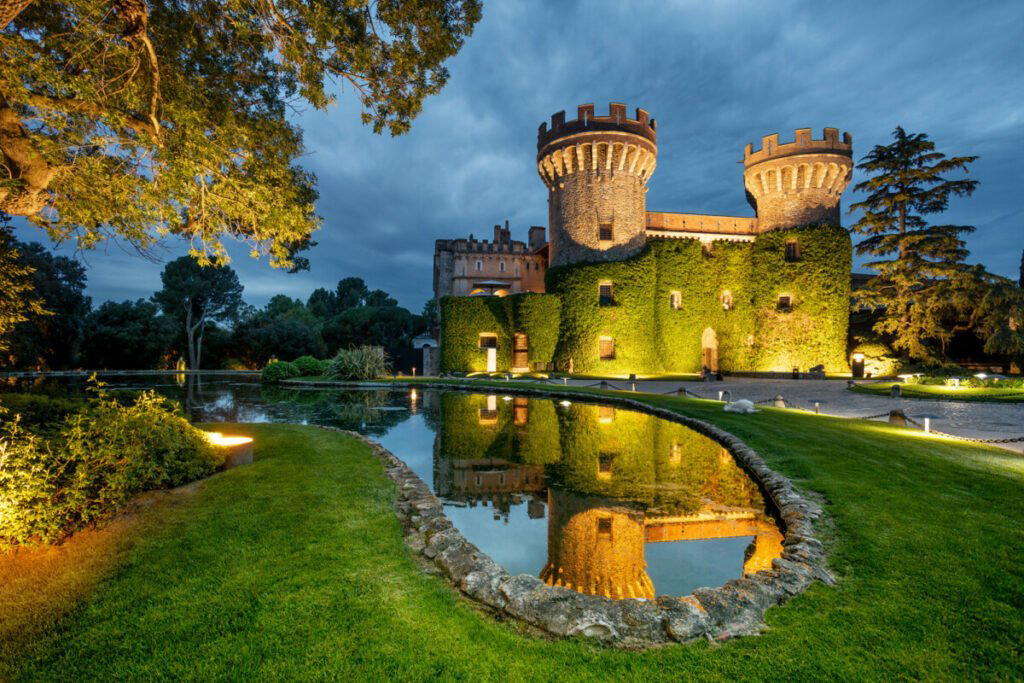
At a Glance
- Modern
- Elegant
- Cozy
- Intimate
- Date Night
- Special Occasion
- Open Kitchen
- Terrace
- Extensive Wine List
- Local Sourcing
- Garden
Current opening hours
- Monday
- Closed
- Tuesday
- 1–2:45 PM, 8–9:45 PM
- Wednesday
- 1–2:45 PM, 8–9:45 PM
- Thursday
- 1–2:45 PM, 8–9:45 PM
- Friday
- 1–2:45 PM, 8–9:45 PM
- Saturday
- 1–2:45 PM, 8–9:45 PM
- Sunday
- Closed
Hours can change for holidays and private events. Last verified .
Bright dining room overlooking the pool with large picture windows, open kitchen, and welcoming modern atmosphere.