





2 Michelin Stars · La Liste Top Restaurants · Macarfi 8.9 Food Rating
Our verdict
A two-Michelin-star address in the quiet Baix Empordà village of Corçà, Bo. TiC operates from a converted carriage factory where modern Catalan technique meets a rare commitment to hyper-local sourcing. Chef Albert Sastregener offers two set menus alongside a concise à la carte, with an extensive wine list weighted toward small producers. La Liste scored it 80 points in 2025.

Pearl is the En Primeur Club membership app — saves, bookings, and concierge access live there. Same editors, same standards.
- Address
- Avinguda Costa Brava, 6, 17121 Corçà, Girona, Spain
- Phone
- +34 972 63 08 69
- Hours
- Mon–Tue ClosedWed–Thu 12:45–5 PMFri–Sat 12:45–5 PM, 7:45 PM–12 AMSun 12:45–5 PM
- Website
- bo-tic.com
- Directions
- Get directions
- Booking
- Book on the venue's website
The menu
What to order
- Foie gras with cotton candy
- Tomato with basil ice cream
- Sea plate
A Carriage Factory in the Baix Empordà
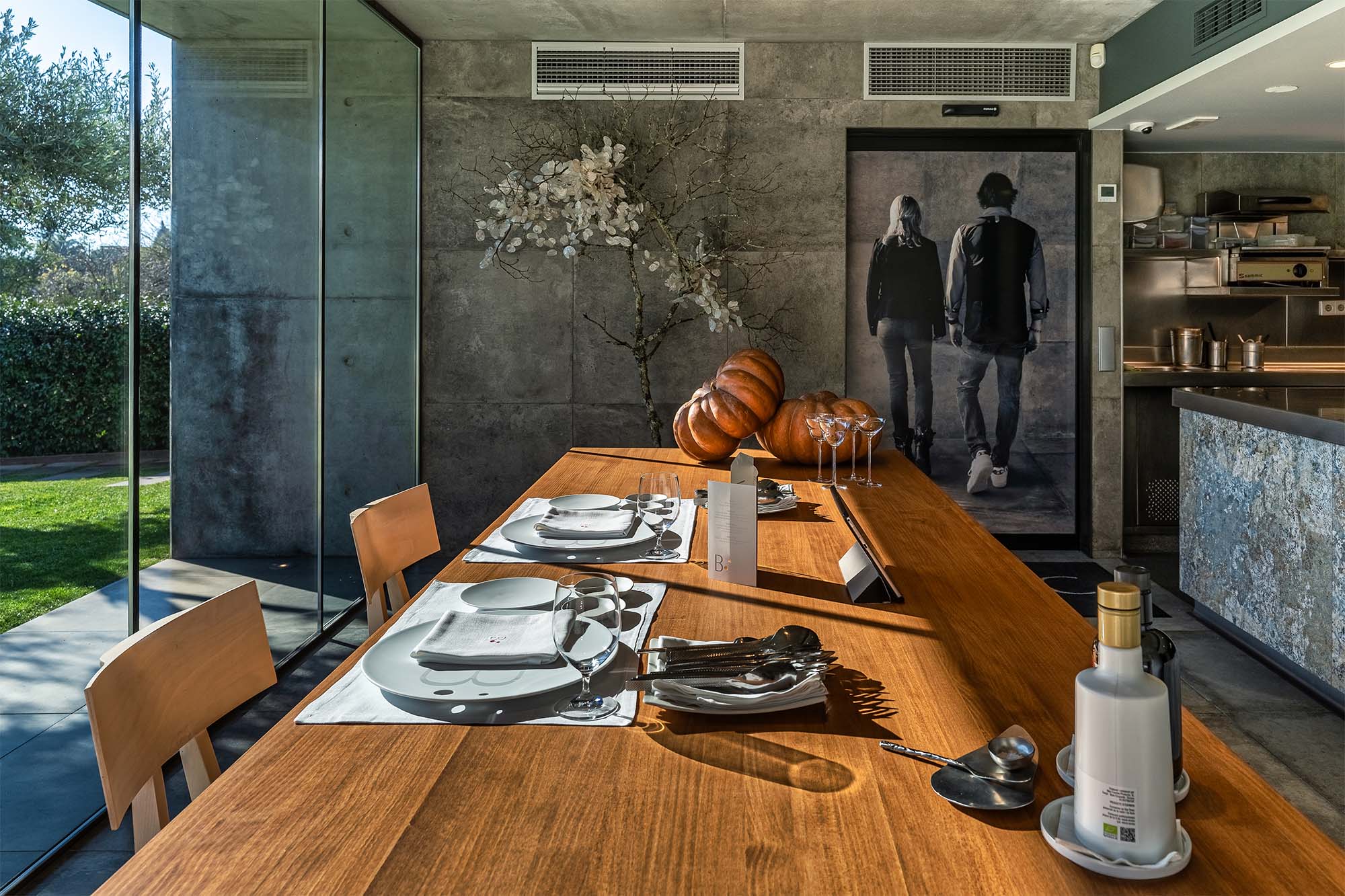
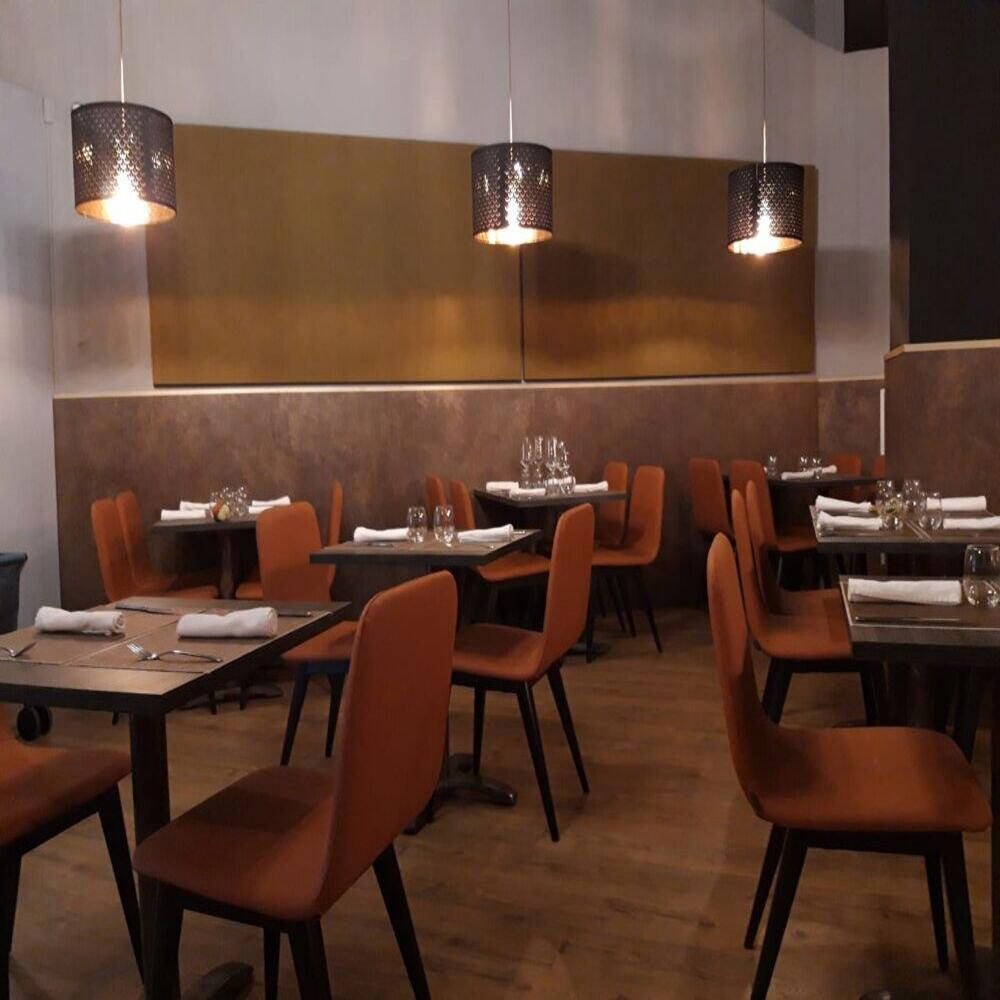
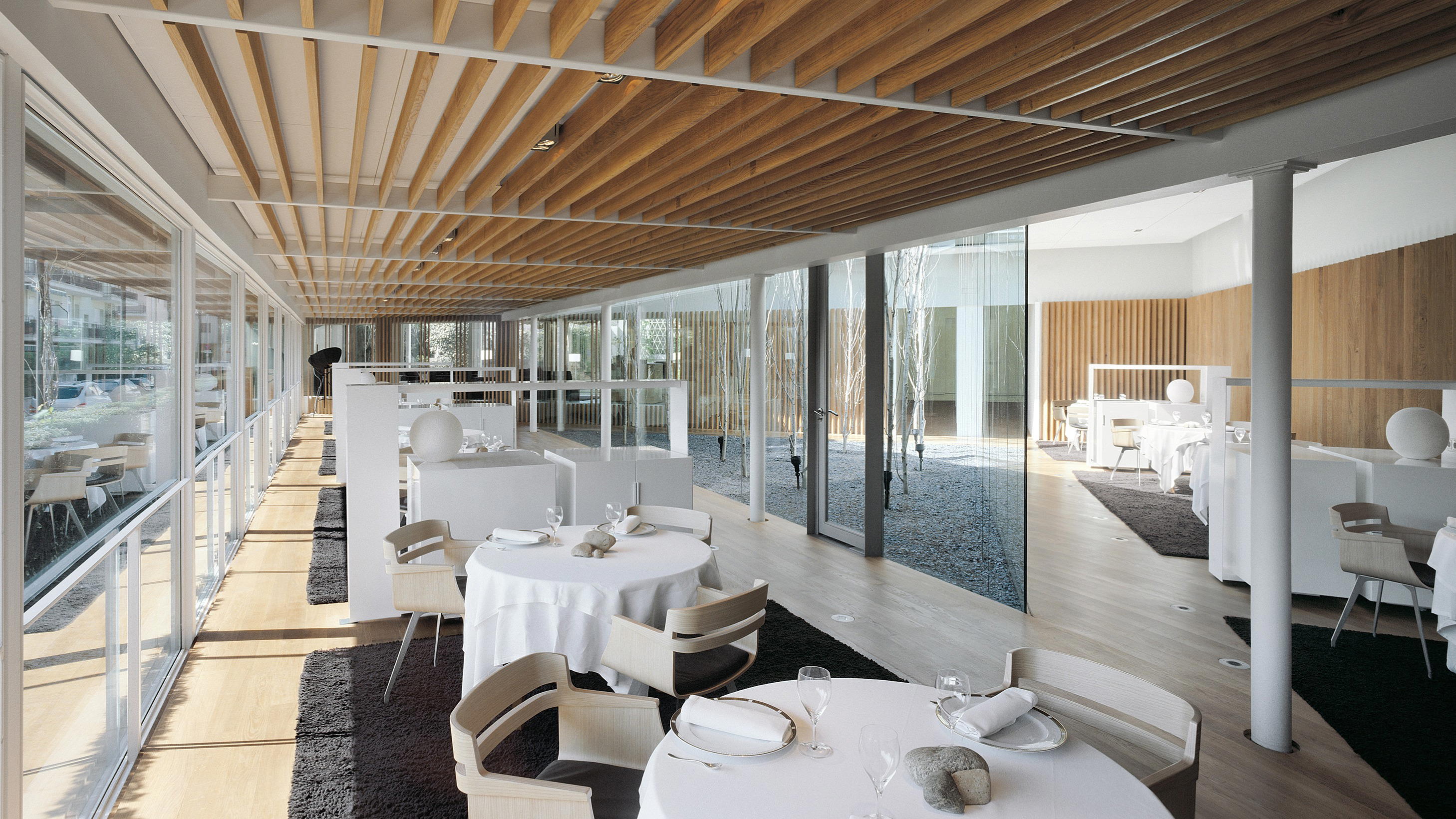
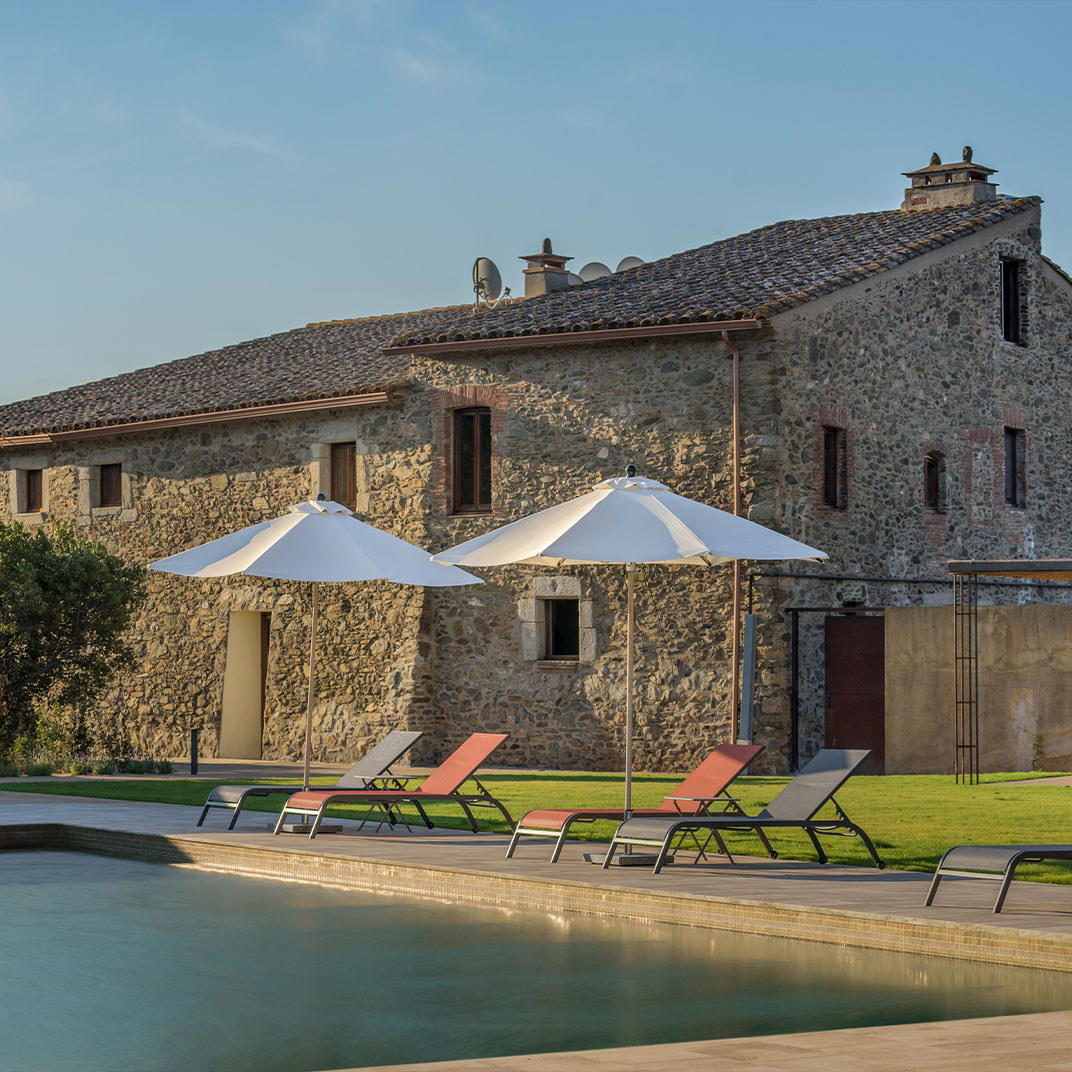
The approach to Bo. TiC tells you something about the dining culture it belongs to. Corçà is the kind of Catalan village where the main road narrows without ceremony, where stone walls absorb afternoon light and the sound of traffic disappears quickly. The restaurant sits on Avinguda Costa Brava behind a garden that screens the dining rooms from the street. Inside, two spaces occupy what was once a carriage factory and carpentry workshop: one minimalist room looks directly onto the kitchen, anchored by a chef's table; the other, set within the original stone walls of the workshop, reads warmer and more enclosed. The architecture does not perform its history, but it shapes the meal in ways a purpose-built dining room would not.
This is not an accident of geography. The Baix Empordà has become one of the more interesting micro-regions for serious dining in Catalonia, sitting between the Costa Brava coastline and the agricultural interior of the Empordà plain. The landscape supplies a restaurant like Bo. TiC with something that urban two-star kitchens have to import: proximity to the source. That proximity informs both the menu structure and the sourcing philosophy, in ways the food itself makes visible.
Where the Menu Sits in the Modern Catalan Tradition
Modern Catalan fine dining has spent the last two decades operating in the long shadow of elBulli, the question being how to move forward from a creative rupture that changed the vocabulary of the cuisine without simply repeating it. The answers have split: some kitchens pushed further into abstraction, others retreated toward regional classicism. Bo. TiC takes a third position, one that is increasingly common among the better mid-generation Catalan tables: technically sophisticated, imaginative in its combinations, but anchored to Catalan tradition in a way that keeps the cuisine legible rather than hermetic.
Chef Albert Sastregener runs the kitchen around two set menus, the Degustación and the Del Chef, alongside a concise à la carte drawn from the same repertoire. The format matters here. Unlike the rigid progression of some tasting menus, the à la carte option allows a degree of self-direction, which connects to something worth noting about how meals at this price tier are evolving in Spain: the most interesting rooms are finding ways to give guests editorial control without collapsing the kitchen's coherence. At Bo. TiC, the set menus and the à la carte share material, so the distinction is one of pacing and depth rather than of separate culinary identities.
The sourcing structure is where the restaurant makes its most distinctive argument. Among the local producers supplying the kitchen is Hidenori Futami, a grower based in the region who cultivates vegetables and shoots native to Japan. The detail is worth dwelling on: a two-star Catalan kitchen drawing Japanese-origin produce from a local grower within what it frames as a zero-miles supply philosophy points to how the definition of regional cooking has shifted. Local is no longer strictly synonymous with traditional. The terroir being expressed at Bo. TiC is one that has absorbed outside influences at the agricultural level before they reach the plate, which gives the cooking a different kind of internationalism than the technique-borrowing that characterised an earlier generation of creative Spanish cuisine. For comparison, kitchens like Ricard Camarena in València have pursued a similarly rigorous local-first sourcing logic, while El Celler de Can Roca in Girona operates within the same broader Catalan creative tradition, though at a scale and international profile that places it in a different competitive tier.
The Snack Culture and How the Meal Opens
In Spain's fine dining rooms, the opening sequence of snacks has become as considered as the main courses, sometimes more so. It is where technique is introduced without the weight of a full plate behind it, and where kitchens signal their range before the meal commits to a direction. At Bo. TiC, the snack sequence across both set menus has drawn specific notice from La Liste, which scored the restaurant 80 points in 2025 and 77 in 2026, placing it within their global top tier. The observation that the snacks feature prominently in the menus here is not a throwaway detail: it suggests a kitchen that treats the pre-service as structurally important rather than as a courtesy round before the real meal begins.
This is consistent with a wider movement in creative Spanish dining, where the boundaries between tapa, snack, and course have been deliberately blurred. The tradition of the tapa as a small, precise expression of technique and flavour has always had a place in Spanish fine dining, but the kitchens that have done the most interesting work in the last decade treat it not as an appetiser but as a compositional mode in itself. The opening bites at a room like Bo. TiC carry editorial weight: they frame the kitchen's sensibility before the longer courses arrive. Spain's most decorated kitchens, from Arzak in San Sebastián to Disfrutar in Barcelona and Mugaritz in Errenteria, have each developed their own approach to this opening vocabulary, and Bo. TiC belongs in that conversation even if it operates at a different scale and in a different register.
The Wine List and What It Signals
Wine lists at Spanish creative restaurants have historically been uneven: ambitious in Spanish and French selections, thinner elsewhere. Bo. TiC's list has been noted for its range of small producers and its selection available by the glass, which is a meaningful signal at this level. A generous by-the-glass programme at a two-star room indicates either confidence in turnover or a deliberate commitment to accessibility, and it functions as a practical benefit for guests on set menus who want to track across multiple styles without committing to full bottles. The Empordà wine region itself produces across a range of styles, including whites, reds, and the region's traditional sweet Garnatxa wines, and a serious local list at a restaurant of this calibre typically reflects the territory as much as it does the kitchen's ambitions. For a deeper look at what the region offers to drink, see our full Corçà wineries guide.
Recognition and Peer Position
People are travelling to Corçà specifically for this meal, and that pattern of destination dining is consistent with what the awards record would predict.
Within Spain's broader two-star tier, Bo. TiC occupies a position that is distinct from the urban flagship model. Where DiverXO in Madrid or Azurmendi in Larrabetzu operate with the infrastructure and profile of destination restaurants in accessible metropolitan or peri-urban settings, Bo. TiC sits in a quieter register. The comparison in regional Catalonia that may be more instructive is Ca l'Enric in La Vall de Bianya, another creative Catalan address positioned outside the major city corridors. The pattern across these rooms suggests that the most interesting work in Catalan cuisine is not exclusively happening in Barcelona, and has not been for some time.
Other Spanish peers worth holding in mind for context include Aponiente in El Puerto de Santa María, Quique Dacosta in Dénia, Martin Berasategui in Lasarte-Oria, and Atrio in Cáceres, each of which demonstrates how Spain's fine dining geography has spread well beyond its two or three major cities. For a completely different register of fine dining ambition, Le Bernardin in New York City offers a useful international point of comparison in terms of sustained critical consistency at the top of its category.
Planning Your Visit
Bo. TiC is open Wednesday through Saturday for both lunch and dinner, and Sunday for lunch only, with the kitchen running 12:45 to 5 pm and 7:45 pm to midnight on the four full-service days. The restaurant closes for two periods annually: February 7 to 22 and November 7 to 22. The price range sits at the top tier (€€€€), consistent with its two-star standing. Plant-based guests should note that the kitchen can accommodate fully plant-based meals if requested in advance. The kitchen features a chef's table position overlooking service, which functions as one of the more instructive seats in the room for those interested in watching the kitchen operate. For context on what else the area offers, see our full Corçà restaurants guide, hotels guide, bars guide, and experiences guide.
Frequently asked questions
Is Bo. TiC child-friendly?
Bo. TiC is a two-Michelin-star tasting menu restaurant in a converted carriage factory in Corçà, operating Wednesday through Saturday for lunch and dinner. The format, set degustación menus running several courses, suits adults focused on extended dining rather than younger children. Families considering a visit should check the venue's official channels to confirm whether accommodations are possible.
How would you describe the vibe at Bo. TiC?
The setting divides across two distinct spaces: a minimalist dining room with a direct view into the kitchen, and a quieter room built within the stone walls of a former carpentry workshop. The approach is considered and calm rather than theatrical, with a garden out front and a kitchen that guests are encouraged to visit during the meal. La Liste awarded Bo. TiC 80 points in 2025, a score that broadly reflects its position as a serious, destination-level restaurant rather than a casual regional stop.
Does Bo. TiC have a Michelin star or similar recognition?
Bo. TiC has received recognition including: La Liste Top Restaurants (2026): 77pts; Located in a quite village in the Baix Empordà region, this restaurant is remarkable both in terms of its setting in an old carriage factory and its ongoing quest to delight guests. Behind the attract….
What's the must-try dish at Bo. TiC?
Specific dishes are not published, and menus change with the seasons, so no single plate can be named with certainty. What La Liste's reviewers singled out is the opening snack sequence, describing it as a particular strength of whichever menu you order. Notably, some of the vegetable and shoot components come from Hidenori Futami, a local grower supplying produce native to Japan, which gives the Catalan framework an unexpected reference point.
What should I expect cuisine-wise at Bo. TiC?
Bo.
| Venue | Cuisine | Price | Awards |
|---|---|---|---|
| Bo. TiCThis venue — the venue you are viewing | Modern Catalan Fine Dining | $200–300 | 2 Michelin Stars · La Liste Top Restaurants |
| Aponiente | Progressive - Seafood, Creative | Not listed | Michelin 3 Star |
| Arzak | Modern Basque, Creative | Not listed | Michelin 3 Star |
| DiverXO | Progressive - Asian, Creative | Not listed | Michelin 3 Star |
| El Celler de Can Roca | Progressive Spanish, Creative | Not listed | Michelin 3 Star |
| Quique Dacosta | Creative | Not listed | Michelin 3 Star |
Recognition history
Dated appearances from independent guides and award organizations, with the underlying list record or original source where available.
Michelin 2 Stars
Michelin
La Liste Top Restaurants
La Liste
Guía Repsol 2 Soles
Guía Repsol
Macarfi 8.9 Food Rating
Macarfi
Opinionated About Dining Top Restaurants in Europe Recommended
Opinionated About Dining
Full recognition history (11 entries)
La Liste Top Restaurants
La Liste
Michelin 2 Stars
Michelin
We're Smart World 2 Radishes
We're Smart World
Michelin 2 Stars
Michelin
Opinionated About Dining Top Restaurants in Europe Ranked #451
Opinionated About Dining
Opinionated About Dining Top New Restaurants in Europe Recommended
Opinionated About Dining
Continue exploring
More in Corçà
Restaurants in Corçà
Browse all →
Bars in Corçà
Browse all →
Hotels in Corçà
Browse all →

Details
- Modern
- Elegant
- Cozy
- Sophisticated
- Minimalist
- Special Occasion
- Date Night
- Celebration
- Chefs Counter
- Open Kitchen
- Terrace
- Extensive Wine List
- Sommelier Led
- Local Sourcing
- Tasting Menu
- A La Carte
- Prix Fixe
- Vegetarian Friendly
Current opening hours
- Monday
- Closed
- Tuesday
- Closed
- Wednesday
- 12:45–5 PM
- Thursday
- 12:45–5 PM
- Friday
- 12:45–5 PM, 7:45 PM–12 AM
- Saturday
- 12:45–5 PM, 7:45 PM–12 AM
- Sunday
- 12:45–5 PM
Hours can change for holidays and private events. Last verified .
Minimalist and modern dining room with stone walls, airy and refined yet unpretentious atmosphere, sleek and businesslike focusing attention on the plate.