Tabelog 100 #37
Our verdict
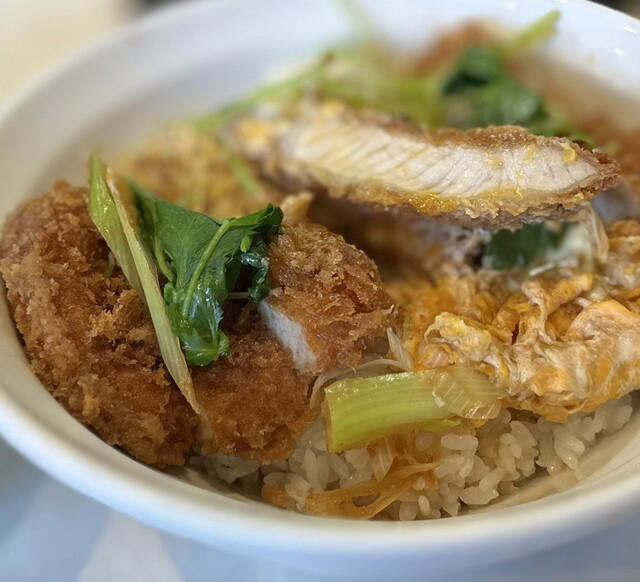
Kamata’s working-station dining culture is the frame at Maruyama Shokudo, a 20-seat counter-led shokudo recognized in Tabelog 100 - Diner - 2026. The appeal is not ceremony but compression: cafeteria, tonkatsu and curry in a room where the kitchen presence is part of the experience, and where Tokyo’s everyday restaurant form earns serious critical attention.

Pearl is the En Primeur Club membership app, where members save venues, book tables and use the concierge.
The menu
What to order
- Hayashi SPF pork tonkatsu
- Tonkatsu set meals
- Ginger-yaki set
- Hamburg steak
- Fried oyster set meal
Tokyo’s everyday dining rooms often move at a different tempo from the city’s polished restaurant corridors. In practical, commuter-led patterns of eating across the city, the grammar is direct: quick decisions, compact meals, fried food, curry, and regulars who understand the rhythm of a familiar place. Maruyama Shokudo belongs to that tradition, rather than to the reservation-led theatre of Tokyo’s more formal dining circuits. Its importance is how much Tokyo dining culture fits into a modest shokudo format: cafeteria cooking, tonkatsu and curry, held together by pace, heat and everyday usefulness.
The experience is best understood through immediacy, placing the meal close to the practical habits of the city. This is not the detached quiet of a luxury tasting room. The format makes appetite and efficiency feel central, and the appeal is rooted in the kind of everyday Tokyo dining where repeat use matters. Maruyama Shokudo reads as Tokyo unfiltered, not softened for hotel-district dining, with the shokudo format doing the cultural work.
Tokyo shokudo culture, treated with award-list seriousness
Tokyo’s restaurant hierarchy often pushes visitors toward sushi counters, kappo rooms and French-Japanese tasting menus, but everyday food culture is just as revealing. Shokudo dining is built for repeat use: rice, cutlet, curry, and a service rhythm for diners who can read the room. The Tabelog Hyakumeiten 2026 recognition places Maruyama Shokudo in a selective conversation about ordinary formats executed with notable consistency, supported by a Tabelog score of 3.65 rather than by ceremony or luxury framing.
The category mix explains the draw. Cafeteria, tonkatsu and curry are overlapping Tokyo habits: pork cutlet can be a set meal, curry topping, lunch anchor or after-work order. Those categories place the cooking close to tonkatsu culture while the shokudo setting keeps it grounded. The appeal is not a single theatrical dish but the way familiar formats are brought together in a place that values pace, appetite and repeatability.
That balance makes the Tokyo context useful. In more formal parts of the city, a cutlet specialist can become a destination format, narrowed to a focused product promise. Here, the same seriousness can sit beside curry and a neighborhood meal structure. Compared with low-price peers such as HIIKI and Grill Suzukou, the appeal is not luxury premium but sharper identity within an everyday budget band; compared with Mi Rei, it reads as a different kind of value judgement. For a broader city view, Our full Tokyo restaurants guide maps how these neighborhood rooms sit alongside the capital’s higher-profile dining circuits.
The format is the point, not a decorative detail
Shokudo dining changes the contract. It shortens the distance between deciding what to eat and getting on with the meal, and rewards diners who need no elaborate explanation. In this kind of setting, ordering, waiting and eating are part of the operating system, not a staged performance. The room expects participation without turning it into theatre, which is precisely why it can feel more revealing than a polished destination meal.
This matters for travelers because Tokyo’s small restaurants can look similar from the outside while functioning differently once chosen. Some are chef-led temples to one ingredient. Others are neighborhood engines, built to feed people quickly while keeping a standard high enough to build loyalty. Maruyama Shokudo sits in the second group, and the Tabelog score of 3.65 confirms this is not merely a convenient Tokyo name, but a modest-format place with measurable recognition.
Tokyo gives the meal a specific urban logic. Its everyday dining map is built around local workers, short trips, repeat use and practical appetites as much as it is built around ceremonial reservations. That is why the city’s broader restaurant map helps. A visitor might pair this meal with other casual or category-specific Tokyo dining rooms, not because they are interchangeable, but because Tokyo rewards eating by format and city context, not prestige alone.
How to read the experience before choosing it
The right diner values precision inside informality. Maruyama Shokudo is listed in the cafeteria, tonkatsu and curry categories, with both lunch and dinner budgets recorded at JPY 1,000 - JPY 1,999. These details matter because they signal a meal organized around access and regular use rather than spectacle. It is an everyday format with award-list recognition, and that tension is the point.
Tokyo dining planning often over-indexes on trophy reservations. Maruyama Shokudo argues for award-recognized everyday food, served in a working city context, without the insulation premium travelers often expect. It belongs on an itinerary when the point is to understand how Tokyo eats between appointments, commutes and practical movements across the city. For readers building a wider trip, restaurant context pairs naturally with Our full Tokyo hotels guide, Our full Tokyo bars guide, Our full Tokyo wineries guide and Our full Tokyo experiences guide.
Further afield, EP Club’s Japan and overseas listings show how compact formats and everyday specialties travel across cities: casual counters, curry specialists, sake bars, grilled-food rooms and other neighborhood-led dining formats all help explain why places like Maruyama Shokudo matter. The lesson is not that every room is the same, but that modest formats can carry serious dining culture without needing luxury signals.
Frequently asked questions
How do I find Maruyama Shokudo?
Maruyama Shokudo is located in Tokyo.
What are Maruyama Shokudo's hours?
Check the venue directly before visiting.
What price level is Maruyama Shokudo?
Pricing at Maruyama Shokudo is listed as JPY 1,000 - JPY 1,999 JPY 1,000 - JPY 1,999, with both dinner and lunch recorded at JPY 1,000 - JPY 1,999.
What's Maruyama Shokudo best at?
The clearest draw is its Tabelog Hyakumeiten 2026 recognition and 3.65 score. The listed categories are cafeteria, tonkatsu and curry, so it suits diners who want a casual Tokyo lunch or dinner at the JPY 1,000 - JPY 1,999 level.
What if I have allergies at Maruyama Shokudo?
The public record lists cafeteria dishes, tonkatsu and curry as the relevant categories. Diners with allergies or dietary restrictions should confirm ingredients in person before ordering and keep to dishes that can be verified on site. Check the venue's official channels for the latest details.
Is Maruyama Shokudo suitable for children?
Families should check directly before visiting, especially because compact Tokyo dining rooms can vary in layout, pace and suitability for young children.
Where the Accolades Land
Comparable venues by cuisine and category.
| Venue | Cuisine | Price | Awards | Notes |
|---|---|---|---|---|
| Maruyama ShokudoThis venue (the venue you are viewing) | Tonkatsu and Japanese Shokudo | $10–20 | Tabelog 100 #37 | Not listed |
| Oniyanma Gotanda honten | Standing Sanuki Udon Shop | $1–10 | Tabelog 100 #27 | Shinagawa |
| Taiyaki Hiiragi | Traditional Japanese Taiyaki Shop | $1–10 | Tabelog 100 #16 | Shibuya |
| Murghee | Classic Japanese curry house | $10–20 | Tabelog 100 #66 | Shibuya |
| Oiwake Dango Honpo Shinjuku honten | Traditional Japanese dango & wagashi cafe | $10–20 | Tabelog 100 #66 | Shinjuku |
| Suikou Dou Honten | Traditional Japanese Wagashi & Daifuku | $10–20 | Tabelog 100 #60 | Chūō |
Recognition history
Dated appearances from independent guides and award organizations, with the underlying list record or original source where available.
Tabelog 100 #37 · No. 37
Tabelog · Tabelog 100 - Diner - 2026