
1 Michelin Star
Our verdict
A prix fixe kappo counter in Shimogyo-ku where the kitchen channels the flavours of Nagasaki's Goto Islands into the dining rooms of Kyoto. The chef's hallmark hatoshi and Goto udon appear alongside sashimi and wanmono, each prepared with kappo technique that brings regional specificity into refined context. Advance reservations are strongly advised.

Pearl is the En Primeur Club membership app, where members save venues, book tables and use the concierge.
Nagasaki in Kyoto: A Regional Kitchen at the End of a Shimogyo Side Street
Shimogyo-ku sits on the southern edge of central Kyoto, a ward that trades the tourist density of Gion and Higashiyama for quieter residential blocks and a more local pace. The area has always housed serious kappo and kaiseki counters, often operating with minimal signage and reservation-only access, venues that rely on word of mouth and established clientele rather than foot traffic. Manjuji Hakuran, at 360 Gokuishicho, operates within that tradition: a counter experience built around a single chef's perspective and a prix fixe format that changes with the seasons and the supply of the Goto Islands.
What distinguishes Hakuran from the broader kappo circuit in this city is its geographical premise. Kyoto's dominant dining tradition pulls from the Seto Inland Sea, from the city's own Nishiki Market suppliers, and from the hyper-local logic of kyo-yasai vegetables. A counter rooted explicitly in Nagasaki, specifically in the Goto Islands, an archipelago off the western coast of Kyushu known for its fishing heritage and a culinary culture shaped by centuries of trade, represents a deliberate counterpoint. The chef brings that specificity to a city that knows exactly what regional integrity means.
The Format and the Menu
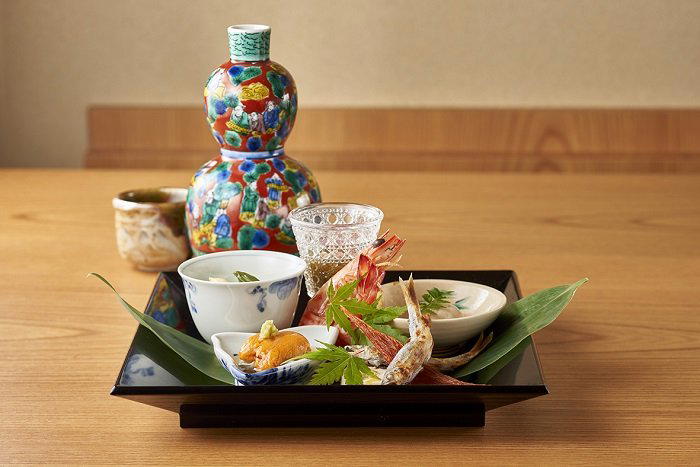
The kitchen operates a prix fixe format, structuring the meal around a sequence that moves through sashimi and wanmono, the clear soup course that sits at the heart of traditional Japanese refined cooking, with Goto Islands seafood as the defining thread. Within kappo technique, dishes are completed in front of, or in close proximity to, the guest, with the chef exercising more visible control over timing and temperature than the more ceremonial kaiseki sequence allows. The result is cooking that reads as precise but intimate, a format well suited to the kind of regional storytelling the menu attempts.
Two dishes anchor the menu's identity. Hatoshi, minced shrimp pressed between slices of bread and fried until crisp, is a Nagasaki port dish with historical roots in Chinese and Portuguese trade influence. It is exactly the kind of preparation that a chef from this background would include: specific to the region, unfamiliar to most Kyoto diners, and technically within the kappo idiom because it demonstrates mastery through apparently simple form. Goto udon, the other signature, carries its own local status in the Goto Islands, known for a particular hand-stretched texture and a light broth suited to the clean-flavoured fish of the surrounding waters. The name Hakuran, composed from both of the chef's parents' names, signals something about the intent: this is a counter where personal geography is the programme, not a detour from it.
For visitors familiar with the Michelin-starred kaiseki counters that define Kyoto's premium dining tier, Gion Sasaki, Hyotei, Kikunoi Honten, Mizai, Hakuran sits in a different register. It is not competing for the same guest on the same evening. The kaiseki tradition it neighbours is codified over centuries of Kyoto protocol; Hakuran's kappo frame gives the chef room to move laterally, to arrive at elegance through a Nagasaki route rather than a Kyoto one. Isshisoden Nakamura occupies a longer institutional history in the city, but the comparison underlines what is relatively rare here: a counter whose identity derives entirely from somewhere else.
Booking Manjuji Hakuran: What to Know Before You Go
The editorial angle most relevant to a first visit is planning. Counters of this type in Kyoto's Shimogyo ward operate with minimal public infrastructure: no walk-in capacity, no English-language booking portal in most cases, and a reservation window that can extend weeks or months ahead for guests without a local contact. For visitors arriving without a reservation, the realistic options are concierge assistance from a Kyoto hotel (see our full Kyoto hotels guide for properties with strong local dining networks) or a specialist travel service with established chef relationships.
Timing matters in a second sense as well. The Goto Islands fishing calendar shapes what arrives at the counter, meaning the menu at one time of year will differ substantially from another. Autumn and winter tend to favour richer wanmono preparations and the kind of cold-water fish that suits the season; spring and early summer shift the emphasis. If you have a preference, the booking conversation, through whatever intermediary you use, is the moment to communicate it.
Comparable reservation dynamics apply at other Japan counters operating in this specialist tier. Harutaka in Tokyo, HAJIME in Osaka, and Goh in Fukuoka all require advance planning on similar lead times; regional specialists like akordu in Nara, Bleston Court Yukawatan in Nagano, and giueme in Akita follow a similar pattern of limited capacity and inbound-enquiry access. The lesson from the Japan counter circuit generally is that the harder a reservation is to secure, the more the kitchen can operate on its own terms, which is, in practice, the point. The difficulty is a feature of the format, not an obstacle to it. Internationally, the dynamic is not dissimilar to securing a table at Le Bernardin in New York City or Emeril's in New Orleans, where reputation and demand outpace available seats.
For visitors building a broader Kyoto itinerary around serious eating and drinking, the city's full offering runs well beyond the kaiseki tier. Our full Kyoto restaurants guide, alongside our guides to Kyoto bars, wineries, and experiences maps the city across categories and price points.
Frequently asked questions
What's Manjuji Hakuran known for in terms of accolades?
Manjuji Hakuran has received recognition including: The chef, a native of the Goto Islands, weaves the flavours of Nagasaki into his prix fixe menus. He beguiles his guests with the fish of his native region, served as sashimi and wanmono. ‘Hatoshi’ is minced shrimp between two slices of cri….
Where exactly is Manjuji Hakuran?
Manjuji Hakuran is located at 360 Gokuishicho, Shimogyo-ku, Kyoto.
What's the best thing to order at Manjuji Hakuran?
The menu is prix fixe, so ordering is not a choice guests make, the kitchen sets the sequence. That said, the dishes most central to the chef's Nagasaki identity are hatoshi (minced shrimp pressed between crispy fried toast) and Goto udon, both rooted in his upbringing on the Goto Islands. The wanmono, a clear soup course, is where kappo technique shows its discipline most clearly.
Can I walk in to Manjuji Hakuran?
The address is 360 Gokuishicho, Shimogyo-ku, Kyoto.
What has Manjuji Hakuran built its reputation on?
The restaurant is built around one chef's commitment to the food of Nagasaki's Goto Islands, translated through formal kappo technique for a Kyoto counter setting. The name 'Hakuran' combines his parents' names, the menu itself is framed as an act of gratitude to his hometown. That specificity of regional origin, rendered with kappo precision rather than nostalgia, is what sets it apart from Kyoto's more generic washoku counters.
Booking and Cost Snapshot
Comparable venues nearby, for context on price, style, and recognition.
| Venue | Cuisine | Price | Awards | Notes |
|---|---|---|---|---|
| Manjuji HakuranThis venue (the venue you are viewing) | Nagasaki-Inspired Kyoto Kaiseki | $100–150 | 1 Michelin Star | Not listed |
| Kuishinbo Yamanaka | Premium Omi Beef Steakhouse | $100–150 | Tabelog Bronze #209 | Nishikyō, Premium Omi Beef Steakhouse |
| Pontocho Sushi Ishiya | Traditional Japanese Omakase Sushi | $50–100 | Michelin Plate | Nakagyō, Traditional Japanese Omakase Sushi |
| Nonkiya Mune | Kyoto Izakaya | $50–100 | Michelin Plate · Tabelog 100 #12 | Nakagyō, Kyoto Izakaya |
| Kyoryori Hachisei | Traditional Kyoto Kaiseki | $100–150 | Michelin Plate | Shimogyō, Traditional Kyoto Kaiseki |
| Okuniya Mambei | Traditional Kyoto Unagi Kabayaki | $50–100 | Michelin Plate · Tabelog 100 #30 | Nakagyō, Traditional Kyoto Unagi Kabayaki |
Recognition history
Dated appearances from independent guides and award organizations, with the underlying list record or original source where available.
Michelin 1 Star
Michelin
Continue exploring
More in Kyoto
Restaurants in Kyoto
All restaurants in Kyoto →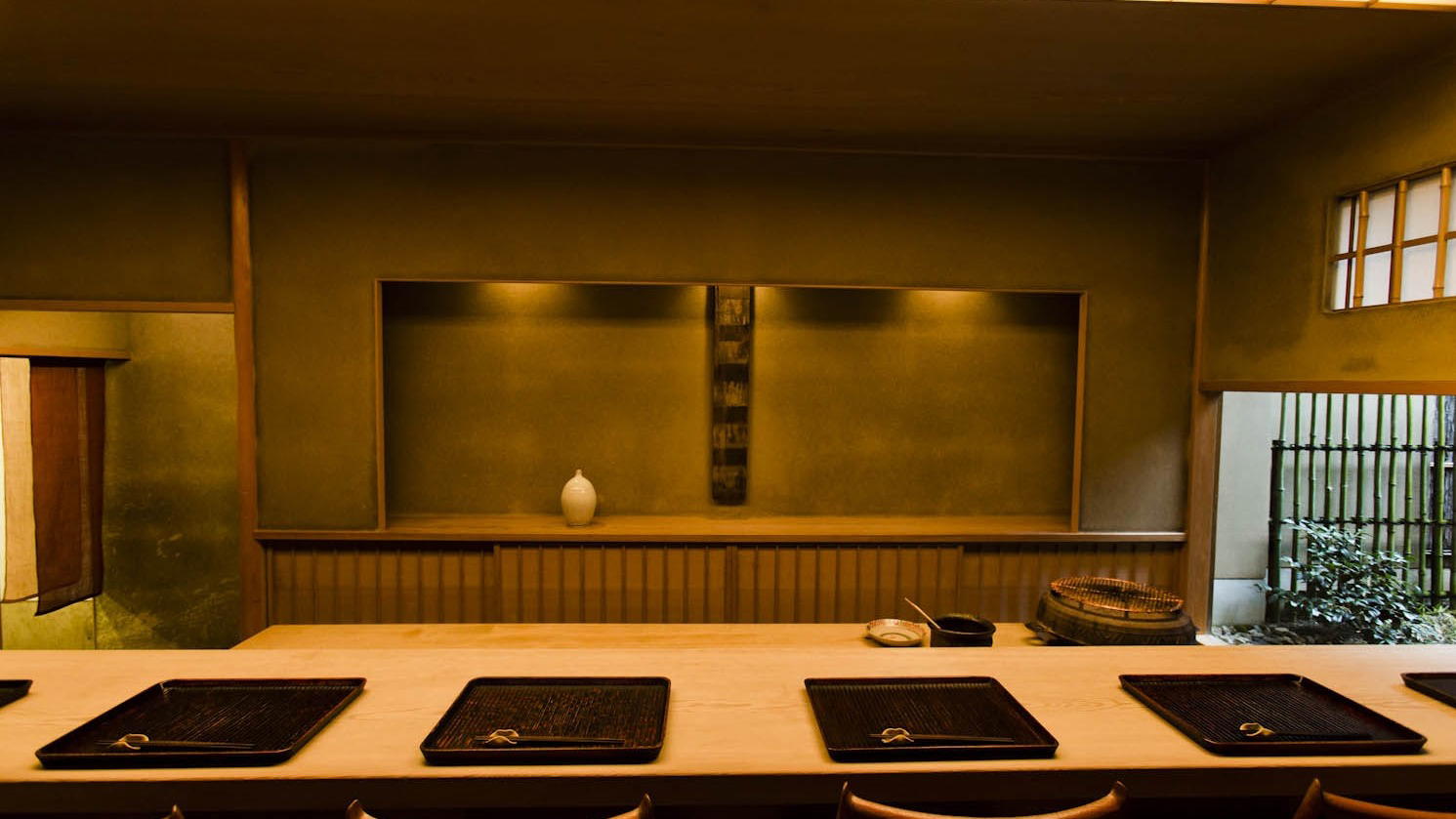
Bars in Kyoto
All bars in Kyoto →
Hotels in Kyoto
All hotels in Kyoto →
Wineries in Kyoto
Browse all →
Details
- Elegant
- Intimate
- Classic
- Special Occasion
- Date Night
- Historic Building
- Sake Program
- Prix Fixe
- Counter Dining
- Sake
Traditional Kyoto machiya atmosphere with intimate counter dining focused on precise seasonal seafood preparations.