Mango Mango
Our verdict
On Bayard Street in Manhattan's Chinatown, Mango Mango sits inside one of New York's most densely layered dining corridors, where dessert-forward concepts and boundary-crossing Chinese-American kitchens have long competed for attention. The address at 63 Bayard places it squarely in a neighbourhood that rewards repeat visits and local knowledge over first-glance discovery.

Pearl is the En Primeur Club membership app, where members save venues, book tables and use the concierge.
The menu
What to order
- Special Mango Juice Sago & Pomelo with Mango Ice Cream
- Coconut Mango Juice Sago & Pomelo
- Mango Sticky Rice
- Mango Pancakes
Bayard Street and the Chinatown Dining Corridor
Manhattan's Chinatown has never operated on a single register. The blocks radiating from Canal Street contain everything from decade-old roast-duck specialists to newer formats testing how far a Chinese-influenced kitchen can stretch before the category label no longer holds. Bayard Street, where Mango Mango sits at number 63, has historically attracted the kind of operation that depends less on tourist foot traffic and more on a neighbourhood audience that knows exactly what it came for. That specificity is both an asset and a filter: the area selects for guests willing to move past the obvious and engage with something more considered.
In the broader context of New York dining, Chinatown occupies an interesting competitive position. The borough's fine-dining ceiling is set by counters and tasting-menu rooms in Midtown and the Upper West Side, places like Le Bernardin, Masa, and Per Se, all of which operate in a different price tier and with a different kind of institutional gravity. Downtown's Chinatown corridor runs on a separate logic: value-driven, community-anchored, and increasingly interesting to a generation of diners who find more honesty in a neighbourhood room than in a chef's tasting counter. Mango Mango operates inside that downtown logic.
What the Format Signals
Dessert-forward and fruit-led concepts have developed a distinct following in Chinese-American urban dining over the past decade, particularly in New York, Los Angeles, and the Bay Area. The format, typically centred on shaved ice, mango-based preparations, puddings, and cold dessert platters, draws from Hong Kong café culture and Taiwanese dessert traditions rather than from any single mainland Chinese source. In New York, the category has split between high-volume tourist-facing operations and smaller, more neighbourhood-oriented rooms where repeat customers define the rhythm of service.
Mango Mango at 63 Bayard sits within that dessert-focused niche. The Bayard Street address places it at the centre of Chinatown's most walkable dining zone, close enough to the Manhattan Bridge approach to catch spillover from Brooklyn-bound crowds, but grounded enough in the local block dynamic to function independently of that traffic. That dual exposure, local anchor plus accessible location, is a structural advantage that the better-known operations along Mott Street or Doyers don't always share.
The Collaborative Logic of a Chinatown Dessert Room
One of the harder things to appreciate from outside any specialised format is how much the guest experience depends on the coordination between whoever is running the floor, whoever is assembling the preparations, and whoever is managing the throughput of a room that may turn tables quickly or let guests linger over cold drinks. In a dessert-focused operation, the rhythm differs from a full-service dinner kitchen. There is no sommelier pairing wine against a tasting progression, no brigade-style coordination between hot and cold stations in the classical sense. What replaces it is a different kind of team dynamic: the person taking orders needs to read how much time a table wants, the preparation side needs to execute cold dishes at the right temperature and presentation speed, and the floor needs to manage what can be, in a popular Chinatown spot, a steady and sometimes pressured queue.
This kind of operational coordination is less glamorous than the chef-sommelier-front-of-house triangles described at places like Atomix or Jungsik New York, but it is no less consequential for the guest. A shaved ice that arrives too melted, or a mango pudding plated without attention to the table's pacing, loses its point. The craft here is in the timing and the temperature management, not in the molecular transformation of ingredients. Getting that right consistently is its own form of service discipline.
Chinatown in the American Dining Conversation
New York's Chinatown is occasionally underwritten in serious food coverage, which tends to focus on the tasting-menu tier or on the borough's immigrant restaurant stories when they fit a particular narrative shape. The dessert and snack-forward segment of Chinatown, the category Mango Mango operates in, receives even less sustained critical attention than the full-service dim sum houses or the Fujianese seafood rooms that have drawn more journalistic interest.
That gap in coverage doesn't reflect a gap in quality or in local significance. Dessert culture in Chinese-American urban communities functions as a social infrastructure: these rooms are where families sit after dinner, where friend groups decompress, where the rhythms of neighbourhood life play out in a low-stakes, affordable format. The role is closer to the Italian gelateria or the French café in terms of its social function than to any fine-dining analogue. Understanding Mango Mango means understanding that context first, before applying any framework borrowed from the tasting-menu or destination-restaurant conversation. For a wider map of where this fits in the city's full dining picture, see our full New York City restaurants guide.
Placing Mango Mango in a Wider Field
Across the United States, the most-discussed destination restaurants occupy a very specific register: farm-sourced tasting menus at places like Blue Hill at Stone Barns in Tarrytown or Single Thread Farm in Healdsburg, or technically ambitious long-form experiences like Alinea in Chicago and Lazy Bear in San Francisco. Regional anchors like Emeril's in New Orleans, Providence in Los Angeles, Addison in San Diego, Bacchanalia in Atlanta, and The Inn at Little Washington all operate with formal service structures, award recognition, and price points that place them in a different conversation entirely. So do internationally anchored rooms like 8 1/2 Otto e Mezzo Bombana in Hong Kong or Alain Ducasse's Louis XV in Monte Carlo, and The French Laundry in Napa.
Mango Mango is not in competition with any of those rooms, and framing it against them would misrepresent what it is and who it serves.
Planning Your Visit
Mango Mango is located at 63 Bayard Street in Manhattan's Chinatown, reachable via the Canal Street subway stop on the N, Q, R, W, J, and Z lines. The neighbourhood is most active on weekends, when foot traffic from both the local community and visitors from other boroughs tends to peak in the early evening. Given the dessert-forward format, visits work well as a post-dinner destination rather than a standalone dining event, and the informal nature of the room means dress code expectations are minimal. Specific hours, current pricing, and booking arrangements are best confirmed directly with the venue before visiting.
Frequently asked questions
What's the vibe at Mango Mango?
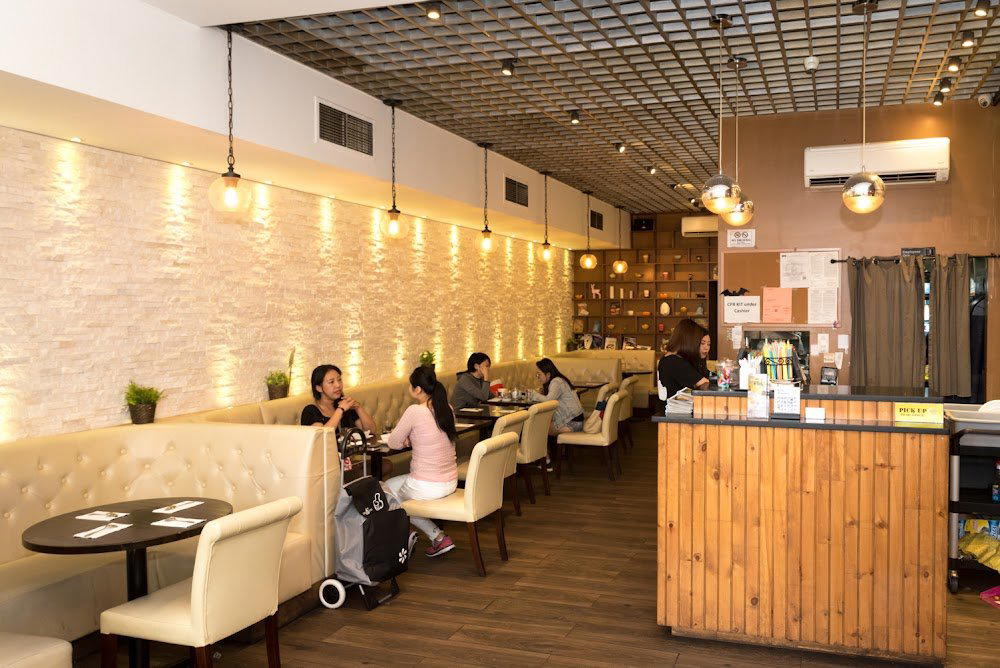
Mango Mango sits on Bayard Street in the heart of Manhattan's Chinatown, and the atmosphere reflects the neighbourhood: casual, fast-moving, and unpretentious. This is a dessert-focused counter rather than a sit-down dining room, which keeps the energy light and the turnover quick. Dress accordingly, there is no formality here.
Where exactly is Mango Mango?
Mango Mango is located at 63 Bayard St, New York, NY 10013, New York City.
Is Mango Mango in NYC good for groups visiting Chinatown?
The Bayard Street location puts Mango Mango within easy reach of the Canal Street subway stop, served by the N, Q, R, W, J, and Z lines, which makes it a practical stop when moving through Chinatown with a group. The dessert-counter format accommodates informal gatherings better than a structured tasting room would. It is worth coordinating arrival time, as the format does not lend itself to extended table holds.
What should I eat at Mango Mango?
The concept is built around fruit-led desserts, with mango as the central ingredient across the menu. Expect preparations that lean on fresh fruit rather than baked goods or chocolate-forward formats. Given the dessert-forward focus, this is a destination for the sweet course, not a full meal.
Do they take walk-ins at Mango Mango?
Mango Mango at 63 Bayard Street operates in a neighbourhood where walk-in culture is the norm. No reservation details are documented, so arriving without a booking is the standard approach. Peak hours on weekends tend to draw queues at comparable Chinatown dessert spots, so mid-afternoon visits on weekdays are typically the smoothest.
What do critics highlight about Mango Mango?
New York's Chinatown dessert category has received growing attention as food coverage moves beyond the tasting-menu tier toward neighbourhood specialists. Mango Mango's Bayard Street address places it in a corridor that serious New York food writers have begun to document more consistently, though formal award recognition is not currently on record.
Standing Among Peers
Comparable venues nearby, for context on price, style, and recognition.
| Venue | Cuisine | Price | Notes |
|---|---|---|---|
| Mango MangoThis venue (the venue you are viewing) | Mango Dessert Shop | $10–20 | Not listed |
| Pierogi Boys | Traditional Polish Pierogi | $10–20 | Downtown Brooklyn |
| CoCo Fresh Tea & Juice | Bubble Tea & Fresh Juice | $1–10 | Flushing-Willets Point |
| Taste Good | Malaysian | $20–30 | Elmhurst |
| B. Cafe | Belgian Bistro | Not listed | Upper East Side-Lenox Hill-Roosevelt Island |
| La Gran Uruguaya Restaurant | Authentic Uruguayan Parrillada | $20–30 | Jackson Heights |
Continue exploring
More in New York City
Restaurants in New York City
All restaurants in New York City →
Bars in New York City
All bars in New York City →
Details
- Trendy
- Modern
- Casual Hangout
- Late Night
- A La Carte
Current opening hours
- Monday
- 12–9 PM
- Tuesday
- 12–9 PM
- Wednesday
- 12–9 PM
- Thursday
- 12–9 PM
- Friday
- 11:30 AM–9:30 PM
- Saturday
- 11:30 AM–9:30 PM
- Sunday
- 12–9 PM
Hours can change for holidays and private events. Hours as of .
Bright and modern dessert shop with a casual, refreshing atmosphere focused on fruity treats.