Manducatis
Manducatis has occupied its corner of Long Island City since before Queens became a destination, making it one of the borough's most enduring Italian addresses. Situated on Jackson Avenue at the edge of what is now a gallery-dense neighbourhood, it operates at a remove from Manhattan's dining circuit while drawing a crowd that knows exactly where it's going.
Pearl is the En Primeur Club membership app — saves, bookings, and concierge access live there. Same editors, same standards.
- Address
- 13-27 Jackson Ave, Long Island City, NY 11101
- Phone
- +17187294602
- Website
- manducatis.com
- Directions
- Get directions
 Saves & bookings on Pearl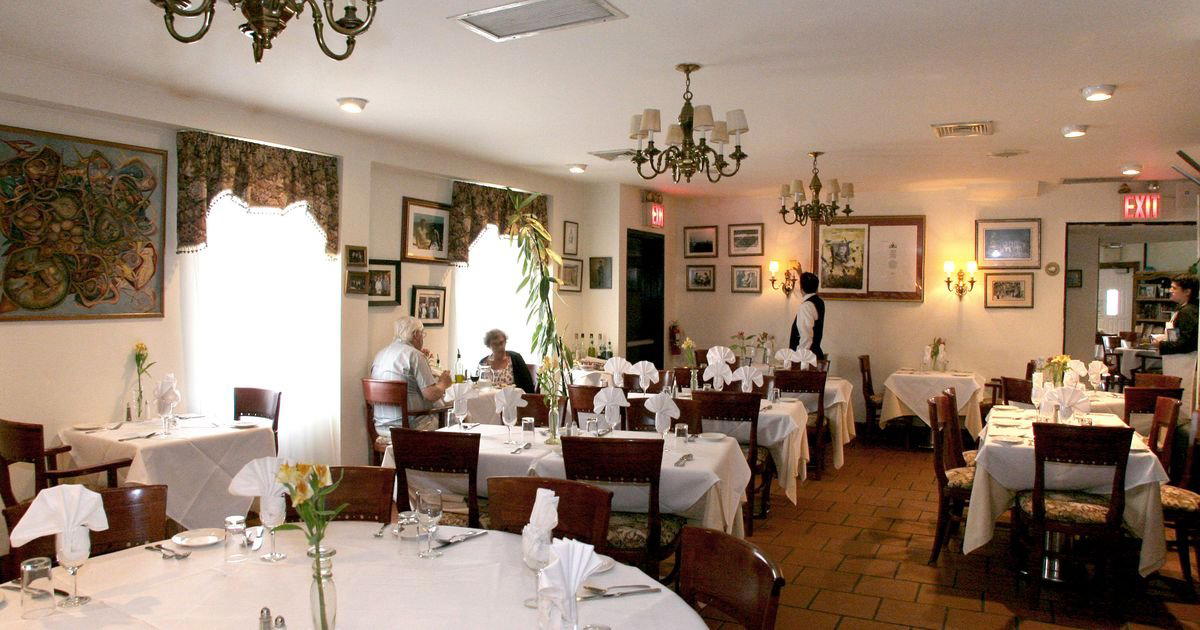
Long Island City Before the Galleries Arrived
The borough of Queens has long housed some of the city's most serious red-sauce institutions, but those restaurants have rarely been routed through the same editorial conversation as the four-star French rooms or the omakase counters that occupy Manhattan's upper tier. Manducatis, on Jackson Avenue in Long Island City, has existed in productive opposition to that geography for decades.
Long Island City's identity has shifted considerably since Manducatis first opened. Manducatis arrived in that earlier version of the neighbourhood and remained as the blocks around it transformed. That kind of tenure is rarer than it sounds: most restaurants built for one neighbourhood context do not survive the transition to a new one.
The Booking Experience: What to Know Before You Go
Arriving at Manducatis requires a specific kind of intention. Jackson Avenue sits across the East River from Midtown Manhattan, accessible from the 7 train at Vernon Boulevard-Jackson Avenue or Court Square, putting it roughly ten to fifteen minutes from Times Square by subway. That short distance is enough to filter out casual foot traffic almost entirely. The crowd here has, by necessity, made a decision to come rather than stumbled in after a walk through a busy neighbourhood.
Reservations are recommended, and the restaurant is open Tue to Thu 12 to 3 PM and 5 to 9 PM, Fri 12 to 3 PM and 5 to 9 PM, Sat 5 to 9 PM, and Sun 2:30 to 7:30 PM. Venues like Atomix or Jungsik New York function on timed-release reservation systems, advance deposit requirements, and months-long lead times. Manducatis belongs to a different category: a neighbourhood institution where the relationship between regulars and the room matters more than platform-mediated booking architecture. Calling ahead is the practical approach, and the rhythm of the dining room reflects a clientele that plans in the way long-standing Italian restaurants have always encouraged, through familiarity and direct communication rather than app-mediated queuing.
Walk-in possibilities exist in a way they do not at the city's heavily subscribed tasting-menu rooms, but the format still rewards a phone call. Italian-American dining institutions of this vintage tend to be busier than their online footprint suggests: the absence of a prominent digital booking trail does not indicate a quiet room.
Where It Sits in the Italian-American Tradition
The cooking that took root in New York's Italian immigrant communities from the late nineteenth century onward adapted to local ingredients, to the expectations of a different dining public, and to the economics of feeding large tables rather than small ones. That tradition produced a cuisine that is simultaneously regional (Southern Italian in its dominant strands) and thoroughly New York in its execution, portion logic, and room atmosphere.
Manducatis operates within this tradition rather than positioning itself against it. That distinguishes it from a generation of newer Italian restaurants in New York that have oriented their identity around regional Italian specificity, natural wine programs, or the kind of produce-driven restraint associated with northern Italian cooking. Those restaurants draw a different competitive comparison: more aligned, conceptually, with what you find at Blue Hill at Stone Barns in its farm-sourcing logic, or the cooking philosophy visible at places like Single Thread Farm in Healdsburg. Manducatis draws its comparison from an older, more specifically New York frame of reference.
Nationally, the Italian-American institution occupies an interesting position. The category appears across American cities in venues as varied as Emeril's in New Orleans or, in European terms, is echoed in the grand-room confidence of a place like Alain Ducasse at Louis XV in Monte Carlo. What connects these otherwise dissimilar rooms is the sense that the restaurant exists as a social institution rather than a dining concept: the room is the point as much as the plate.
The Wine Dimension
Manducatis keeps faith with the wine lists that have long suited this part of Queens, where Italian bottles often matter as much as the menu. The Italian wine program at restaurants of this type and tenure tends to run deep in regions that were collected before they became fashionable: Barolo and Barbaresco from producers whose current allocations are spoken for years in advance, Brunello from vintages that predate the category's current price levels. This is a structural advantage of longevity in the restaurant business, and it is one of the reasons that older Italian-American institutions often outperform newer, flashier rooms on the bottle list in ways that are not immediately obvious from the outside. For readers who approach a restaurant's cellar as seriously as its kitchen, this is the kind of detail worth raising when you call.
Placing Manducatis in the Wider New York Dining Picture
New York's dining conversation tends to cluster around a few legible categories: the Michelin-validated tasting menus, the destination chef tables, the natural wine bars, the ramen shops with three-hour waits. The Italian-American institution of the Queens or outer-borough variety rarely enters that conversation in editorial terms, even when it has been operating for longer than most of the restaurants being discussed. That asymmetry is worth naming directly.
For comparison, the high-end American tasting-menu format represented by Alinea in Chicago, Lazy Bear in San Francisco, Providence in Los Angeles, Addison in San Diego, Bacchanalia in Atlanta, and The Inn at Little Washington speaks to one kind of American ambition at the table. The Italian-American neighbourhood institution speaks to another, equally durable one. The reader who understands both is reading the city accurately. Similarly, the Italian fine-dining tradition at its highest international expression, visible in rooms like 8½ Otto e Mezzo Bombana in Hong Kong, illustrates how far the Italian dining register can travel when deployed in a luxury context. Manducatis operates in a different register entirely, one defined by continuity, neighbourhood identity, and a clientele that returns rather than discovers.
Planning Your Visit
Jackson Avenue is an easy subway ride on the 7 train, and the walk from the station is short. The neighbourhood around the restaurant has a character that rewards arriving a few minutes early to orient yourself. Long Island City's evolution from industrial zone to arts-and-residential area is visible in the blocks around Jackson Avenue, and the restaurant's position in that geography is part of what makes it worth the trip. Call ahead and arrive with some flexibility.
At a Glance
Comparable venues nearby, for context on price, style, and recognition.
| Venue | Cuisine | Price | Notes |
|---|---|---|---|
| ManducatisThis venue — the venue you are viewing | Not listed | $$ | Not listed |
| Italianissimo Ristorante | Not listed | $$ | Upper East Side-Yorkville, Classic Italian Trattoria |
| Serafina Broadway | Midtown-Times Square, Northern Italian | $$ | Not listed |
| Pizza Studio Tamaki | Not listed | $$ | East Village, Tokyo-Style Neapolitan Pizza |
| Tre | East Village, Napoli-Inspired Italian | $$ | Not listed |
| Don Giovanni Ristorante | Not listed | $$ | Hell's Kitchen, Traditional Neapolitan Pizza |
Continue exploring
More in New York City
Restaurants in New York City
Browse all →
Bars in New York City
Browse all →



Hotels in New York City
Browse all →






At a Glance
- Cozy
- Classic
- Intimate
- Family
- Business Dinner
- Casual Hangout
- Historic Building
- Extensive Wine List
Current opening hours
- Monday
- Closed
- Tuesday
- 12–3 PM, 5–9 PM
- Wednesday
- 12–3 PM, 5–9 PM
- Thursday
- 12–3 PM, 5–9 PM
- Friday
- 12–3 PM, 5–9 PM
- Saturday
- 5–9 PM
- Sunday
- 2:30–7:30 PM
Hours can change for holidays and private events. Last verified .
Warm, spacious, low-key and comfortable with working fireplaces, ideal for conversation without loud music or rushing.