Mama Guava
Our verdict
Mama Guava sits on North King Street in Honolulu's Chinatown district, a neighbourhood where the dining pace is unhurried and the menus tend toward the personal. The address places it inside a corridor of independent operators that have quietly reshaped the area's food character over the past decade. Visitors to Chinatown looking for a meal that reflects the block's creative bent tend to find their way here.

Pearl is the En Primeur Club membership app, where members save venues, book tables and use the concierge.
The menu
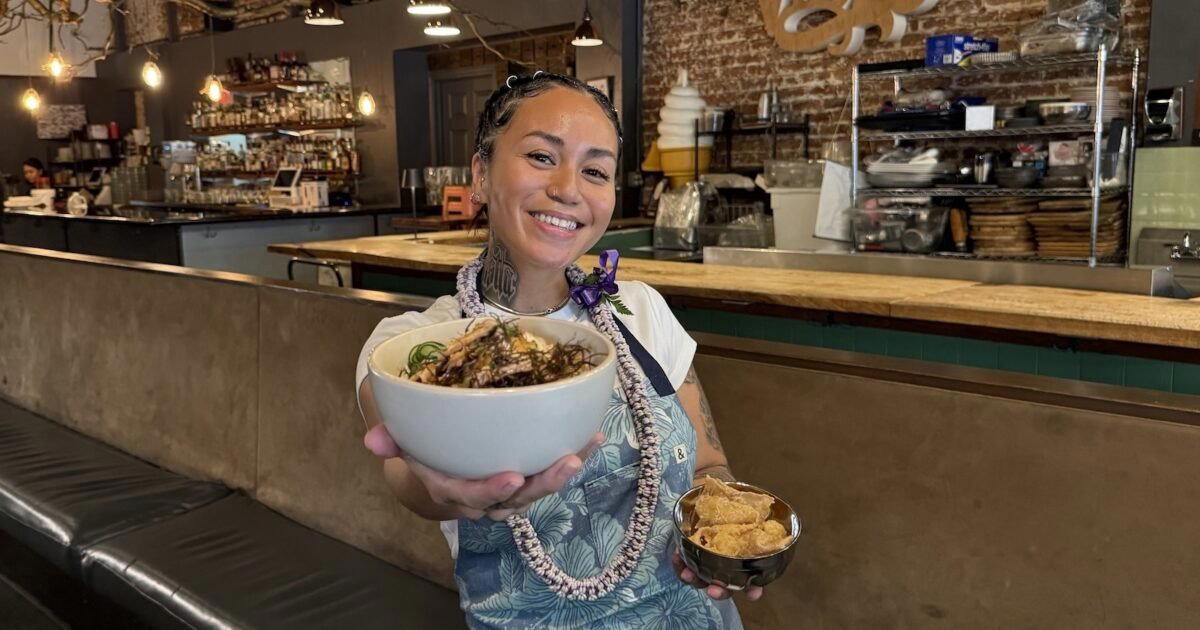
What to order
- Hawaiian Poke Bowl
- Loco Moco
- Kalua Pork Tacos
- Tortang Talong
- Huli Huli Chicken
North King Street and the Chinatown Dining Shift
Honolulu's Chinatown has undergone a recognisable transition over the past ten to fifteen years. The neighbourhood's older generation of roast-duck shops and dim sum counters remains, but alongside them has emerged a layer of independent restaurants and bars that draw a different kind of attention. North King Street sits near the centre of this shift. The street is walkable, low-signage, and rewards the visitor who arrives without a fixed agenda. Mama Guava, at 83 N King St, is part of this second wave of operators that have made Chinatown a destination rather than a pass-through.
Across Honolulu, the dining conversation tends to concentrate on the hotel corridor along Kalakaua and the established fine-dining rooms that have anchored the city's reputation for decades. Venues like 3660 On the Rise and 53 By The Sea represent Honolulu's polished, occasion-dining tier. Chinatown operates differently. The neighbourhood's better operators tend to be smaller, less formal, and more willing to take positions on what Hawaiian food can look like when it isn't performing for a tourist expectation. Mama Guava belongs to that cohort.
The Rhythm of a Meal in Chinatown
One of the markers of serious independent dining in neighbourhoods like Chinatown is the pace at which a meal moves. In contrast to the efficient table-turns that characterise the Waikiki hotel dining rooms, Chinatown restaurants tend to operate on a slower clock. Dishes arrive when they're ready, the atmosphere is shaped by the room rather than engineered for it, and the service tends toward the knowledgeable rather than the scripted. This is the dining ritual that North King Street rewards: arriving without a plan, reading the room, and letting the kitchen set the pace.
That rhythm connects Chinatown to a broader American independent dining tradition. Restaurants like Lazy Bear in San Francisco or Atomix in New York City have formalised the idea of the meal as a structured ritual with clear pacing and intentional sequencing. Chinatown's version is less theatrical, more neighbourhood-scaled, but the underlying principle, that the diner's experience is shaped by sequence and atmosphere as much as by any single dish, applies equally at street level. Mama Guava occupies that register.
The contrast is instructive when placed alongside the Honolulu operators that run more event-oriented formats. Ahaaina Luau and 855-ALOHA both represent a strand of Hawaiian dining built around performance and communal spectacle. Mama Guava sits at the opposite end of that spectrum: the emphasis is on the table, the food, and the conversation rather than the production around it.
Within Honolulu's independent dining tier, Mama Guava's North King Street address locates it alongside a cluster of operators that have collectively changed how the neighbourhood is written about in food media. Fête (New American) is the most discussed of this cohort, drawing attention for a seasonal, produce-led approach that reads as deliberately non-Hawaiian while remaining rooted in local supply. The comparison is useful: Fête operates with the kind of editorial identity that generates press coverage; Chinatown's other independent operators, including Mama Guava, tend to build reputation through repeat local custom rather than review cycles.
At a national level, the restaurants that earn sustained attention do so through a combination of format clarity, booking discipline, and consistent execution. The French Laundry in Napa, Providence in Los Angeles, and Addison in San Diego represent the formal end of that spectrum on the West Coast. Mama Guava operates well below that register of ambition and price, but the same underlying logic applies at any scale: the restaurants that last are those where the format, the food, and the room are in agreement with each other.
Hawaii's dining scene has its own version of this tension. The state's geographical isolation historically pushed its restaurant culture toward either resort-serving luxury or utilitarian local eating. The middle tier, independent restaurants with genuine culinary ambition but without the backing of a hotel food and beverage operation, has been slower to develop here than in comparable American cities. Chinatown is where most of that independent middle tier now clusters in Honolulu.
The Address as Context
83 N King St places Mama Guava in the block that has seen the most turnover and the most interest from new operators over the past decade. The street has the character of a neighbourhood in active transition: older businesses alongside newer ones, foot traffic that mixes long-time residents with visitors who have done some research before arriving. It is not a destination that announces itself at volume. The venues that work on North King Street tend to work because of word-of-mouth and because the neighbourhood itself has enough pull to bring people in without heavy marketing.
That dynamic is worth understanding before you arrive. This is not the kind of block where you turn up without any sense of what you're looking for and stumble into a meal. The neighbourhood rewards preparation: knowing which door you're heading for, arriving at a time that suits the kitchen, and being willing to adjust if the room is full. For visitors oriented toward the kind of dining that Blue Hill at Stone Barns in Tarrytown or Single Thread Farm in Healdsburg represent at a premium level, Chinatown offers a version of that ethos in a lower-pressure, more accessible format.
For a broader view of where Mama Guava sits within Honolulu's dining options, the full Honolulu restaurants guide maps the city's independent and hotel-adjacent tiers alongside neighbourhood context. Internationally, the independent casual format that Chinatown represents has parallels in cities as different as Hong Kong, where 8 1/2 Otto e Mezzo Bombana (Hong Kong) anchors the formal end while the neighbourhood restaurant layer does the daily work of feeding the city, and Washington DC, where The Inn at Little Washington represents the opposite pole of ambition and formality from what Chinatown's operators are doing.
Know Before You Go
- Address: 83 N King St, Honolulu, HI 96817
- Neighbourhood: Chinatown, Honolulu
- Hours: Not confirmed, verify before visiting
- Getting there: North King Street is accessible by car and by TheBus routes serving downtown Honolulu; street parking is available but variable
Frequently asked questions
Where is Mama Guava in Honolulu?
Mama Guava is located at 83 N King St, Honolulu, HI 96817, Honolulu.
What kind of neighbourhood is Mama Guava located in, and does it affect the dining experience?
Mama Guava sits at 83 N King St in Honolulu's Chinatown, a district that has shifted substantially over the past ten to fifteen years from legacy roast-duck shops toward a younger cohort of independent operators. That transition has produced a dining corridor with genuine range in format and price, and Mama Guava is part of the cluster that has collectively changed how the block is perceived. The neighbourhood context means the experience is grounded in local character rather than the resort-corridor polish found elsewhere on Oahu.
What do people recommend at Mama Guava?
Mama Guava operates on North King Street in Honolulu's Chinatown, a block that has drawn the most sustained attention from independent operators over the past decade. Independent kitchens at this address tend to rotate based on seasonal and market availability, which is part of the draw for repeat visitors.
Do I need a reservation for Mama Guava?
Reservation policy for Mama Guava at 83 N King St, Honolulu has not been formally published. In Chinatown's independent dining tier, walk-in capacity is often limited, particularly on weekend evenings when the neighbourhood draws the most foot traffic.
Reputation Context
Comparable venues nearby, for context on price, style, and recognition.
| Venue | Cuisine | Price | Notes |
|---|---|---|---|
| Mama GuavaThis venue (the venue you are viewing) | Modern Filipino-American Fusion | $20–30 | Not listed |
| Basalt | Local Hawaiian Fusion | $30–50 | Waikiki |
| Eating House 1849 by Roy Yamaguchi - Waikiki, Oahu | Modern Hawaiian Plantation Fusion | $50–100 | Kapahulu |
| Big Kahuna Pizza | Hawaiian-Style Pan Pizza | $10–20 | Salt Lake |
| Andy's Sandwiches & Smoothies | American Sandwiches & Smoothies | $10–20 | St. Louis Heights |
| Alicia's Market | Hawaiian Poke & Plate Lunches | $10–20 | Kalihi Kai |