Alicia's Market
Alicia's Market occupies a quiet stretch of Mokauea Street in Honolulu's Kalihi district, operating at a remove from the tourist-facing dining corridor along Kalākaua Avenue. Compared to the polished New American rooms of Honolulu's fine-dining tier, this address functions closer to the neighbourhood-market end of the spectrum, where local sourcing and community familiarity define the experience more than formal credentials.
Pearl is the En Primeur Club membership app — saves, bookings, and concierge access live there. Same editors, same standards.
- Address
- 267 Mokauea St, Honolulu, HI 96819
- Phone
- +18088411921
- Website
- aliciasmarket.com
- Directions
- Get directions
 Saves & bookings on Pearl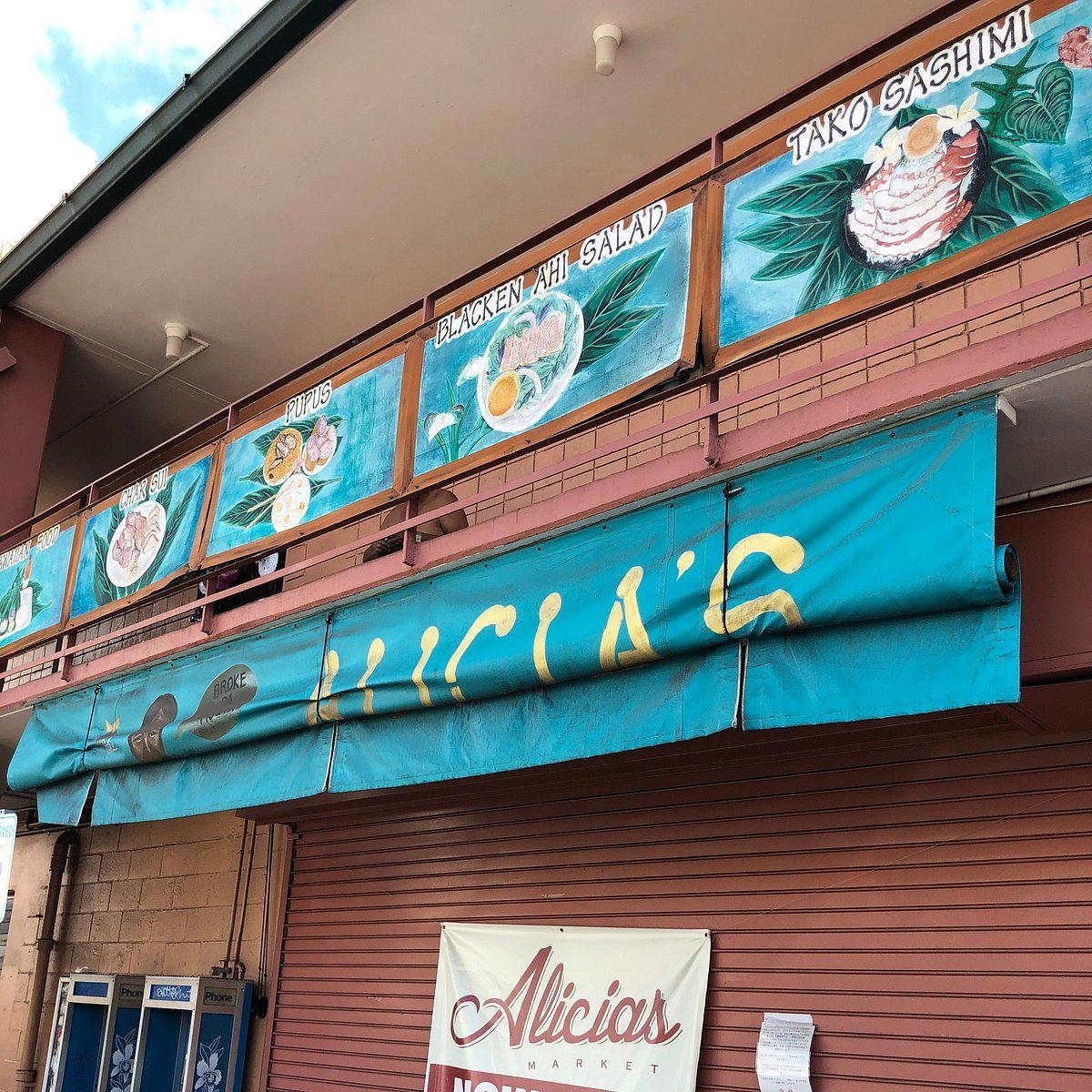
Kalihi's Market Culture and Where Alicia's Fits
Honolulu's dining conversation tends to cluster around two poles: the resort-aligned restaurants of Waikīkī and Kakaʻako, and the tightly credentialed fine-dining rooms that have earned national recognition over the past two decades. Between those poles sits a quieter, less-documented tier of neighbourhood food businesses that sustain local communities without courting critical attention or tourist foot traffic. Alicia's Market, at 267 Mokauea Street in the Kalihi district, belongs to that intermediate register — a market-format address operating in a residential corridor that most visitors never reach.
Kalihi is one of Honolulu's older working neighbourhoods, positioned west of downtown and largely bypassed by the dining infrastructure that has developed around Kakaʻako's newer mixed-use blocks. The food culture here runs on different terms: plate lunches, local grocery staples, and the kind of counter-service familiarity that doesn't require a reservation system or a social media presence. Within that context, a neighbourhood market like Alicia's functions as a community anchor rather than a destination dining address — which tells you something meaningful about what the area values and how its residents eat.
The Market Format in Honolulu's Food Ecosystem
Hawaii's market and plate-lunch tradition occupies a distinct place in the broader American food conversation. Plate lunch as a format, two scoops rice, macaroni salad, and a protein, emerged from the plantation-era labour force of the 19th and early 20th centuries, drawing on Japanese, Filipino, Korean, Portuguese, and Native Hawaiian food practices simultaneously. That layering is not incidental; it reflects the actual demographic history of the islands in a way that no single-cuisine restaurant can replicate. The market-style businesses that continue this tradition serve as living evidence of that culinary synthesis.
Against the more formal end of Honolulu's dining spectrum, addresses like Fête (New American) and 3660 On the Rise represent the credentialed, reservation-required tier where Hawaii Regional Cuisine has been refined and repositioned for a national audience since the early 1990s. Venues like 53 By The Sea bring a view-driven occasion-dining register to the mix, while 855-ALOHA and Ahaaina Luau address cultural-experience dining at a different scale entirely. Alicia's Market operates entirely outside that competitive set, not competing for the same diner, not pursuing the same recognition, and not measured by the same metrics.
That structural separation is worth understanding before you visit. The decision to go to a neighbourhood market in Kalihi is a different kind of decision than booking a table at a fine-dining room, and the value proposition differs accordingly. You are choosing locality, informality, and proximity to how residents actually eat, not cellar depth, tasting menus, or sommelier programmes.
What the Absence of Formal Credentials Signals
Several data points about Alicia's Market are absent from the public record: no published awards, no listed chef, no price range, no documented hours, no cuisine classification in the major review databases. In the context of Honolulu's neighbourhood market tier, that absence is structurally normal rather than a red flag. The businesses that serve Kalihi's residents have not historically sought Michelin attention or James Beard nominations, the award infrastructure that matters at venues like Lazy Bear in San Francisco or Alinea in Chicago simply has no jurisdiction here.
Nationally, the tier that attracts the deepest critical and curatorial attention sits at the opposite end of the format spectrum: multi-course tasting menus at The French Laundry in Napa, Single Thread Farm in Healdsburg, or Providence in Los Angeles all operate under credentialling systems that require formal structure, documented menus, and sustained critical visibility. The same is true internationally, where 8 1/2 Otto e Mezzo Bombana in Hong Kong or Atomix in New York City represent a tier of investment and formality that a neighbourhood market has no reason to pursue. Understanding where Alicia's Market sits relative to those addresses, not as a lesser version of them, but as a categorically different kind of food business, is the necessary framing for any visit.
Thinking About Wine and Beverage in the Market Context
The editorial angle of wine-list depth and sommelier expertise matters considerably at the formal dining tier. Restaurants like Le Bernardin in New York City, Blue Hill at Stone Barns in Tarrytown, or Addison in San Diego maintain cellars where the wine programme functions as a co-equal component of the dining experience, with sommeliers who navigate producer relationships and vintage decisions as a formal part of the operation. At The Inn at Little Washington or Emeril's in New Orleans, the beverage list is curated with the same care as the menu itself.
In a neighbourhood market context, that framework does not apply. Market-format businesses in Hawaii's working neighbourhoods typically carry a functional selection of packaged beverages rather than a curated wine programme, and no documented evidence suggests Alicia's Market operates differently. For travellers whose primary interest is cellar depth and sommelier-guided pairings, the Honolulu fine-dining corridor provides that; Kalihi's market addresses serve a different purpose entirely. Bringing those expectations to Mokauea Street would be a category error rather than a dining disappointment.
Getting to Kalihi
The Kalihi neighbourhood sits roughly three miles west of Waikīkī along the H-1 corridor. By car, Mokauea Street is accessible from the Kalihi Street exit; the address at 267 Mokauea Street places the market in a residential block typical of the surrounding area. TheBus routes serving the Kalihi district connect to downtown Honolulu and points east, making the area accessible without a rental car for those staying in central Honolulu. Parking in the surrounding streets is generally informal and ungated, consistent with the residential character of the neighbourhood.
For a broader orientation to what Honolulu's dining scene covers across its different tiers and neighbourhoods, the full Honolulu restaurants guide provides coverage from the market tier through to multi-award fine dining.
Know Before You Go
- Address: 267 Mokauea St, Honolulu, HI 96819
- Neighbourhood: Kalihi, west of downtown Honolulu
- Format: Neighbourhood market; not a reservation-based dining room
- Hours: Not publicly documented, confirm locally before visiting
- Price range: Not formally published; market-tier pricing expected
- Reservations: Not applicable to this format
- Getting there: Approximately 3 miles west of Waikīkī via H-1; TheBus Kalihi routes serve the area
How Alicia's Market Honolulu compares with similar nearby venues.
| Venue | Cuisine |
|---|---|
| Ethel's Grill | Japanese |
At a Glance
- Rustic
- Casual Hangout
Current opening hours
- Monday
- 10 AM–2 PM
- Tuesday
- 10 AM–2 PM
- Wednesday
- 10 AM–2 PM
- Thursday
- 10 AM–2 PM
- Friday
- 10 AM–2 PM
- Saturday
- 10 AM–2 PM
- Sunday
- Closed
Hours can change for holidays and private events. Last verified .
Casual, efficient takeout counter in a family-run market with a local, no-frills atmosphere.
Know Before You Go
- Getting there
- 267 Mokauea St, Honolulu, HI 96819