Tabelog 100 #27
Our verdict
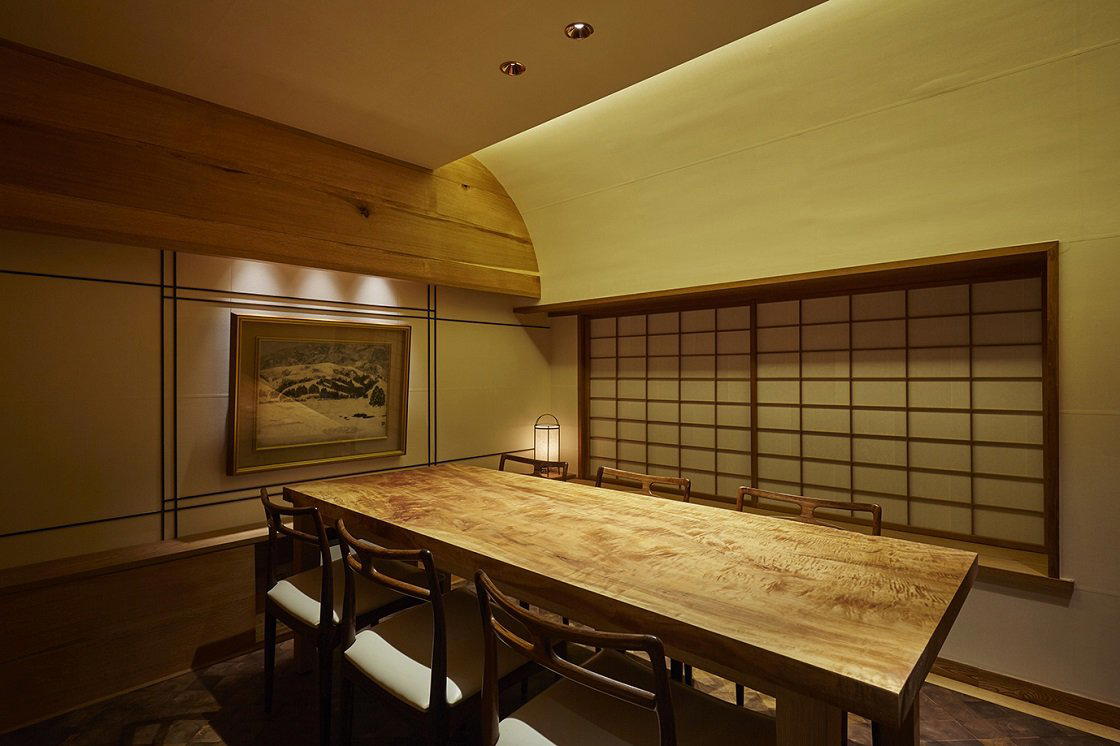
Makisumi Madara belongs to Osaka’s small-format creative dining tier, where charcoal, fish, game and yakitori technique sit closer to a critical conversation than a casual night out. Its selection for Tabelog 100 Innovative / Creative cuisine 2025 gives the room a clear reputation signal within a city better known abroad for street food, counters and classic kappo.

Pearl is the En Primeur Club membership app, where members save venues, book tables and use the concierge.
The menu
What to order
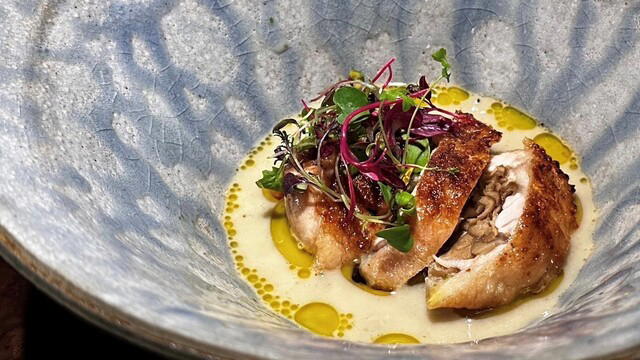
- Madara – charcoal-grilled Kyoto Akadori chicken wing with stuffed Japanese eel and aromatic dashi sauce
- Nine-course creative wood and charcoal tasting menu
Approach Osaka at night and the city changes register. Takoyaki steam, shopping-arcade glare and train-station turnover give way to quieter rooms where dinner is less speed than control. Makisumi Madara fits a precise Osaka pattern: a creative restaurant using grilled-skewer grammar, wild game and a category-crossing approach to move beyond the familiar split between refinement and informality.
That matters because Osaka’s reputation abroad is often reduced to pleasure-first clichés. The city excels at speed, value and appetite, but its serious dining culture also runs through focused rooms, exacting choices and menus drawn from Japanese technique without staying inside one category. Tabelog’s 2025 Hyakumeiten recognition places the restaurant in that narrower conversation. It is not Michelin-style shorthand, and should not be read as one; it is a Japanese critical signal for diners attentive to category, peer group and audience.
Grilled skewers and game put Osaka's creative cooking in a darker register
Creative dining in Japan can become overpolished: imported luxury cues, international vocabulary and plates that look interchangeable from Tokyo to Fukuoka. The more persuasive Osaka version stays closer to heat, grilling and drinking culture. Here, the markers are telling: creative cuisine, wild game dishes and yakitori. Together they point to a kitchen working from grilled technique and protein, not decorative plating alone.
That format gives the meal tension. Osaka sits within a deep dining culture, with exacting habits around serious restaurants, but grilled cooking changes the tone, pulling creative cooking toward bitterness, fat, skin and timing. In a city where many visitors chase instant gratification, this is the slower, more adult appetite: dinner built around controlled sequence, not famous local-food checklists.
The restaurant’s category reinforces that position. Creative cooking, wild game and yakitori all sit within its orbit, a combination increasingly legible to diners who want Japanese technique without a single rigid label. For diners comparing Osaka’s serious rooms, that mix suggests a restaurant designed for people who want the meal to carry its own rhythm, not guests who treat the format as an afterthought.
The Tabelog 100 signal places it in Osaka's specialist tier
Tabelog recognition carries weight in Japan because it reflects a domestic reviewing culture with its own biases, vocabulary and obsessiveness. A 3.66 score may not mean much to travelers used to inflated global platforms; in Japan, where scoring is tighter, it reads differently. The 2025 Hyakumeiten signal is the stronger marker, especially for a restaurant sorted into a national conversation rather than only a local list.
The competitive context helps. Osaka’s high-end dining map is not one hierarchy but overlapping micro-scenes. Chinese rooms such as Gessen and xiang hua belong to a different technical conversation. MAKIBI sits in another lane. Makisumi Madara occupies the narrow middle where creative Japanese cooking, grilled-skewer technique and a darker appetite meet. That distinct proposition explains why its reputation signal matters more than any single dish name.
Osaka frames the experience. It belongs in serious dining itineraries, but it does not need to behave like a tourist dining strip. The city’s smaller restaurants often feel aimed at repeat local diners, business dinners and people willing to move beyond the obvious route. That texture suits a room whose appeal depends on concentration rather than spectacle.
For broader Osaka planning, place this meal against the city’s range rather than a single genre. The casual end can mean unnamed snack stops, bakery breaks, coffee-led pacing or Italian detours elsewhere in the city. The fuller map sits in Our full Osaka restaurants guide, with adjacent planning through Our full Osaka hotels guide, Our full Osaka bars guide, Our full Osaka wineries guide and Our full Osaka experiences guide.
Who should choose this over a classic Osaka night out
This is not the address for a first-timer trying to understand Osaka through neon, queues and snack culture. It is better for the second or third serious meal in the city, after the obvious pleasures have been handled and the question becomes more specific: where does contemporary Osaka cooking go when it wants game and grilled technique at the centre?
The answer is a format rewarding diners comfortable with a focused room and a category-crossing menu. The listed dinner budget of JPY 10,000 - JPY 14,999 pushes the experience toward planned dining rather than spontaneous tourism. That price band also places it in a serious but not maximalist tier, useful for travelers weighing one specialist dinner against other Osaka dining rooms.
There is a useful editorial caution here. Tabelog’s 2025 Hyakumeiten recognition should raise expectations for seriousness, not inflate the meal into a trophy hunt. Osaka has richer rewards when diners stop asking for universal rankings and start reading category signals. Creative cuisine in Japan is not automatically better because it crosses genres; it becomes interesting when the crossing has discipline. Wild game, yakitori technique and controlled heat give this room clear constraints, often what separates a focused dinner from a vague contemporary one.
Travelers building a wider Japan dining itinerary can use it as a reference against other regional formats without forcing direct comparisons. Other cities offer their own approaches to beef dining, grilling, regional cooking, curry, small-format counters and Japanese food culture abroad, but those examples belong to different local conversations. Makisumi Madara is best read within Osaka’s own specialist dining map, alongside comparisons such as Gessen, MAKIBI, xiang hua, ポンテベッキオ and 月泉.
The critical case for Makisumi Madara is not that it represents all of Osaka. It represents a narrower, more demanding lane: contemporary Japanese cooking with grilled technique at its core, domestic recognition behind it, and an Osaka setting that keeps the meal away from the city’s louder dining clichés.
Frequently asked questions
Is Makisumi Madara okay with children?
Makisumi Madara is best understood as a serious Osaka dining room, so it is likely better suited to adults and older children comfortable with a focused meal than to casual family dining.
What kind of setting is Makisumi Madara?
Expect a specialist Osaka restaurant known through Tabelog’s 2025 Hyakumeiten recognition, with categories listed as Creative, wild game dishes and yakitori.
What's the price range at Makisumi Madara?
Pricing at Makisumi Madara is listed as JPY 10,000 - JPY 14,999 for dinner.
What is Makisumi Madara known for?
Makisumi Madara is known in Osaka for creative cooking, wild game dishes and yakitori, with a Tabelog score of 3.66 and 2025 Hyakumeiten recognition.
Cuisine Context
Comparable venues at the same tier.
| Venue | Cuisine | Price | Awards | Notes |
|---|---|---|---|---|
| Makisumi MadaraThis venue (the venue you are viewing) | Creative wood & charcoal Japanese-Italian with yakitori focus | $50–100 | Tabelog 100 #27 | Not listed |
| Pres | Modern standing wine bar & bistro | $30–50 | Tabelog 100 #80 | Kita |
| STAND AFRO | Creative Fusion Standing Bar | $10–20 | Tabelog 100 #35 | Chūō |
| SANADA | Innovative Fusion Tasting Menu | $150–200 | Tabelog 100 #95 | Kita |
| IAKU | Innovative French–Italian Tasting Menu | $150–200 | Tabelog 100 #42 | Kita |
| Meganeya | Creative Yoshoku & Wine Bar | $30–50 | Tabelog 100 #71 | Yodogawa |
Recognition history
Dated appearances from independent guides and award organizations, with the underlying list record or original source where available.
Tabelog 100 #27 · No. 27
Tabelog · Tabelog 100 - Innovative / Creative cuisine - 2025