Tabelog 100 #80
Our verdict
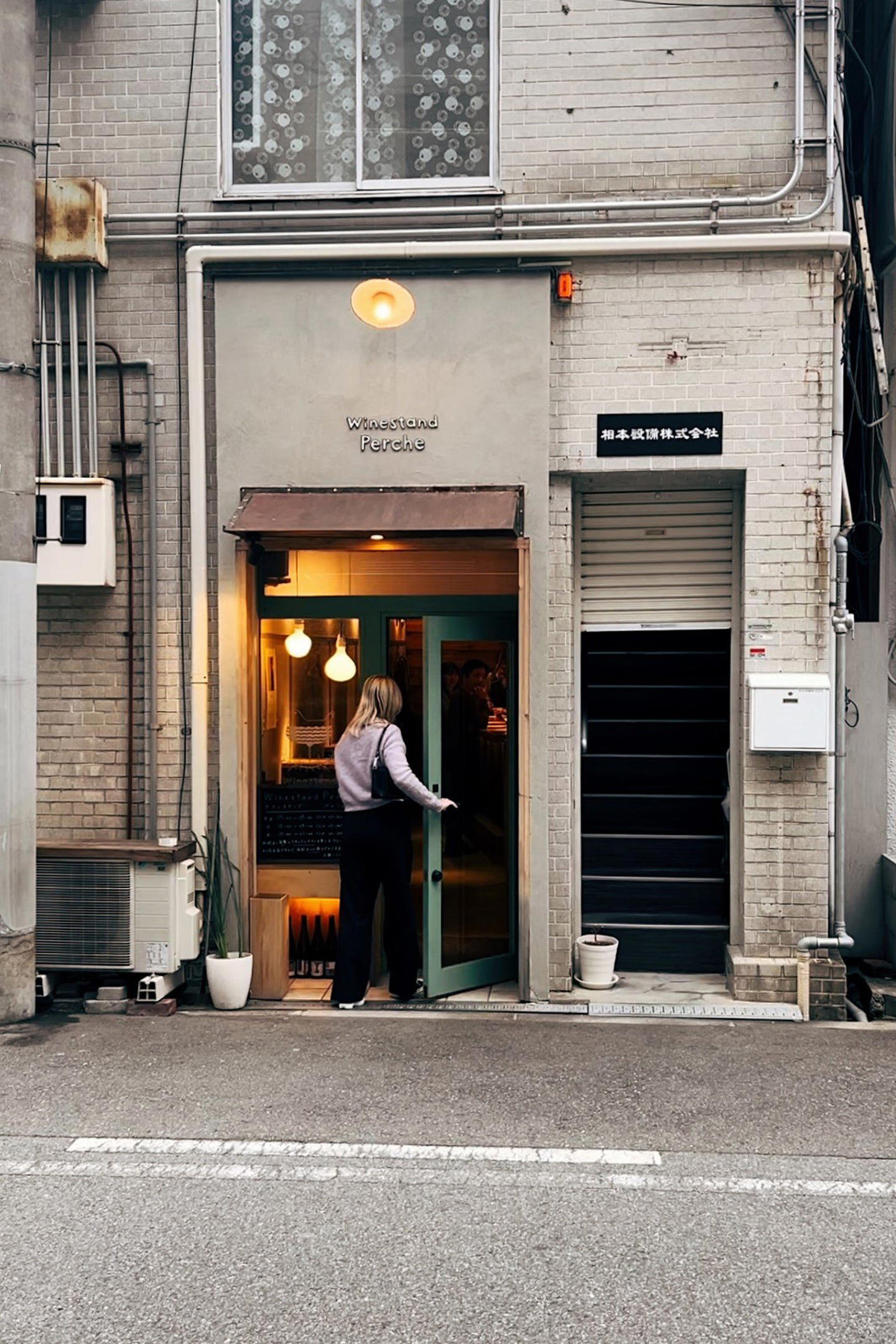
Pres puts Osaka’s stand-up drinking culture into a higher-spend bracket: wine-led, bistro-adjacent, and anchored near Ogimachi rather than the city’s more obvious nightlife corridors. Its 2025 Tabelog 100 Tachinomi selection signals serious local traction for a place that treats tachinomi as a focused food-and-wine format, not a cheap pre-dinner stop.

Pearl is the En Primeur Club membership app, where members save venues, book tables and use the concierge.
Osaka’s tachinomi rooms are built for compression: narrow frontage, quick decisions, limited ceremony, and crowds that know the difference between a casual standing bar and a place with intent. In Osaka, that distinction matters. The city has long rewarded small-format eating, from compact counters to late-afternoon drinking rooms, while the newer premium tachinomi wave asks a sharper question: how much structure can a standing-bar format carry before it competes with bistros?
Pres sits inside that question. Its mix of stand-up bar, bistro, and bread is more precise than the usual “bar with snacks” shorthand. Its recognition is specific too: selection through Tabelog’s Hyakumeiten framework for 2025, with a Tabelog score of 3.59, places it among the Osaka standing-drink addresses with documented attention for the year. That matters in Osaka, where informal dining standards are punishingly high and low prices alone do not create loyalty.
Premium tachinomi, measured against Osaka's everyday value culture
Osaka is ruthless about value. A city that can make everyday dining feel like a civic reference point will not reward a standing bar simply for looking polished. The proposition must be clearer: a tighter food logic, a stronger sense of format, and a room that can move without becoming a queue with glassware.
The spend level is revealing. Pres operates above the everyday tachinomi tier, closer to a compact bistro-leaning session than a quick post-work beer. Within Osaka, the comparison is useful. Sangourmand, Sogetsu, THE MUNCHIES BURGER WORKS. Happy Camper Bagel, and Ogimachi Udonya Asuro all sit within the wider local rhythm of compact, repeatable dining. Pres belongs to a narrower category: standing-room informality with bistro cues and bread as part of the identity.
The format clarifies the audience. This is not Osaka’s sprawling dining rooms or hotel-polished tasting menus, but a small-scale urban habit: arrive with appetite for food, interest in the standing-bar format, and flexibility to accept tachinomi grammar. Tachinomi is about proximity, pace, and looseness; the better modern examples add structure without killing the form.
Bread is a useful signal. In Osaka, bread culture has become a serious parallel track to restaurant dining, not just breakfast. The city supports specialist bakeries, hybrid cafés, and casual rooms with unusual enthusiasm. Readers mapping that side can place Pres within Osaka’s broader small-format dining culture, not because every venue serves the same purpose, but because the best compact rooms can carry more ambition than their footprint suggests.
A premium format changes the standing-bar equation
Japanese tachinomi began as a democratic drinking format: fast, inexpensive, and built around regulars. A more premium bar approach complicates that history. It raises spend, slows decisions, and shifts food from pure drinking snacks toward dishes that sustain a longer session. That is the tension behind the better new-wave standing bars in Osaka: they borrow the body language of the old form, then price and program themselves closer to a specialist room.
Pres is strongest as a value proposition through that lens. The question is not whether it is cheap; it is not trying to be. The better question is whether the extra spend buys a more focused category experience than a standard casual bar. Its Tabelog Hyakumeiten recognition for 2025 suggests local evaluators see coherence: stand-up service, bistro association, bread, and enough identity to register in a crowded city.
Osaka diners understand cross-category eating better than guidebook clichés allow. A night can move from one casual format to another, from quick staples to a counter with a more deliberate structure. For that wider map, other Osaka dining rooms show how different references enter the city at different price points and formality levels. Pres uses a leaner frame, but the same pattern applies: Osaka absorbs dining languages only when they prove useful to local habits.
The absence of a public chef narrative is not a weakness here. Tachinomi culture has never depended on the chef-as-protagonist model like fine dining. Credibility comes from format discipline and repeat demand: whether the room makes sense, the bar focus is legible, and the food keeps pace with the visit. In that respect, a Tabelog category selection carries more practical meaning than a florid backstory.
How to place it within an Osaka itinerary
Pres works better as a deliberate stop than an incidental add-on. Osaka rewards grazing, but a bistro-framed standing bar needs a different rhythm from the city’s lower-cost snack trail. It suits an early-evening anchor or second stop after a lighter meal better than a rushed crawl built around volume.
The Osaka location defines the appeal. This is not a page about spectacle or the polished hotel circuit, but about a more local register: practical movement, compact formats, and dining rooms that fill without international signaling. For travelers, that context is part of the value. The spend buys access to contemporary Osaka drinking culture driven less by spectacle than by category literacy.
Hotel choice will shape the evening more than diners often expect, especially if the night runs beyond the central tourist corridors; use Our full Osaka hotels guide for that layer. Readers can also scan Our full Osaka wineries guide, while Japan-wide context sits across other dining in Osaka and beyond.
The verdict is simple: Pres suits travelers who want Osaka’s informal dining culture without defaulting to its lowest-spend version. The evidence points to a focused standing-bar format, bistro adjacency, bread, and enough local recognition to justify planning around it. In a city famous for value, that is the more interesting test than cheapness.
Frequently asked questions
Where is Pres located?
Osaka.
Is Pres more mid-range or high-end?
Pricing at Pres is listed as JPY 6,000 - JPY 7,999 JPY 5,000 - JPY 5,999 View spending breakdown.
Is Pres reservation-only?
Reservation details are not established here. Plan around Pres as an Osaka standing-bar stop and check current operating information before visiting.
What is Pres known for?
Pres was recognized through Tabelog’s Hyakumeiten framework in 2025, a clear sign of standing-bar credibility in Osaka. The listing also points to stand-up bar, bistro, and bread categories.
City Peers
Nearby venues at a similar price tier for orientation.
| Venue | Cuisine | Price | Awards | Notes |
|---|---|---|---|---|
| PresThis venue (the venue you are viewing) | Modern standing wine bar & bistro | $30–50 | Tabelog 100 #80 | Not listed |
| Sangourmand | A5 Wagyu Hamburger Steak & Omurice Yoshoku | $20–30 | Tabelog 100 #38 | JPY 1,000 - JPY 1,999 JPY 1,000 - JPY 1,999 |
| Sogetsu | Traditional Osaka Okonomiyaki | $20–30 | Tabelog 100 #14 | JPY 1,000 - JPY 1,999 - JPY 999 |
| THE MUNCHIES BURGER WORKS. | Gourmet American-style burgers | $10–20 | Tabelog 100 #34 | JPY 1,000 - JPY 1,999 JPY 1,000 - JPY 1,999 |
| Happy Camper Bagel | Bagel Shop / Bakery Cafe | $1–10 | Tabelog 100 #64 | JPY 999 |
| Ogimachi Udonya Asuro | Handmade Udon Specialist | $10–20 | Michelin Bib Gourmand · Tabelog 100 #14 | Udon |
Recognition history
Dated appearances from independent guides and award organizations, with the underlying list record or original source where available.
Tabelog 100 #80 · No. 80
Tabelog · Tabelog 100 - Tachinomi - 2025